Volume: 75 L 容积:75 升
Dimensions: 60х36х45 cm 尺寸:60×36×45 厘米
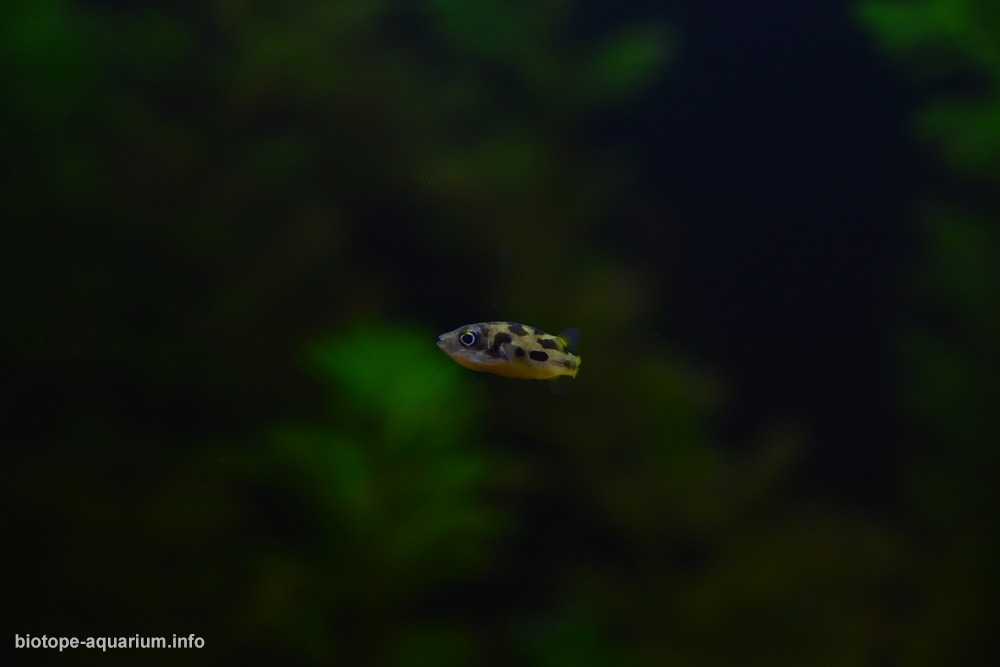
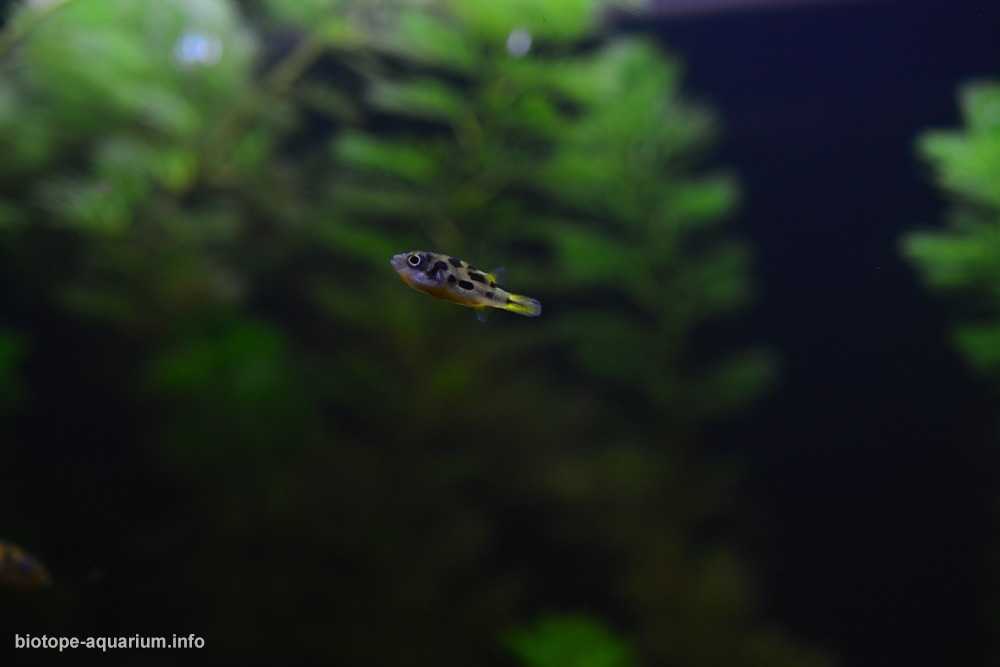
List of fishes: Carinotetraodon travancoricus
鱼类名录:卡氏四齿鲀(Carinotetraodon travancoricus)
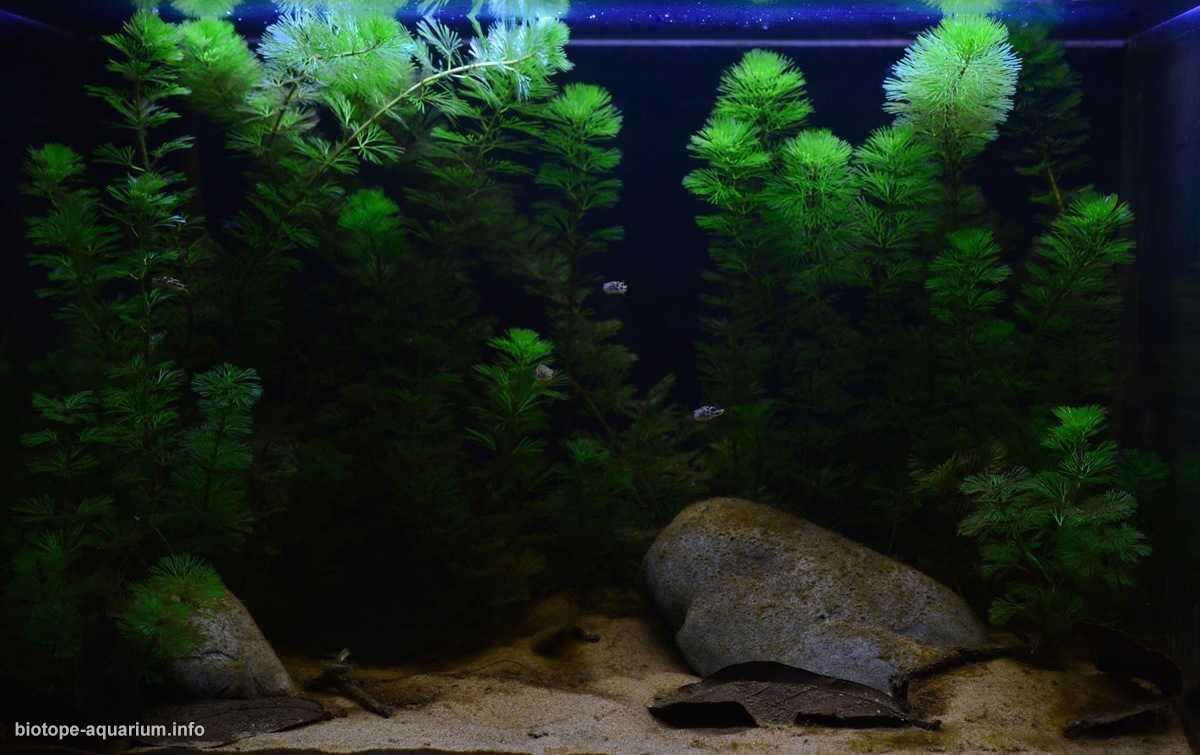
List of plants: Cabomba caroliniana
植物列表:卡邦巴(Cabomba caroliniana)
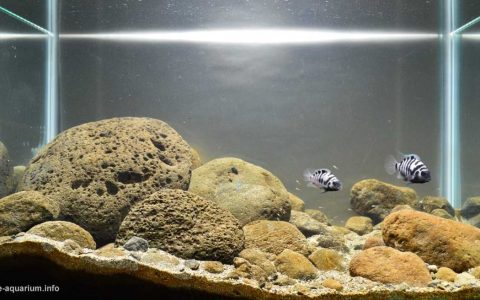
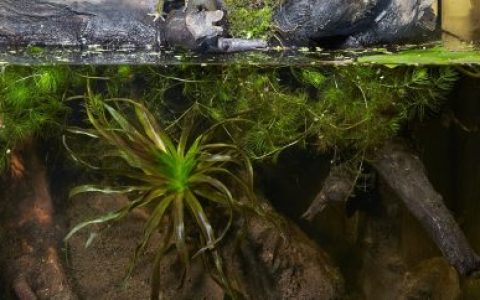
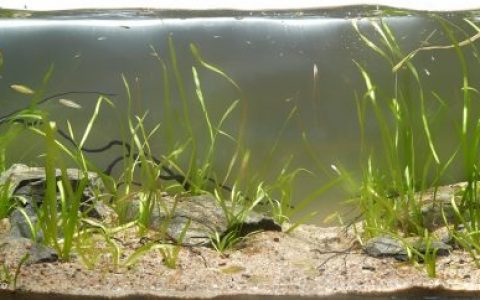
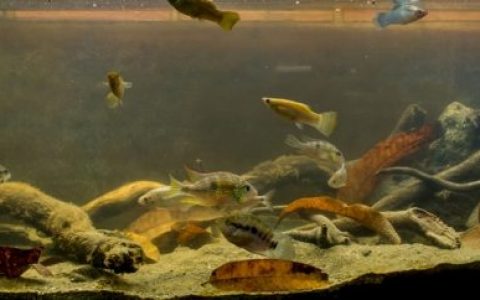
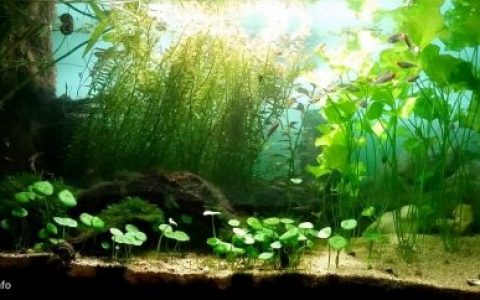
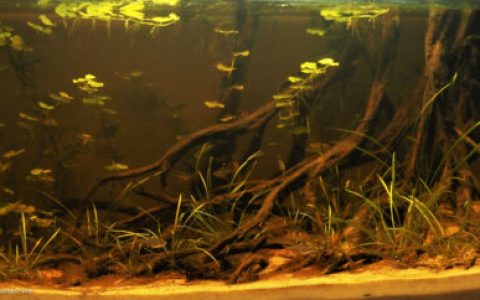
Description of decorations: The substrate consists of a layer of sand covered with organic debris and plant debris, both produced by the aquariums ecosystem. Terminalia catappa leaves and branches litter the bottom to replicate fallen riparian vegetation, Cabomba caroliniana is forming a dense growth.
装饰描述:底床由一层沙子构成,表面覆盖着水族箱生态系统产生的有机碎屑和植物残骸。榄仁树(Terminalia catappa)的叶片与枝条散落于底部,以模拟河岸坠落的植被;卡邦巴(Cabomba caroliniana)则形成茂密的丛生。
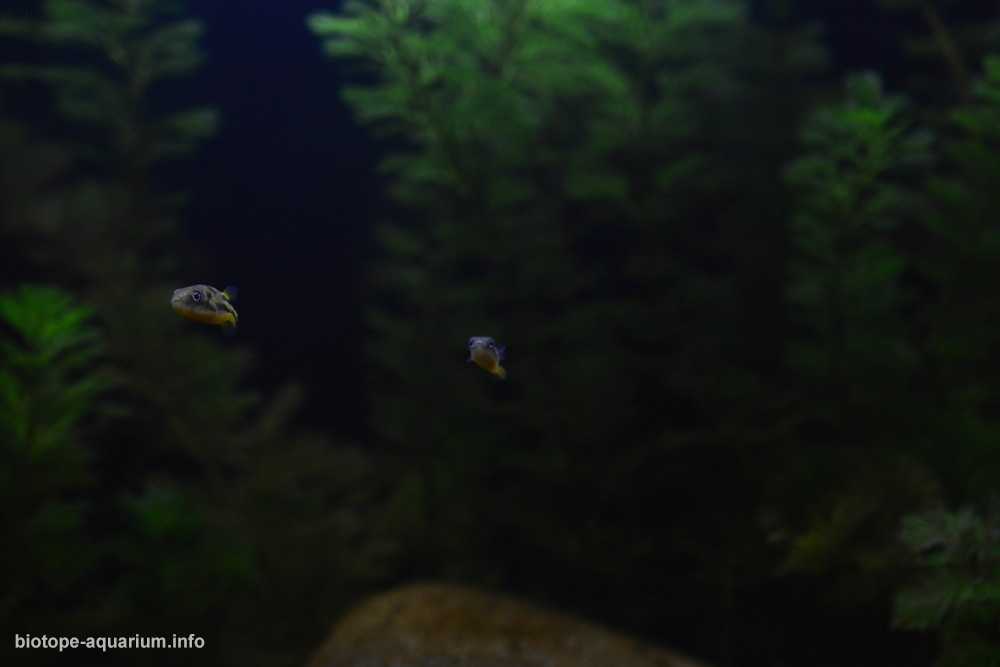
Description of equipment: Lighting: 21W integrated Superfish LED. Filtration: External 2-stage filter (Superfish X-Pro 400): Activated carbon, CrystalMax, BioBalls and filter foam. Water-flow is 400 l/h, filter has a volume of 5.8 l. Heating: JBL ProTemp S 100.
设备描述:照明:21W 集成式 Superfish LED 灯。过滤:外置两级过滤器(Superfish X-Pro 400),内含活性炭、CrystalMax、BioBalls 及过滤棉。水流量为 400 升/小时,过滤器容积为 5.8 升。加热:JBL ProTemp S 100。
Water parameters: The aquarium is kept at a temperature of 30°C (based on the Pamba river average water temperature), pH has a value of 7, gH has a value of 4.
水质参数:水族箱水温维持在 30°C(基于帕姆巴河平均水温),pH 值为 7,gH 值为 4。
INFORMATION ABOUT BIOTOPE
关于生物群落的信息
Description of the area surrounding the biotope: The Pamba river is the third longest in Kerala state with 176 km length. The river cuts across a diverse array of ecosystem settings from montane temperate grasslands, through moist deciduous and evergreen forests to a mangrove-lined estuary. Like all the river basins in Kerala, the Pamba basin also can be divided into three natural zones based on elevation, consisting of low land or seaboard, midland and high land. The coast for a short distance along the borders of lakes is flat, retreating from it the surface roughens up into slopes which gradually combine and swell into mountains on the east. The low land area along sea coast is generally swampy and liable to be flooded during monsoon inundation. The plains/midlands succeed low land in gentle ascents and valleys interspersed with isolated low hills. The high land on the eastern portion is broken by long spurs, dense forests, extensive ravines and tangled jungles. Towering above all their slopes are Western Ghats that form eastern boundary of the basins. The Pamba river basin has an area of 2082.80 km2, including 50.59 km2 Lowland, 238.711 km2 Midland, 902.74 km2 Highland and 568.25 km2 Highrange. The reservoirs and drainage network of the river basin consists of 268.509 km2. The longest river stretch was 90km of midland stretch followed by Highrange (41km), Highland (35km) and lowland (10km), the vegetation profile of the riparian forests of Pamba river basin correlated with this divergence and showed clustering of evergreen species in the highrange and highland stretches of the river. River Pamba, venerated as southern Ganga, originates at the Pulachimalai hill in the Peermedu plateau of the Western Ghats at an altitude of 1650 m and drains into the Vembanad Lake after nourishing many places. Pamba River nourishes hundreds of medicinal plants in the mountain ranges where it originates and carries its boons to everywhere it flows. Let us have a glimpse of some of the best known places and events on its banks. The sandy banks of river Pamba witnessed the emergence and growth of many cultural and religious centres. Sabarimala temple amid luxuriant forests and grasslands is the most popular religious center in Kerala for the Hindus and it is intimately connected to the river Pamba. Bathing in the river, believed to absolve one’s sins, is a requirement before commencing the trek to the shrine at Sabarimala. Cherukolpuzha Convention is an important religious convention of the Hindus held at Cherukole on the sand banks of a river Pamba, usually in February every year. Started in 1896, the Maramon Convention is also held on the banks of river Pamba at Maramon near Kozhencherry in Pathanamthitta District. It is the largest Christian convention in Asia. Aranmula is a unique cultural village on the banks of river Pamba. The ancient Parthasarathy temple, the annual regatta of snake boats during the festival of Onam and the magnificent Aranmula Kannadi are but to name a few attractions here. Noted for outstanding beauty and shrouded in secrecy, the Aranmula Kannadi is considered a medieval marvel in the annals of metallurgy. The technical know-how of this metal mirror is confined to a few households of master craftsmen in the village of Aranmula. The Pamba River is a veritable signature of a rich culture that continues to nourish the imagination, wisdom and happiness of many in its vicinity.
生物群落周边区域描述:潘巴河是喀拉拉邦第三长的河流,全长 176 公里。该河流穿越多种多样的生态系统,从山地温带草原,经过湿润落叶林和常绿林,直至红树林环绕的河口。与喀拉拉邦所有流域一样,潘巴河流域也可根据海拔划分为三个自然带:低地或沿海带、中部地带和高地。沿湖泊边界延伸的短段海岸地势平坦,由此向内陆地表逐渐变得崎岖,形成缓坡,并逐步汇聚隆起为东部的山脉。沿海低地通常沼泽遍布,季风洪水期间易受淹没。平原/中部地带以平缓的上升地形和山谷接替低地,其间散布着孤立的低矮丘陵。东部高地则被长长的山脊、茂密的森林、广阔的沟壑以及错综复杂的丛林所分割。耸立于所有这些斜坡之上的是西高止山脉,它们构成了该流域的东部边界。 潘巴河流域面积为 2082.80 平方公里,其中包括低地 50.59 平方公里、中部地带 238.711 平方公里、高地 902.74 平方公里以及高山区 568.25 平方公里。该流域的水库与排水网络总面积为 268.509 平方公里。河流最长的河段为中部地带,达 90 公里,其次为高山区(41 公里)、高地(35 公里)和低地(10 公里)。潘巴河沿岸森林的植被分布与此地貌差异密切相关,显示出常绿树种在高山区和高地河段呈聚集分布。潘巴河被誉为“南方的恒河”,发源于西高止山脉皮尔梅杜高原的普拉奇马拉伊山,海拔 1650 米,流经并滋养众多地区后注入文巴纳德湖。潘巴河在其源头的山脉中孕育了数百种药用植物,并将其恩泽带至所经之处。让我们一窥其沿岸一些最著名的地点与事件。潘巴河的沙质河岸见证了众多文化与宗教中心的兴起与发展。 萨巴里马拉神庙坐落在郁郁葱葱的森林与草原之间,是喀拉拉邦印度教徒最受欢迎的宗教中心,与潘巴河息息相关。在前往萨巴里马拉圣地进行朝圣徒步之前,信徒必须先在河中沐浴,相信此举能洗清罪孽。切鲁科尔普扎大会是印度教的重要宗教集会,每年二月通常在潘巴河畔的切鲁科勒沙洲上举行。始于 1896 年的马拉蒙大会也在潘巴河畔举行,地点位于帕塔南蒂塔区科真切里附近的马拉蒙,这是亚洲规模最大的基督教集会。阿兰穆拉是潘巴河畔一个独特的文化村落。古老的帕尔塔萨拉蒂神庙、欧南节期间举行的蛇舟赛船盛会,以及壮丽的阿兰穆拉卡纳迪镜,只是此地众多名胜中的几例。阿兰穆拉卡纳迪镜以其非凡之美和神秘色彩著称,被视为冶金史上的中世纪奇迹。这种金属镜的制作技艺仅传承于阿兰穆拉村中少数几户工匠大师家族。 潘巴河是丰富文化的真实象征,持续滋养着周边众多居民的想象力、智慧与幸福。
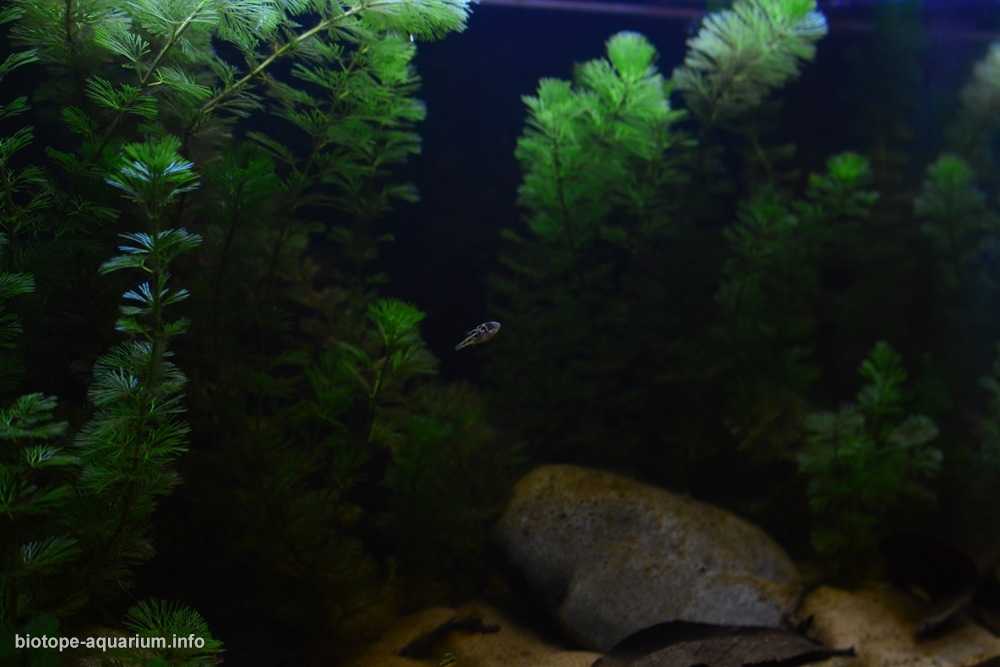
Description of the underwater landscape of the biotope: The Pamba river is mostly a clearwater river, turbidity in the water reduces the transparency due to the presence of particulate matter such as clay or silt, finely divided organic matter, plankton or other microscopic organisms. The river has different types of water flow such as stagnant water, slowflowing water, fast-flowing water and rapid water, with different grades of substrate such as silt, sand, clay, stones, boulders and bedrock. Observations on the habit of C.travancoricus in its natural habitat in river Pamba indicated its dominance in areas where Cabomba plants aggregated. Aquatic plants provide habitats containing food resources for both juvenile and adult fish. Their long stems and leaves support macro invertebrates in rivers and lakes and plant beds supply additional nutrients to support a diverse group of benthic macro organisms. Many juvenile fishes select structurally complex habitats, such as submerged vegetation, in response to predation risk. However, structurally complex habitats can reduce foraging return and growth rate of juvenile fishes. In the Pamba river, the major planktonic organisms collected from various stretches in the river were Anabena, Ankistrodesmus, Chlorella, Navicula, tintinnids, Pleurosigma and Microcystis. Benthic population consisted of Chironomus larvae, polychaetus(Dero sp. Nereis.sp), Tubifex sp, insect larvae, gastropods and bivalves. The algal and benthic biomass and diversity is generally low in most of the stretches.
生物群落的水下景观描述:潘巴河主要是一条清水河流,但由于水中存在黏土或淤泥等颗粒物、细碎有机物、浮游生物或其他微生物,其浊度会降低水体透明度。该河流具有多种水流类型,包括静水、缓流、急流和湍流,底质类型也多样,涵盖淤泥、沙、黏土、石块、巨石和基岩。对特拉凡科鳢(C. travancoricus)在潘巴河自然栖息地中的习性观察表明,其在聚生有狐尾藻(Cabomba)植物的区域占主导地位。水生植物为幼鱼和成鱼提供了包含食物资源的栖息地。它们长长的茎和叶片支撑着河流与湖泊中的大型无脊椎动物,而植物床则为多样化的底栖大型生物群提供额外的营养。许多幼鱼为应对捕食风险,会选择结构复杂的栖息地,例如沉水植被;然而,这类结构复杂的栖息地也可能降低幼鱼的觅食效率和生长速率。 在印度喀拉拉邦的庞巴河中,从河流不同河段采集到的主要浮游生物包括鱼腥藻(Anabena)、针杆藻(Ankistrodesmus)、小球藻(Chlorella)、舟形藻(Navicula)、铃壳虫(tintinnids)、双眉藻(Pleurosigma)和微囊藻(Microcystis)。底栖生物群落则由摇蚊幼虫、多毛类(如颤蚓属 Dero sp. 和沙蚕属 Nereis sp.)、水丝蚓(Tubifex sp.)、昆虫幼虫、腹足类和双壳类组成。总体而言,该河大多数河段的藻类和底栖生物的生物量及多样性均较低。
Description of the parameters of the habitat: The average temperature ranges from 29.1°C to 31.7°C, with a minimum range of 29°C and a maximum range of 32.1°C. pH range is acidic, the average range in all seasons of pH ranges from 6 to 6.01. Transparency range showed variations in all the seasons, the average range of transparency is 16.3 to 21.1cm. In the pre-monsoon season the hardness ranges from 12 mg/l to 22 mg/l, in monsoon season the hardness is nearly 10 mg/l to 20 mg/l, in post monsoon season the hardness ranges from 14 mg/l to 18 mg/l. Salinity of the water in the pre monsoon season ranges from 3.22mg/l to 5.78mg/l, salinity of the water in the monsoon season ranges from 3.2mg/l to 5.7 mg/l, salinity of the water in the post monsoon season has a minimum range of 4.18mg/l and a maximum range of 6.4mg/l. Ammonia of the water in the pre monsoon season ranges from 42.5 mg/l to 59.5 mg/l, in monsoon season the minimum range is 38 mg/l and a maximum of 55.5 mg/l, ammonia of the water in the post monsoon season range from 34 mg/l to 51 mg/l. Carbon dioxide of the water in pre monsoon season has a minimum range of 4.4 mg/l and a maximum range of 7.9 mg/l, in monsoon season the carbon dioxide of the water has a minimum of 5.2 mg/l and a maximum of 7.9 mg/l, carbon dioxide of the water in post monsoon season ranges from 4.4 mg/l to 12.3 mg/l. Dissolved oxygen of the water in the pre monsoon season has a minimum range of 4 mg/l and a maximum range of 5 mg/l, dissolved oxygen of the water in monsoon season range from 7.3mg/l to 9.6 mg/l, dissolved oxygen of the water in the post monsoon season has a minimum range of 7.04 mg/l and a maximum range of 8.3 mg/l. (All the water parameters are based on the most recent data that was found)
栖息地参数描述:平均温度范围为 29.1°C 至 31.7°C,最低温度为 29°C,最高温度为 32.1°C。pH 值呈酸性,全年各季节的平均 pH 值范围为 6 至 6.01。透明度在各季节均有所变化,平均透明度范围为 16.3 至 21.1 厘米。旱季(季风前)硬度范围为 12 mg/l 至 22 mg/l,雨季(季风期)硬度约为 10 mg/l 至 20 mg/l,季后季(季风后)硬度范围为 14 mg/l 至 18 mg/l。旱季水体盐度范围为 3.22 mg/l 至 5.78 mg/l,雨季水体盐度范围为 3.2 mg/l 至 5.7 mg/l,季后季水体盐度最低为 4.18 mg/l,最高为 6.4 mg/l。旱季水体氨含量范围为 42.5 mg/l 至 59.5 mg/l,雨季水体氨含量最低为 38 mg/l,最高为 55.5 mg/l,季后季水体氨含量范围为 34 mg/l 至 51 mg/l。 季风前季节,水中二氧化碳含量最低为 4.4 mg/l,最高为 7.9 mg/l;季风季节,水中二氧化碳含量最低为 5.2 mg/l,最高为 7.9 mg/l;季风后季节,水中二氧化碳含量介于 4.4 mg/l 至 12.3 mg/l 之间。季风前季节,水中溶解氧含量最低为 4 mg/l,最高为 5 mg/l;季风季节,水中溶解氧含量介于 7.3 mg/l 至 9.6 mg/l 之间;季风后季节,水中溶解氧含量最低为 7.04 mg/l,最高为 8.3 mg/l。(所有水质参数均基于最新获取的数据)
List of fishes and invertebrates occurring in the nature biotope: Pamba river is one of the longest river systems of Kerala. There are 60 species of fish reported from the river, 26 species, belonging to 5 orders and 21 genera contributed to the exploited fishery. The fish are catogorised into 3 groups: Cultivable: Anguilla bengalensis, Cyprinus carpio, Cirrhinus mrigala, Labeo dussumieri, Labeo fimbriatus, Catla catla, Tor khudree, Horabagrus brachysoma, Heteropneustes fossilis, Etroplus suratensis, Channa marulius. Ornamental: Osteobrama bakeri, Puntius amphibius, Puntius bimaculatus, Puntius denisonii, Puntius vittatus, Puntius fasciatus, Puntius filamentosus, Puntius ticto, Amblypharyngodon microlepis, Barilius bakeri, Barilius gatensis, Danio malabaricus, Danio aequipinnatus, Rasbora daniconius, Garra mullya, Garra hughi, Garra surendranathanii, Bhavania auatralis, Mesonemacheilus triangularis, Mesonemacheilus guentheri, Lepidocephalus thermalis, Ompok bimaculatus, Wallago attu, Parambassis thomassi, Nandus nandus, Pristolepis marginatus, Etroplus maculatus, Carinotetraodon travancorius. Food fish: Gonoproktopterus curumca, Puntius chola, Puntius sarana subnasutus, Salmostoma acinaces, Salmostoma boopis, Garra ceylonensis, Bataso travancoria, Mystus gulio, Mystus armatus, Mystus menoda, Xenentodon cancila, Parambassis dayi, Glossogobius giuris, Anabas testudineus, Channa striatus, Channa orientalis, Channa diplogramma, Macrognathus aral, Clarias dussumieri, Mastacembelus armatus, Clarias gariepinus. Invertebrates: Paludomus annandalei, Caridina chauhani, Vanni deepta.
帕姆巴河自然生境中的鱼类和无脊椎动物名录:帕姆巴河是喀拉拉邦最长的河流系统之一。据记录,该河共有 60 种鱼类,其中 26 种分属 5 个目、21 个属,构成了可开发渔业资源。这些鱼类可分为三类:可养殖类:孟加拉鳗(Anguilla bengalensis)、鲤鱼(Cyprinus carpio)、Mrigala 野鲮(Cirrhinus mrigala)、Dussumieri 野鲮(Labeo dussumieri)、 fringe 唇野鲮(Labeo fimbriatus)、Catla 鲃(Catla catla)、Khudree 墨头鱼(Tor khudree)、短身霍拉鲇(Horabagrus brachysoma)、化石异囊鲇(Heteropneustes fossilis)、苏拉特慈鲷(Etroplus suratensis)、Marulius 鳢(Channa marulius)。观赏类:Bakeri Osteobrama(Osteobrama bakeri)、两栖无须鲃(Puntius amphibius)、双斑无须鲃(Puntius bimaculatus)、丹尼森无须鲃(Puntius denisonii)、条纹无须鲃(Puntius vittatus)、带纹无须鲃(Puntius fasciatus)、丝鳍无须鲃(Puntius filamentosus)、Ticto 无须鲃(Puntius ticto)、微鳞宽咽鱼(Amblypharyngodon microlepis)、Bakeri 条鳅(Barilius bakeri)、Gatensis 条鳅(Barilius gatensis)、马拉巴尔斑马鱼(Danio malabaricus)、等鳍斑马鱼(Danio aequipinnatus)、Daniconius 波鱼(Rasbora daniconius)、Mullya 爬岩鳅(Garra mullya)、Hughii 爬岩鳅(Garra hughi)、Surendranathanii 爬岩鳅(Garra surendranathanii)、南方巴瓦尼亚鱼(Bhavania auatralis)、三角中条鳅(Mesonemacheilus triangularis)、冈氏中条鳅(Mesonemacheilus guentheri)、温泉鳞头鳅(Lepidocephalus thermalis)、双斑油鲇(Ompok bimaculatus)、Attu 瓦拉戈鲇(Wallago attu)、Thomasii 副双边鱼(Parambassis thomassi)、南杜斯南杜斯鱼(Nandus nandus)、缘边普里斯托勒皮斯鱼(Pristolepis marginatus)、斑点慈鲷(Etroplus maculatus)、特拉凡科尔四齿鲀(Carinotetraodon travancorius)。 食用鱼类:曲吻金线鲃(Gonoproktopterus curumca)、朱氏无须魮(Puntius chola)、亚鼻须魮(Puntius sarana subnasutus)、刀形异齿鳑鲏(Salmostoma acinaces)、大眼异齿鳑鲏(Salmostoma boopis)、锡兰墨头鱼(Garra ceylonensis)、特拉凡科尔巴塔索鲃(Bataso travancoria)、古利奥鲿(Mystus gulio)、武装鲿(Mystus armatus)、梅诺达鲿(Mystus menoda)、恒河异颌针鱼(Xenentodon cancila)、戴氏副双边鱼(Parambassis dayi)、吉氏舌虾虎鱼(Glossogobius giuris)、龟壳攀鲈(Anabas testudineus)、条纹鳢(Channa striatus)、东方鳢(Channa orientalis)、双纹鳢(Channa diplogramma)、阿拉尔刺鳅(Macrognathus aral)、杜氏胡鲇(Clarias dussumieri)、武装棘鳅(Mastacembelus armatus)、革胡子鲇(Clarias gariepinus)。 无脊椎动物:安南代螺(Paludomus annandalei)、乔汉米虾(Caridina chauhani),瓦尼迪普塔(Vanni deepta)。
List of plants found in the nature biotope: The Pamba river has a vast amount of riparian flora, but only a few are true aquatic plants, these are divided into different statuses: Invasive: Salvinia adnata, Cabomba caroliniana, Pistia stratiotes, Eichhornia crassipes. Naturalised: Marsilea minuta, Ceratopteris thalictroides, Nymphaea nouchali, Nymphaea pubescens, Nymphoides cristata, Nymphoides indica. Naturalised or Invasive: Limnocharis flava. Endemic: Aponogeton appendiculatus.
原生生物群落中发现的植物名录:潘巴河拥有极其丰富的河岸植被,但真正的水生植物却寥寥无几,这些植物按其生态地位分类如下:入侵物种:黏性槐叶蘋(Salvinia adnata)、卡罗莱纳狐尾藻(Cabomba caroliniana)、大薸(Pistia stratiotes)、凤眼蓝(Eichhornia crassipes)。归化物种:细叶田字草(Marsilea minuta)、水蕨(Ceratopteris thalictroides)、印度睡莲(Nymphaea nouchali)、毛花睡莲(Nymphaea pubescens)、冠荇菜(Nymphoides cristata)、印度荇菜(Nymphoides indica)。归化或入侵物种:黄花蔺(Limnocharis flava)。特有种:附生水车前(Aponogeton appendiculatus)。
Threats to the ecology: The habitat of Carinotetraodon travancoricus is severely modified by damming, indiscriminate de-forestation and subsequent conversion of forest area into agricultural plantations. This species is also a famous aquarium fish, and capturing the species for aquarium trade is a threat. The major disturbances along the riparian stretches of Pamba river basin include both long term (dams, bridges, road, channel diversion, settlements and plantation) and short term (sand mining, embankment, cultivation, vegetation clearing, bank erosion, weed infestation and waste deposition). It was observed that, sand mining has been prevalent in lowland stretches of the Pamba river, which drastically alters the floodplain structure causing bank erosion and destruction of natural riparian vegetation. Along the riparian zones in midland stretches, water-dispersed plants and rapidly spreading exotics colonized the depositional floodplains. The distribution of invasive exotics concentrated in midland and lowland stretches of the Pamba river basin. This is corroborated with the observation that exotic plant species generally associated with disturbed environments. On top of that on 16 August 2018, severe floods affected the south Indian state of Kerala, due to unusually high rainfall during the monsoon season. It was the worst flood in Kerala in nearly a century. Over 483 people died, and 14 are missing.
生态面临的威胁:特拉凡科卡氏鲀(Carinotetraodon travancoricus)的栖息地因筑坝、滥伐森林以及随后将林地转为农业种植园而遭到严重破坏。该物种也是著名的观赏鱼,为水族贸易而进行的捕捞构成另一项威胁。潘巴河流域沿岸地带的主要干扰因素包括长期性影响(如水坝、桥梁、道路、河道改道、定居点和种植园)以及短期性影响(如采砂、堤岸修筑、耕作、植被清除、河岸侵蚀、杂草入侵和废弃物堆积)。观察发现,采砂活动在潘巴河的低地河段十分普遍,剧烈改变了洪泛区结构,导致河岸侵蚀并破坏天然河岸植被。在中地河段的沿岸区域,水力传播的植物及快速扩散的外来物种已殖民于沉积形成的洪泛区。外来入侵物种的分布集中于潘巴河流域的中地和低地河段。这一现象印证了如下观察:外来植物物种通常与受干扰的环境相关联。 此外,2018 年 8 月 16 日,由于季风季节降雨量异常偏高,印度南部的喀拉拉邦遭遇了严重洪灾。这是喀拉拉邦近百年来最严重的洪水。 超过 483 人遇难,另有 14 人失踪。
本文部分素材来自网络,如有类似请联系修改,如若转载,请注明出处:http://www.yangyubang.com/?p=3028