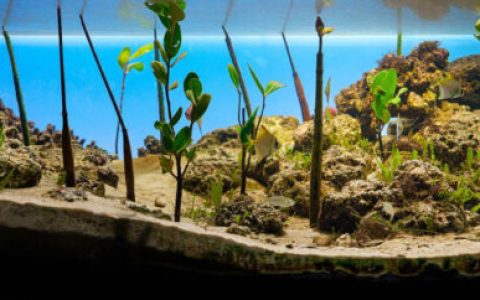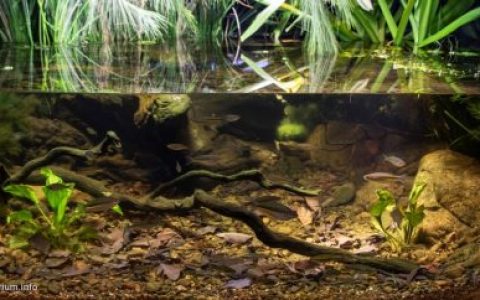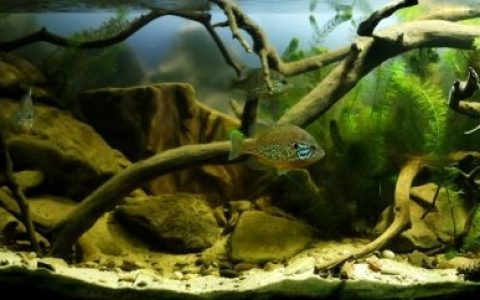
Volume: 487 L 容积:487 升
Dimensions: 150x50x65 cm 尺寸:150×50×65 厘米
List of fishes: Neolamprologus brichardi and Cyphotilapia frontosa
鱼类名录:贝氏新亮丽鲷(Neolamprologus brichardi)和额斑六间鱼(Cyphotilapia frontosa)
List of plants: – 植物列表:–
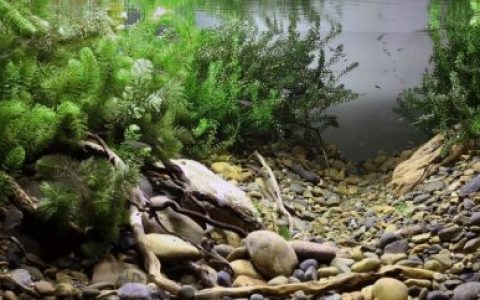
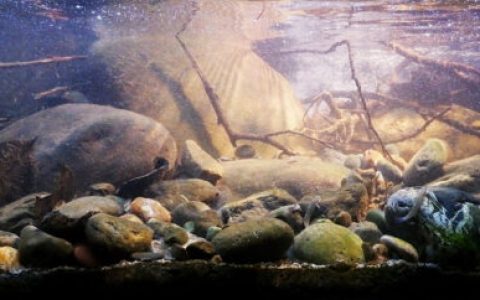
Description of decorations: 1-30 kg of nautral argonit sand (taken from sea floor)
装饰描述:1–30 千克天然文石砂(采自海底)
2-150 kg of rocks in variable sizes
2-150 公斤大小不一的岩石
3- Turquaz Background 3-绿松石色背景
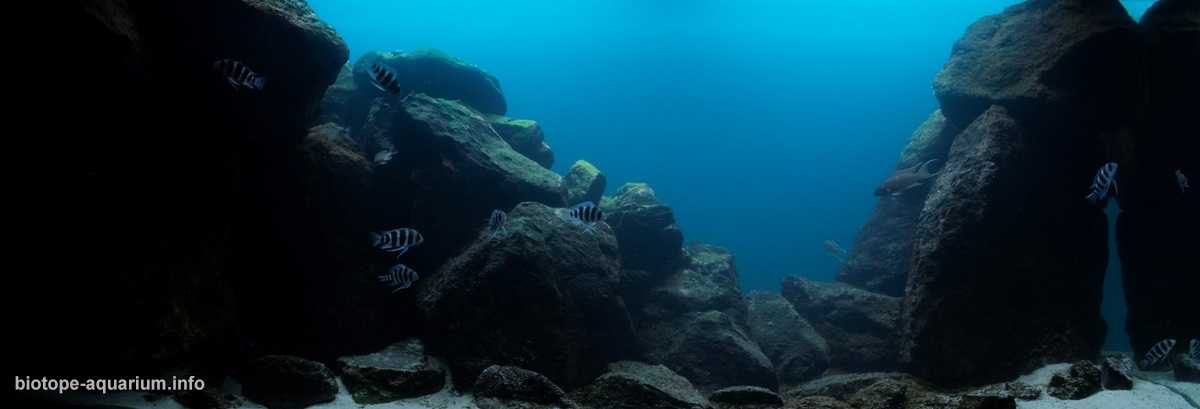
Description of equipment: 1-Ligthining: 4x led fluorescent (24 watt,120 cm,6500 K, Dayligth),
设备描述:1-照明:4 支荧光型(实为荧光灯管式)LED 灯(24 瓦,120 厘米,6500 K,日光色),
2-Filtering: Sump system 3000 L/H,
2-过滤:底滤系统,流量 3000 升/小时,
3-Heating: 300 watt heater.
3-加热:300 瓦加热棒。
Water parameters: Ph: 8,2-8,4, Temp: 24,3°C, Electirical Conductivity:680 μS, GH:14, KH:11 in addition Nitrate: 5- 15 ppm and Nitrite: 0 ppm
水质参数:pH 值 8.2–8.4,温度 24.3°C,电导率 680 μS,总硬度(GH)14,碳酸盐硬度(KH)11;此外,硝酸盐浓度为 5–15 ppm,亚硝酸盐浓度为 0 ppm。
Additional info: Weekly %20 water change and maintanence. During weekly maintanence sump pump, pipes, heater and glasses are cleaned. In every six mouths sump materail is cleaned.
补充说明:每周更换 20% 的水量并进行维护。在每周维护期间,会清洗底滤泵、管道、加热棒及玻璃缸壁。每六个月清理一次底滤材料。
PS: Cyphotilapia frontosas added in small size to make them to learn get along with Neolamprologus brichardis and not to see them as preys.Till now no serious agression is seen from Cyphotilapia Frontosas. But unfortunately that doesn’t mean there won’t be because Cyphotilapia frontosas are one of the calmest predators of lake Tanganyika.
附注:引入小型个体的慈鲷(Cyphotilapia frontosas),使其学会与布氏新亮丽鲷(Neolamprologus brichardis)和睦共处,而不将其视为猎物。截至目前,尚未观察到慈鲷(Cyphotilapia frontosas)出现严重攻击行为。但遗憾的是,这并不意味着未来不会发生,因为慈鲷(Cyphotilapia frontosas)是坦噶尼喀湖中最温顺的掠食者之一。
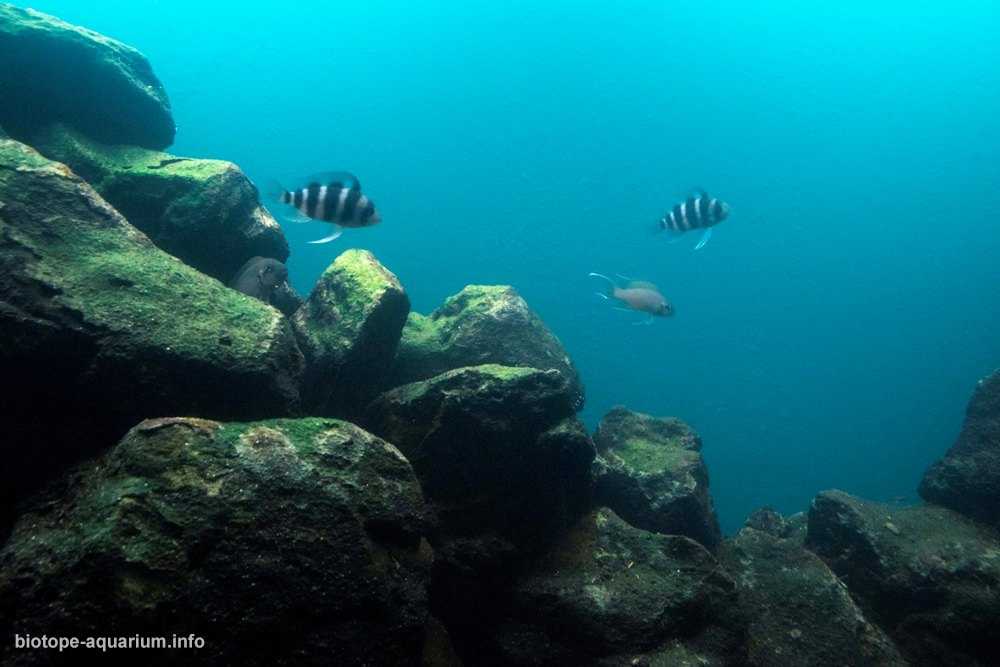
INFORMATION ABOUT BIOTOPE
关于生物群落的信息
Description of the area surrounding the biotope: Lake Tanganyika is second largest lake of eastern Africa. It is the longest freshwater lake in the world with it’s 660 km length and the second deepest with it’s 1,436 meters depth after Lake Baikal in Russia. Comparatively narrow, varying in width from 16 to 72 km, it covers about 32,900 square km.(1) Lake tanganyika is formed 12 million years ago by techtonic movements and it’s very different from modern lakes formed by glaciers.(2) Lake is having two seasons which are wet season and dry season. In wet season lakes climate is with high humidity, much precipitation, unconsiderable winds, many thunderstorms and in dry season with strong, southerly winds and little precipitation. These seasonal changes are caused because of large-scale atmospheric processes.(4) These very different two seasons have some effects on underwater life by changing temperature, depth and water chemistry. Lake’s main way to renew it’s water is evaporaiton(8) but the lake never suffer rapid change in depth thanks to it’s large basin and three major feeding rivers.(5) Lake’s mostly steep sides help to maintain surface area against changing water levels.(8) The Malagarasi River, the Ruzizi River, and the Kalambo River are main inflows to lake. Along way to lake rivers pass many small or big falls espacially the Kalambo River so this makes water so oxygen rich. The Lukuga River is only outflow of lake. (4,*) Lake is having effects of surroudning area habitants severly because there are about one million people who are depended on lake for protein, drinking water and transportation.(2) Surrounding area of lake is not very suitable for husbandry as a result of this fish from lake are main protein source for surrounding residents. Shore parts of lake contains some large forests and has stoney/rocky beaches or no beaches just steep cliffs. Residental occupations around lake is in a spectacular scale compared to inner parts.(6) My biotope is from Kungwe Point which has mostly no beaches just bushy or rocky steep cliffs, behind shores land rises and a thick forest starts named as Kungwe Bay Forest Reserve. (7) Forest reserve is suitable for land fauna and flora to thrieve.(*)
生物群落周边区域描述:坦噶尼喀湖是东非第二大湖泊。它是世界上最长的淡水湖,全长 660 公里;深度仅次于俄罗斯的贝加尔湖,达 1,436 米,为世界第二深湖。该湖相对狭窄,宽度在 16 至 72 公里之间变化,总面积约 32,900 平方公里。(1) 坦噶尼喀湖形成于 1200 万年前的构造运动,与冰川形成的现代湖泊截然不同。(2) 该湖具有两个季节:雨季和旱季。雨季时,湖区气候表现为高湿度、降水充沛、风力微弱且雷暴频繁;旱季则盛行强劲的南风,降水稀少。这些季节性变化由大规模大气过程引起。(4) 这两个差异显著的季节通过改变水温、水深及水体化学性质,对水下生命产生一定影响。湖泊更新水体的主要方式是蒸发 (8),但得益于其广阔的湖盆以及三条主要补给河流,湖水深度从未发生急剧变化。(5) 湖泊大多陡峭的湖岸有助于在水位变动时维持其表面积。(8) 马拉加拉西河、鲁济济河和卡兰博河是注入该湖的主要河流。这些河流在流入湖泊的途中会经过许多大小不一的瀑布,尤其是卡兰博河,这使得湖水富含氧气。卢库加河是该湖唯一的出水口。(4,*) 由于约有百万人口依赖该湖获取蛋白质、饮用水和交通运输,湖泊对周边居民产生了严重影响。(2) 湖泊周边地区不太适合发展畜牧业,因此湖鱼成为周边居民主要的蛋白质来源。湖岸部分区域分布着一些大型森林,拥有多石/岩石海滩,或根本没有海滩,只有陡峭的悬崖。与内陆地区相比,环湖地区的居住规模极为壮观。(6) 我的生物群落取自孔格韦角,这里大多没有海滩,只有灌木丛生或岩石嶙峋的陡峭悬崖;沿岸向后陆地逐渐升高,起始片名为“孔格韦湾森林保护区”的茂密森林。(7) 该森林保护区适宜陆生动植物繁衍生息。(*)
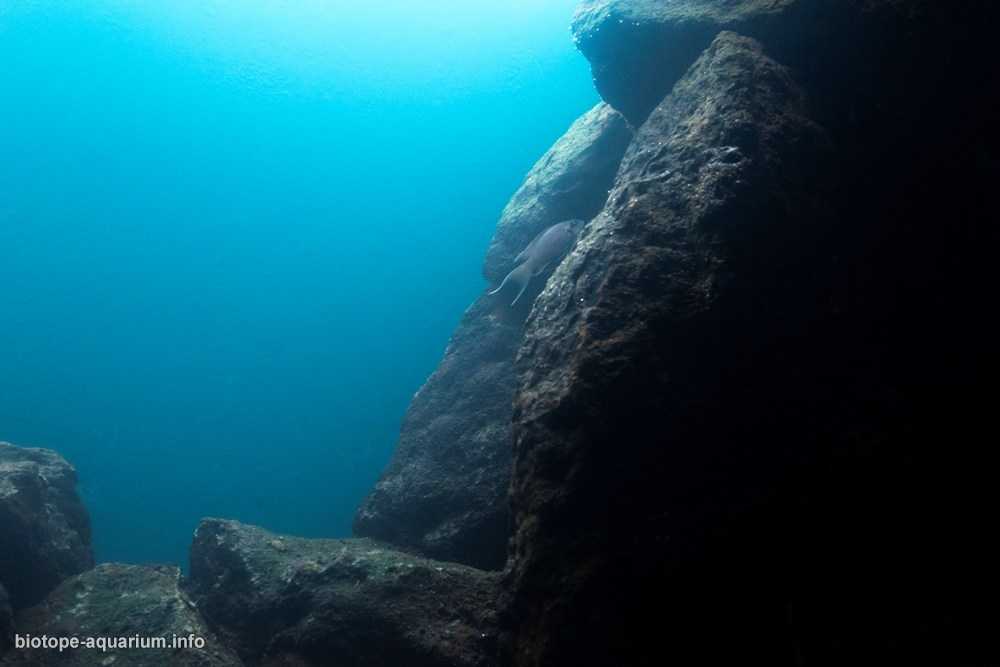
Description of the underwater landscape of the biotope: Lake Tangayika has three major biotopes, the pleagic, the deep water and littoral.(8) Lake Tanganyika is valuable for both, the presence of unique, endemic species and microcosm so value of lake to Global Biodiversity can’t be measured.(2) But all depths of Tanganyika are not inhabitable due to oxgen deplation. In northern basin till 100 meters and in southern basin till 200 meters oxygen can be found. Being thermocycline and oxycline shapes lake’s species’ regions. Lake Tanganyika formed by rifting so underwater structers of lake tanganyika are extensions of surrouding lands mostly steep rocky bottoms then changing into muddy or sandy bottoms.(8,10) These kind of bottom structures in lake promotes lots of species inhabit which are in needs of feeding, sheltering and spawning or in other words species evolved according to what is abundant and necesarry in habitat according to adaptive radiation.(*) My biotope is benthic (deep water) parts of Kungwe point (5°37’43.2″S 29°52’11.7″E) and depth is 15 meters with huge, steep sediment covered rocky structures.(15) Rock’s sizes are between 30 cm to 3 meters When going deeper rocks leaves it’s place to fine sand in combination with more coarse sand.(7,9,15,*,18) Due to being warm during all seasons in these depths water is always less oxygented and less ligthened then upper parts. Species living in these depths spread to area till mostly to 60 meters where oxygen level drops to %10 and H2S is more abundant.(8,10) Because of low sunligth and less water movement rocks are mostly covered with sediment instead of algea.(9) Lack of seasonal changes in benthic habitats lets microbial communities and other organisms to exist all the time so this stituation helps stromatilites always grow then triger life cycle in depths and pelagic waters.(11) Benthic habitats get nutriens from it’s bottom and pleagic waters and thanks to high ability of seeing in dark Benthic species hunt and get feed easliy. Main nutrients in habitat are invertebrates, decays and visitors coming down from pleagic waters in purpose of breeding or dying. Water is less blurry in compare with littoral parts.(*,12)
生物群落水下景观描述:坦噶尼喀湖拥有三大主要生物群落,即远洋区、深水区和沿岸区。(8) 坦噶尼喀湖的价值不仅在于其拥有独特的特有物种,更在于它是一个完整的微观生态系统,因此其对全球生物多样性的贡献无法估量。(2) 然而,由于缺氧,坦噶尼喀湖并非所有深度都适宜生物生存。在北部流域,氧气可延伸至 100 米深处;而在南部流域,则可达 200 米。温跃层和氧跃层的分布塑造了该湖物种的区域格局。坦噶尼喀湖由裂谷作用形成,因此其水下结构多为周边陆地的延伸,通常表现为陡峭的岩石底部,随后逐渐过渡为淤泥或沙质底部。(8,10) 此类湖底结构促进了众多物种的栖息,这些物种依赖此处获取食物、庇护所及产卵场所;换言之,根据适应性辐射原理,物种已演化出与其栖息地中丰富且必需资源相适应的特征。(*) 我的生物群落位于孔格韦角(南纬 5°37′43.2″,东经 29°52′11.7″)的底栖(深水)区域,水深 15 米,分布着巨大、陡峭且覆盖沉积物的岩石结构。(15) 岩石尺寸介于 30 厘米至 3 米之间。随着水深增加,岩石逐渐被细沙与较粗沙粒的混合物所取代。(7,9,15,*,18) 由于这些深度的水体全年保持温暖,其溶氧量和光照强度始终低于上层水域。栖息于该深度的物种分布范围通常延伸至约 60 米处,此处氧气含量降至 10%,且硫化氢(H2S)更为丰富。(8,10) 因光照不足且水流较弱,岩石表面多被沉积物覆盖,而非藻类。(9) 底栖生境缺乏季节性变化,使得微生物群落及其他生物得以常年存续;这一状况促使叠层石持续生长,进而触发深水及上层水体的生命循环。(11) 底栖生境从底部及上层水体获取营养;凭借在黑暗环境中卓越的视觉能力,底栖物种能够轻松捕食并获取食物。该生境的主要营养来源包括无脊椎动物、有机碎屑,以及为繁殖或死亡而从上层水体下潜至此的生物。与沿岸区域相比,此处水体浑浊度较低。(*,12)
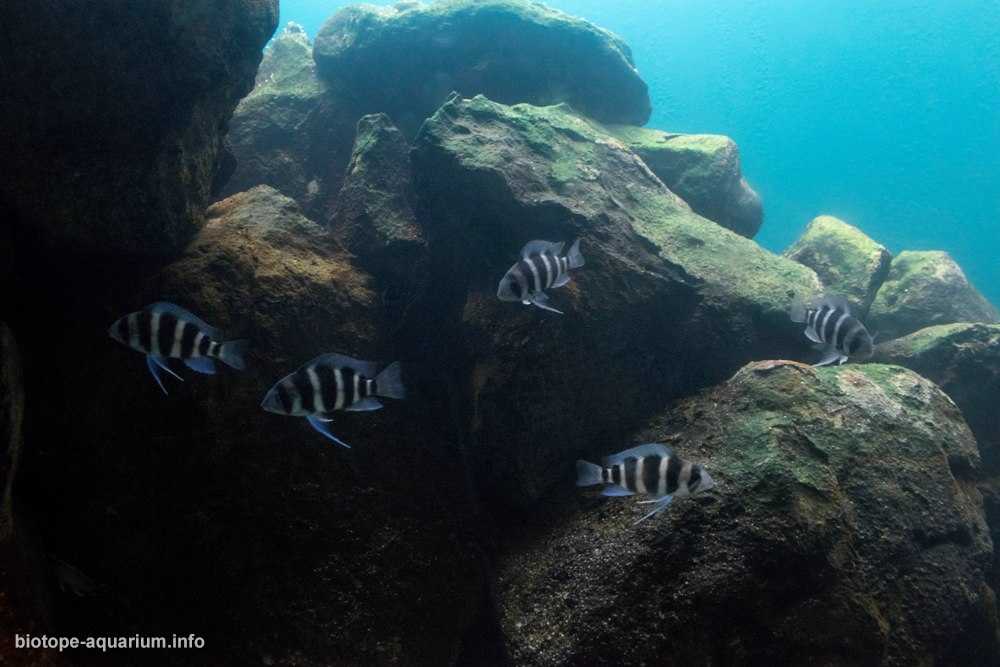
Description of the parameters of the habitat: Lake Tanganyika has uniform water chemstry for it’s all length and depth except for the nutrient minerals, ammonia, nitrate, phosphate, and silica. Saturation and temperature of water changes accoding to depth and at 70 meters strong thermocline are observed. (13) Thanks to depthness in my biotope water temperature stable irrespectively with seasons and it is around 24 °C. This triggers debate about if lake bottom touches earthcore. Due to low temperature in compare with upper parts PH is lower and chemicals in water are less deluted.(1,*) About saturaion Lake Tanganyika has same characteristic with black sea after 150-200 meters depths it s water turns to be anoxic and not uninhabitable for most of species. (13)
栖息地参数描述:坦噶尼喀湖的水体化学性质在其全长和全深范围内基本一致,唯独营养矿物质、氨、硝酸盐、磷酸盐和二氧化硅存在差异。水的饱和度和温度随深度变化,在 70 米处可观察到明显的温跃层。(13) 得益于我生物缸所模拟的深度环境,水温不受季节影响而保持稳定,约为 24 °C。这一现象引发了关于湖底是否触及地核的争论。由于与上层水域相比温度较低,该区域的 pH 值偏低,水中化学物质浓度也更高(稀释程度更低)。(1,*) 关于饱和度,坦噶尼喀湖与黑海具有相似特征:在水深超过 150–200 米后,水体转为缺氧状态,对大多数物种而言已不适宜生存。(13)
Tempeture: Changing according to seasons (wet season/dry season) between 24-28°C, but at depths greater then 400 meters is more stable between 23,1-23,4°C, (1)
温度:随季节(雨季/旱季)变化于 24–28 °C 之间,但在水深超过 400 米处则更为稳定,介于 23.1–23.4 °C 之间。(1)
Ph: Around 9 at depths of 0-100 meters, 8,7 below this and 8,3 at deepest parts, (1)
pH 值:在 0–100 米水深范围内约为 9,此深度以下降至 8.7,而在最深处则为 8.3。(1)
Electirical Conductivity: Upper parts 670 and deepest parts 690, (1)
电导率:上层水域为 670,最深处为 690。(1)
Other Parameters: GH 12-20, and the KH 10-15. (*)
其他参数:GH 12-20,KH 10-15。(*)
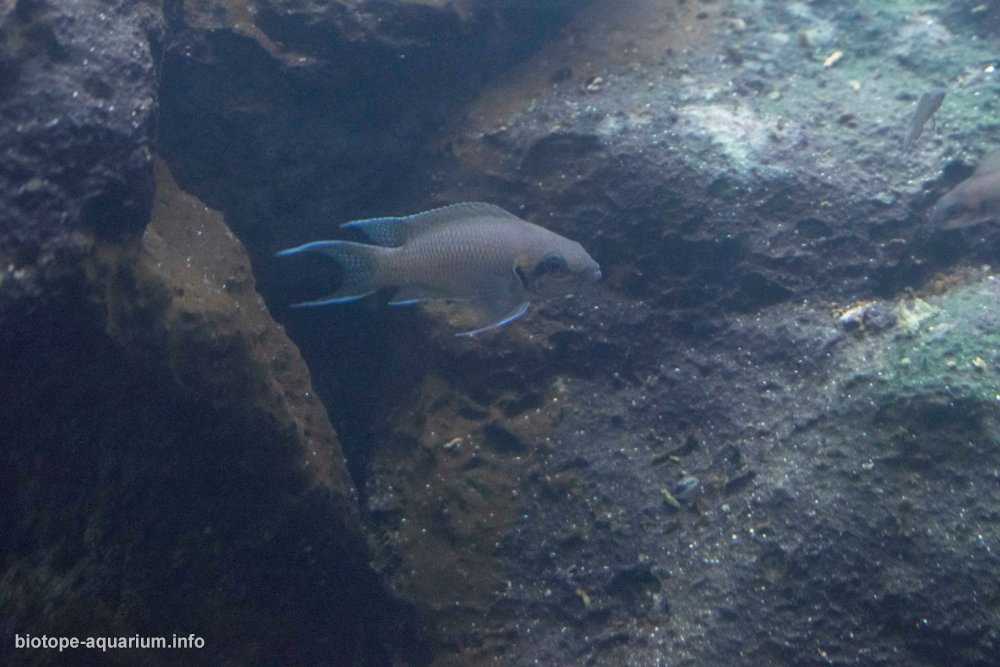
List of fishes and invertebrates occurring in the nature biotope: If we accept region as Halembe;
自然生境中出现的鱼类和无脊椎动物名录:若将区域认定为哈莱姆贝(Halembe);
Altolamprologus compressiceps, Chalinochromis brichardi, Cyathopharynx foae , Cyphotilapia frontosa, exLamprologus brevis, exLamprologus callipterus, exLamprologus lemairii ,exLamprologus similis, Julidochromis marlieri, Neolamprologus leleupi longior, Neolamprologus pulcher, Ophthalmotilapia nasuta, Ophthalmotilapia ventralis, Petrochromis ephippium, Petrochromis sp. ‘kasumbe’, Tanganicodus irsacae, Tropheus duboisi, Tropheus sp. ‘viridescens’ , Xenotilapia spilopterus Neolamprologus Brichardi , various invertabres(14)
Altolamprologus compressiceps、Chalinochromis brichardi、Cyathopharynx foae、Cyphotilapia frontosa、原属 Lamprologus brevis、原属 Lamprologus callipterus、原属 Lamprologus lemairii、原属 Lamprologus similis、Julidochromis marlieri、Neolamprologus leleupi longior、Neolamprologus pulcher、Ophthalmotilapia nasuta、Ophthalmotilapia ventralis、Petrochromis ephippium、Petrochromis sp. ‘kasumbe’、Tanganicodus irsacae、Tropheus duboisi、Tropheus sp. ‘viridescens’、Xenotilapia spilopterus、Neolamprologus Brichardi,以及各种无脊椎动物 (14)
List of plants found in the nature biotope: N/A
自然生境中发现的植物名录:无
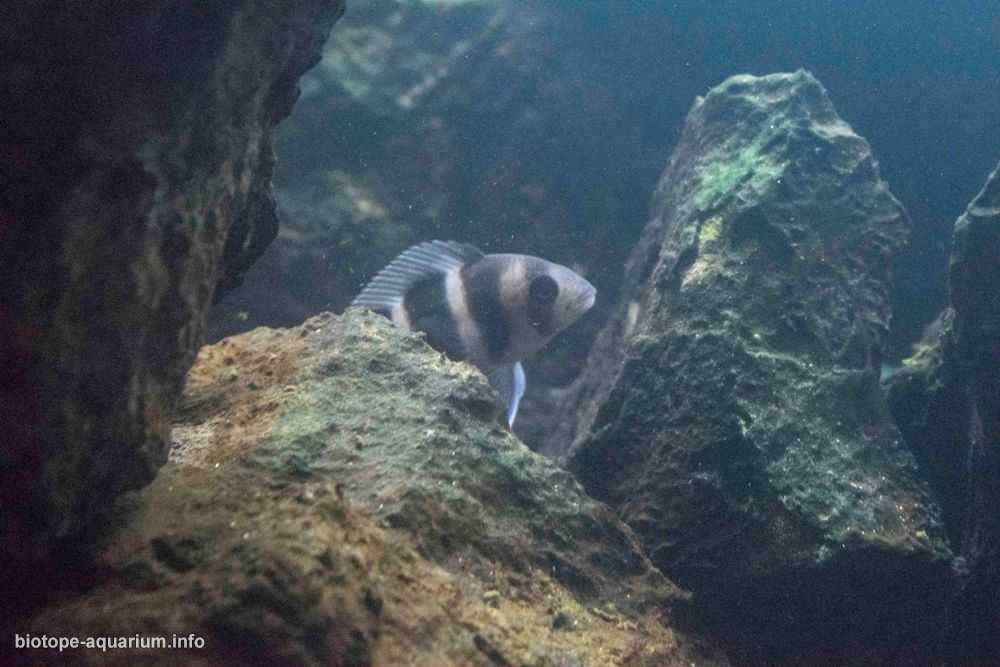
Threats to the ecology: Lake Tanganyika is under threat like lots of other habitats of world. I want to inform you about sedimentation danger in Tanganyika. Because my biotope is a heavliy sedimented area. Sedimentation pollutes water, prevents natural vegetation from growing and kills fish. Sedimentation is a consequence of defrostration of surrounding area. Defrostation is mostly done by human like everything bad to nature. In defrostated areas eroded sediments are carried in to lake and pollute narrow shore line where species are living, this stituation is like a death trap to species because they can’t move down to depths, there is no oxygen and they can’t move up, they are already close to shore so only thing to do for them just to be extinct. As a result some regions lost it’s diversty more then 150 years ago. Solution to prevent danger of sedimentation is frostration of lands around lake espacially hill type shores. (16,17)
生态面临的威胁:坦噶尼喀湖与全球许多其他栖息地一样正面临威胁。我想向大家说明坦噶尼喀湖所面临的沉积物危害,因为我的生物群落区域正是严重沉积区。沉积物会污染水质、阻碍天然植被生长并导致鱼类死亡。沉积现象是周边地区森林砍伐的后果,而如同所有对自然有害的行为一样,森林砍伐主要由人类造成。在被砍伐的区域,侵蚀产生的沉积物被带入湖中,污染物种栖息的狭窄沿岸带;这种状况对物种而言犹如死亡陷阱——它们无法向深水区迁移(那里缺乏氧气),也无法向上游移动(因已紧邻岸边),唯一结局便是灭绝。因此,某些区域的生物多样性早在 150 多年前就已丧失。防止沉积危害的解决方案是在湖泊周边土地(尤其是丘陵型岸线)重新造林。(16,17)
本文部分素材来自网络,如有类似请联系修改,如若转载,请注明出处:http://www.yangyubang.com/?p=3447