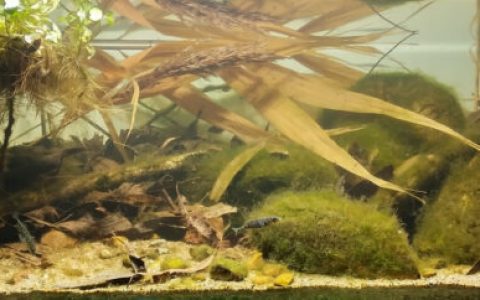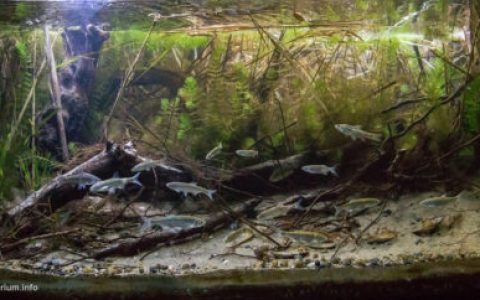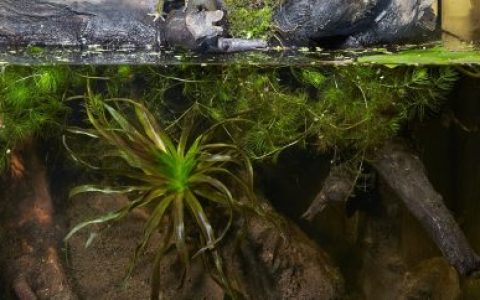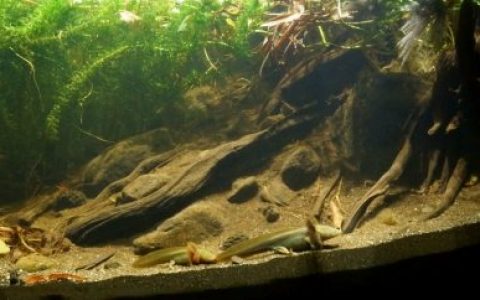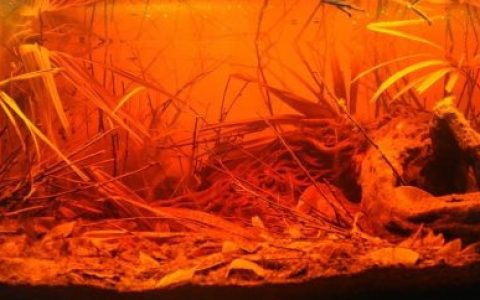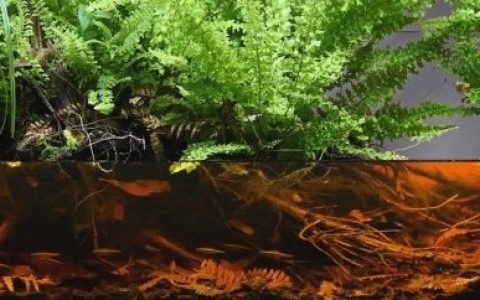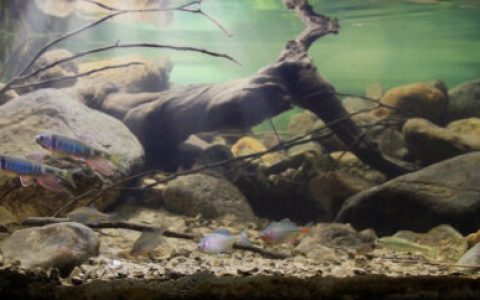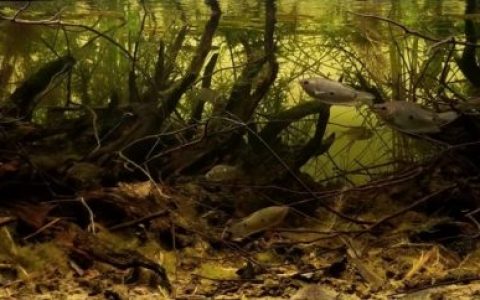
Volume of aquarium: 156 L
水族箱容积:156 升
Dimensions of aquarium: 100*39*40 cm
鱼缸尺寸:100*39*40 厘米
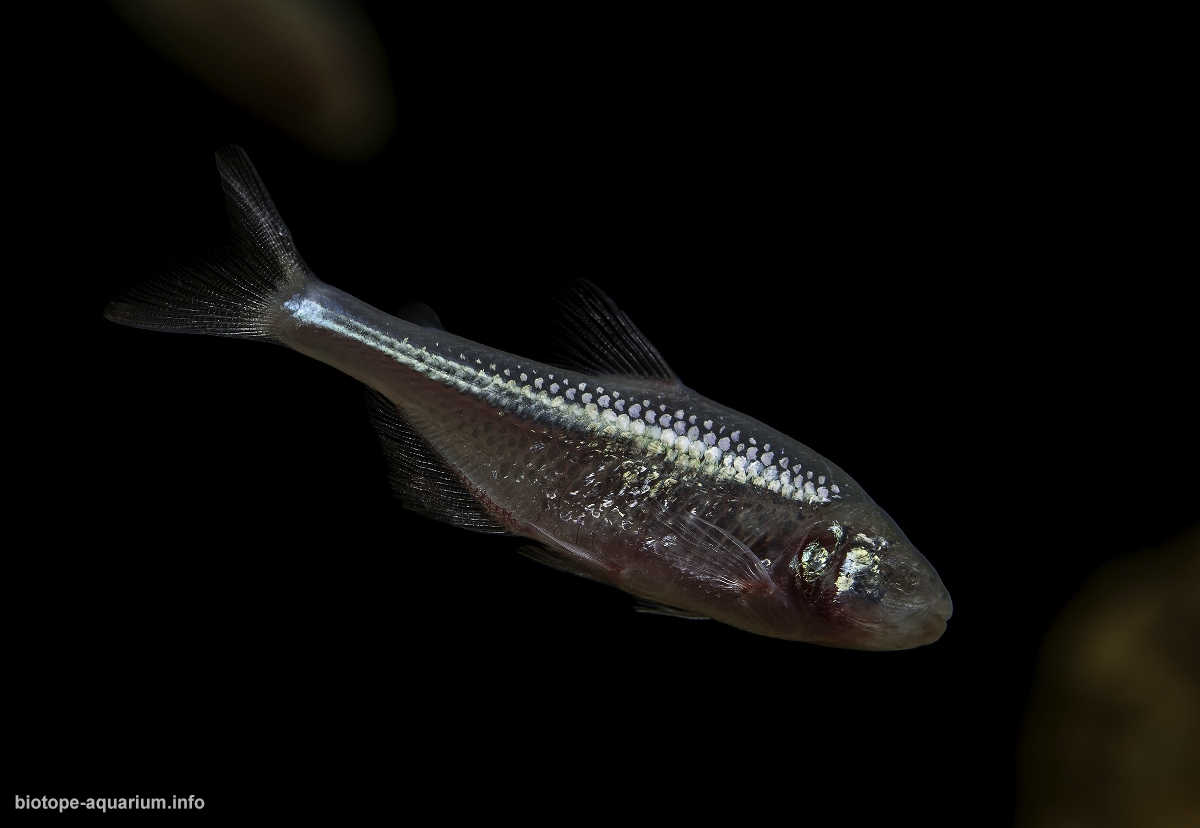
List of fishes: Astyanax mexicanus
鱼类名录:Astyanax mexicanus
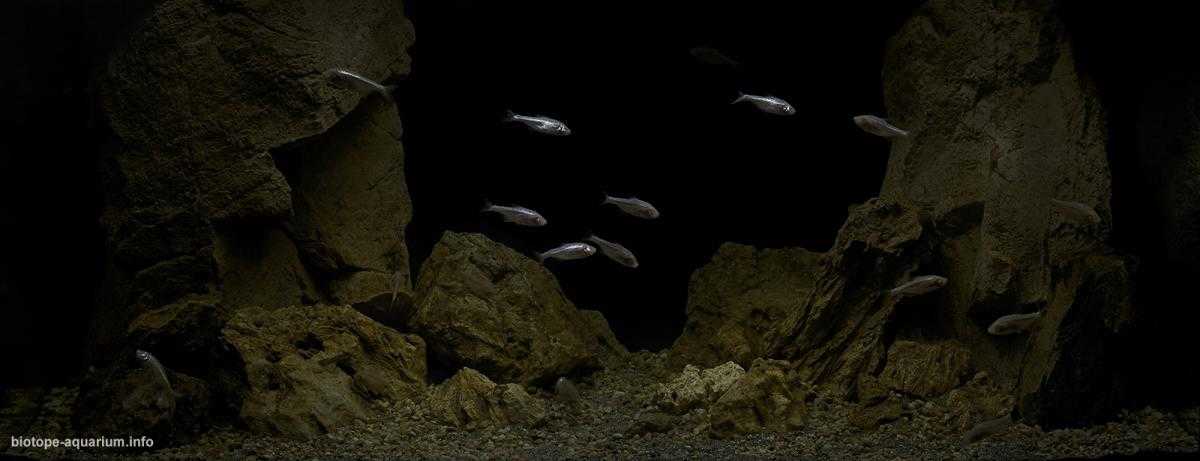
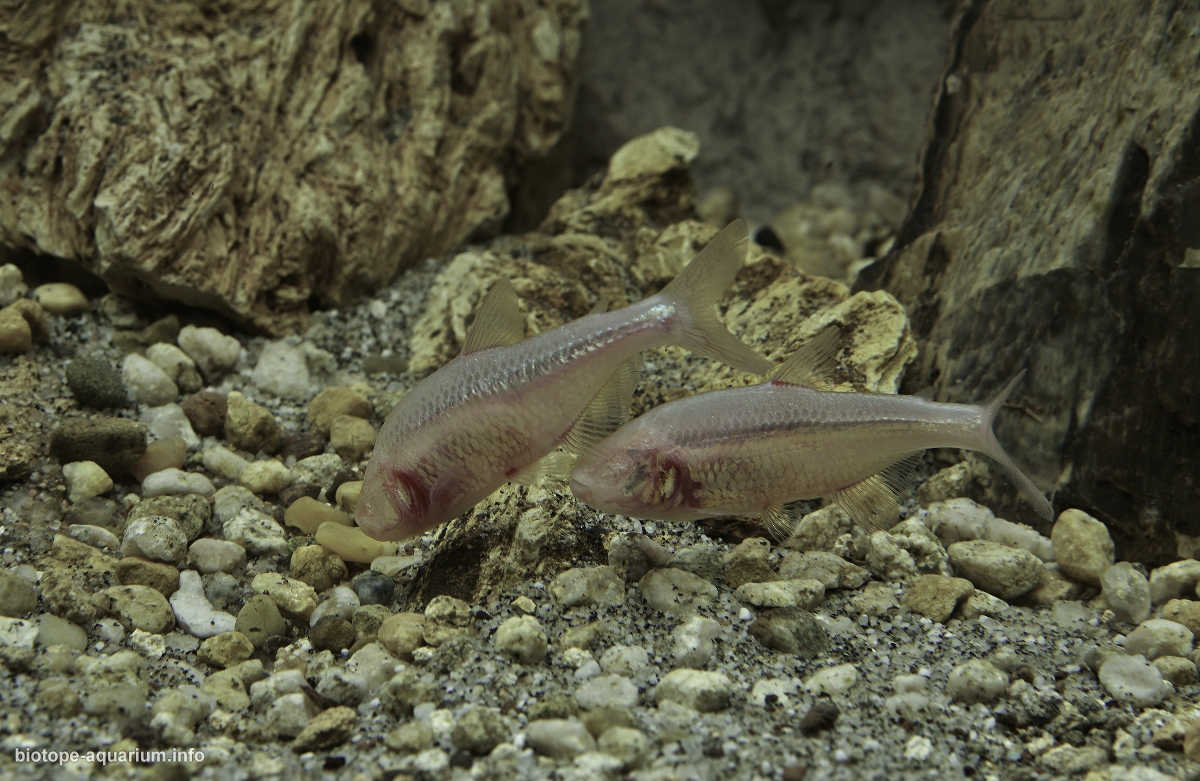
Description of Decorations and Substrate: Natural large and small chipped stones, similar in shape and color to the stony rock of the cave; natural light sand, similar to the soil at the bottom of the cave.
装饰与底床描述:天然的大块与小块碎石,其形状和颜色模拟洞穴中的岩石;天然浅色沙,模拟洞穴底部的土壤。
Description of Equipment: JBL CristalProfi greenline e901 external filter, LEDDY SMART LED II SUNNY 6 W, AQUAEL PLATINIUM HEATER 200 W, OXYBOOST 200 plus two-channel compressor.
设备描述:JBL CristalProfi greenline e901 外置过滤器、LEDDY SMART LED II SUNNY 6 W 灯具、AQUAEL PLATINIUM HEATER 200 W 加热棒、OXYBOOST 200 plus 双通道气泵。
Water Parameters: pH 7,2, dH 16°; t 24°C
水质参数:pH 7.2,dH 16°;温度 24°C
Additional Info:Regular water changes (30% every 3 weeks), fish are fed every other day with live, frozen or dry food.
补充信息:定期换水(每 3 周更换 30%),每隔一天投喂一次活饵、冷冻饲料或干饲料。
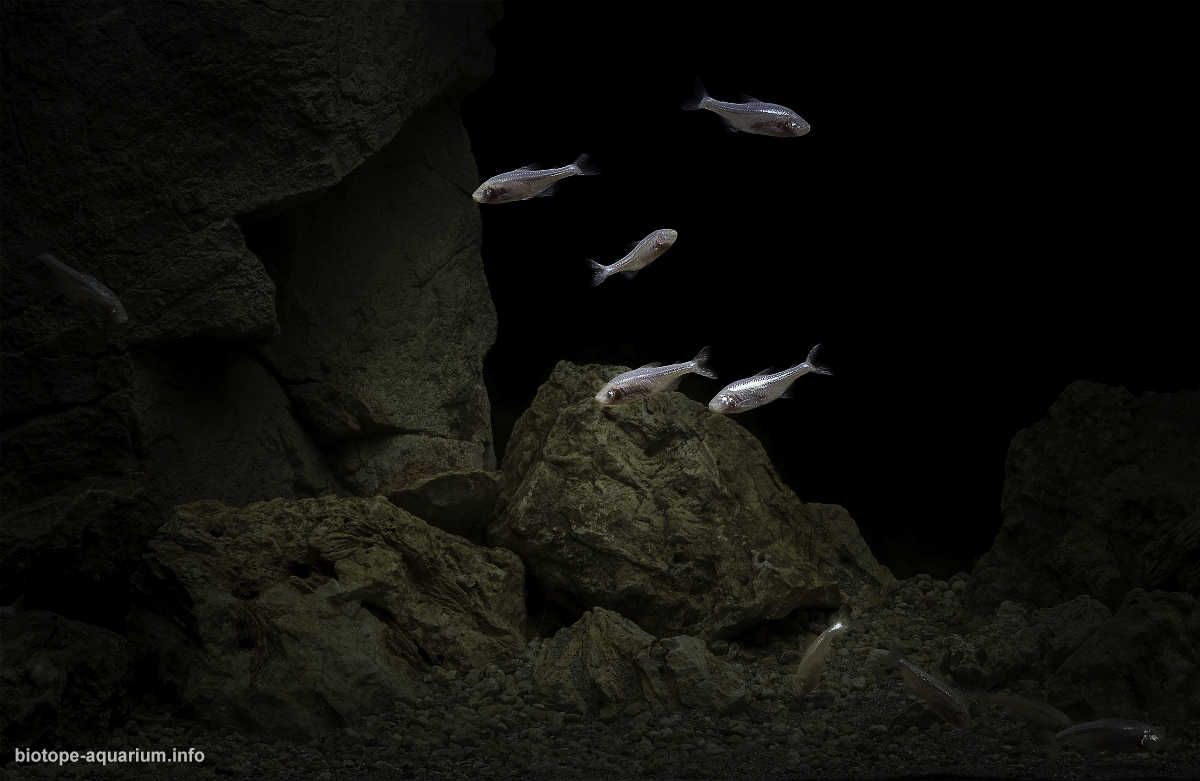
Description of the Area Surrounding the Biotope: The Sierra del Abra Tanchipa biosphere Reserve is a protected natural area in northeastern Mexico. It is located in the Huasteca Potocina region of the state of San Luis Potosí, in the eastern foothills of the Eastern Sierra Madre.
生物栖息地周边环境描述:阿布拉 – 坦奇帕山脉生物圈保护区是墨西哥东北部的一处受保护自然区域,位于圣路易斯波托西州的瓦斯特卡波托西纳地区,地处东马德雷山脉的东坡山麓。
The reserve protects an area of 167.58 km2 in the Sierra del Abra Tanchipa. The Sierra stretches from north to south, the easternmost of the eastern ranges of the Sierra Madre. The coastal plain lies to the east, between Sierra Leone and the Gulf of Mexico. Altitudes in the reserve range from 300 to 850 meters. The Sierra is a steep slope in the east facing the coastal plain and gradually descends to the west. The Sierra is composed primarily of sedimentary limestone, a porous rock that facilitates the infiltration of rainwater into groundwater basins and underground drainage. The Sierra is drained by tributaries of the Rio Verde, which is part of the Panuco river system. The state of San Luis Potosi is located in the northern part of the center of the country, in the central part of the Mexican Highlands, with the exception of the southeastern part of the state – it lies on the plateau of the Panuco River.
该保护区位于阿布拉 – 坦奇帕山脉(Sierra del Abra Tanchipa),保护面积达 167.58 平方公里。该山脉呈南北走向,是东马德雷山脉(Sierra Madre)最东侧的支脉。其东侧为沿海平原,介于塞拉利昂与墨西哥湾之间(注:此处原文”Sierra Leone”疑为笔误,地理上应指当地山系)。保护区内海拔介于 300 至 850 米之间。山脉东坡陡峭,面向沿海平原,向西则逐渐平缓下降。该山脉主要由沉积石灰岩构成,这种多孔岩石有利于雨水渗入地下水盆地并形成地下排水系统。山脉的水系由韦尔德河(Rio Verde)的支流排泄,该河属于帕努科河(Panuco)水系的一部分。圣路易斯波托西州位于该国中部偏北地区,地处墨西哥高原中心地带,但该州东南部除外,其位于帕努科河高原之上。
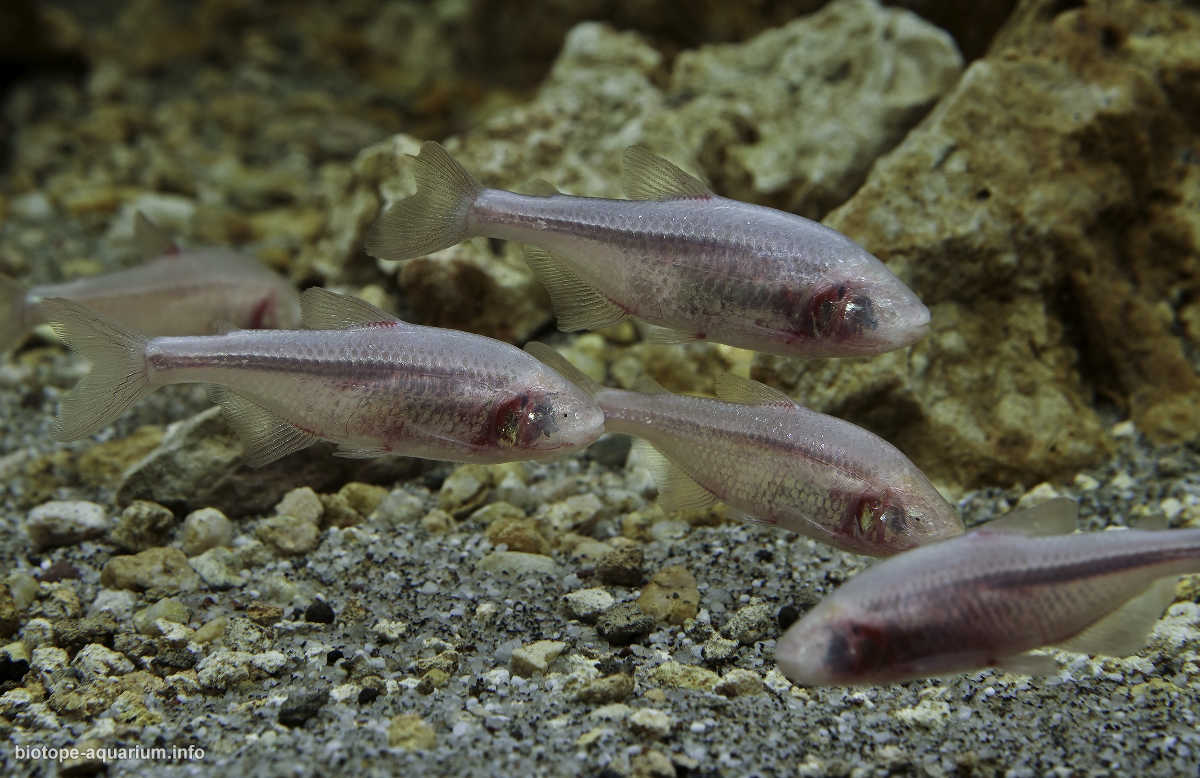
Description of the Underwater Landscape of the Biotope:The bottom of the cave is partly sandy, partly rocky, and sometimes muddy. In the underwater landscape there are large stones and small chipped ones. The sand is light, the water is clear, there are no aquatic plants.
生物栖息地水下景观描述:洞穴底部部分为沙质,部分为岩质,有时也覆盖着淤泥。水下景观中分布着大块岩石和细小的碎石。沙色浅淡,水质清澈,无水生植物生长。
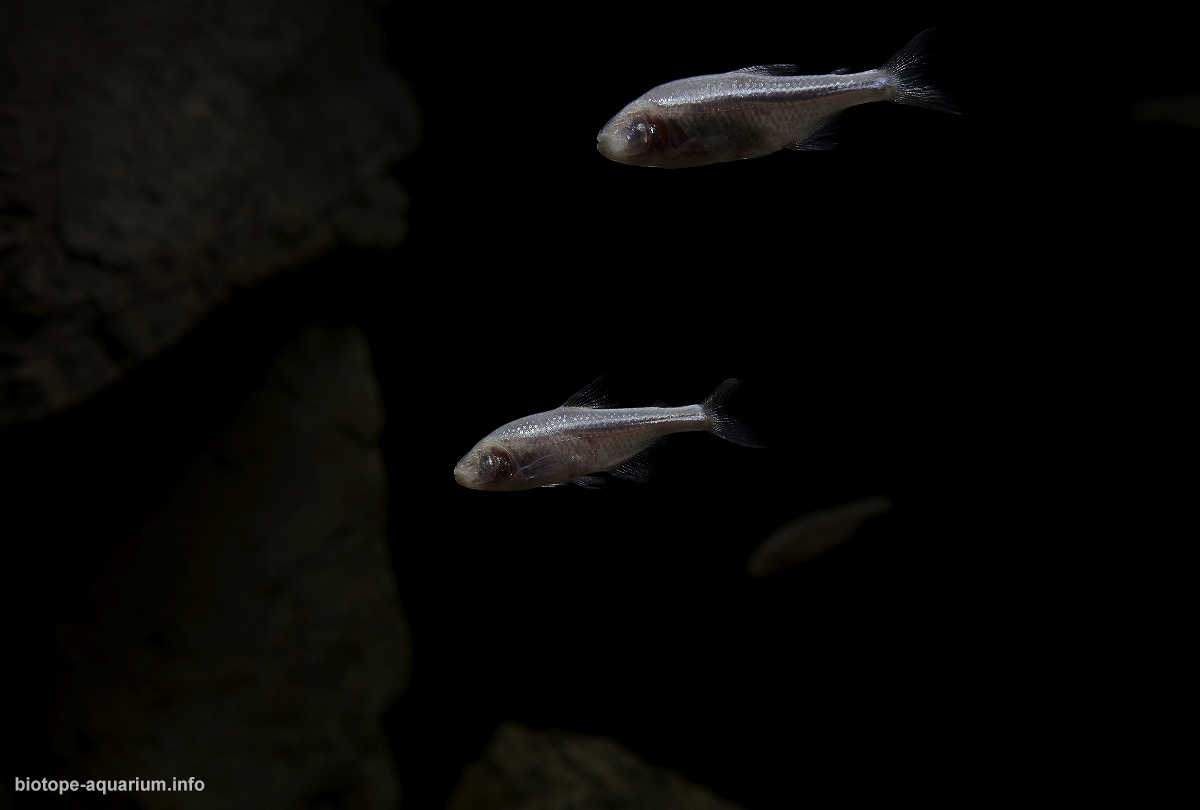
Description of the Habitat Parameters: The blind cave tetra inhabits Eastern Mexico. It lives only in those places where it finds many shelters – underground reservoirs, flooded caves and grottoes.
栖息地参数描述:盲眼洞穴脂鲤分布于墨西哥东部。它们仅生活在拥有大量遮蔽物的区域,如地下水库、被淹没的洞穴和岩洞中。Most of the state of San Luis Potosí is dominated by arid and semi-arid conditions. Average temperatures fluctuate around +18 °C. In May the temperature can reach +30 °C, and in January +3 °C. The average rainfall is about 800 mm/year.
圣路易斯波托西州大部分地区以干旱和半干旱气候为主。平均气温在 +18°C 左右波动。5 月气温可达 +30°C,而 1 月可降至 +3°C。年平均降水量约为 800 毫米。
The climate in the Sierra del Abra Tanchipa Reserve is tropical, including warm humid and warm sub-arid Köppen climates. The average annual temperature is 24° C. The average annual rainfall in the reserve ranges from 1200 mm to 1500 mm and is highest during the summer months.
阿布拉坦奇帕山脉保护区的气候属热带类型,包括温暖湿润型和温暖半干旱型(柯本气候分类)。年平均气温为 24°C。保护区内年降水量介于 1200 毫米至 1500 毫米之间,夏季达到峰值。
The reserve is in the Veracruz wet forest ecoregion, which stretches across the coastal bay plain and foothills of southern Tamaulipas, eastern San Luis Potosi, and the northern states of Veracruz. The reserve is located in the transition zone between the tropical and temperate biogeographic regions of North and South America and is home to animals and plants characteristic of both areas and some specific to the transition zone.
该保护区位于韦拉克鲁斯湿润森林生态区,这一生态区横跨塔毛利帕斯州南部沿海平原及山麓、圣路易斯波托西州东部以及韦拉克鲁斯州北部各州。保护区地处北美与南美热带和温带生物地理区的过渡地带,栖息着兼具两地特征的动植物,以及一些仅见于该过渡带的特有物种。
Water parameters in the cave: T 18-24, pH 7.0-8.0; dH 16-25°.
洞穴内的水质参数:温度 18-24℃,pH 7.0-8.0;硬度 16-25°dH。
List of Fishes and Invertebrates Occurring in the Nature Biotope: Astyanax mexicanus
该自然生物群落中出现的鱼类和无脊椎动物名录:墨西哥盲鱼(Astyanax mexicanus)
Threats to the Ecology of the Biotope: There is no threat to the environment yet, because the biotope is located in the Sierra del Abra Tanchipa reserve, but the threat may come from human activities (destruction of caves, water poisoning).
该生物群落的生态威胁:目前该环境尚未受到威胁,因为其位于 Sierra del Abra Tanchipa 保护区内,但人类活动(如洞穴破坏、水体污染)可能构成潜在威胁。
Astyanax mexicanus is an important evolutionary model for the study of biological processes, including the circadian rhythm, as its ancestral form lives on the surface of the water and coexists with isolated forms that inhabit caves. Thus, it allows a physiological and molecular comparison of the two forms of this fish species. The blind tetra has completely non-existent day/night cycles, hence lacking the locomotor rhythms normally induced by the circadian clock. This indicates dysfunction or a decrease in their behavioral rhythm. The lack of light causes several difficulties, whether visually, spatially, or even in reproduction. In addition, animals living in aperiodic environments, such as Astyanax mexicanus, do not have a selective advantage for a functioning circadian clock. The connection between an organism and its environment is important only if the ecological cycles are constant and regular. Thus, their lifestyle leads to a phenotype with degenerative characteristics such as eye loss and pigmentation. On the other hand, other traits are better developed, such as heightened sense of smell and mechanical sensitivity. Until now, two evolutionary processes determine the phenotype of fish: firstly, natural selection, which says that losses at the phenotype level are beneficial for the animal, and secondly, genetic drift, which leads to a regression of the trait due to the accumulation of resulting mutations. Finally, over time it was found that the fish were slightly more active during the day. Thus, the hypothesis arises that the molecular circadian rhythm of the blind tetra works differently and is independent of motor activity, as well as other outputs such as metabolism. Therefore, it is important to preserve this species.
墨西哥盲鱼(Astyanax mexicanus)是研究生物过程(包括昼夜节律)的重要进化模型,因为其祖先类型生活于水体表面,并与栖息于洞穴中的隔离种群共存。因此,该物种允许对这两种形态进行生理学和分子层面的比较。盲鱼完全缺乏昼夜周期,因而缺失通常由生物钟诱导的运动节律,这表明其行为节律存在功能障碍或减弱。光照的缺失导致了多方面的困难,涉及视觉、空间定位甚至繁殖等方面。此外,生活在非周期性环境中的动物(如墨西哥盲鱼)并不具备维持功能性生物钟的选择优势。只有当生态周期恒定且规律时,生物体与其环境之间的关联才具有重要意义。因此,其生活方式导致了具有退化特征的表型,例如眼睛缺失和色素减退;另一方面,其他性状则得到更好发展,如嗅觉和机械敏感性的增强。 迄今为止,有两个进化过程决定了鱼类的表型:首先是自然选择,即表型层面的缺失对动物有利;其次是遗传漂变,它因突变的积累而导致性状退化。最终,人们发现这种鱼在白天略微活跃一些。因此,有假设认为盲眼四须鲃的分子昼夜节律运作方式不同,且独立于运动活动以及新陈代谢等其他输出。因此,保护该物种至关重要。
本文部分素材来自网络,如有类似请联系修改,如若转载,请注明出处:http://www.yangyubang.com/?p=3928