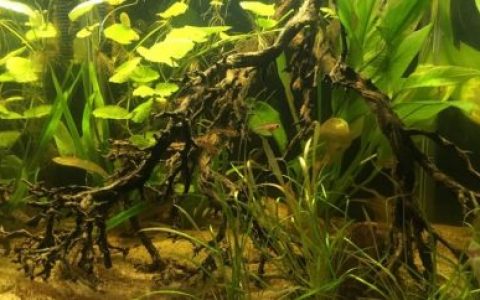
Volume of your aquarium: 40 L
鱼缸容量:40 升
Dimensions of your aquarium: 45x30x30 cm
您的鱼缸尺寸:45x30x30 厘米
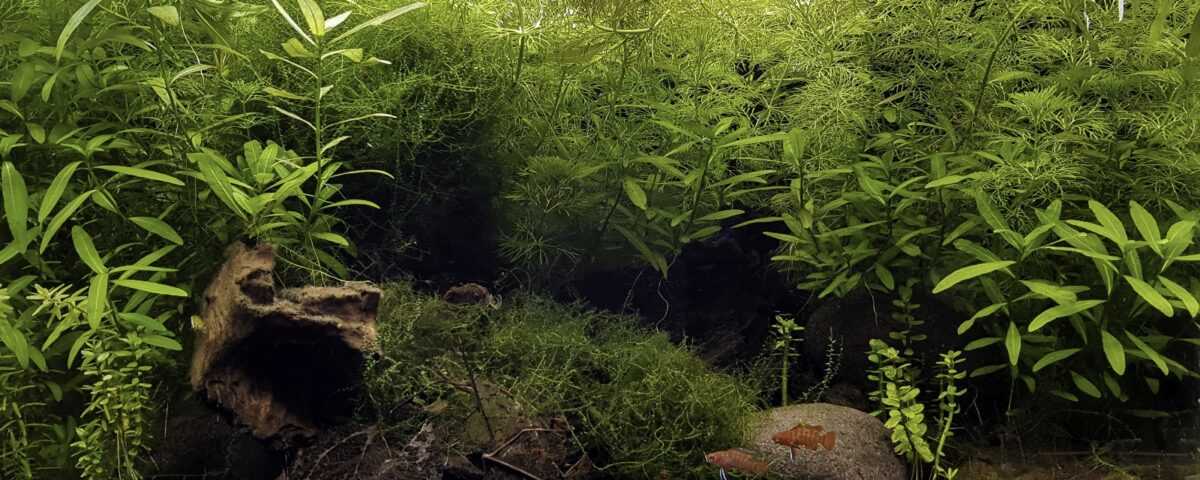
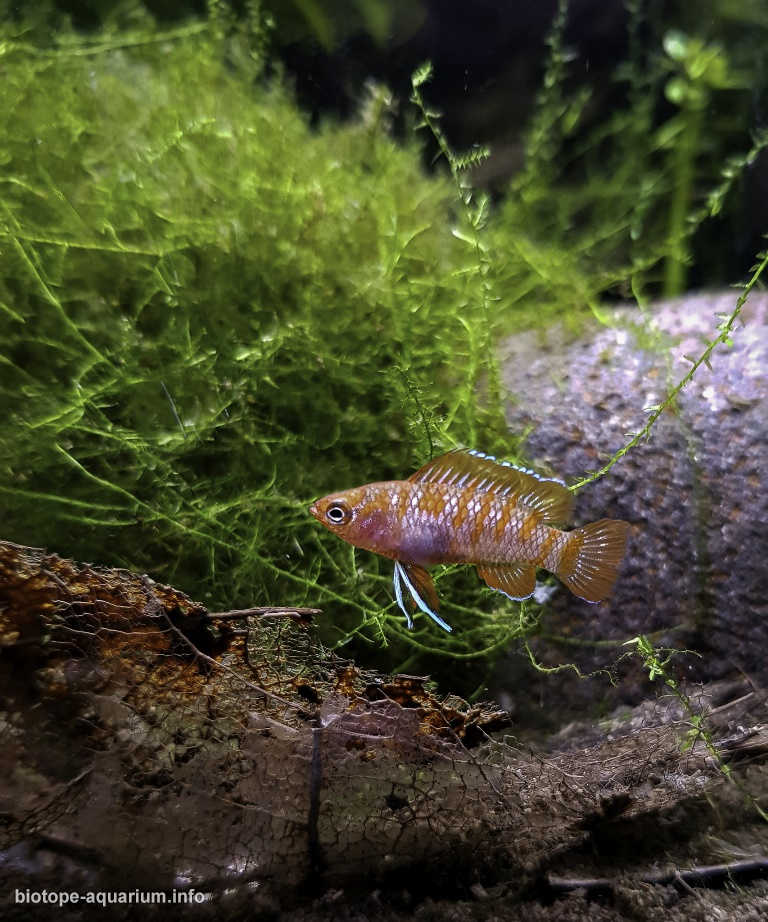
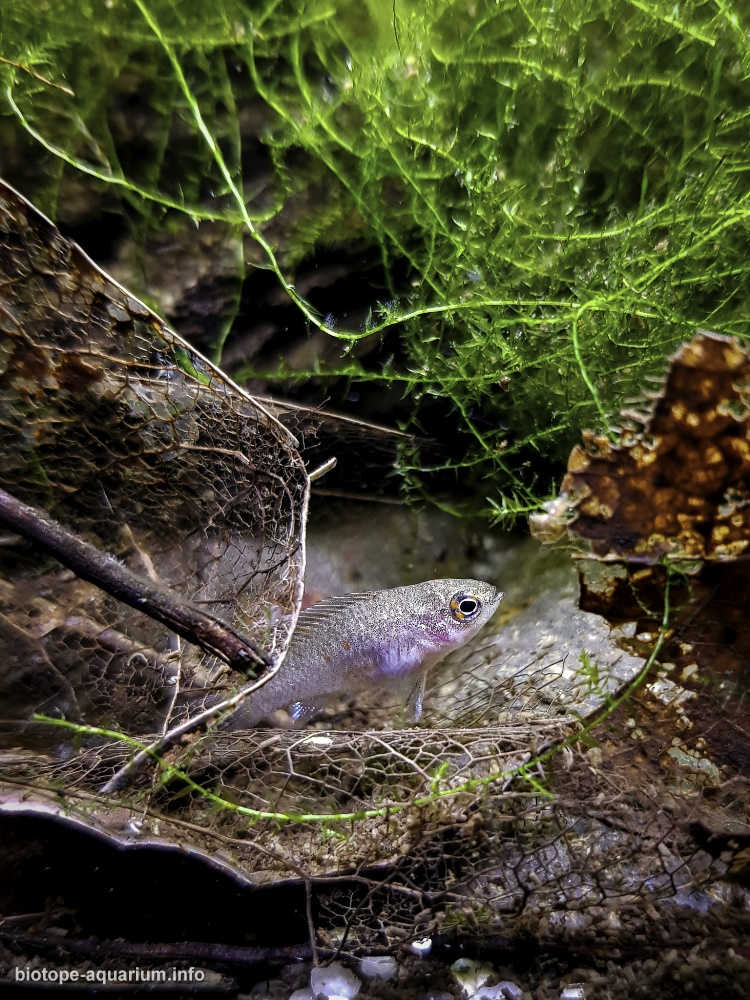
List of fishes: Dario dario, Caridina babaulti and some snails.
鱼类列表:达里奥鲈(Dario dario)、巴氏米虾(Caridina babaulti)及若干螺类。
List of plants: Hygrophila polysperma, Limnophila sessiliflora, Rotala indica, R. rotundifolia and some Amblystegium serpens moss.
植物列表:多刺水蓑衣(Hygrophila polysperma)、无柄石龙尾(Limnophila sessiliflora)、印度罗塔草(Rotala indica)、圆叶罗塔草(R. rotundifolia)及部分匍匐柳叶藓(Amblystegium serpens)。
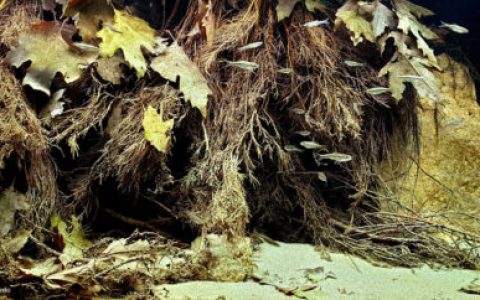
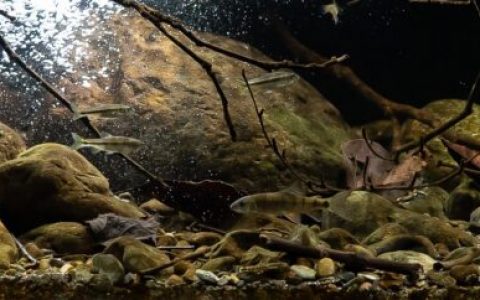
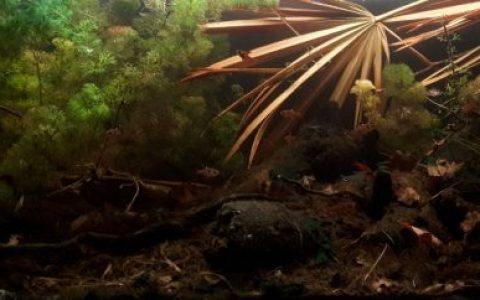
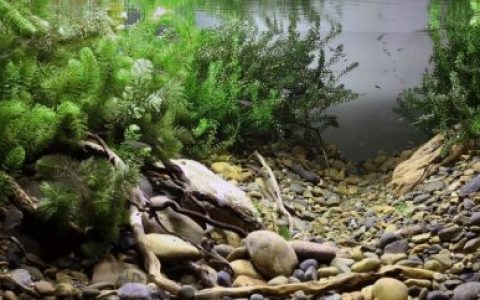
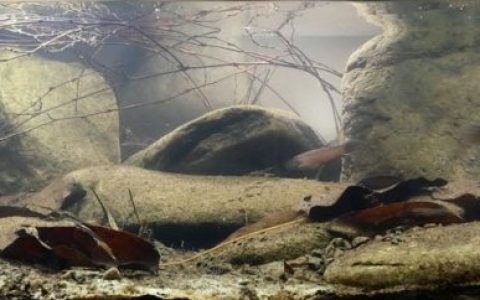
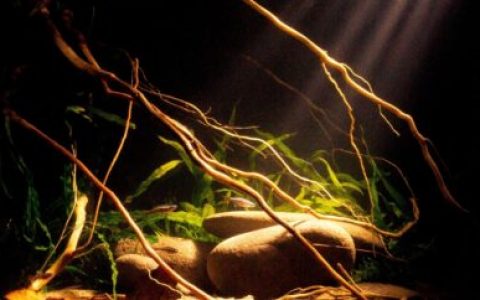
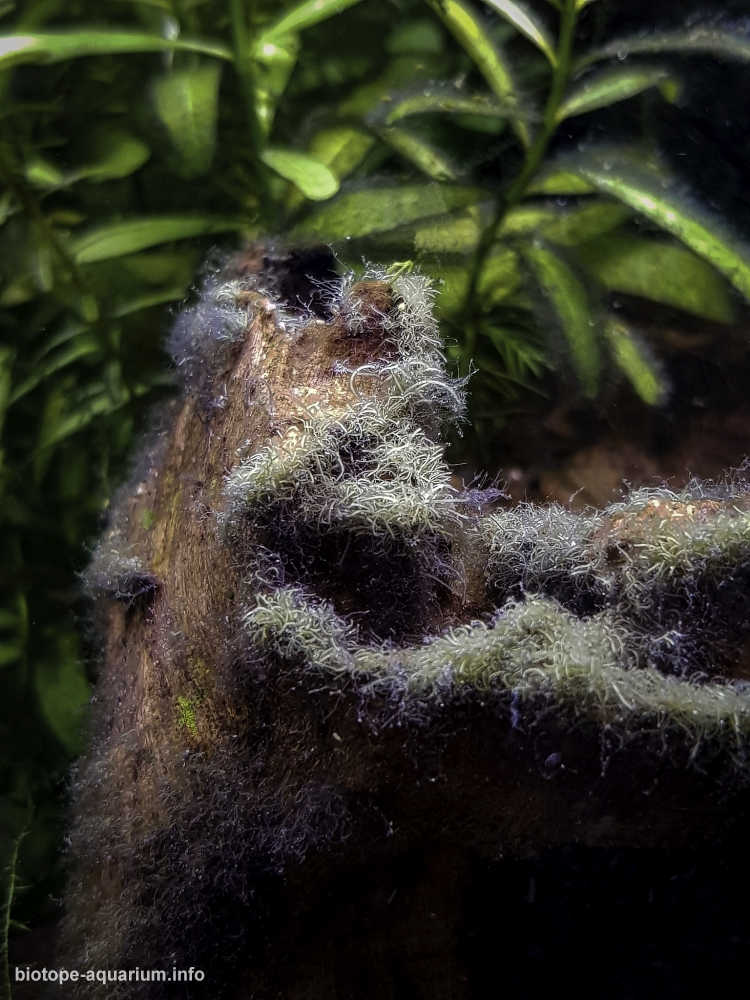
Description of Decorations and Substrate: Dark grey river sand, gravel, small roundish rocks, small pieces of wood, and dry leaves (like, for example, Terminalia catappa) that, in nature, are deposited along the stream margins. With that, I tried to create many visual barriers and small caves that help fish to establish their territories, and simulate a stream margin with a small unevenness from the back of the aquarium till the front.
装饰与底床描述:深灰色河沙、砾石、小型圆卵石、小木块,以及自然沉积于溪流边缘的枯叶(如榄仁树 Terminalia catappa 叶片)。我借此营造出大量视觉屏障与小型洞穴,帮助鱼类建立领地,同时模拟从水族箱后部至前部略有起伏的溪流边缘地貌。
Description of Equipment: Filtration = SunSun – hang on back filter HBL-801, with an adjustable flow, that can arrive till a maximum of 500 L/h. I never used the maximum flow, since in the nature habitat the water flow isn’t strong, but it’s constantly renewed.
设备描述:过滤系统 = 森森(SunSun)HBL-801 型背挂式过滤器,流量可调,最高达 500 升/小时。我从未使用最大流量,因为原生栖息地的水流并不湍急,但水体持续更新。
Lightning = Twinstar light 300 EA dimmered, simulating the natural daylight intensity, and giving the boost that the vibrant flora needs, like the intense sunlight that it recieves in the wild shallow streams.
照明:使用 Twinstar light 300 EA 调光器模拟自然日光强度,为繁茂的水生植物提供所需的光照增强,如同它们在野外浅溪中接收到的强烈阳光。
Water Parameters: The water temperature varied from 22 ºC, in the cold season, until 26 ºC. The water parameters measured were: GH = 8; KH = 5; pH = 7,27; NH4 = 0 mg/L; NO2 = 0 mg/L; NO3 = 10 mg/L; PO4 = 0 mg/L; K = 12 mg/L; Fe = 0,25 mg/L; TDS = 127 mg/L; Condutivity = 236 uS/cm
水质参数:水温在寒冷季节为 22°C 至 26°C 之间变化。测得的水质参数为:GH=8;KH=5;pH=7.27;NH4=0 mg/L;NO2=0 mg/L;NO3=10 mg/L;PO4=0 mg/L;K=12 mg/L;Fe=0.25 mg/L;TDS=127 mg/L;电导率=236 uS/cm。
Additional Info: I made weekly water changes (approximately 25%), and added 1L of water every 2 days, trying to simulate the constant renewal of the water that happen in nature.
补充信息:我每周换水约 25%,并每两天补充 1 升水,以模拟自然界中持续的水体更新。
To give some extra nutrients to the plants, and permit that they grow lusher, every 2 months, I put some fertilizer, Aquario’s NEO plants tab (Long lasting, K and Fe), in the soil. A good option for plants, that doesn’t change the water parameters, and consequently the fauna isn’t affected.
为了给植物提供额外养分并促进其更茂盛生长,我每两个月在底床中埋入 Aquario’s NEO 植物根肥片(长效型,含钾和铁)。这种肥料对植物效果良好,且不会改变水质参数,因此不会影响生物群落。
As Dario dario is a specie that needs some time to feed, and only eat live or frozen food, I decided to maintain them alone, only with shrimps. They maintain their natural hunting behaviour trying to eat some baby shrimps.
由于达里奥·达里奥(Dario dario)这种鱼需要一定时间才能进食,且只吃活食或冷冻食物,我决定只将它们与虾类单独饲养。它们会保持天然的捕食习性,尝试捕食一些幼虾。
Description of the Area Surrounding the Biotope: Brahmaputra River is the major river of Central and Southern Asia. It flows some 2,900 Km from its source in the Himalayas (Manasarovar Lake region) to its confluence with the Ganges River, after which the mingled waters of the two rivers empty into the Bay of Bengal. [1, 2]
生物群落周边区域描述:布拉马普特拉河是中亚和南亚的主要河流。它发源于喜马拉雅山脉(玛旁雍错湖区域),全长约 2900 公里,最终与恒河交汇,两河汇流后注入孟加拉湾。[1, 2]
Along its course the Brahmaputra passes through the Tibet Autonomous Region of China, some Indian states and Bangladesh. For most of its length, the river serves as an important inland waterway. It is not, however, navigable between the mountains of Tibet and the plains of India. In its lower course the river is both a creator and a destroyer – depositing huge quantities of fertile alluvial soil but also causing disastrous and frequent floods. [1]
在流经过程中,布拉马普特拉河穿越中国西藏自治区、印度部分邦以及孟加拉国。该河大部分河段是重要的内陆水道,但在西藏山区与印度平原之间无法通航。在下游河段,这条河既是创造者也是破坏者——既沉积大量肥沃的冲积土壤,也频繁引发灾难性洪水。[1]
When Brahmaputra River enters in the Indian territory the river is mighty, even in the dry season, and during the rains its banks are more than 8 Km apart. As the river follows its braided 700 Km course through the valley, it receives several Himalayan streams, including the Subansiri, Kameng, Bhareli, Manas, Champamati, Sankosh and Raidāk rivers. [1, 3]
当布拉马普特拉河进入印度境内时,即便在旱季也显得气势磅礴,而雨季时河岸间距更超过 8 公里。这条河流在峡谷中蜿蜒流淌约 700 公里,沿途接纳了多条喜马拉雅山溪流,包括苏班西里河、卡门河、巴雷利河、马纳斯河、钱帕马蒂河、桑科什河和雷达克河。[1, 3]
Raidāk River has its origin at Mount Akungphu at na altitude of 6400 m, in Bhutan. After emerging the Bhutan territory, it enters in West Bengal, near the border with the Assam state. Then the river bifurcates into two branches: Raidāk I and Raidāk II. The Riadāk I join the united streams of Torsa and Kaljani, goes by the name Raidāk and outflows into Brahmaputra in Bangladesh. While, Raidāk II is joined by the Sankosh river, and ultimately outflows into Brahmaputra in Bangladesh, by the name Gangadhar. In the low lying riverine plain, agricultural land in terraces lies the forest area that characterize the landscape. The Raidāk river is a very shallow but more than 15 m wide river, with moderate current, and the bottom is covered with gravel and small stones. In the zone near this river, between 26°30’ to 26°35’ N and 89°40 to 89°45 E, there are many small streams that inspired the creation of this biotope. [3, 4, 5, 6]
雷达克河发源于不丹境内海拔 6400 米的阿空普山。流出不丹后,它进入西孟加拉邦,靠近与阿萨姆邦的边界。随后河流分叉为两条支流:雷达克 I 和雷达克 II。雷达克 I 与托尔萨河及卡尔贾尼河的汇流段相接,以雷达克之名流经孟加拉国注入布拉马普特拉河;而雷达克 II 则与桑科什河交汇,最终以甘加达尔之名在孟加拉国汇入布拉马普特拉河。在低洼的河岸平原上,梯田农业用地与森林区域交织,构成了当地的地貌特征。雷达克河是一条水深极浅但宽度超过 15 米的河流,水流平缓,河床覆盖着砾石和小石块。在该河附近北纬 26°30’至 26°35’、东经 89°40’至 89°45’的区域,分布着众多小溪流,正是这些溪流启发了这一生物栖息地的构建。[3, 4, 5, 6]
The Indian part of the Brahmaputra River drainage area is governed by the monsoon (wet, dry) climate, though it is somewhat modified there compared with other parts of the subcontinent; the hot season is shorter than usual, and the average annual temperature ranges from 26 to 29 °C. Precipitation is relatively heavy, and humidity is high throughout the year. The annual rainfall – between 1,780 and 3,810 mm – falls mostly between June and early October; however, light rains also fall from March to May. [1]
布拉马普特拉河流域的印度部分受季风(湿、干)气候控制,但与南亚次大陆其他地区相比,该地区的气候略有不同;炎热季节比通常更短,年平均气温在 26 至 29°C 之间。降水量相对较大,全年湿度较高。年降雨量在 1,780 至 3,810 毫米之间,主要集中在 6 月至 10 月初;不过,3 月至 5 月期间也有少量降雨。[1]
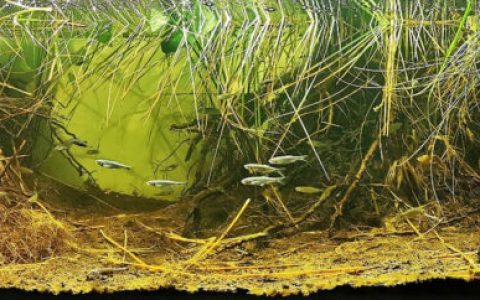
Description of the Underwater Landscape of the Biotope: Near Raidāk river there are some streams that pass through lush agricultural fields (often rice) where there are lots of water lilies floating, Myriophyllum sp. (possibly M. tetrandrum or M. tuberculatum) and some grasses growing in the water. In other streams the water is reddish because of the presence of humic acids. Some have substrates of fine sand and round rocks, a slow water movement, and mosses of the genera Vesicularia sp. or Amblystegium serpens. Others, in the dry season, can vary in width between 2-5 m and in depth 30-70 cm, with a crystal clear water, bottom covered by dark sand and fine gravel, and dense growths of marginal and aquatic vegetation [e.g. Hygrophila (possibly H. balsamica, H. corymbosa, H. difformis, H. lancea or H. polysperma), Limnophila (possibly L. aquatica, L. aromatica, L. heterophylla, L. indica, L. rugosa or L. sessiliflora), Ottelia (possibly O. alismoides), and Rotala (possibly R. indica, R. rotundifolia, R. serpyllifolia or R. wallichii) species]. Lastly, far away from Raidāk river, but always in the Brahmaputra River drainage, there are small clear water creeks, with slow flow, grey sand substract, and no submerged vegetation. [9, 10, 11, 12, 13, 14, 15, 16]
生物群落水下景观描述:在 Raidāk 河附近,一些溪流穿过茂密的农田(通常是稻田),水面上漂浮着大量睡莲,水中生长着狐尾藻属植物(可能是四蕊狐尾藻或瘤果狐尾藻)及一些禾本科植物。另一些溪流因腐殖酸的存在而呈现红褐色。部分溪流底质为细沙和圆石,水流缓慢,生长着藓纲植物(如水藓属或匍匐青藓)。在旱季,其他溪流的宽度在 2-5 米之间变化,深度为 30-70 厘米,水质清澈见底,底部覆盖着深色沙子和细砾石,边缘和水生植被茂密生长[例如水蓑衣属(可能是香青水蓑衣、水蓑衣、异叶水蓑衣、披针叶水蓑衣或多籽水蓑衣)、石龙尾属(可能是水石龙尾、芳香石龙尾、异叶石龙尾、印度石龙尾、皱叶石龙尾或无柄石龙尾)、水车前属(可能是水车前)和节节菜属(可能是印度节节菜、圆叶节节菜、匍匐节节菜或瓦氏节节菜)物种]。 最后,在远离雷达克河但始终属于布拉马普特拉河流域的地方,有一些清澈的小溪流,水流缓慢,底质为灰色沙地,且没有沉水植被。 [9, 10, 11, 12, 13, 14, 15,16]
Description of the Habitat Parameters: The water physico-chemical parameters in a Raidāk river spot (26°21’07”N and 89°40’29”E), near the area that inspired the biotope, shows that the water temperature varies from 16,5 ºC, in the post-monsoon period, until 30 ºC in the pre-monsoon period. The turbidity chenges from 8,6 until 32,9 NTU, during the monsoon, the pH is between 6,8 and 7,2, and the water is moderately hard (gH between 6 and 8). The conductivity varies from 31,1 till 39,1 μs/cm, the nitrate concentration from 0,19 till 0,46 mg/L, the phosphate from 0,075 till 0,185 mg/L and the sulfate concentration from 4,1 till 5 mg/L. Obviously, some of these parameters can have slightly changes depending of the stream, and the period of the year. [7, 8, 9]
栖息地参数描述:在雷达克河一处地点(北纬 26°21’07″,东经 89°40’29″)的水体理化参数显示,该区域靠近激发此生物群落设计的灵感来源地。水温在季风后期为 16.5°C,至季风前期升至 30°C。浊度在季风期间从 8.6 NTU 变化至 32.9 NTU,pH 值介于 6.8 至 7.2 之间,水体为中等硬度(总硬度介于 6 至 8)。电导率在 31.1 至 39.1 μs/cm 之间波动,硝酸盐浓度范围为 0.19 至 0.46 mg/L,磷酸盐为 0.075 至 0.185 mg/L,硫酸盐浓度则为 4.1 至 5 mg/L。显然,部分参数会因溪流差异及季节变化而略有浮动。[7, 8, 9]
List of Fishes and Invertebrates Occurring in the Nature Biotope: In all these kinds of underwater landscapes, it is possible to find the extraordinary Dario dario fish, Together with the Indian shrimp specie Caridina babaulti, and many other native fish species, (some of them live in different water levels), like: Aborichthys elongatus, Badis assamensis, B. blosyrus, B. kanabos, B. singenensis, Batasio tengana, Brachydanio rerio, Colisa chuna, Danio dangila, Danionella sp., Dermogenys brachynotopterus, Devario assamensis, D. devario, Erethistes horai, E. jerdoni, E. pusillus, Erethistoides infuscatus, E. sicula, Gagata sexualis, Glyptothorax telchitta, Gogangra viridescens, Lepidocephalichthys guntea, Myersglanis blythii, Mystus bleekeri, M. carcio, Nangra assamensis, Oreichthys crenuchoides, Oryzias sp., Pethia aurea, P. conchonius, P. shalynius, Pseudolaguvia flavida and P. shawi. [5, 9, 10, 12, 13, 14, 16, 17, 18, 19, 20, 21, 22, 23, 24, 25, 26, 27, 28]
自然生物群落中出现的鱼类和无脊椎动物列表:在所有这些类型的水下景观中,都有可能发现非凡的达里奥鲈鱼,以及印度虾种卡里迪纳·巴鲍尔蒂虾,还有许多其他本地鱼类(其中一些生活在水体的不同水层),例如:阿博里奇斯·埃隆加图斯、阿萨姆巴迪斯、B. 布洛西鲁斯、B. 卡纳博斯、B. 辛根尼斯、巴塔西奥·滕加纳、斑马鱼、科利萨·楚纳、丹尼奥·丹吉拉、丹尼奥内拉属、德莫根尼斯·布拉奇诺特普特斯、德瓦里奥·阿萨门西斯、D. 德瓦里奥、埃雷西斯泰斯·霍莱、E. 杰尔多尼、E. 普西卢斯、埃雷西斯托伊德斯·因富斯卡图斯、E. 西库拉、加加塔·塞克斯阿利斯、格利普托托拉克斯·特尔奇塔、戈甘格拉·维里德斯森斯、莱皮多塞法利奇斯·贡特亚、迈尔斯格拉尼斯·布莱西、米斯图斯·布莱克里、M. 卡西奥、南格拉·阿萨门西斯、奥雷奇斯·克雷努科伊德斯、奥里齐亚斯属、佩西亚·奥雷亚、P. 康乔尼乌斯、P. 沙利尼乌斯、伪拉古维亚·弗拉维达和 P. 沙维。[5, 9, 10, 12, 13, 14, 16, 17, 18, 19, 20, 21, 22, 23, 24, 25, 26, 27, 28]
List of Plants Found in the Nature Biotope: Myriophyllum tetrandrum, M. tuberculatum, Vesicularia sp., Amblystegium serpens, Hygrophila balsamica, H. corymbosa, H. difformis, H. lancea or H. polysperma, Limnophila aquatica, L. aromatica, L. heterophylla, L. indica, L. rugosa or L. sessiliflora, Ottelia alismoides, and Rotala indica, R. rotundifolia, R. serpyllifolia and R. wallichii. [9, 10, 11, 12, 13, 14, 15, 16]
自然生物群落中发现的植物列表:四蕊狐尾藻、瘤果狐尾藻、明叶藓属、匍匐柳叶藓、香彩水蓑衣、伞花水蓑衣、异叶水蓑衣、披针叶水蓑衣或多籽水蓑衣、水龙胆草、芳香石龙尾、异叶石龙尾、印度石龙尾、皱叶石龙尾或匍匐石龙尾、水车前,以及印度圆叶节节菜、圆叶节节菜、匍匐节节菜和瓦氏节节菜。[9, 10, 11, 12, 13, 14, 15, 16]
Threats to the Ecology of the Biotope: It is needless to mention that at present a large number of native fish species are facing serious threat. In this area, major reasons behind this situation include pollution, discharging industrial effluents, and especially discharged pesticides used in agriculture. All these factors either directly or indirectly harm the fish diversity. Residential and commercial developments including tourism and recreational areas are also affecting many endemic fish and plant species. [20, 22]
生物群落生态面临的威胁:毋庸置疑,目前大量本土鱼类物种正面临严重威胁。在该区域,造成这一状况的主要原因包括污染、工业废水排放,尤其是农业中使用的农药排放。所有这些因素都直接或间接地损害了鱼类多样性。住宅和商业开发(包括旅游和休闲区域)也影响了许多特有鱼类和植物物种。[20, 22]
本文部分素材来自网络,如有类似请联系修改,如若转载,请注明出处:http://www.yangyubang.com/?p=4000