Volume: 648 L 体积:648 升
Dimensions: 180x60x60 cm 尺寸:180x60x60 cm
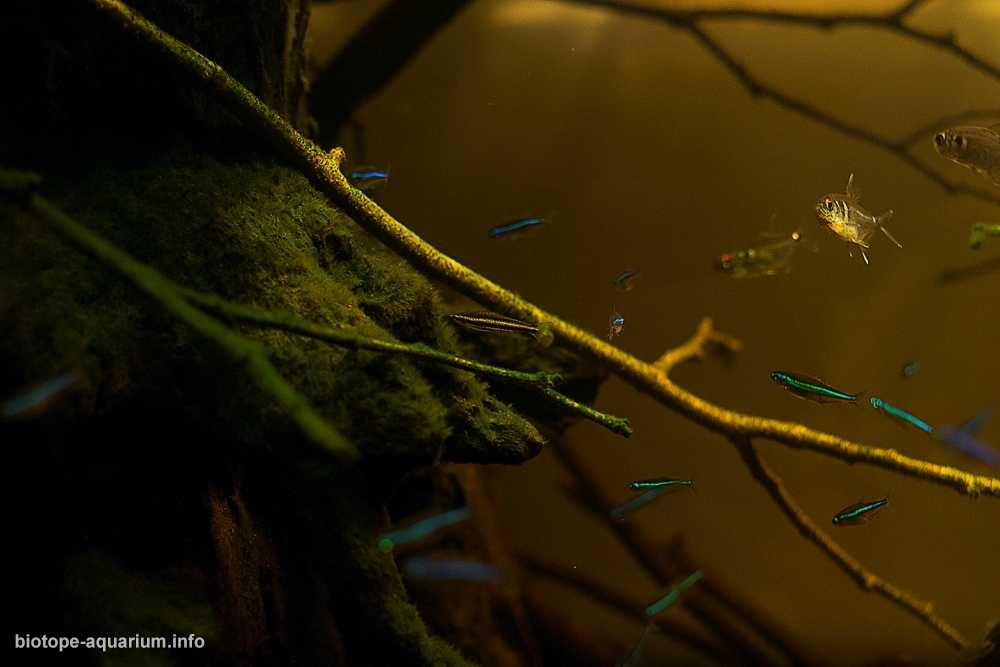
List of fishes: Paracheirodon simulans, Dicrossus filamentosus, Hemigrammus ocellifer, Poecilocharax weitzmani, Nannostomus marilynae, Aspidoras pauciradiatus, Copella meinkeni.
鱼类清单:Paracheirodon simulans、Dicrossus filamentosus、Hemigrammus ocellifer、Poecilocharax weitzmani、Nannostomus marilynae、Aspidoras pauciradiatus、Copella meinkeni。
List of plants: N/A 植物清单:不适用
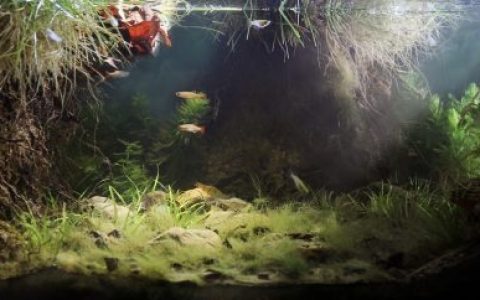
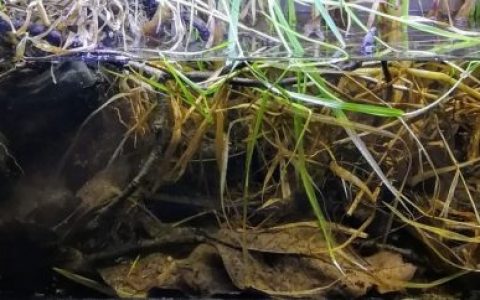
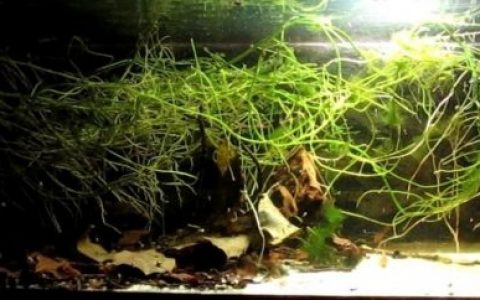
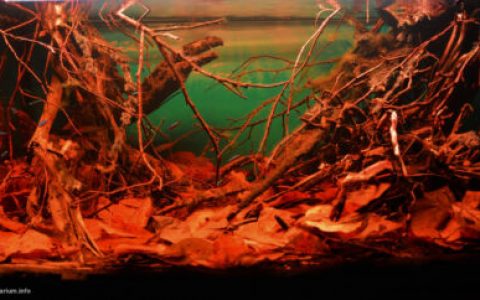
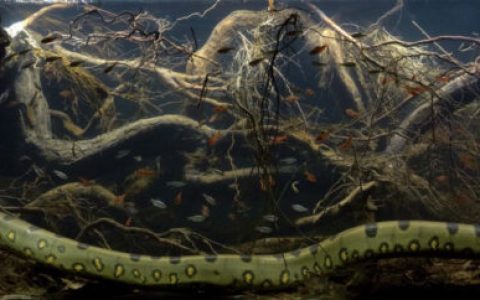
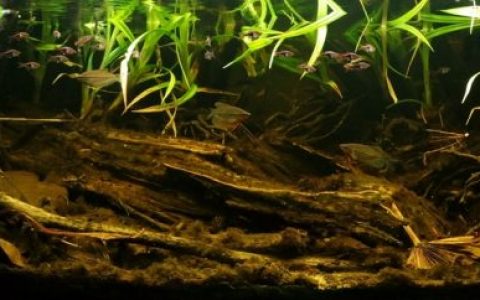
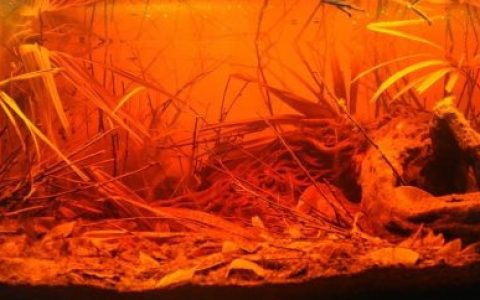
Description of decorations: The bottom layer is made of fine, light brown-yellowish sand with a mixed size of 0.5-2mm. There is peat on top of it to simulate older organic matter and to lower the pH. There are also a couple of round pebbles to be found between the leaves and twigs. Next to it there are seedpods like the so called ‘monkey-pods’ fallen from Eschweilera tenuifolia during the rainy season and carried away by the forest stream. Driftwood and locally collected branches and leaves (like beech and alder) similar to those found in biotope, covered by algae. On top of it there is a fine layer of deposits of vegetable detritus.
装饰描述:底层由细颗粒、浅棕黄的沙子组成,粒径混合为 0.5-2mm。其上有泥炭以模拟较旧的有机物并降低 pH。叶片和树枝之间还能看到几颗圆形卵石。旁边有像在雨季从 Eschweilera tenuifolia 上掉落并被林间溪流带走的种荚,俗称“猴子豆荚”。还放有来自本地的浮木、树枝和叶子(如山毛榉和桤木),类似生境中发现的,覆盖着藻类。其上覆盖着一层细薄的植物残骸沉积物。
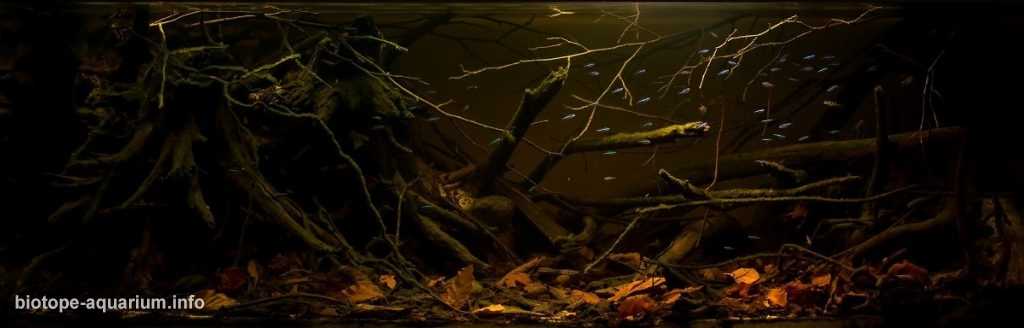
Description of equipment: The aquarium is equipped with two canister filters; the Eheim professionel 3 (1700l/h) and the JBL CristalProfi e901 (900 l/h). The lighting is made of two 95 cm CREE-ledstrips (6500K) combined with an RGB strip. These are powered by a computer with a specially designed program to simulate sunrise and sundown in the Amazon rainforest. The water is heatened by a Hydor external heater.
设备说明:该水族箱配备了两个桶式过滤器;Eheim professionel 3(1700 l/h)和 JBL CristalProfi e901(900 l/h)。照明由两条 95 cm 的 CREE LED 灯带(6500K)与一条 RGB 灯带组合。它们由一台电脑供电,并运行专门设计的程序以模拟亚马逊雨林的日出与日落。水体由一台 Hydor 外置加热器加热。
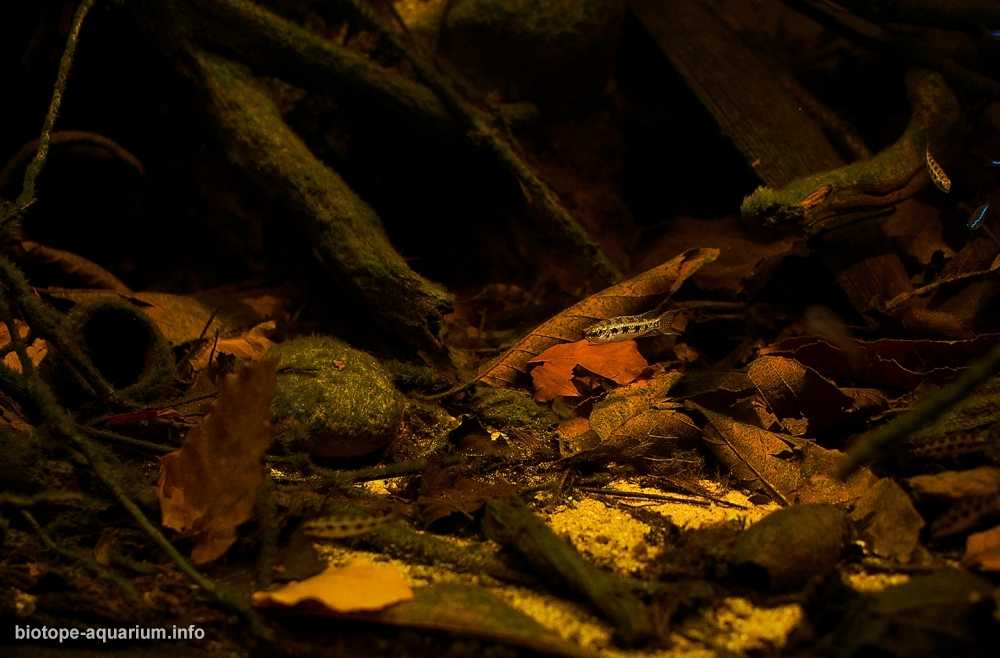
Water parameters: The water looks clear but stained with a yellow-reddish tone. It is soft with a pH of 6.2, a KH of 0-1 and GH of 0-1. TDS is 58 ppm and the conductivity is 112 µS/cm. These values are reached by the use of a mix of RO water or rainwater and tapwater. The temperature of the aquarium is kept at 26°C.
水质参数:水看起来清澈但带有黄红色的色调。水质偏软,pH 为 6.2,KH 为 0–1,GH 为 0–1。TDS 为 58 ppm,电导率为 112 µS/cm。通过混合反渗透水或雨水与自来水得到这些数值。水族箱温度保持在 26°C。
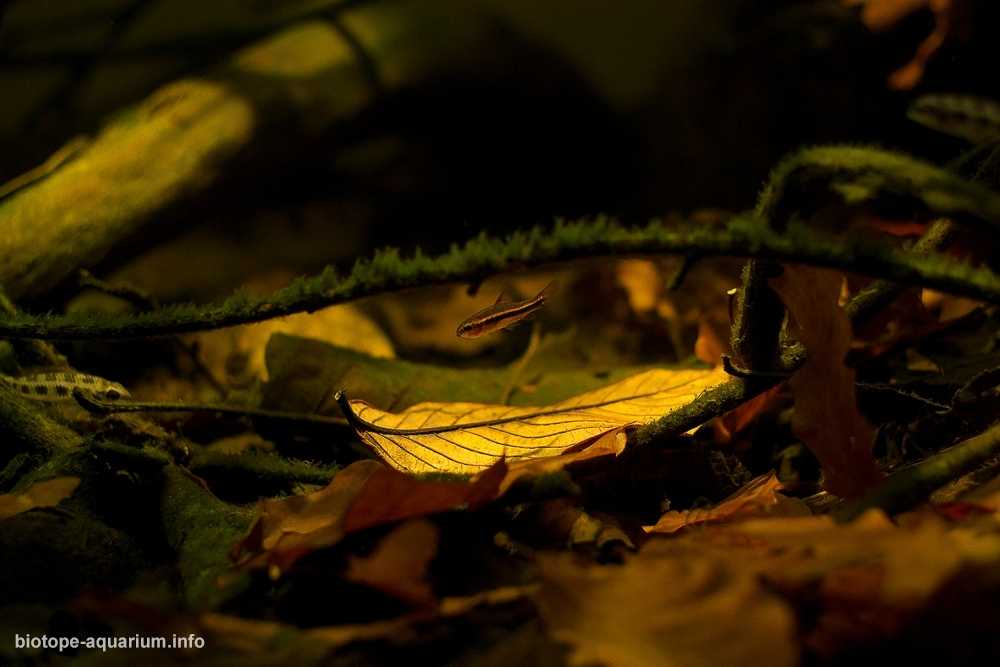
Additional info: I made the background of foam, epoxy and sand all by myself to simulate the bank of the forest stream where the trees and other plants grow. Some fish shelter overthere. The big pieces of wood are integrated in this background, and on the left side of the aquarium is a cave which can be entered by the fish on two sides; one entirely on the left side and one more from the front/right. Every 3 weeks there is a 25% waterchange which contains approximately 75% RO water and 25% tapwater (which is pretty soft here; pH 7 and KH/GH 3-4).
补充信息:我用泡沫、环氧树脂和沙子亲手做了背景,以模拟森林小溪的岸边,那里生长着树木和其他植物。有些鱼会在那儿躲藏。大块的木头与这个背景融为一体,水族箱左侧有一个洞穴,鱼可以从两个方向进入;一个完全位于左侧,另一个从前方/右侧进入。每三周换水 25%,换水中大约 75%为反渗透水,25%为自来水(这里的自来水相当软;pH 7,KH/GH 3-4)。
INFORMATION ABOUT BIOTOPE
关于生物群落的信息
Description of the area surrounding the biotope: The Rio Daraá is a leftbank tributary of the middle Rio Negro, just past the city Santa Isabel do Rio Negro in Amazonas state in Brazil.
生境周边区域描述:Daraá 河是中段 Negro 河的左岸支流,位于巴西亚马孙州圣伊莎贝尔多里奥内格罗市外不远处。
To know more about the Rio Daraá, we first have to understand the Rio Negro. The Rio Negro rises in Colombia, where it is known as the Guainía, before joining with the Casiquaire on the border with Venezuela. After flowing for about 1700 km, it flows into the Amazon at Manaus, Brazil. The Rio Negro is the world’s largest tributary and the world’s largest blackwater river. Its annual flow exceeds that of all the rivers of Europe combined. The Rio Negro is a seasonal river in the sense that it has fairly predictable seasonal fluctuations in water level during most years. It begins raining earlier in the lower Rio Negro drainage than in its upper reaches. The rainiest months in the lower Rio Negro are between December and May, whereas in the middle course they are between March and July. At the Rio Daraá, February is the month with the heaviest rainfall and October is the month with the least rainfall. Water level usually varies about 7 meters from low to high tide, but a maximum difference of 16 meters is possible. During low water periods you can find entire beaches formed by fine, almost white sand. Some cataracts are confronted within 20-30 km of the mouths of the left bank tributaries of the upper Rio Negro, and they indicate the presence of the Guiana Shield. Upstream the Rio Daraá there are also some waterfalls flowing over big granite rocks like the ‘cachoeira do Aracu’. Along the riverbanks of Rio Daraá and the surrounding forests a lot of trees and bushes are growing, like palmtrees (Leopoldina pulchra and Astrocaryum jauari), Smilax regelli, locally known as ‘sarsaparillas’, Pseodobombax munguba and Eschweilera tenuifolia. There are also many bushes like Licania stewardii, also known as ‘acará-acú’ and Myrciaria dubia, known as ‘camu-camu’. Many fish can be found along the riverbanks to find their shelter between these bushes and fallen branches and to eat the fruits and seeds carried by these plants. Its hard seedpods are cracked open by monkees and some fall into the water which form part of the diet of the fish who live here. During the period of inundation small fishes move upstream within the river’s tributaries and then laterally into the flooded forest itself to feed and reproduce, before returning to the tributaries when the waterlevel drops. As you move deeper into the dense ‘terra firme’ forest you can find many small shallow rivers or forest streams, also known locally as an ‘igarapé’, slowly flowing through the dense forest. There is a presence of overhanging riparian vegetation and many fallen leaves and twigs on the ground. You can hear many birds singing in the background. The coordinates of this particular igarapé are 0.4S and 64.8W. It is close to the mouth of the Rio Daraá.
要了解达拉阿河,首先必须了解黑河。黑河发源于哥伦比亚,在那里被称为瓜伊尼亚河,随后在与委内瑞拉接壤处与卡西瓜伊雷河汇合。黑河流经约 1700 公里后在巴西马瑙斯注入亚马逊河。黑河是世界上最大的支流,也是世界上最大的黑水河流。它的年流量超过了所有欧洲河流流量的总和。黑河属于季节性河流,这意味着在大多数年份其水位有相当可预测的季节性波动。下游流域的降雨比上游来得早。下游最潮湿的月份是 12 月至次年 5 月,而中游则在 3 月至 7 月之间。在达拉阿河,2 月是降雨最集中的月份,10 月降雨最少。水位从枯水到丰水通常变化约 7 米,但最大差异可达 16 米。枯水期可以看到由细腻、几乎洁白的沙子形成的完整沙滩。 在上游内格罗河左岸支流的河口 20–30 公里处就能遇到一些急流,这些急流表明圭亚那盾的存在。在达拉阿河上游也有一些瀑布,从像“cachoeira do Aracu”那样的大型花岗岩上奔流而下。沿着达拉阿河的河岸和周围的森林生长着许多树木和灌木,如棕榈(Leopoldina pulchra 和 Astrocaryum jauari)、当地称为“sarsaparillas”的 Smilax regelli、Pseodobombax munguba 和 Eschweilera tenuifolia。还有许多灌木,如也称为“acará-acú”的 Licania stewardii 和被称为“camu-camu”的 Myrciaria dubia。许多鱼类会在河岸边的这些灌木和倒下的树枝间寻找庇护,并以这些植物所结的果实和种子为食。其坚硬的种荚会被猴子撬开,部分坠入水中,成为这里鱼类饮食的一部分。在泛滥期,小鱼会沿着河流的支流向上游移动,然后横向进入被淹没的森林中觅食和繁殖,水位下降时再返回支流。 当你深入茂密的“高地森林”(terra firme)时,你会发现许多小而浅的河流或森林溪流,当地也称为“igarapé”,它们缓缓穿行于浓密的森林中。河岸上有悬垂的植被,地面上散布着许多落叶和树枝。背景中可以听到许多鸟儿的歌唱。这个特定 igarapé的坐标是南纬 0.4 度、西经 64.8 度。它靠近 Daraá河的入海口。
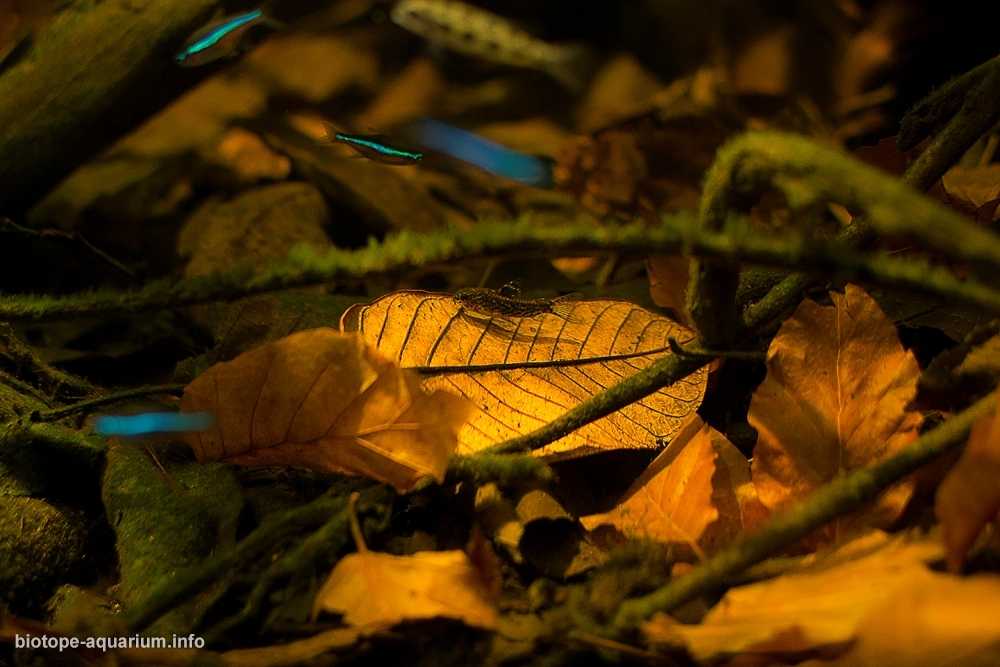
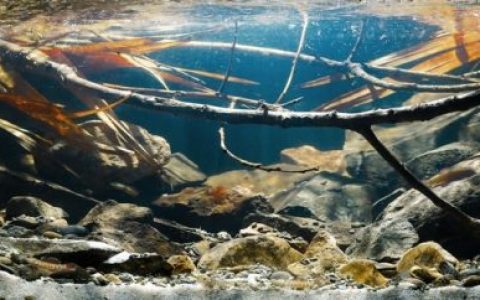
Description of the underwater landscape of the biotope: The Rio Negro and its many tributaries, like the Rio Daraá, are stained by humic acids or compounds due to immense layers of leaves and twigs. Igarapés are characterised by thick, often overhanging, riparian vegetation and substrates covered in fallen branches, tree roots and leaf litter. Therefore it has its unique dark color, ranging from light brown to almost entirely black. The tropical sun is streaming in through the canopy just to light up a few places in the water. The water is shallow, less than 1 meter in most places, and the bottom is thoroughly covered with leaf litter. The sheer density of fish is therefore incredible. It’s also likely that just a few dozen kilometers further down there is another igarapé that contains a completely different set of species from the previous one, and often including species not found anywhere else in the Amazon. It happens that igarapés are extremely diverse in aquatic fauna and very distinct from one another.
生物景观水下环境描述:黑河及其众多支流,如达拉阿河,因大量落叶和树枝的淹积而被腐殖酸或相关化合物染色。小溪(igarapés)的特点是密集且常常伸出水面的河岸植被,底部覆盖着倒伏的树枝、树根和落叶。因此水体呈现独特的深色,从浅褐色到几乎全黑不等。热带阳光穿透林冠,只照亮水中为数不多的几处。水域较浅,大多数地方不足 1 米,底部完全被落叶覆盖。鱼类密度极高,令人难以置信。再往下游几十公里,往往会出现另一个包含与前者完全不同物种组合的小溪,而且常常包括在亚马逊其他地方找不到的物种。小溪的水生动物多样性极高,相互之间也非常不同。
Description of the parameters of the habitat: The Rio Negro drains three principal geological formations, that is, the ancient Guiana Shield, late Cretaceous to early Tertiary Lowlands and Quaternary Lowlands. In general the rocks, and derived soils, of the Rio Negro basin are acidic and extremely poor in chemicals associated with nutrients. The Rio Negro is chemically one of the poorest rivers in the world. It is also referred to as ‘slightly contaminated distilled water’, according to Sioli (1967). In the absolute concentrations of major elements, Rio Negro is very similar to rainwater (Gibbs, 1971). The blackwater rivers are extremely poor in dissolved nutrients because the geology it drains had very impoverished soils. The rivers are very poor in nearly all of the major elements, especially phosphorous, calcium and potassium. The conductivity is somewhere between 8-10 µS/cm. The most striking chemical characteristic of the Rio Negro is its low pH or high acidity. The pH ranges from about 3.6-5.8, depending on the exact site and time of the year. No exact measurements are known from this particulair igarapé, but it is similar to those known of the Rio Daraá (pH 3.9). The transparency ranges between about 0.9-1.5m. Because it is darker in color than for example clearwater rivers of the Amazon, it absorbs more solar radiation and is thus slightly warmer. The water temperatures are about 28-31 degrees Celsius. During the low water period, when many lakes and pools become shallow, super-heating can take place and temperatures have been recorded in excess of 35 degrees Celsius. The waters can become very deoxygenated due to thermal stratification, decomposition or organic matter and because of super-heating.
栖息地参数描述:黑河(Rio Negro)汇流于三种主要地质构造,即古圭亚那盾、晚白垩纪至早第三纪低地和第四纪低地。总体而言,黑河流域的岩石及其衍生土壤呈酸性且极度缺乏与养分相关的化学成分。黑河在化学成分上是世界上最贫瘠的河流之一。正如 Sioli(1967)所述,它也被称为“微污染的蒸馏水”。就主要元素的绝对浓度而言,黑河与雨水非常相似(Gibbs,1971)。黑水河中的溶解养分极其匮乏,因为其所汇流的地质地区土壤本身就非常贫瘠。该流域在几乎所有主要元素上都很贫乏,尤其是磷、钙和钾。电导率大约在 8–10 µS/cm 之间。黑河最显著的化学特征是其低 pH 值或高酸性。pH 值约在 3.6–5.8 之间,取决于具体地点和季节。尚无关于该特定小河(igarapé)的精确测量值,但其类似于已知的 Daraá河(Rio Daraá)(pH 3.9)。 水的透明度大约在 0.9–1.5 米之间。因为它的颜色比例如亚马孙的清水河更深,能吸收更多的太阳辐射,因此水温略高。水温大约为 28–31 摄氏度。在枯水期,许多湖泊和水洼变得很浅时,可能发生过热,已记录到超过 35 摄氏度的温度。 这些水体可能因热分层而变得严重缺氧,有机物的分解以及过热也是原因。
List of fishes and invertebrates occurring in the nature biotope: Some igarapés have more species of freshwater fish than whole countries. Close to the water’s edge among the leaf litter and submerged roots, you can find many fishspecies like checkerboard cichlids (Dicrossus filamentosus), small pairs and groups of Apistogramma diplotaenia and Apistogramma hyppolytae, dwarf pike cichlids (Crenicichla notophthalmus), sailfin tetra (Crenuchus spilurus), an abundance of pencilfish (Nannostomus eques/marilynae/marginatus/
自然生境中出现的鱼类和无脊椎动物列表:有些小水道的淡水鱼种类比整个国家还多。在水边的落叶层和淹没的根系之间,你可以发现许多鱼类,如方格丽鱼(Dicrossus filamentosus)、成对或小群的阿匹斯多线丽鱼和阿匹斯波丽鱼(Apistogramma diplotaenia 和 Apistogramma hyppolytae)、矮眼斑古力鱼(Crenicichla notophthalmus)、帆鳍脂鲢(Crenuchus spilurus)、大量铅笔鱼(Nannostomus eques/marilynae/marginatus/digrammus/trifasciatus/unifasciatus)、韦茨曼四间鱼(Poecilocharax weitzmani)、喷溅四间鱼(Copella nattereri 和 Copella meinkeni)、切鱼(Carnegiella strigata 和 Carnegiella marthae)、许多四间鱼物种如 Hemigrammus bellotti、Hemigrammus analis 和 Hemigrammus ocellifer,尤其可以在此处发现绿色霓虹灯四间鱼(Paracheirodon simulans)。在许多地方你也能找到著名的红帽四间鱼(Paracheirodon axelrodi),但它们通常不会与前者在完全相同的栖息地共存。
List of plants found in the nature biotope: The production of aquatic herbaceous plants in especially igarapés is very limited because of the poor nutrient quality of the river. The relatively poor transparency of blackwater rivers is due to the organic plant compounds that color the water, hence preventing better light penetration. Also a lot of sunlight is blocked by the thick capony of leaves by the dense vegetation.
自然生境中发现的植物名单:在小河(igarapés)中水生草本植物的生长尤其有限,这主要是由于河水营养成分贫乏。黑水河透明度相对较差,是因为有机植物化合物给水体着色,从而阻碍了光线的更好穿透。此外,茂密植被所形成的厚叶冠也遮挡了大量阳光。
Threats to the ecology: There are many threats to the Amazon rainforest, like goldmining, hydroelectric dams and agriculture, which cause massive deforestations and endangering the lives of local populations. Goldmining is generally very destructive to the environment. In order to mine, trees and vegetation are cleared and burned. With the ground completely bare, large scale mining operations use huge bulldozers and excavators to extract the metals and minerals from the soil. Agricultural expansion and intensification are also major threats to tropical biodiversity. In addition to the direct removal of native vegetation, agricultural expansion often elicits other human‐induced disturbances, many of which are poorly addressed by existing environmental legislation and conservation programmes. This is particularly true for tropical freshwater systems, where there is considerable uncertainty about whether a legislative focus on protecting riparian vegetation is sufficient to conserve stream fauna.
对生态的威胁:亚马逊雨林面临许多威胁,如淘金、修建水电站和农业开发,这些都导致大规模的森林砍伐并威胁当地居民的生计。淘金通常对环境破坏极大。为了开采,需清除并焚烧树木和植被。地面被彻底暴露后,大规模采矿作业使用巨型推土机和挖掘机从土壤中提取金属和矿物。农业扩张和集约化也是热带生物多样性的主要威胁。除了直接移除本土植被外,农业扩张往往还引发其他人为扰动,而许多此类扰动并未被现行环境立法和保护计划充分应对。这一点在热带淡水系统中尤为明显,人们对于仅通过立法保护河岸植被是否足以保护溪流动物群仍存在相当大的不确定性。
But there are also threats on local scale. Recent studies demonstrate that small bodies of water are much more important than scientists previously supposed. Because igarapés are extremely diverse in aquatic fauna and very distinct from one another, it is important to conserve these wonderful places. Igarapés provide potable water for human and livestock consumption; irrigation for valuable fruit and vegetable crops; fish for consumption and ornamental trade. A threat to igarapés are so called ‘dirt roads’. These are roads made of sand which cross and cut off the small forest stream. It creates a small dam, leading to sand and clay accumulates and the stream flooding its banks. Interruption of the water flow results in a barrier to the movement of fauna. Fewer fish species live upstream of small dams. There is erosion and silting up of the rivercourse on the other side of the dirt road and little river beds are exposed. This will eventually cause loss of habitat diversity; less vegetation and therefore loss of fish species.
但在局部范围内也存在威胁。近期研究表明,小型水体的重要性远超过科学家此前的想象。由于小河道(igarapés)在水生动物方面极为多样且彼此之间差异很大,保护这些奇妙之所十分重要。小河道为人类和牲畜提供饮用水;为有价值的果蔬作物提供灌溉;提供供食用和观赏贸易的鱼类。所谓的“土路”是对小河道的威胁之一。这些由沙土铺成的道路横穿并切断了小型森林溪流,形成了一个小水坝,导致沙土和粘土堆积,溪流漫过两岸。水流中断构成了动物迁徙的障碍。小型水坝上游的鱼类种类更少。土路另一侧河道发生侵蚀和淤积,裸露出浅河床。最终这将导致栖息地多样性的丧失;植被减少,因此鱼类物种也会减少。
本文部分素材来自网络,如有类似请联系修改,如若转载,请注明出处:http://www.yangyubang.com/?p=2460