Volume: 90 L 容积:90 升
Dimensions: 60x50x30cm 尺寸:60x50x30cm
List of fishes: Oryzias pectoralis, Tanichthys albonubes, Barbodes semifasciolatus
鱼类清单:桂系青鳉、唐鱼、条纹二须鲃
List of plants: Myriophyllum hippuroides, Blyxa japonica, Myriophyllum hippuroides (invasive)
植物清单:日本箦藻、针叶聚藻(入侵种)
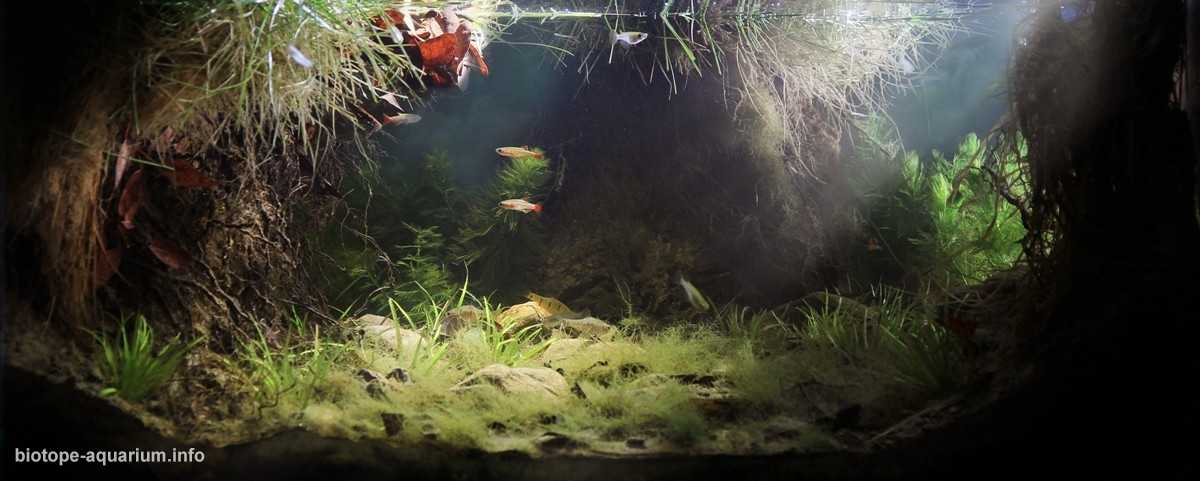
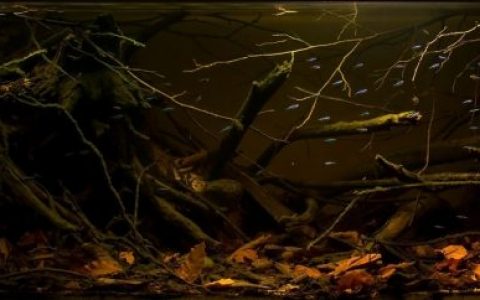
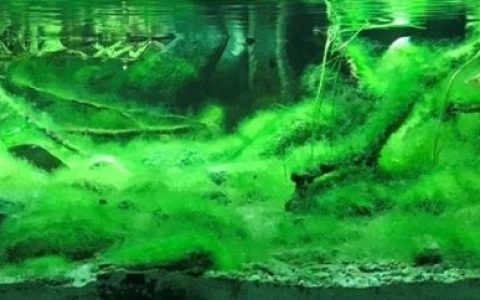
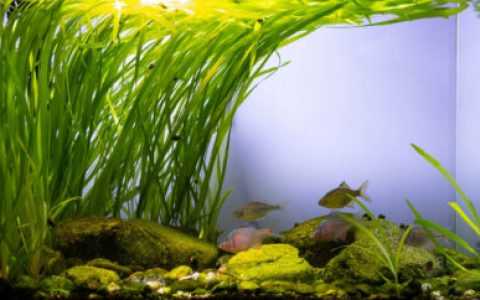
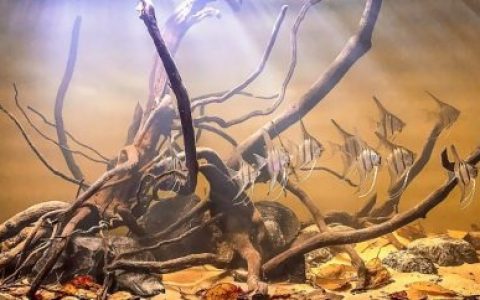
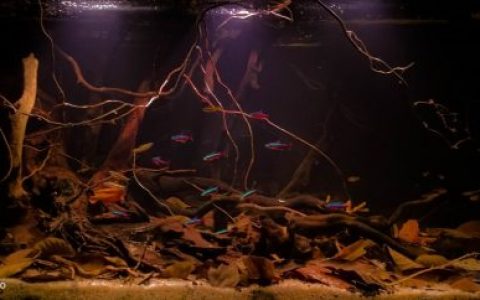
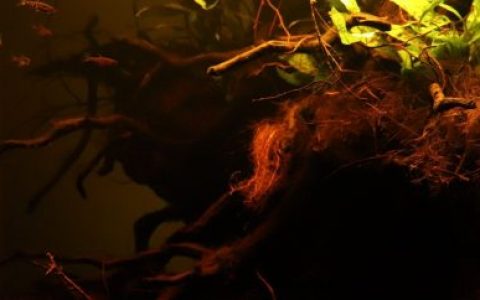
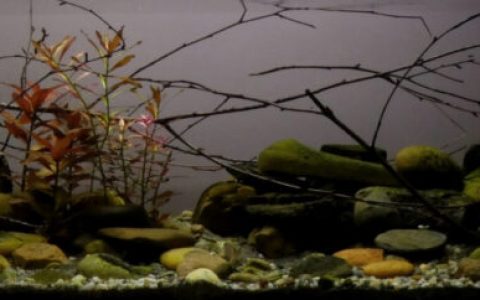
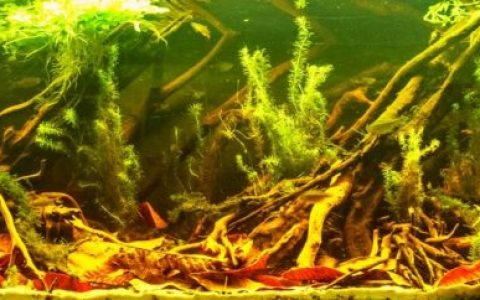
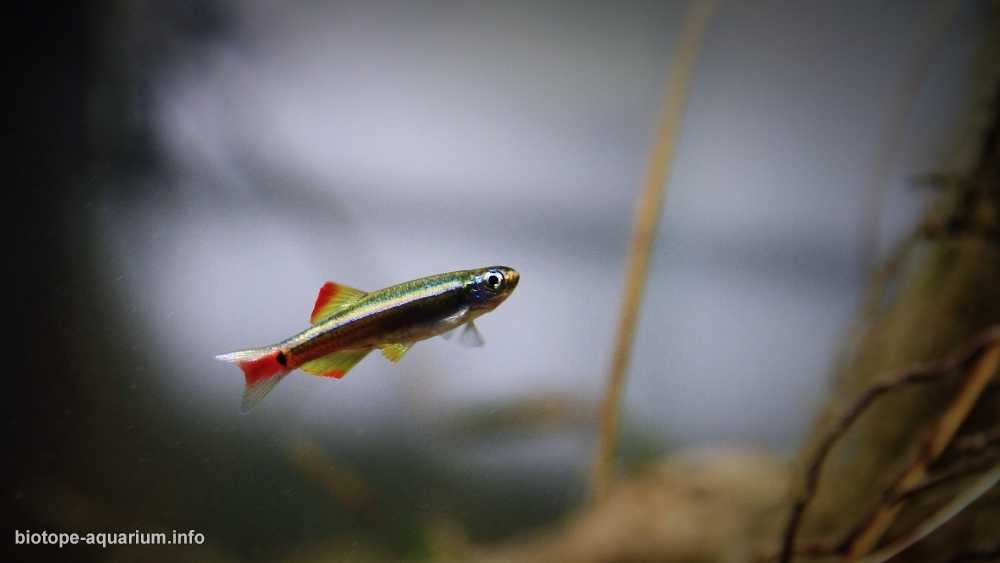
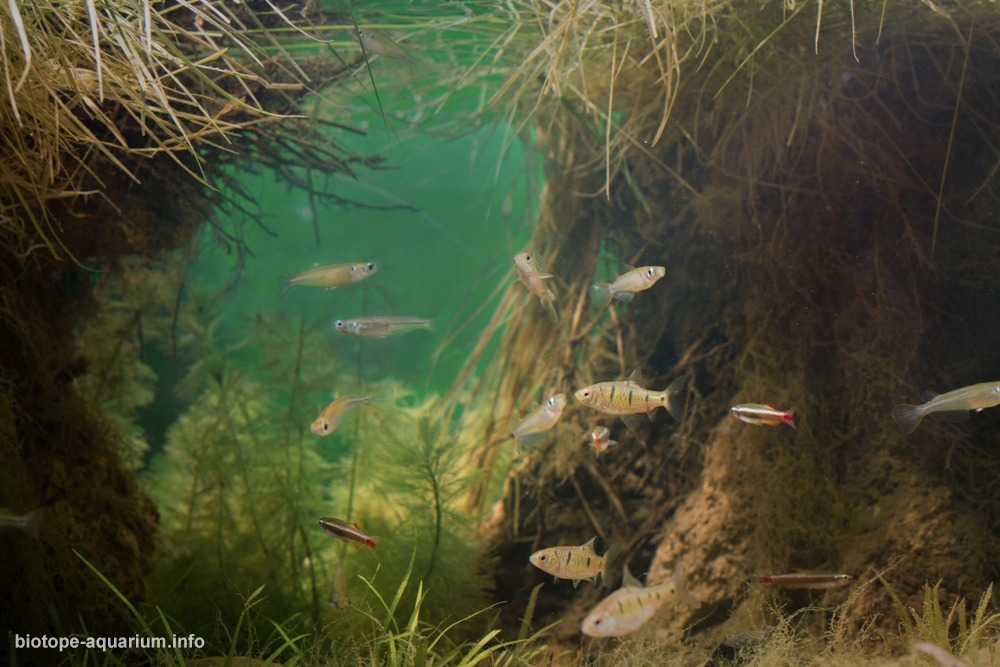
Description of decorations: Tanichthys albonubes (Lin, 1932) is one of the most beautiful native fishes in China. Unfortunately, with the continuous expansion of human activities, the habitat is constantly being destroyed, and the wild population disappears a lot. In recent years, under the conservation of native guardians, the wild community is gradually recovering. In order to let more people understand their beauty and protect them, I plan to make a biotope aquarium to truly restore the habitat of Tanichthys albonubes this year. The first-hand materials are the basis of a good habitat restoration. I invited my friends in Guangdong province to collect useful information, e.g. videos, pictures and environmental parameters, of typical habitats of Tanichthys albonubes. My target is the Yangmei River which originated in Mount Zaomu in Foshan city. The water becomes clear and gentle during the dry season. The substrate is muddy, with scattered small rocks. The vegetation is rich. The roots and leaves of the terrestrial plants live on the river bank are naturally falling down to the water, forming a natural shelter for Tanichthys albonubes and other fish, where they can grow, play, and reproduce. All the materials used in my aquarium, including rocks, branches, dry leaves, etc., come from the wild nature. In order to restore wild habitat of Tanichthys albonubes in the most authentic way, I use the natural pond mud taking from the origin in Foshan, Guangdong Province, which is vital in producing beneficial bacteria and achieving the same water quality parameters as in the original habitat. I restored the banks of river using rocks and pond mud on the left side and the back of the aquarium, and planted a lot of grass on the banks. After a few months, the roots of these terrestrial plants grew underwater and extend all the way down, eventually firmly plunging into the bed. The leaves of the grass naturally fall into the water. After a long period of soaking, some of the leaves begin to turn yellow and become spoiled, providing a lot of shelters and foods for the fish. I planted a large number of Myriophyllum hippuroides (Nuttall ex Torrey & A. Gray 1840) under the river bank, and also some Blyxa japonica (Ascherson and Gurke, 1889) on the bottom. These aqua plants played an important role in maintaining water quality and ecological balance. They also provide the fish with a space to play and breed. A good ecosystem must consider not only the survival and reproductive needs for the adult fish, but also the needs for new born fish survival and growth. I used willow roots and fallen leaves to build a floating island connected with the river bank. As time passed, more and more dry leaves fell into the water and eventually gathered around the island, which effectively slow down the water flow. It also provides an ideal upper layer living space for the new born fish to escape from the attack. Two months after the floating island was built, the Oryzias pectoralis (T. R. Roberts,1998) succeeded in breeding in my aquarium. You can imagine the excitement when I saw the new born fish swimming in my aquarium. I made an interesting attempt in this small ecosystem. Two grasshoppers were caught from the wild, and they were kept in the grass on the bank, grazing and singing every day. The most interesting thing is to observe the grasshopper molting. The grasshopper slowly breaks free from the body and the wet body and soft wings are slowly dried, restore color and hardness, complete the growth. The entire process of molting will last for about an hour. These two grasshoppers have molted several times and have grown from larvae to adult worms. Looking forward to the succeed in breeding.
装饰说明:Tanichthys albonubes(林,1932)是中国本土最美丽的鱼类之一。不幸的是,随着人类活动的不断扩张,栖息地持续被破坏,野生种群大量消失。近年来,在本土守护者的保护下,野外群落逐渐恢复。为了让更多人了解它们的美并保护它们,我计划今年制作一个生境水族箱,真实还原 Tanichthys albonubes 的栖息地。第一手材料是一份良好栖息地还原的基础。我邀请了广东省的朋友收集 Tanichthys albonubes 典型栖息地的有用信息,如视频、图片和环境参数。我的目标是发源于佛山市枣木山的杨梅江。枯水季节时水质变得清澈且平缓。底质为淤泥,散布着小石块。植被茂盛。 生长在河岸上的陆生植物的根和叶自然落入水中,为白云丹尼氏鱼(Tanichthys albonubes)及其他鱼类形成了天然庇护所,在那里它们可以生长、嬉戏和繁殖。我水族箱中使用的所有材料,包括岩石、枝条、枯叶等,均来自野外自然。为了以最真实的方式还原白云丹尼氏鱼的野外栖息地,我使用了取自广东省佛山原产地的天然池塘泥,这对产生有益细菌并达到与原始栖息地相同的水质参数至关重要。我在水族箱左侧和后部用岩石与池塘泥恢复了河岸,并在岸上种植了大量草。几个月后,这些陆生植物的根在水下生长并一直延伸,最终牢固地扎入底床。草的叶子自然落入水中。经过长时间浸泡,一些叶子开始变黄并腐烂,为鱼类提供了大量的庇护所和食物。我种植了大量的羽状水草 Myriophyllum hippuroides (Nuttall ex Torrey & A. 灰氏(Gray,1840)在河岸下方,还有一些日本水芙蓉(Blyxa japonica,Ascherson and Gurke,1889)生长在底部。这些水生植物在维持水质和生态平衡方面起着重要作用。它们也为鱼类提供了玩耍和繁殖的空间。一个良好的生态系统必须考虑的不仅是成鱼的生存和繁殖需求,还要考虑新生鱼类的存活和生长需求。我用柳树根和落叶搭建了一个与河岸相连的浮岛。随着时间推移,越来越多的干叶落入水中并最终聚集在浮岛周围,有效地减缓了水流。它还为新生鱼类提供了理想的上层生活空间,以躲避攻击。浮岛建成两个月后,胸鳚(Oryzias pectoralis,T. R. Roberts,1998)在我的水族箱里成功繁殖。当我看到幼鱼在水族箱中游动时,你可以想象我的兴奋。我在这个小生态系统里做了一个有趣的尝试。两只从野外捕来的蚱蜢被放在岸边的草丛里,每天在那儿吃草并鸣叫。 最有趣的是观察蚱蜢蜕皮。蚱蜢慢慢从躯体中钻出,湿漉漉的身体和柔软的翅膀慢慢变干,恢复颜色和硬度,完成成长。整个蜕皮过程大约持续一个小时。这两只蚱蜢已经蜕皮多次,已经从幼虫长成成虫。期待繁殖成功。
Description of equipment: Kessil Tuna Sun A160WE 40w LED lamp, Spectrum 6,000K to 9,000K. EHEIM 600 classic external filter (1000 L/H)
设备说明:Kessil Tuna Sun A160WE 40w LED 灯,光谱 6000K 到 9000K。EHEIM 600 经典外置滤器(1000 L/H)
Water parameters: Aquarium water looks clear. The aquarium is kept at room temperature at about 25°C at this time of year. The parameters of the water are 6.5 pH and 7 GH. These pH and GH values are reached thanks to the use of the same substrate of the aquatic system.
水质参数:水族箱水看起来清澈。此时节水族箱保持室温,大约 25°C。水的参数为 pH 6.5 和 GH 7。这些 pH 和 GH 值通过使用该水生系统相同的底床而达到。
INFORMATION ABOUT BIOTOPE
关于生物群落的信息
Description of the area surrounding the biotope: The Yangmei River is originated in Mount Zaomu and cross through Yangmei Town, and flows into the Gaoming River in Renhe Town. Finally, it flows into West river which is one of the main streams of the Pearl River system in Guangdong Province. The Yangmei River is 39.43 kilometers long with a total drop of 805.2 meters and a rain collection area of 191.6 square kilometers. The rivers in the territory are intertwined, the plains account for 75% of the total area, and the hills account for 25% of the total area. Yangmei river is located in Foshan city which is in the central plain of the Pearl River Delta in Guangdong Province. Mount Zaomu is the first peak of Foshan City. It is 805.2 meters above sea level. The mountains are covered by large forests and the vegetation is flourishing. Wild animals such as wild boars and wild goats and many birds live in the mountains.
生物群落周边地区的描述:杨梅河发源于枣木山,穿过杨梅镇,流入仁和镇的高明河,最终注入西江,西江是广东省珠江水系的主干之一。杨梅河全长 39.43 公里,总落差 805.2 米,集雨面积 191.6 平方公里。境内河流纵横交错,平原占总面积的 75%,山地占 25%。杨梅河位于佛山市,处于广东省珠江三角洲中部平原。枣木山是佛山市的第一峰,海拔 805.2 米。群山被茂密的森林覆盖,植被茂盛。山中栖息着野猪、野山羊等野生动物以及许多鸟类。
Description of the underwater landscape of the biotope: The Yangmei River has a relatively slow water flow in the dry season. The substrate at the bottom of the river is muddy with sand and rocks. Underwater vegetation is very rich. A large amount of Myriophyllum hippuroides are distributed (Myriophyllum hippuroides is invasive species in China, but at present they are very common in ponds and streams) in some specific course of the river. The aquatic plants, benthic animals and plankton are extremely rich. There are many upper, middle and lower layers of fish, and the ecological groups are more complicated. The roots of the land plants immersed into the water, together with branches providing abundant shelter and food sources for underwater life.
生物群落水下景观描述:在枯水期,杨梅河的水流相对缓慢。河底基质为淤泥夹砂岩。水下植被非常丰富。在河流的某些特定河段大量分布有假水芹(Myriophyllum hippuroides)(假水芹在中国为入侵物种,但目前在池塘和溪流中非常常见)。水生植物、底栖动物和浮游生物极为丰富。鱼类分布有上中下三个层次,生态群落更加复杂。陆生植物的根系浸入水中,连同枝条一起为水下生物提供了丰富的庇护所和食物来源。
Description of the parameters of the habitat: Foshan belongs to the subtropical maritime monsoon climate. The coordinates of Mount Zaomu are 23°01′19′′N 113°07′15′′E. The annual average temperature is 22.5 °C. The annual precipitation is 1,681.2 mm, and the annual average sunshine is 1886.3 hours. The typhoon activity is frequent, and the rainfall could reach 79% of the year in the rainy season from April to September. During the rainy season, the water level rises obviously. The soil, branches and leaves along the river bank are washed into the river. The water level is reduced during the dry season (from October to March), and the organic matter content in the water is also reduced. The water becomes clear and gentle. The typical pH is 6.5 and GH is 6.8 during the dry season.
栖息地参数说明:佛山属亚热带海洋性季风气候。枣木山的坐标为北纬 23°01′19′′,东经 113°07′15′′。年平均气温为 22.5°C。年降水量为 1681.2 毫米,年平均日照时数为 1886.3 小时。台风活动频繁,雨季(4 月至 9 月)降雨可达全年 79%。雨季期间,水位明显上升,河岸的土壤、树枝和落叶被冲入河中。旱季(10 月至翌年 3 月)水位降低,水中的有机质含量也减少。水质变得清澈而平缓。旱季的典型 pH 值为 6.5,总硬度(GH)为 6.8。
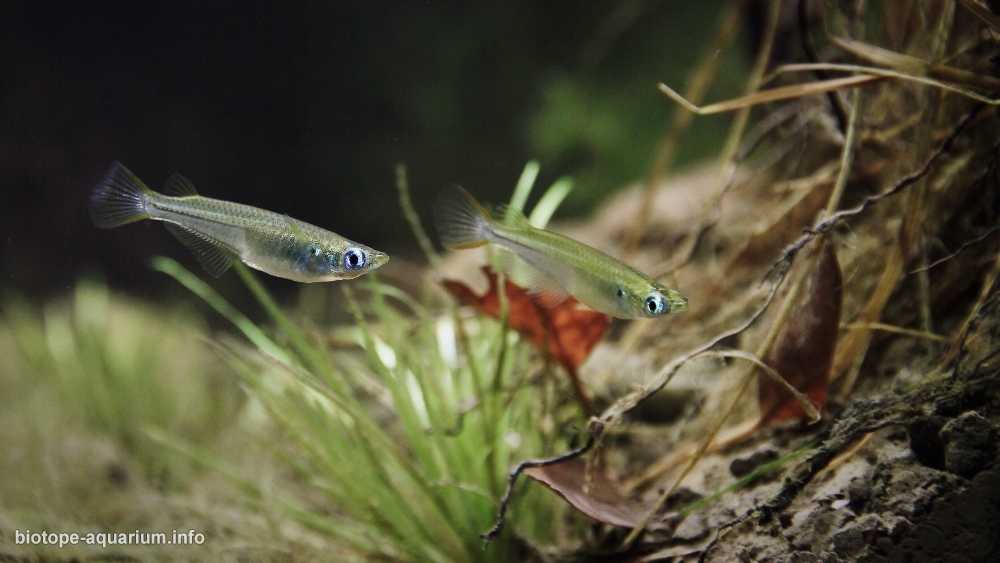
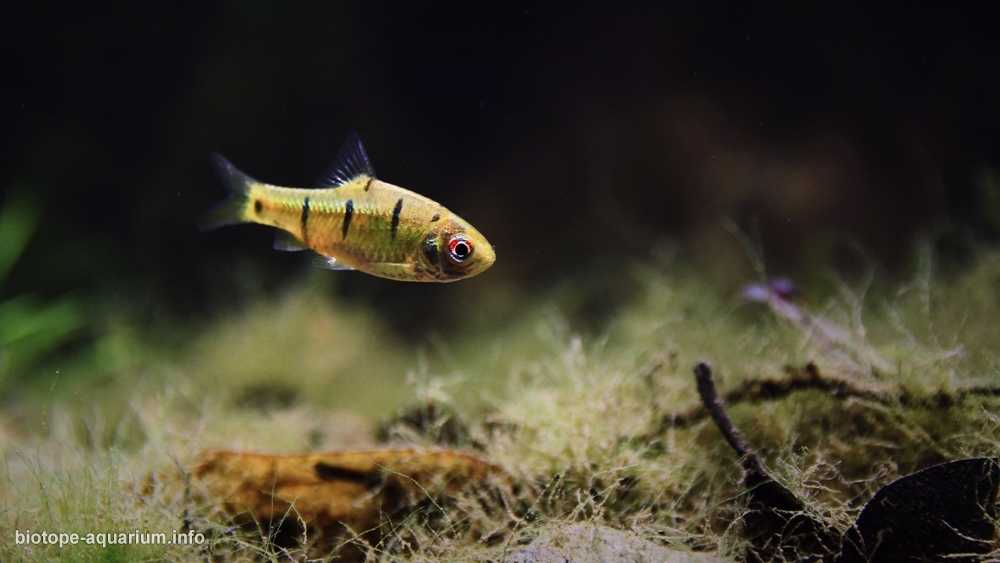
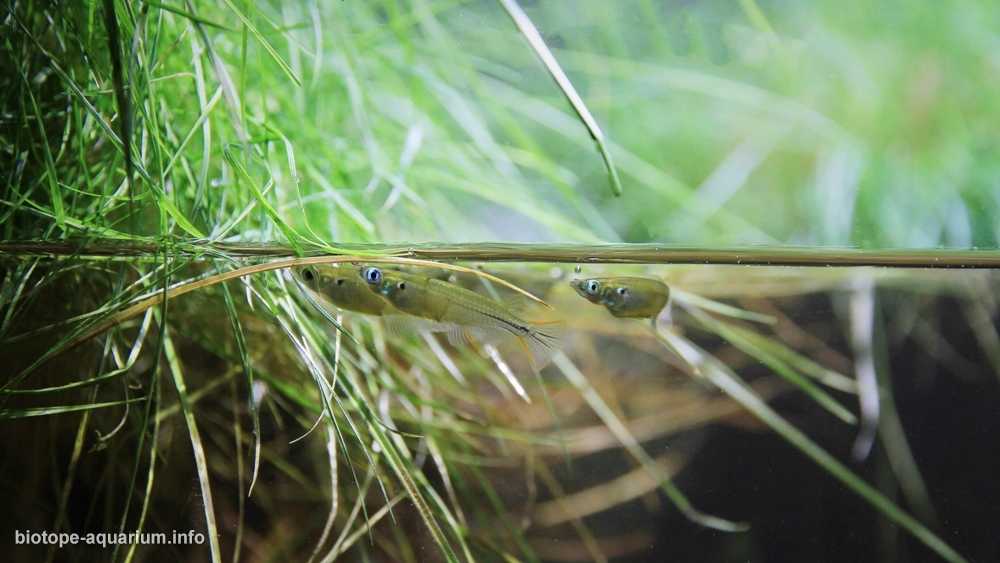
List of fishes and invertebrates occurring in the nature biotope: The Oryzias pectoralis (T. R. Roberts,1998) prefers to inhabit the upper layer of water, usually on top of the underwater plants near the river bank. Tanichthys albonubes (Lin, 1932), Rasbora steineri (Nichols et C. H. Pope, 1927), Aphyocypris normalis (Nichols & Pope, 1927) and Barbodes semifasciolatus (Günther, 1868) live in the middle and bottom of the water and prefer to shuttle among the underwater plants. Caridina cantonensis (Yu,1938) also lives in this river.
自然生物群落中出现的鱼类和无脊椎动物清单:胸鳍稻氏鱼 Oryzias pectoralis (T. R. Roberts,1998) 喜欢栖息在水体上层,通常位于河岸附近的水下植物顶部。白云丹氏鱼 Tanichthys albonubes (Lin, 1932)、斯氏细鳞鱲 Rasbora steineri (Nichols et C. H. Pope, 1927)、常规拟鲤 Aphyocypris normalis (Nichols & Pope, 1927) 和半带拟鲤 Barbodes semifasciolatus (Günther, 1868) 生活在水体的中下层,偏好在水下植物间穿梭活动。广州淡水虾 Caridina cantonensis (Yu,1938) 也生活在这条河中。
List of plants found in the nature biotope: Myriophyllum hippuroides (Nuttall ex Torrey & A. Gray 1840), associated with other underwater plants such as Blyxa japonica (Ascherson and Gurke, 1889) are found in the Yangmei River. The color of these plants is a little yellow due to lack of light. Myriophyllum hippuroides is invasive species in China, but at present they are very common in ponds and streams.
自然生物群落中发现的植物清单:海柳状鳍叶草 Myriophyllum hippuroides (Nuttall ex Torrey & A. Gray 1840),以及与之共生的其他水下植物如日本水草 Blyxa japonica (Ascherson and Gurke, 1889) 出现在杨梅河中。由于光照不足,这些植物的颜色有些发黄。海柳状鳍叶草在中国是入侵物种,但目前它们在池塘和小溪中非常常见。
Threats to the ecology: Because the reproductive capacity of Tanichthys albonubes (Lin, 1932) is not strong, the population is small. In recent years, because of human activities, the destruction of mountain forests in the production areas, the soil was loss and the water was cut off or diverted. The ecological environment of the original distribution area of Tanichthys albonubes has changed greatly, which has made it difficult to find traces in nature. The theme I chose is to let more people understand Tanichthys albonubes and work together to protect them, so that this beautiful species can continue to flourish in nature.
对生态的威胁:由于白云山灯鱼(Tanichthys albonubes (Lin, 1932))的繁殖能力不强,种群数量较少。近年来,由于人类活动、产区山地森林被破坏,导致土壤流失、水源被切断或改道。白云山灯鱼原始分布区的生态环境已发生重大变化,因而在野外难以寻觅踪迹。我选择的主题是让更多人了解白云山灯鱼并共同保护它们,使这一美丽物种继续在自然中繁衍生息。
本文部分素材来自网络,如有类似请联系修改,如若转载,请注明出处:http://www.yangyubang.com/?p=2468