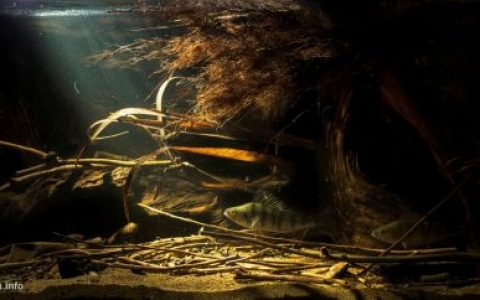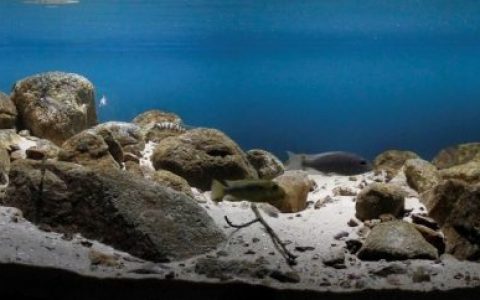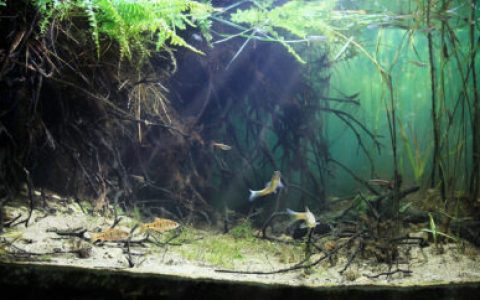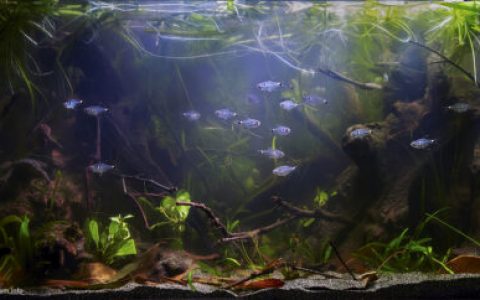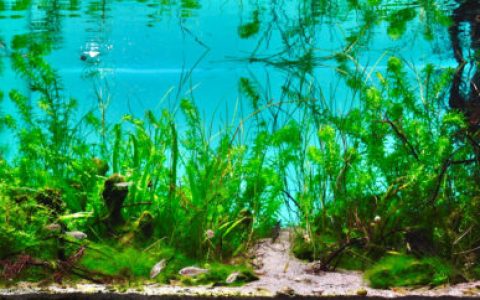
Volume: 140 L 水体容积:140 升
Dimensions: 80x40x42 cm 尺寸:80×40×42 厘米
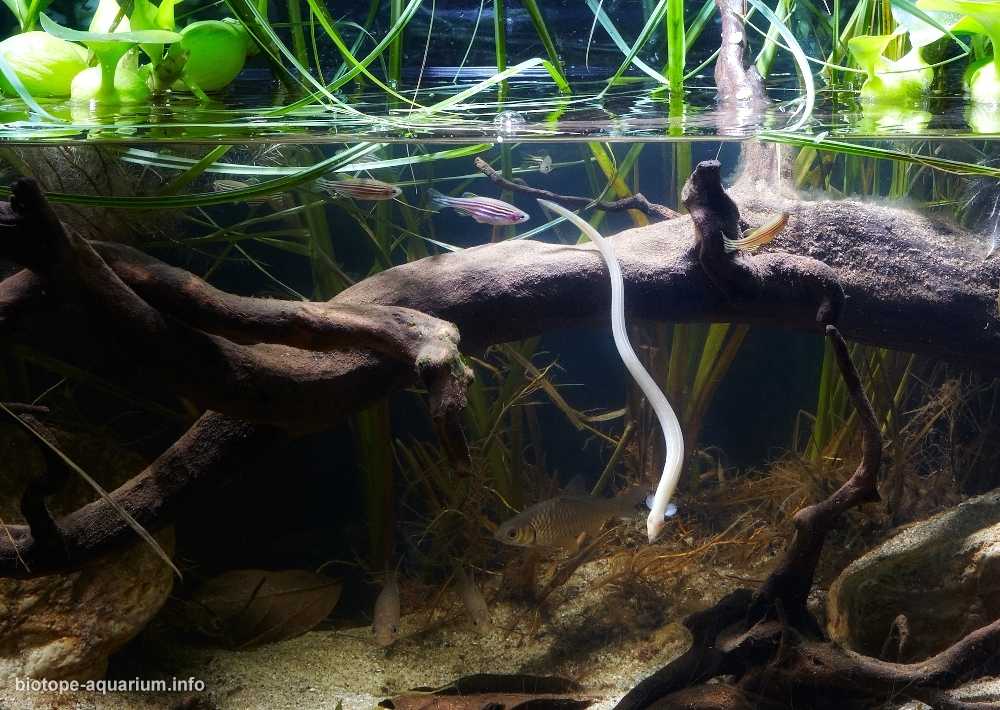
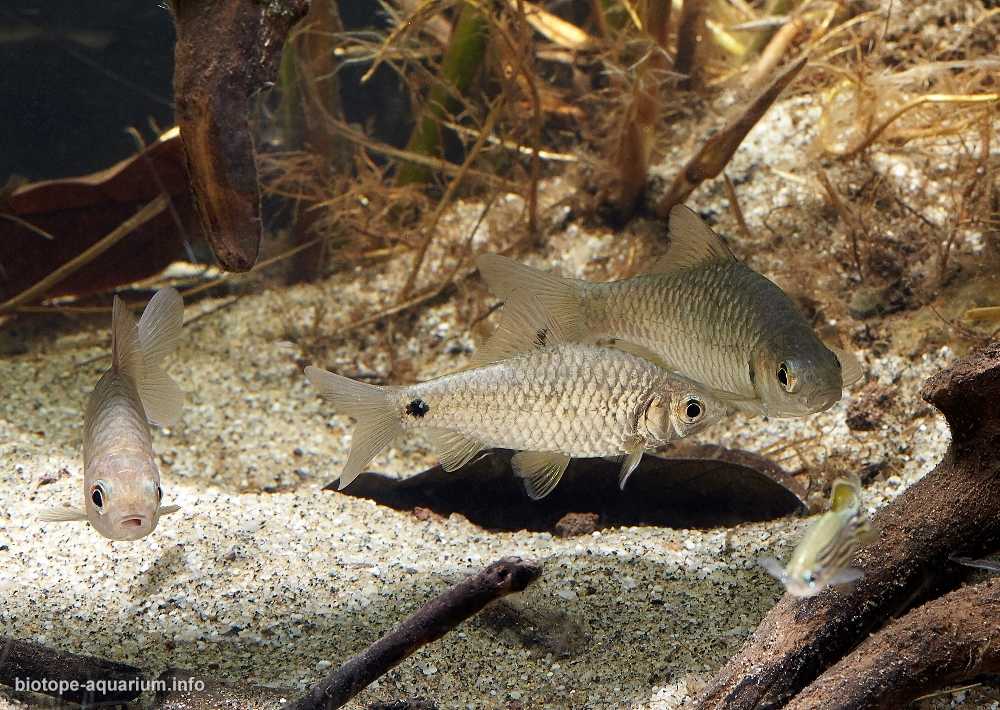
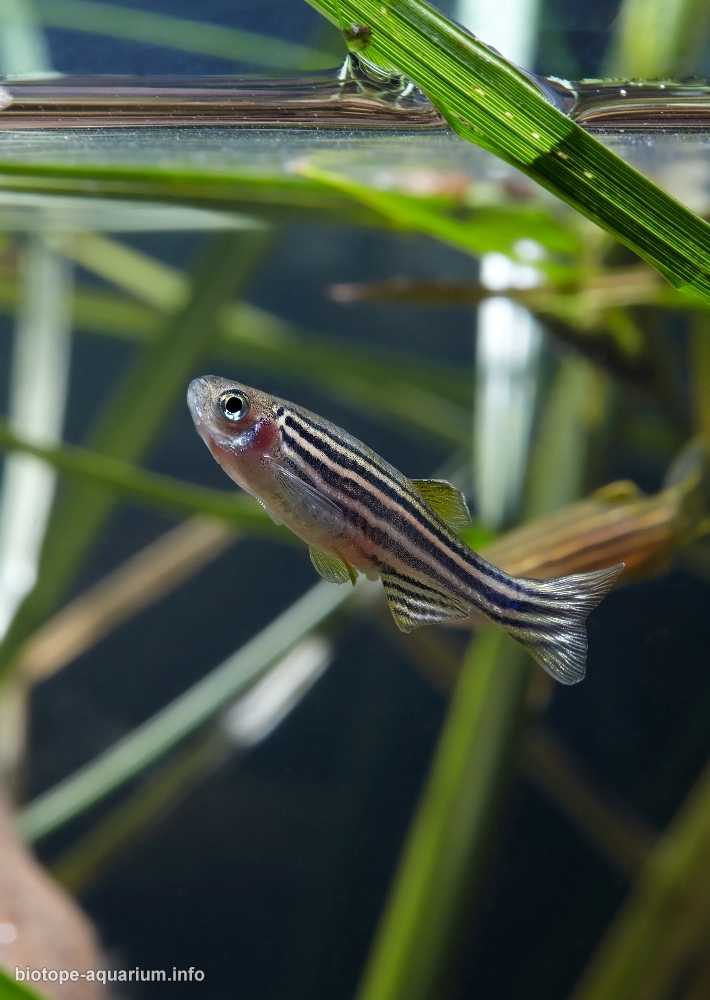
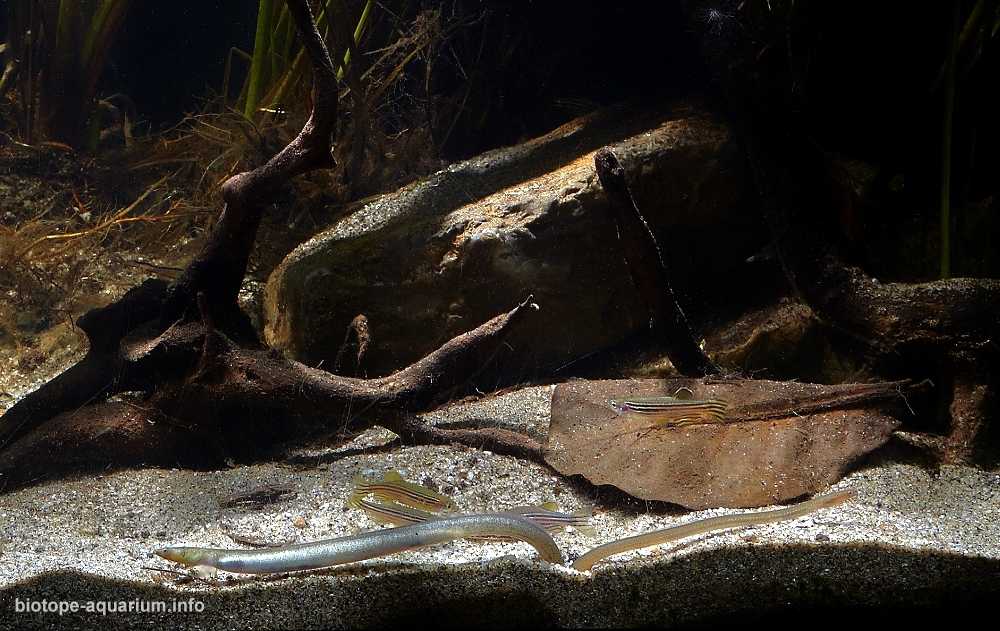
List of fishes: Pethia ticto, Danio rerio, Pisodonophis boro.
鱼类名录:条纹四须鲃(Pethia ticto)、斑马鱼(Danio rerio)、波罗稻食蛇鳗(Pisodonophis boro)。
List of plants: Eichhomia crassipes, Carex acuta, Juncus compressus.
植物名录:凤眼莲(Eichhornia crassipes)、尖苔草(Carex acuta)、扁灯心草(Juncus compressus)。
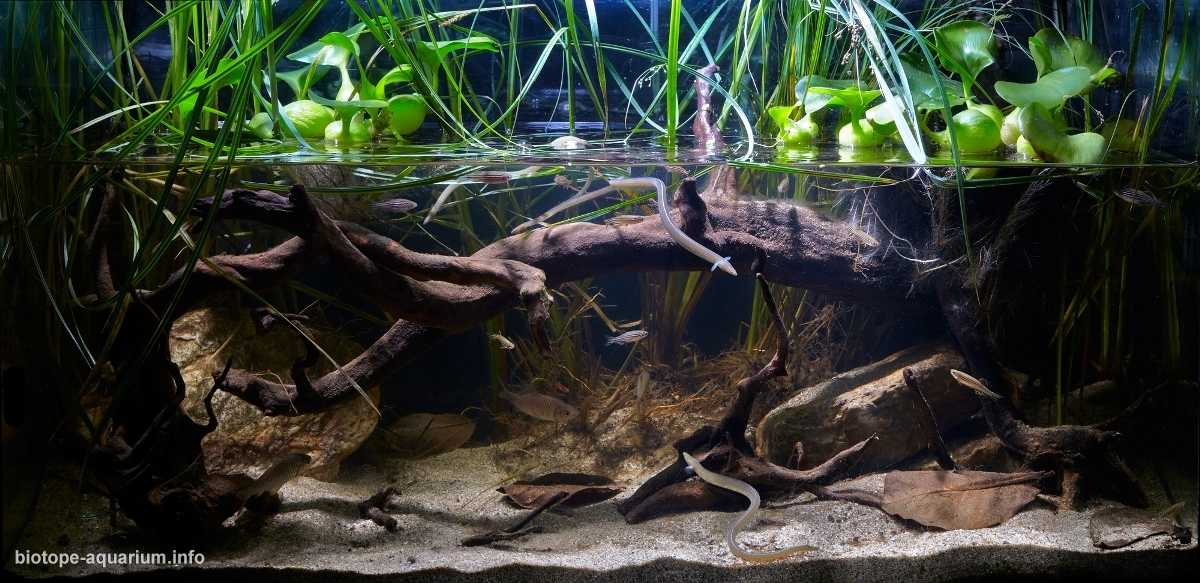
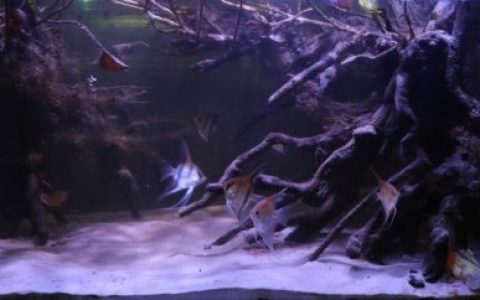
Description of decorations: Natural soil for aquariums “Light sand” UDeco River Light, 0.1-0.6 mm, desert mini driftwood UDeco Desert Driftwood XXXS, driftwood “Chinese” for aquariums and terrariums UDeco Chinese Driftwood XXL, leaves DECOTOP Catappa S, stone composition for aquariums DECOTOP Helicon 6.
装饰描述:水族箱专用天然底砂”Light sand”UDeco River Light,粒径 0.1-0.6 毫米;沙漠迷你沉木 UDeco Desert Driftwood XXXS;适用于水族箱和爬虫箱的“中式”沉木 UDeco Chinese Driftwood XXL;DECOTOP Catappa S 榄仁叶;以及 DECOTOP Helicon 6 水族箱石材组合。
Description of equipment: External filter AQUAEL MAXI KANI 250, heater AQUAEL FIX ZONE HEATER 75W, air pump AQUAEL OXYBOOST 150 Plus, TETRA Tetronic LED ProLine 780 lamp.
设备描述:外置过滤器 AQUAEL MAXI KANI 250、加热棒 AQUAEL FIX ZONE HEATER 75W、气泵 AQUAEL OXYBOOST 150 Plus,以及 TETRA Tetronic LED ProLine 780 灯具。
Water parameters: Temperature – 25 ° C, pH – 6.8, kH – 4, gH – 8, NO3 – 30 mg / l, NO2 – 0.
水质参数:温度 – 25 °C,pH – 6.8,kH – 4,gH – 8,NO3 – 30 mg/l,NO2 – 0。
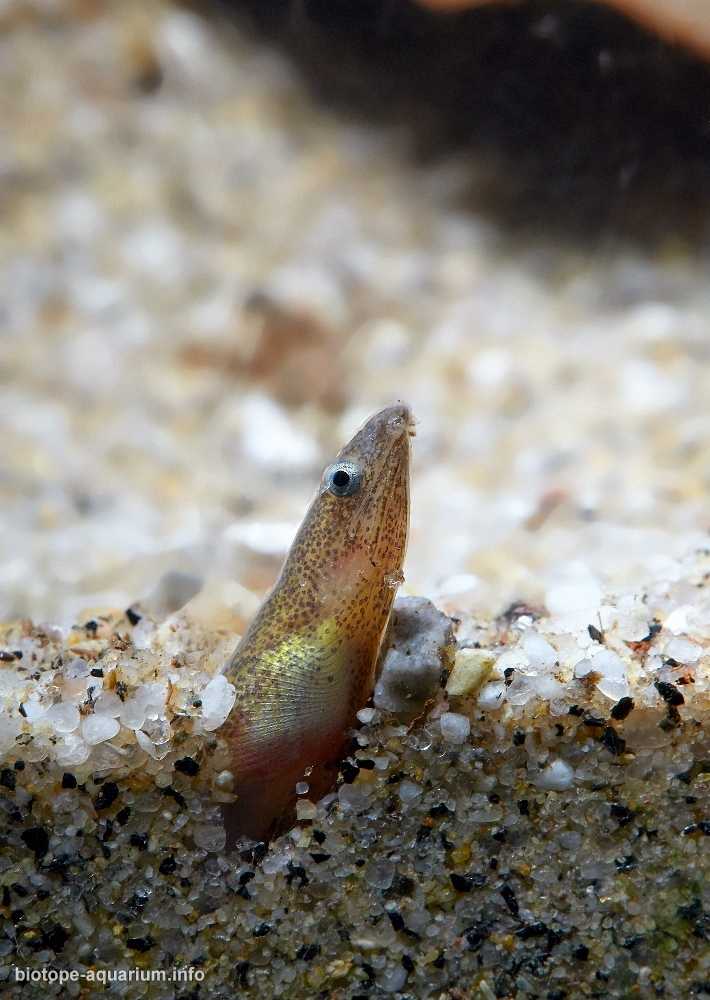
Additional info: The aquarium was created primarily to monitor the behavior of Pisodonophis boro, which appeared in the zoological trade of our country recently. The aquarium contains 4 young individuals with a length of 30 – 35 cm. Most of the time they spend buried in the sand entirely, and bury themselves with amazing agility, both head and tail forward. Therefore, in the aquarium, the minimum soil layer is 6 cm, so that the eels can demonstrate their natural behavior. They accept only live or frozen bloodworms, which are often also dragged into the sand to eat without bothering. In nature, their food is invertebrates, larvae, and crustaceans. They do not show interest in fish, you can safely keep moving fish of a rather small size with them, you just need to make sure that the eels get enough food, too active neighbors can leave them hungry. According to various sources, the maximum size of rice eel in nature is 70 – 90 cm. What size these fish can reach in the aquarium, we do not know yet, judging by our observations, they grow quite slowly, but as they grow, we plan to provide them with large aquariums and proportionate neighbors. To maintain the necessary mineralization, when changing 15% of water per week, the mineral salt SERA was used.
附加信息:该水族箱主要是为了监测波氏蛇鳗(Pisodonophis boro)的行为而设立,这种鱼近期才出现在我国的观赏鱼贸易中。水族箱内饲养了 4 条体长 30–35 厘米的幼鱼。它们大部分时间完全埋藏在沙中,并能以惊人的敏捷度头朝前或尾朝前将自己埋入沙中。因此,水族箱中的底砂层厚度至少为 6 厘米,以便这些鳗鱼能够展现其自然行为。它们只接受活体或冷冻的红虫,且常常将食物拖入沙中安心进食。在自然环境中,它们的食物包括无脊椎动物、幼虫和甲壳类。它们对鱼类不感兴趣,可以安全地与体型较小的活动性鱼类混养,只需确保鳗鱼能获得充足的食物即可,因为过于活跃的邻居可能会让它们挨饿。根据各种资料,稻鳗在自然环境中的最大体长为 70–90 厘米。至于它们在水族箱中能长到多大,目前尚不清楚;根据我们的观察,它们的生长速度相当缓慢,但随着它们逐渐长大,我们计划为它们提供更大的水族箱以及体型相称的混养伙伴。 为维持必要的矿化度,每周更换 15% 的水时,使用了 SERA 矿物盐。
INFORMATION ABOUT BIOTOPE
关于生物群落的信息
Description of the area surrounding the biotope: The state of India Odisha is located in the north-east of the Indian subcontinent, washed by the Bay of Bengal. On the slopes of the mountains of the Eastern Ghats grow dense deciduous monsoon forests, dropping foliage in the dry season; thickets of mangroves are found along the coast. The plain territory is almost completely plowed up. 80% of the total cultivated area in the state is reserved for rice (about 10% of the total rice production in India). The state of Odisha occupies the coastal plains along the Bay of Bengal, in the deltas of the Mahanadi, Brahmani and Baytarani rivers. The coastline is slightly indented and there are no convenient natural harbors. Cyclones causing catastrophic floods are frequent. Odisha refers to those states of India that are more likely than others to suffer from natural disasters. Lake Chilika is located south of the mouth of the Mantei River and is India’s largest lagoon. The lake appeared due to the siltation of the Mantei River, which flows into the northern part of the lake and carries its waters to the Bay of Bengal, forming a shallow along the east coast and creating a shallow lagoon. If not for its smooth surface, Lake Chilika, the largest lagoon in Asia, could well be mistaken for the sea. From its muddy front shore, you can hardly distinguish a narrow strip of marshy islands and sandbanks that separate 1,100 square kilometers of brackish water from the Bay of Bengal. The area of the lake varies from 1165 km² in the rainy season to 906 km² in the drought. There are several small islands on the lake. The largest of them, such as Parikud, Fulbari, Berahpur, Nuapara, Nalban and Tampara are separated by shallow channels. These islands, together with the Maloud Peninsula, form part of the district of Puri called Krushnaprasad. Perfect ecology and amazing flora and fauna of Krushnaprasad attract tourists from all over the world. The north coast of the lake is part of the Hordha region, and the west coast is part of the Ganjam region. Lake Chilika is a habitat for both migratory and permanent waterfowl, in particular flamingos. Migratory birds arrive in October from such distant places as Siberia, Iran, Iraq, Afghanistan, the Himalayas and winter on the lake until March.
生物群落周边区域描述:印度的奥里萨邦位于印度次大陆东北部,濒临孟加拉湾。东高止山脉的山坡上生长着茂密的落叶季雨林,旱季时树叶凋零;沿海地带则分布着红树林丛。平原地带几乎全部被开垦为农田。该邦 80% 的耕地用于种植水稻(约占印度水稻总产量的 10%)。奥里萨邦占据沿孟加拉湾的沿海平原,地处马哈纳迪河、布拉赫马尼河和拜塔拉尼河的三角洲区域。海岸线略有曲折,缺乏便利的天然港湾。引发灾难性洪水的气旋频发,奥里萨邦是印度最易遭受自然灾害的邦之一。奇利卡湖位于曼泰河口以南,是印度最大的潟湖。该湖因曼泰河淤积而形成;曼泰河流入湖泊北部,将其水流注入孟加拉湾,沿东海岸形成浅滩,并造就了一片浅水潟湖。 若非湖面平滑,奇利卡湖——亚洲最大的潟湖——很可能被误认为大海。从其泥泞的前岸望去,几乎难以分辨出那条狭长的沼泽岛屿与沙洲带,它们将 1100 平方公里的咸淡水与孟加拉湾隔开。湖泊面积随季节变化,雨季可达 1165 平方公里,旱季则缩减至 906 平方公里。湖中分布着数座小岛,其中最大的几座如帕里库德(Parikud)、富尔巴里(Fulbari)、贝拉赫普尔(Berahpur)、努阿帕拉(Nuapara)、纳尔班(Nalban)和坦帕拉(Tampara),由浅水航道彼此分隔。这些岛屿与马卢德半岛共同构成了普里地区下辖的克里希纳普拉萨德(Krushnaprasad)区。克里希纳普拉萨德拥有完美的生态环境以及令人惊叹的动植物资源,吸引着来自世界各地的游客。湖北岸属于霍尔达(Hordha)地区,西岸则属于甘贾姆(Ganjam)地区。奇利卡湖是迁徙性与留居性水禽的栖息地,尤其是火烈鸟。每年十月,候鸟从西伯利亚、伊朗、伊拉克、阿富汗及喜马拉雅山脉等遥远之地飞抵此地,在湖上越冬直至次年三月。
The lake is home to a variety of aquatic animals. 225 species of fish live in the waters of Chilica, and the Irrawaddy dolphin (Orcaella brevirostris).
该湖泊是多种水生动物的家园。奇利卡湖水域中生活着 225 种鱼类,以及伊洛瓦底江豚(Orcaella brevirostris)。
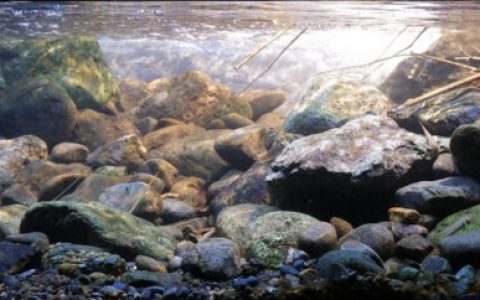
Description of the underwater landscape of the biotope: Since this lake used to be part of the Bay of Bengal, the bottom is sandy, flat, soft soil, brackish water, and plants are only in shallow water. In the underwater landscape there are stones, driftwood, fallen leaves. The water is clear, along the coast there are moisture-loving plants such as reeds, sedges.
生物群落的水下景观描述:由于该湖曾是孟加拉湾的一部分,其湖底为沙质、平坦、柔软的土壤,水体呈半咸水状态,植物仅分布于浅水区。水下景观中包含石块、沉木和落叶。水质清澈,沿岸生长着芦苇、莎草等喜湿植物。
Description of the parameters of the habitat: Chilika is the largest salt lake in Asia, which is located in the east of India, is actually a lagoon separated from the Bay of Bengal by a long sand spit. Salt waters fall into it through the mouth, which, mixed with the water of the rivers flowing into the lake, form a unique ecosystem. In drought, between rainy seasons, the area of the lake is halved. Due to silt sediments, the amount of salt per unit volume of lake water decreases. This leads to a rapid growth of water hyacinths, a decrease in oxygen in the water and – as a result – to a reduction in fish stocks, which is the only source of food for the local population. The water is clear, brackish, T 17-25 ° C, pH 6.7-7.0, GH 6-15.
栖息地参数描述:奇利卡湖是亚洲最大的咸水湖,位于印度东部,实际上是一个被长条沙嘴与孟加拉湾隔开的潟湖。海水通过河口注入湖中,与流入湖泊的河水混合,形成了独特的生态系统。在雨季之间的干旱期,湖泊面积会缩减一半。由于泥沙沉积,单位体积湖水中的盐分含量下降,导致水葫芦迅速繁殖、水中溶解氧减少,进而造成鱼类资源衰退——而鱼类正是当地居民唯一的食物来源。水体清澈,呈半咸水性质,温度 17–25 °C,pH 6.7–7.0,总硬度(GH)6–15。
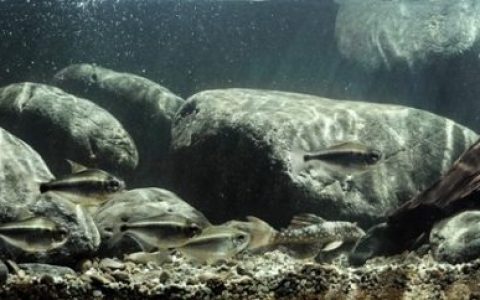
List of fishes and invertebrates occurring in the nature biotope: Pethia ticto, Danio rerio, Pisodonophis boro, Uca naulipes, Acentrogobius griseus, Bathygobius ostreicola, Pisodonophis boro, Oryzias dancena, Parambassis ranga, Ailia coila, Dussumieria elopsoides, Amblygaster sirm, Tenualosa ilisha.
自然生境中出现的鱼类和无脊椎动物名录:Pethia ticto、Danio rerio、Pisodonophis boro、Uca naulipes、Acentrogobius griseus、Bathygobius ostreicola、Pisodonophis boro、Oryzias dancena、Parambassis ranga、Ailia coila、Dussumieria elopsoides、Amblygaster sirm、Tenualosa ilisha。
List of plants found in the nature biotope: Eichhomia crassipes (invasive), Carex acuta, Juncus compressus, Phragmites australis.
自然生境中发现的植物名录:Eichhomia crassipes(入侵种)、Carex acuta、Juncus compressus、Phragmites australis。
Threats to the ecology: The Ramsar Convention recognizes Lake Chilika as an internationally important wetland. The Ramsar Convention was based on the fact that:
生态面临的威胁:拉姆萨尔公约将奇利卡湖认定为具有国际重要性的湿地。该公约的认定基于以下事实:
• Over a million migratory water and coastal birds spend winter on the islands
• 超过一百万只迁徙水鸟和海岸鸟类在此岛屿越冬
• More than 400 species of vertebrate animals live here
• 此处栖息着 400 多种脊椎动物
• Unique representatives live in the lagoon, living in both sea and fresh water
• 潟湖中生活着独特的物种,它们既能适应海水也能适应淡水环境
• Several rare and endangered species survived only in this region.
• 多种珍稀濒危物种仅存于该区域。
• The lagoon plays a big role in maintaining ecological diversity
• 潟湖在维持生态多样性方面发挥着重要作用。
• Weeds, rosehips and aquatic plants grow on the coast
• 海岸上生长着杂草、蔷薇果和水生植物。
The main reason for the current changes in the ecology of the lake was the new dam that separates the lake from the ocean. This highly controversial modification was approved by the government in 2001, mainly for tourism development. Aborigines of Lake Chilika, primarily living from fisheries, faced malnutrition and starvation. Irrawadd dolphins suffer from a constant hit in fishing nets and their number has already decreased to 50 individuals.
导致奇利卡湖当前生态变化的主要原因是将湖泊与海洋隔开的新建水坝。这项极具争议的改造工程于 2001 年获得政府批准,主要目的是促进旅游业发展。奇利卡湖的原住民主要依靠渔业为生,却面临着营养不良和饥饿的困境。伊洛瓦底江豚因频繁误入渔网而遭受重创,其种群数量已减少至仅 50 头。
Part of the lake is under the protection of Chilik Lake Bird Sanctuary.
该湖的部分区域受奇利卡湖鸟类保护区保护。
本文部分素材来自网络,如有类似请联系修改,如若转载,请注明出处:http://www.yangyubang.com/?p=3154