Volume: 100 L 水体容积:100 升
Dimensions: 100x50x20 cm 尺寸:100×50×20 厘米
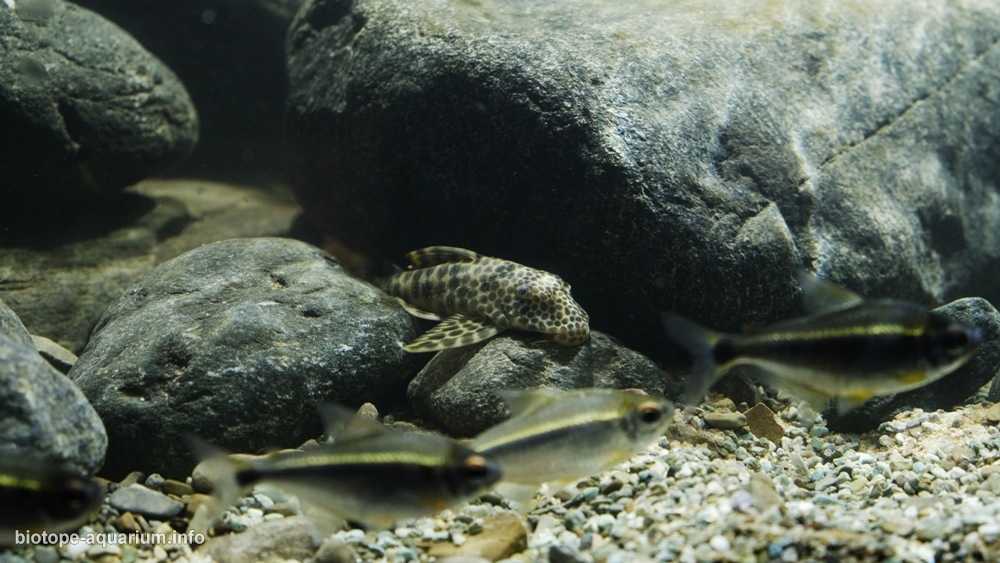
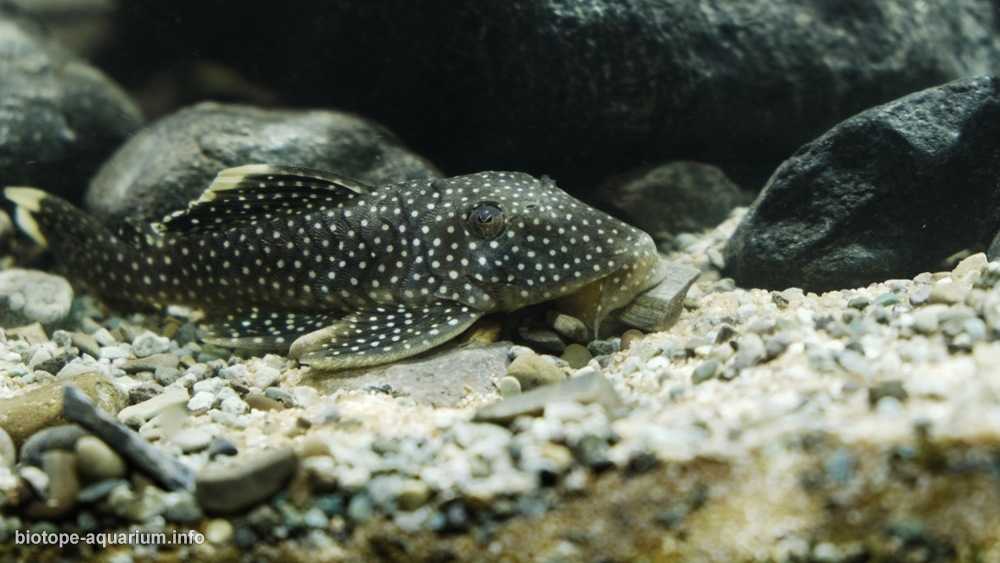
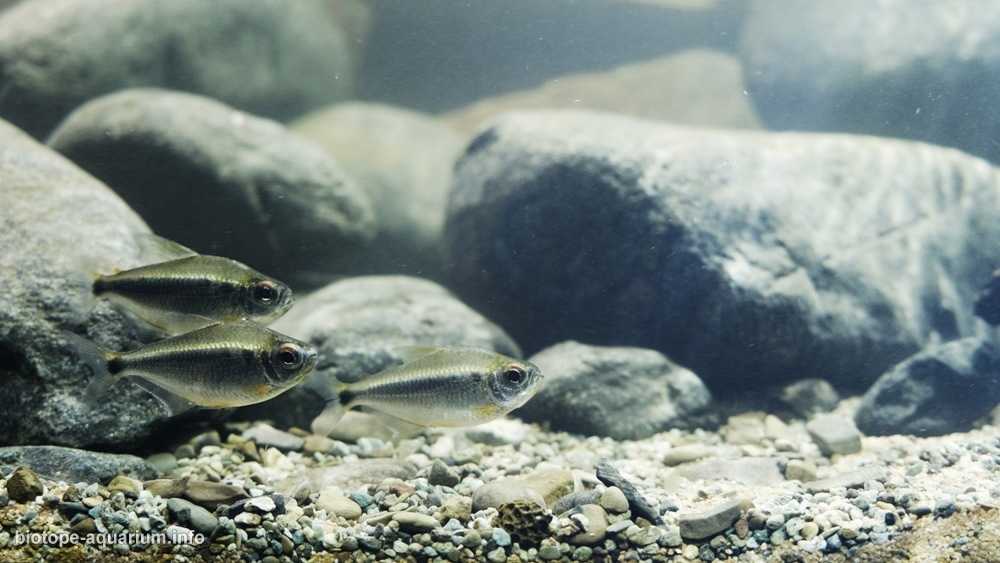
List of fishes: Scobinancistrus aureatus, Ancistomus sabaji, Baryancistrus sp, Moenkhausia heikoi
鱼类名录:金斑钩鲶(Scobinancistrus aureatus)、萨巴吉拟钩鲶(Ancistomus sabaji)、Baryancistrus sp.、海科氏莫恩克豪西亚鱼(Moenkhausia heikoi)
List of plants: There are no aquatic plants except for the plants that are submerged during the rainy season.
植物名录:除雨季被淹没的植物外,无水草。
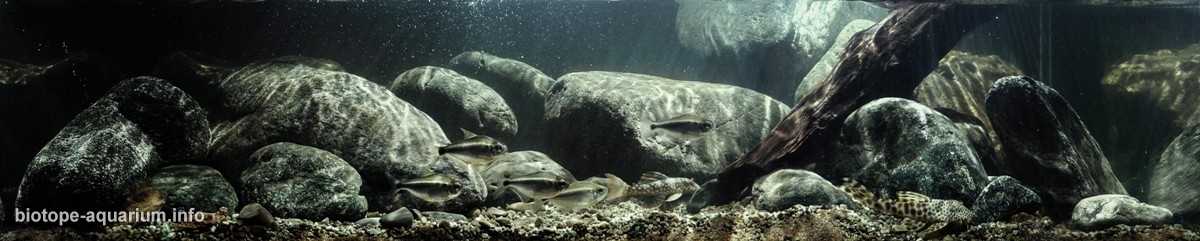
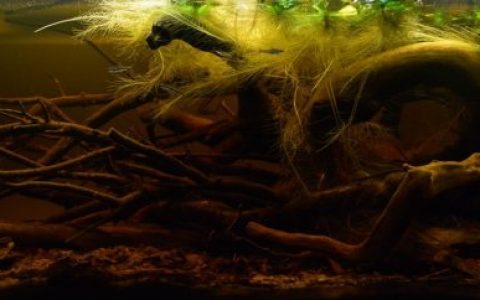
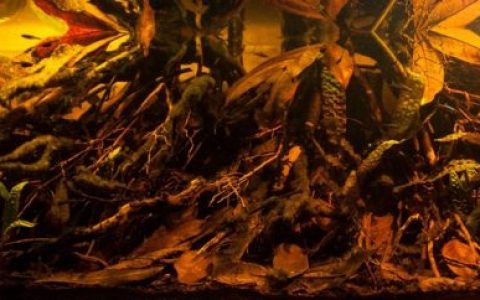
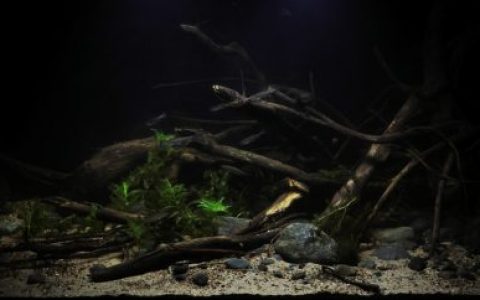
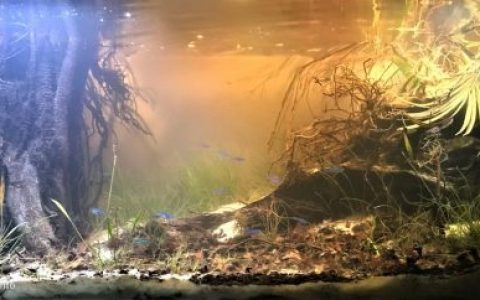
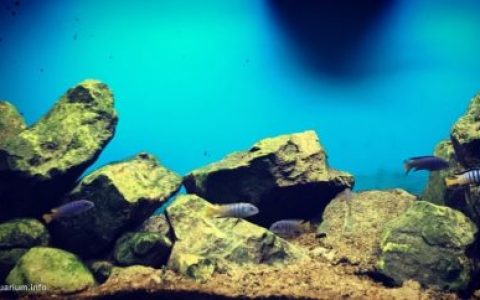
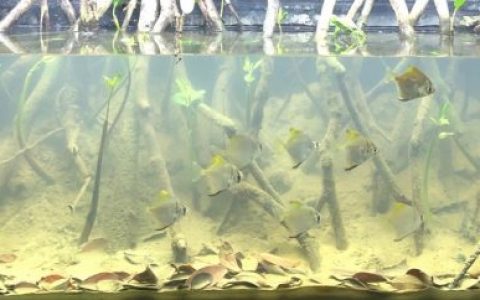
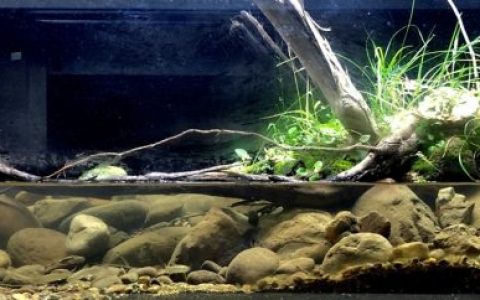
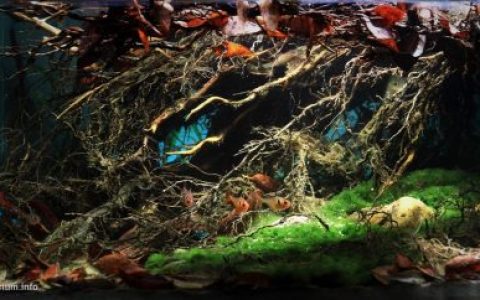
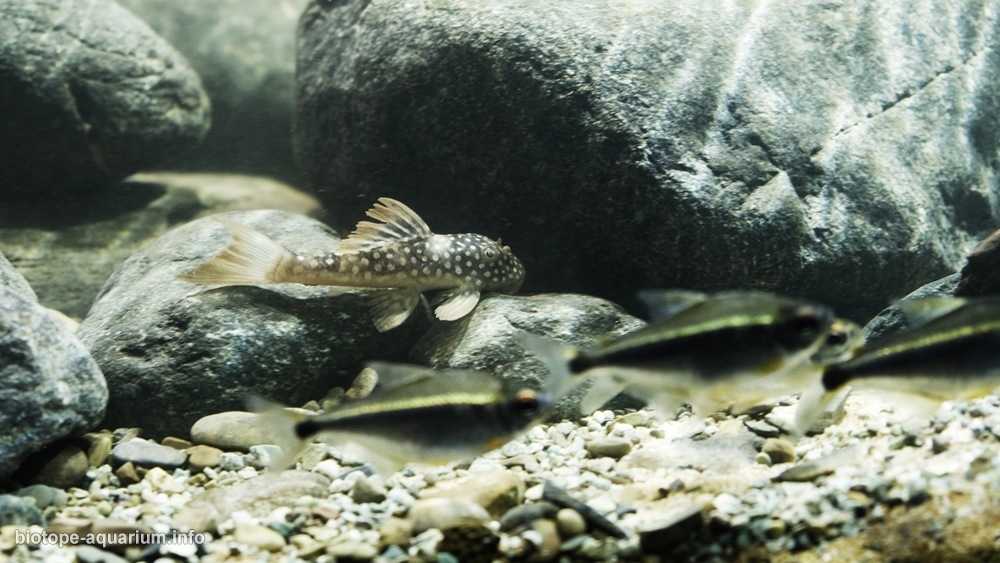
Description of decorations: The pebbles, rocks and sands were all collected in the river. The shape and color of the selected pebbles, rocks and sands are basically the same as the habitat. At the same time, some fallen leaves and branches were found at the bottom of the river. The driftwood is very common in the Rio Xingu River. Loricariidae Family fish feed on this. I used rocks and sands of different sizes to imitate the hidden places in the habitat for Loricariidae Family fish to live. In addition to these fish, I also put some Moenkhausia heikoi as middle-layer fish to enrich the species in the aquarium. In my aquarium, different fish can find almost the same environment as in the habitat. Scobinancistrus aureatus, Ancistomus sabaji and Baryancistrus sp. live in the shelter area, while Moenkhausia heikoi swim in the open area. There is occasional intersection between them, just like going to the house as a guest, lively and interesting.
装饰物描述:鹅卵石、岩石和沙子均采集自河流。所选鹅卵石、岩石和沙子的形状与颜色基本与原生栖息地一致。同时,在河底还发现了一些落叶和树枝。沉木在欣古河中非常常见,甲鲶科鱼类以此为食。我使用了不同大小的岩石和沙子,以模拟甲鲶科鱼类在栖息地中的藏身之处。除了这些鱼类外,我还放入了一些海氏莫恩克豪斯鱼作为中层鱼类,以丰富水族箱内的物种多样性。在我的水族箱中,不同的鱼类几乎能找到与原生栖息地相同的环境:金帚甲鲶、萨巴吉钩鲶和拟钩鲶属未定种生活在遮蔽区域,而海氏莫恩克豪斯鱼则在开阔水域游弋。它们之间偶尔会有交集,宛如串门做客,生动有趣。
Description of equipment: EHEIM compact+ 3000 pump (3000L/h)
设备描述:伊罕 compact+ 3000 水泵(3000 升/小时)
Kessil 360x Tuna Sun 90w (6000k-9000K color spectrum)
凯西尔 360x Tuna Sun 90 瓦(色温范围 6000K–9000K)
Laoyujiang CX-W3 55w Natural Wave Pump (20000L/h)
老渔匠 CX-W3 55 瓦自然波泵(20000 升/小时)
The color spectrum of Kessil 360x Tuna Sun spotlight is closer to the sun. The shining light can more prominently show the relationship between the ripples of the water surface and the underwater objects.
Kessil 360x Tuna Sun 聚光灯的光谱更接近太阳光。其明亮的光线能更清晰地展现水面涟漪与水下物体之间的互动关系。
I carefully designed an annular water flow system for these fast-flowing stream fishes. The bottom of the aquarium is vacuum. A natural wave pump is placed on the one side of the bottom. Under the thrust of the wave pump, the water flows out from the other side of the bottom of the aquarium and enters the top of the tank, returning to the starting point under the action of the water flow, which forms a water circulation inside the cylinder. Since, the flow rate in the tank is very fast, just like the habitat I described, these fish can live in my aquarium in the same way as they do in the nature.
我为这些栖息于急流中的鱼类精心设计了一套环形水流系统。鱼缸底部为真空结构,一侧安装了一台自然造浪泵。在造浪泵的推动下,水流从鱼缸底部的另一侧流出,进入缸体顶部,并在水流作用下回流至起点,从而在缸内形成循环水流。由于缸内流速极快,正如我所描述的原始栖息环境,这些鱼在我的水族箱中能够像在自然界一样生活。
Water parameters: The temperature of the water is about 28 ℃. pH=6.3 to 6.7 and GH=3.
水质参数:水温约为 28℃,pH 值为 6.3 至 6.7,GH 为 3。
INFORMATION ABOUT BIOTOPE
关于生物群落的信息
Description of the area surrounding the biotope: The Rio Xingu River is in Para State in the central part of Brazil. It is formed by the source of several rivers. The river generally flows northward and is injected into the Amazon River just south of the island of Ilha Grande de Gurupa, which is about 2,100 kilometers long. The upper course of the Rio Xingu River is gentle, with a rapid stream at the north of the 10° south latitude; the downstream river is wide and deep. The Rio Xingu River is a large tributary on the right bank of the Amazon River, flowing through the states of Barato and Mato Grosso state, Brazil.
栖息地周边环境描述:欣古河位于巴西中部的帕拉州,由多条河流的源头汇聚而成。该河总体向北流淌,在古鲁帕大岛(Ilha Grande de Gurupá)以南注入亚马逊河,全长约 2,100 公里。欣古河上游水流平缓,至南纬 10°以北河段则变得湍急;下游河段宽阔而深邃。作为亚马逊河右岸的一条大型支流,欣古河流经巴西的帕拉州和马托格罗索州。
From Sao Felix to Altamira, the length of the river is 500 kilometers, with a total drop of 95 meters. From the 16km long section of the Altamira, it is a very sharp corner. For the Volta Grande corner, the total drop is 85 meters, with an average of 0.53 meters / km. The number of plant species in the basin is the highest in the world.
从圣费利克斯(São Félix)到阿尔塔米拉(Altamira),河段长 500 公里,总落差为 95 米。其中阿尔塔米拉长 16 公里的河段形成一个极为急促的大拐弯,即“沃尔塔格兰德”(Volta Grande)弯道,该段总落差达 85 米,平均坡度为每公里 0.53 米。该流域内的植物物种数量居全球之首。
Many large trees are more than 60 meters high and cover the sky. Therefore, the ground of the dry forest is bare and there is only one layer of decaying foliage. The forests in the depression are very different, and the shrubs and trees have slab-like roots that help to survive. Kudzu, orchids, and bromeliad plants compete for high growth, with monkeys, sloths, hummingbirds, diamonds, parrots, giant butterflies, and countless bats. The water is home to caiman, freshwater turtles, and aquatic mammals such as manatees and freshwater dolphins. Lands are home to jaguars, western, lynx, capybara, and crickets. There are also 2,500 species of fish.
许多大树高达 60 多米,遮天蔽日。因此,干旱森林的地面裸露,仅有一层腐烂的落叶。洼地中的森林则截然不同,灌木和树木拥有板状根以帮助生存。葛藤、兰花和凤梨科植物竞相向上生长,栖息于此的动物包括猴子、树懒、蜂鸟、金刚鹦鹉、巨蝶以及数不胜数的蝙蝠。水域中生活着凯门鳄、淡水龟以及海牛和淡水海豚等水生哺乳动物。陆地上则有美洲豹、西部猞猁、水豚和蟋蟀。此外,这里还分布着 2500 种鱼类。
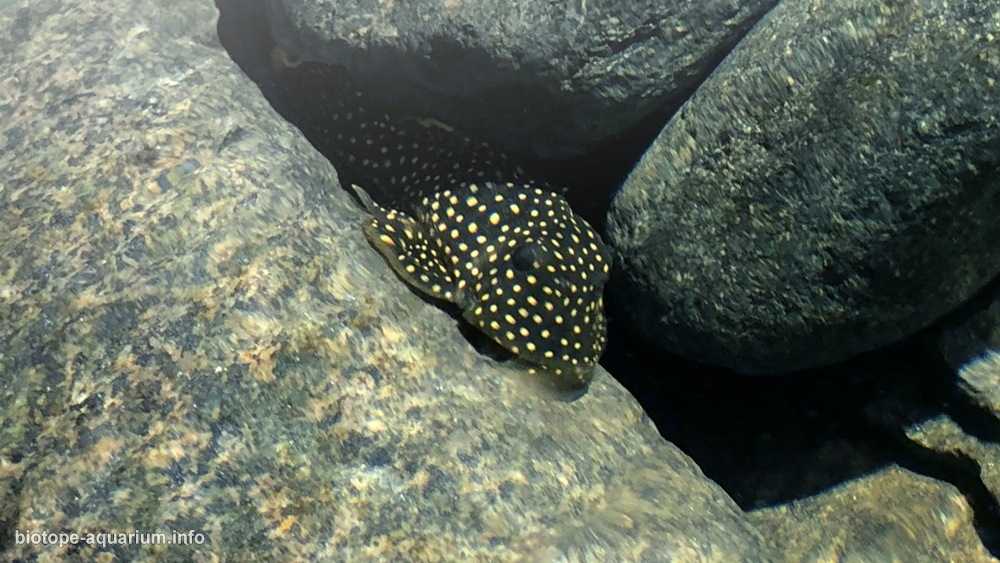
Description of the underwater landscape of the biotope: Rio Xingu, located in the states of Pará and Masto Grosso, Brazil, is not only a treasure trove of tropical fish in South America, but also a rich species of fish (especially the Loricariidae Family fish), which is the most famous origin of freshwater fish in the world. During the dry season, the underwater roots are exposed, and underwater stones are common here. The color of the stone varies from black to blue to purple, depending on the condition of the sun. Many fish will gather behind the stones, avoid the water, and still eat all the food that passes. Loricariidae Family fish also often hide in the cracks of the stone.
生物群落的水下景观描述:位于巴西帕拉州和马托格罗索州的欣古河,不仅是南美洲热带鱼类的宝库,也是鱼类物种(尤其是甲鲶科鱼类)的丰富栖息地,被誉为全球最著名的淡水鱼原产地。在旱季,水下树根裸露,水下石块随处可见。石块的颜色随日照条件变化,从黑色到蓝色再到紫色不等。许多鱼类会聚集在石块后方,躲避水流,同时摄食所有经过的食物。甲鲶科鱼类也常藏身于石缝之中。
Description of the parameters of the habitat: Water parameters in dry season: pH: 6.0-6.7, GH: 1-3, temperature: 26.3-34.6 ° C, measured at a depth of 30-100 cm.
栖息地参数描述:旱季水质参数:pH 值 6.0–6.7,总硬度(GH)1–3,水温 26.3–34.6°C,测量深度为 30–100 厘米。
List of fishes and invertebrates occurring in the nature biotope: Hypancistrus zebra, Baryancistrus sp, Ancistomus sabaji, Scobinancistrus aureatus, Moenkhausia heikoi, Geophagus argyrostictus, Leporinus friderici, Hemiodus vorderwinkleri
自然生物群落中出现的鱼类和无脊椎动物名录:斑马小精灵(Hypancistrus zebra)、巴拉那小精灵(Baryancistrus sp.)、萨巴吉下口鲶(Ancistomus sabaji)、金斑铲鼻鲶(Scobinancistrus aureatus)、海科氏莫恩克豪西亚鱼(Moenkhausia heikoi)、银点珠母丽鱼(Geophagus argyrostictus)、弗雷德里西兔头鱼(Leporinus friderici)、沃德温克勒半齿脂鲤(Hemiodus vorderwinkleri)。
List of plants found in the nature biotope: There are no aquatic plants except for the plants that are submerged during the rainy season. Podostemaceae grows in those small waterfalls. They bloom and develop fruit in the dry season and even self-pollinate. Seeds attach to the rock through the biofilm of the bacteria. They are important to the ecosystem here. There is almost no aquatic plant in this rushing river.
自然生境中发现的植物列表:除了雨季被淹没的植物外,这里没有水生植物。小瀑布中生长着水石衣科(Podostemaceae)植物。它们在旱季开花结果,甚至能自花授粉。种子通过细菌形成的生物膜附着在岩石上。它们对这里的生态系统至关重要。在这条湍急的河流中,几乎没有任何水生植物。
Threats to the ecology: Deforestation As in many other parts of the world, habitat destruction is sad. As the population grows, the demand for land is also greater. The construction of the Belo Monte dam also destroys the large natural environment. Once the habitat was submerged, the river’s direction has also changed. Only the future will explain how this affects all animals living here. The area on the other side of the Belo Monte dam no longer exists. This area is now being flooded. It has now become a large static reservoir. This fast-moving part of the river is home to many endemic fish, which happens to be one of the worst-affected areas after the dam started. I hope that such a place will continue to exist in the future.
生态面临的威胁:森林砍伐。与世界许多其他地区一样,栖息地破坏令人痛心。随着人口增长,对土地的需求也日益增加。贝罗蒙特大坝的建设也破坏了大片自然环境。一旦栖息地被淹没,河流的流向也随之改变。唯有时间才能揭示这将如何影响生活于此的所有动物。贝罗蒙特大坝另一侧的区域已不复存在,如今正被洪水淹没,变成了一座巨大的静水水库。这段水流湍急的河段曾是众多特有鱼类的家园,却不幸成为大坝建成后受影响最严重的区域之一。我希望这样的地方在未来仍能继续存在。
本文部分素材来自网络,如有类似请联系修改,如若转载,请注明出处:http://www.yangyubang.com/?p=3224