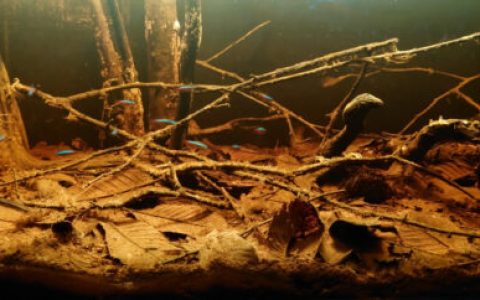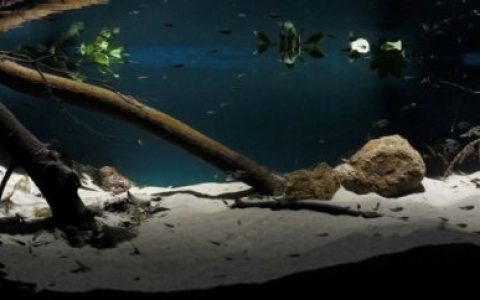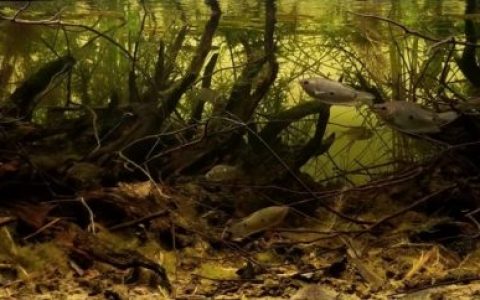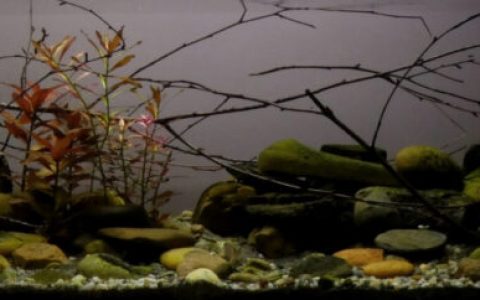
Volume: 540 L 水体容积:540 升
Dimensions: 150x60x60 cm 尺寸:150×60×60 厘米
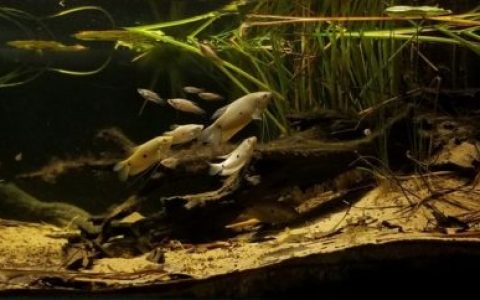
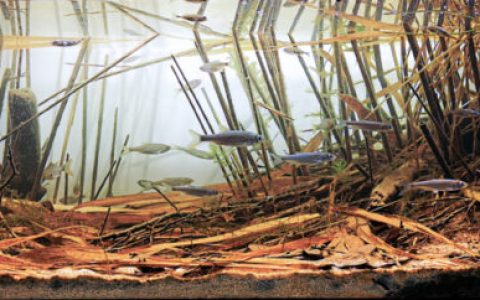
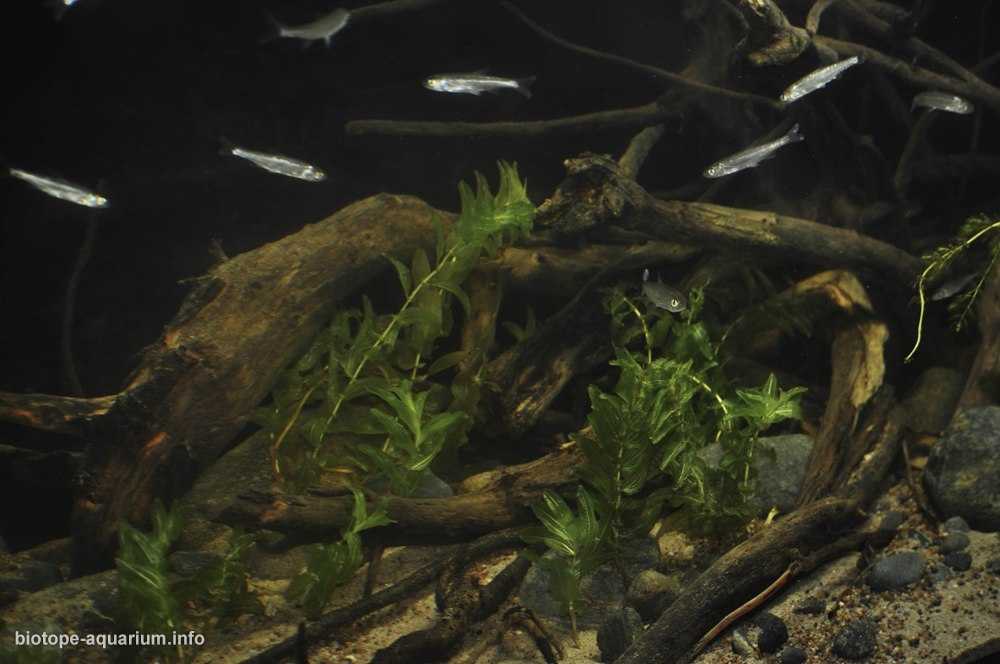
List of fishes: Leuciscus leuciscus, Rutilus rutilus, Leuciscus idus, Squalius cephalus, Gobio gobio, Abramis brama
鱼类名录:雅罗鱼(Leuciscus leuciscus)、红眼鱼(Rutilus rutilus)、欧鳊(Leuciscus idus)、鲌形拟鲤(Squalius cephalus)、普通鮈(Gobio gobio)、欧鳊(Abramis brama)
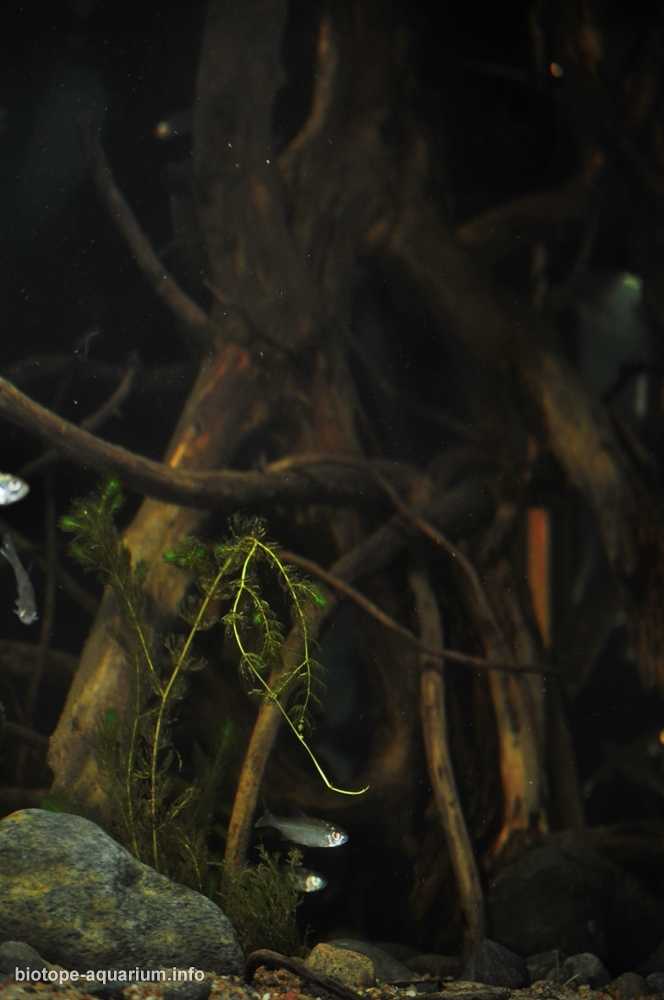
List of plants: Potamogeton perfoliatus, Ceratophyllum demersum, Chara fragilis
植物列表:穿叶眼子菜(Potamogeton perfoliatus)、金鱼藻(Ceratophyllum demersum)、脆轮藻(Chara fragilis)
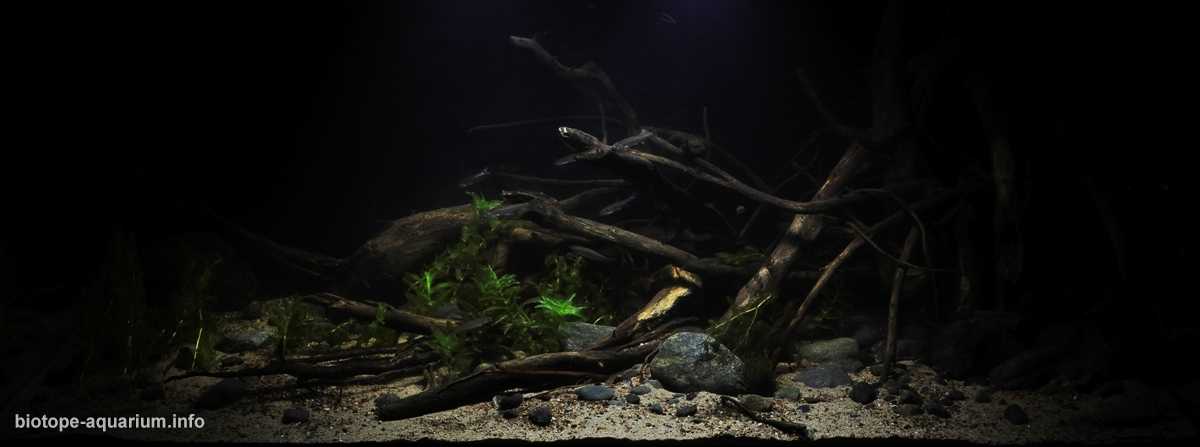
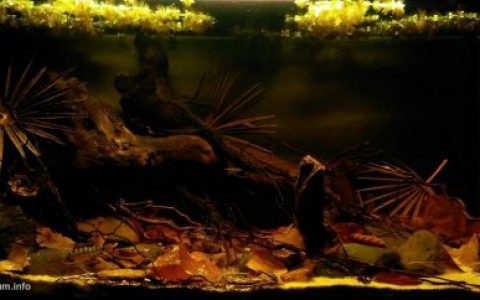
Description of decorations: All aquarium decorations were collected on the river bank or in the coastal forest (driftwood). Sand and small pebbles were washed to a state of perfect cleanliness. Large stones were machined. The driftwood before being immersed in the aquarium was cleaned of bark and putrid areas, dried for 4 months, and then soaked in water for half a year. Sand in the aquarium is light yellow, with a predominance of silicon, quartz and granite. Cobblestones, small and large pebbles are mainly dark gray. Driftwood are the roots of a dead willow, uprooted several years before the creation of the project by the waves and strong winds characteristic of Lake Ladoga.
装饰物描述:所有水族箱装饰物均采集自河岸或沿海森林(沉木)。沙子和小型鹅卵石被清洗至完全洁净。大型石块经过机械加工。沉木在放入水族箱前,去除了树皮和腐烂部分,干燥 4 个月,随后浸水浸泡半年。水族箱中的沙子呈浅黄色,主要成分为硅、石英和花岗岩。卵石及大小不一的鹅卵石主要为深灰色。沉木为一株死柳树的根系,该柳树在项目创建数年前,被拉多加湖特有的巨浪和强风连根拔起。
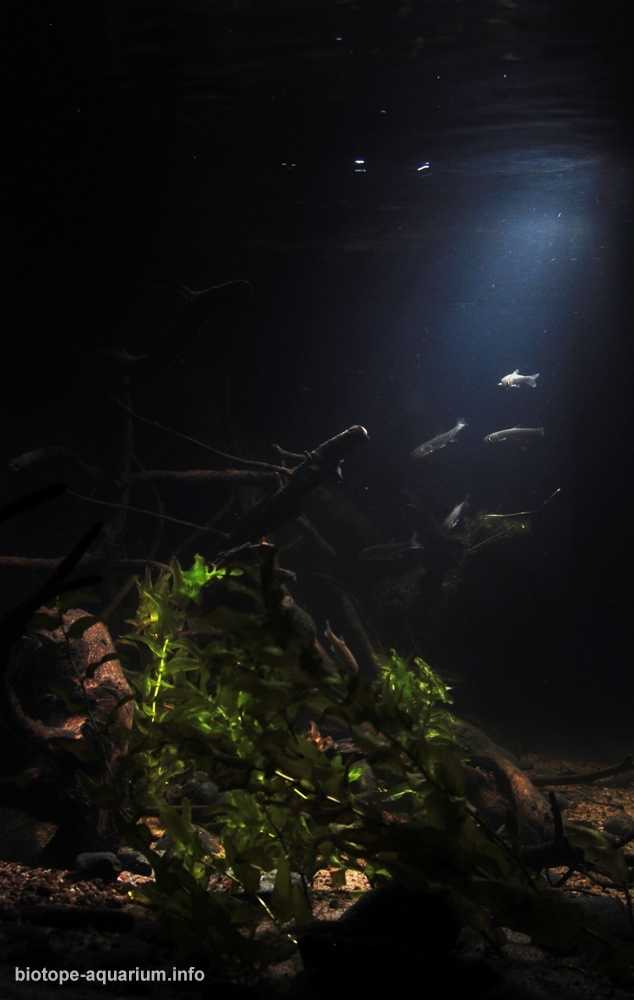
Description of equipment: External filter JBL Cristalprofi e1902, compressor Eheim air pump 400, flow pump Aquael Reef circulator 6000 l / h. 2 LED spotlights 30 W, 6700 K.
设备描述:外置过滤器 JBL Cristalprofi e1902,压缩机 Eheim air pump 400,水流泵 Aquael Reef circulator 6000 升/小时。2 盏 30 瓦、色温 6700 K 的 LED 射灯。
Water parameters: Temperature is 20-21 ºС, pH 7.3, GH 8, NH3 0, NO2 0, NO3 0-5.
水质参数:温度 20–21 ºС,pH 7.3,GH 8,NH3 0,NO2 0,NO3 0–5。
Additional info: In the aquarium there is a driftwood area in the coastal zone of the source of the Neva River. According to the legend of the aquarium, similar to the natural situation, all the elements of the trees were covered with ice-freezing on an irresistible section of the bottom landscape. In the summer, vegetation began to sprout from under it in areas accessible to light, and fry of fish settled in search of food and shelters. That is why, the vegetation in the aquarium is planted in a similar way (without changing the anatomy of the roots), and all fish are small in size. Water changes in the aquarium are carried out weekly in 40-50% of the total. Feeding takes place 2 times a day, mainly with special food, in order to avoid the entry of infectious and invasive pathogens into the aquarium. At the time of recording photo and video materials, the fish have minor damage to the surface of the body and fins. These injuries appeared during the fishing and transportation of aquatic organisms. Before putting into the aquarium, all fish went through a set of quarantine measures. At the current time, all the damage has passed, proof of this is the video shot a week after the photo session [1]. As growth, lack of biological and mechanical filtration, or due to traumatic situations, residents will either be put in other tanks or returned to their natural habitat.
附加信息:水族箱内设有模拟涅瓦河源头沿岸区的沉木景观。据该水族箱的设定,如同自然环境一般,所有树木残骸均被冰层覆盖,固定于底部地貌中难以移动的区域。夏季时,植被在光照可及之处从冰层下萌发,鱼苗亦在此觅食并寻找庇护所。因此,水族箱内的水草以类似方式种植(不改变根系结构),且所有鱼类均为小型品种。每周更换水族箱总水量的 40–50%。每日投喂两次,主要使用专用饲料,以避免传染性及入侵性病原体进入水族箱。拍摄照片和视频资料时,鱼类体表及鳍部存在轻微损伤。这些伤痕是在捕捞和水生生物运输过程中产生的。入缸前,所有鱼类均经过一系列检疫措施。 目前,所有损害均已消除,一周后拍摄的视频可作证明 [1]。随着生物生长、缺乏生物和机械过滤,或因创伤性事件发生,居民将被转移至其他水族箱或放归其自然栖息地。
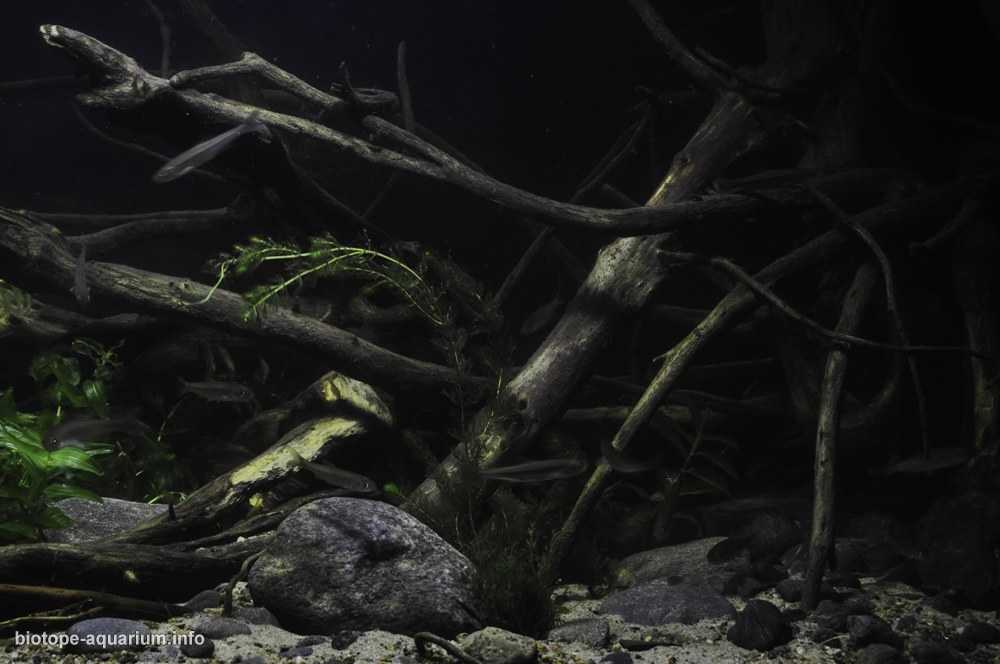
INFORMATION ABOUT BIOTOPE
关于生物群落的信息
Description of the area surrounding the biotope: The Neva, which is part of the system of watercourses and reservoirs in the Baltic Basin District, flows from Lake Ladoga and flows into the Neva Bay of the Gulf of Finland of the Baltic Sea. Taking into account the Ladoga Lake basin, but excluding the water bodies of the Onega Lake basin, the drainage area of the Neva basin is 281 thousand km² with a river length of only 74 km. The area of the Neva’s own basin is 5.18 thousand km², which is about 2% of the total basin. 5 out of 12 months of the year the river is under the ice. Spring and summer floods are not significant. However, there is a tendency in the annual fluctuation of the water level [2]. The average speed of the Neva water is about 0.8-1.1 meters per second. The prevailing depth is 8–11 m; the largest (24 m) is on the right bank opposite Arsenalnaya St. Petersburg., the smallest (4.0–4.5 m) is in the Ivanovo rapids (Leningrad region). The greatest width is 1200 m (in the delta), the smallest is 210 m (at the Ivanovo rapids opposite Cape Svyatki), the average is 400–700 m. 26 tributaries flow into N. (the main are Mga, Tosna, Okhta, Izhora, Slavyanka, Chernaya, Chernaya Rechka, Utka). It has the sixth place among European rivers [3], [4] in terms of water availability (annual water discharge is 79.7 cubic km, 2530 cubic m/s). Since the approximate age of the river is about 1.5-3 thousand years and it originates from a glacial, mainly oligotrophic lake, the area surrounding it is a plain covered with sand, pebbles and rounded cobblestones at the edge of the coastal zone. Along the river bank to the city of St. Petersburg, there are secondary forests represented directly on the coastline by deciduous trees and shrubs (willow, birch, rowan, aspen, etc.). Elements of these trees, along with freezing, periodically lathers over shallow stones and other parts of the landscape on the bottom of shallow water, forming shelters for many species of fish in the early stages of ontogenesis [5].
生物群落周边区域描述:涅瓦河属于波罗的海流域区水系与水库系统的一部分,发源于拉多加湖,注入波罗的海芬兰湾的涅瓦湾。若计入拉多加湖流域但排除奥涅加湖流域的水体,涅瓦河流域的集水面积为 28.1 万平方公里,而河道长度仅为 74 公里。涅瓦河自身流域面积为 5180 平方公里,约占整个流域总面积的 2%。一年中约有 5 个月(共 12 个月)河流处于冰封状态。春季和夏季的洪水并不显著,然而水位年际波动存在一定趋势 [2]。涅瓦河的平均流速约为 0.8–1.1 米/秒。主流水深为 8–11 米;最大水深(24 米)位于圣彼得堡阿森纳尔纳亚街对岸的右岸,最小水深(4.0–4.5 米)出现在伊万诺沃急流段(列宁格勒州)。最宽处达 1200 米(位于三角洲),最窄处为 210 米(位于伊万诺沃急流段,与斯维亚特基角相对),平均宽度为 400–700 米。共有 26 条支流汇入涅瓦河。 (主要支流包括姆加河、托斯纳河、奥赫塔河、伊若拉河、斯拉维扬卡河、切尔纳亚河、切尔纳亚列奇卡河和乌特卡河)。就水资源量而言,该河在欧洲河流中排名第六 [3]、[4](年径流量为 79.7 立方千米,平均流量为 2530 立方米/秒)。由于该河形成于约 1500 至 3000 年前,发源于一个主要为贫营养型的冰川湖,其周边区域为平原,沿海地带边缘覆盖着沙粒、砾石和磨圆的卵石。沿河岸直至圣彼得堡市,分布着次生林,海岸线直接由落叶乔木和灌木(如柳树、桦树、花楸、山杨等)构成。这些树木的残枝与冰层一起,周期性地覆盖在浅水区的石块及其他底部地貌上,为许多鱼类在个体发育早期阶段提供庇护所 [5]。
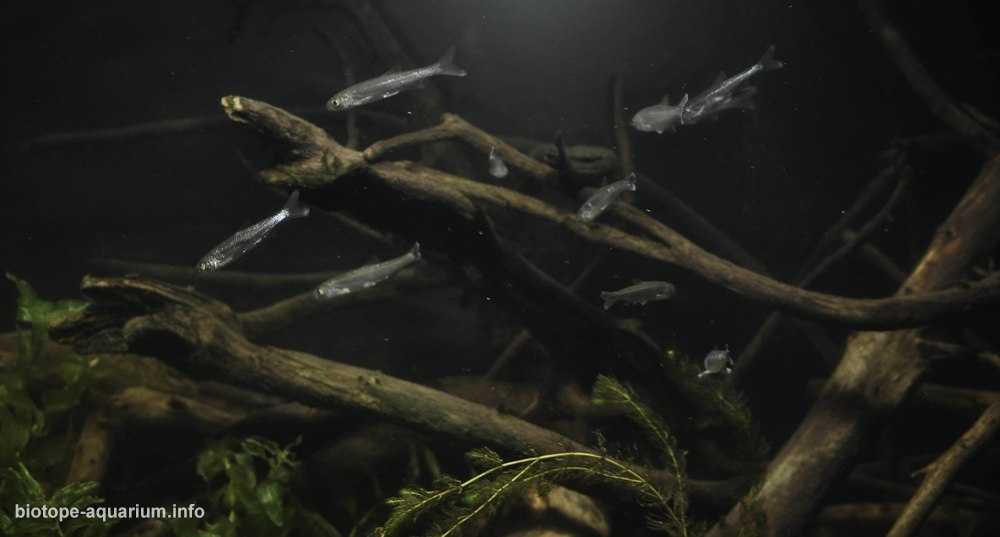
Description of the underwater landscape of the biotope: The bottom of the river in the coastal zone at the source is gentle, without any significant changes in the landscape. There are accumulations of massive cobblestones left offshore after cleaning and widening the fairway. Soil, as a rule, is a sandy mixture of various rocks mainly of dark gray, grayish-red, light beige and other shades. Large cobblestones are also available in small quantities. Due to the strong flow of the river, most of the stones are rounded. Dendrite is found in small amounts in areas with the lowest flow rate. On coastal shallow areas up to 1.5-2 m deep, there are extensive thickets of higher aquatic plants mixed with elements of trees. Which serve both as a substrate for spawning of phytophilic fish species, and as a place of concentration of food objects and shelters for juveniles [5].
该生物群落的水下景观描述:河流源头沿岸区域的河床平缓,地貌无显著变化。近岸处堆积着大量因航道疏浚与拓宽而遗留的巨大卵石。底质通常为沙质混合物,混杂各类岩石,主要呈深灰色、灰红色、浅米色及其他色调,亦少量分布较大卵石。受强劲水流冲刷,多数石块呈圆润状。在流速最低的区域,可发现少量树状藻类。在水深 1.5–2 米的沿岸浅水区,广泛分布着高等水生植物茂密丛生的群落,其间夹杂着树木残体;这些植被既为喜植性鱼类提供产卵基质,又作为幼鱼的食物聚集区与庇护所 [5]。
Description of the parameters of the habitat: Neva’s water is fresh (average mineralization is 61.3 mg/l), hydrocarbonate class, soft, characterized by constant and high oxygen saturation due to good aeration of the water masses with frequent and strong waves on Ladoga and other lakes. The turbidity is average. The average annual water temperature is 6.9°C, but in August the average monthly temperature is 17.4°C and sometimes reaches 25°C. Of the most important parameters for the existence of fish, it is worth highlighting: pH is 6.8-7.7, TDS is 225-270, depending on the season of the year, the river section, and abiotic factors [3], [4].
栖息地参数描述:涅瓦河水质为淡水(平均矿化度为 61.3 毫克/升),属碳酸氢盐类,硬度较低;由于拉多加湖及其他湖泊频繁且强烈的波浪作用使水体充分曝气,其溶解氧饱和度持续保持高位。水体浊度中等。年平均水温为 6.9℃,但 8 月平均月温可达 17.4℃,有时甚至升至 25℃。在关乎鱼类生存的最关键参数中,值得特别指出的是:pH 值为 6.8–7.7,总溶解固体(TDS)为 225–270,具体数值随季节、河段及非生物因素而变化 [3]、[4]。
List of fishes and invertebrates occurring in the nature biotope: Since the Neva is a large river connecting Lake Ladoga and the Gulf of Finland, it is logical to assume that its ichthyofauna for the most part intersects with these reservoirs. However, this assumption is true only partly. The species composition of the ichthyofauna of the Gulf of Finland, tentatively, includes 75 species from 32 families. Some of them relate to spawning fish in sea water, so if they can be in the upper reaches of the river, it is only by an absurd accident or under the influence of man. Passing and semi-passing fish, with the exception of Salmo salar and Coregonus albula, etc., also, as a rule, do not reach Shlisselburg or are kept far from the coast. Therefore, in the framework of a specific work, it makes sense to consider exclusively the types of freshwater complex found throughout the Neva River. A similar approach is applicable to the assessment of the ichthyofauna of Lake Ladoga. At the current moment of time, abstracting from the history of the formation of both the lake itself and its fish population, according to literary sources, 43 indigenous species of fish and cyclostomes are found in the lake. For a more correct presentation, these fish species are appropriate to divide into cold-water (fish that originally inhabited Ladoga before the Neva River appeared) and warm-water (settled in the lake shortly before or after its formation). Cold-water fish species include: Lampetra fluviatilis (L.) and L. planeri (Bloch), Salmo salar m. sesebago Girard, S. trutta m. lacustris L., Salvelinus lepechini (Gmelin), Coregonus lavaretus lavaretus L., C. albula L., Thymallus thymallus (L.), Osmerus eperlanus (L.), Lota lota (L.), Triglopsis quadricornis lönnbergi Berg. Almost all of these species, with the exception of C. albula, Thymallus thymallus and S. trutta m. lacustris, either do not enter the river or are not found on its coastal areas due to the biological characteristics and needs of the species. Significant warming created favorable conditions for the appearance of warm-water fish in Ladoga, which made up the second wave of invaders. The lake and reservoirs of its private catchment were replenished with 15 species new for the region, including Leuciscus cephalus (L.), Scardinius erythrophthalmus (L.), Aspius aspius (L.), Leucaspius delineatus (L.), Tinca tinca (L.), Blicca bjorkna (L.), Abramis sapa (L.), Abramis ballerus (L.), Vimba vimba (L.), Pelecus cultratus (L.), Carassius carassius (L.), Silurus glanis (L.), Sander lucioperca (L.), etc. Thus, the composition of the fish population of the river itself is reduced to:
涅瓦河自然生境中出现的鱼类和无脊椎动物名录:由于涅瓦河是连接拉多加湖与芬兰湾的大型河流,逻辑上可推断其鱼类区系在很大程度上与这两个水体相交。然而,这一推断仅部分成立。芬兰湾的鱼类区系物种组成暂估包含来自 32 个科的 75 个物种。其中一些属于海水产卵鱼类,因此它们若出现在河流上游,只能是极其偶然的意外或受人类活动影响所致。除大西洋鲑(Salmo salar)和欧洲白鲑(Coregonus albula)等种类外,洄游性及半洄游性鱼类通常也无法抵达施吕瑟尔堡,或远离海岸分布。因此,在本项具体工作中,仅考虑遍布整个涅瓦河的淡水类群物种具有实际意义。类似方法亦适用于拉多加湖鱼类区系的评估。 目前,撇开湖泊本身及其鱼类种群的形成历史不谈,根据文献记载,该湖共有 43 种原生鱼类和圆口类动物。为更准确地呈现,这些鱼类宜分为冷水性鱼类(在涅瓦河出现之前即已栖息于拉多加湖的鱼类)和暖水性鱼类(在湖泊形成前不久或之后迁入的鱼类)。冷水性鱼类包括:河七鳃鳗(Lampetra fluviatilis (L.))和溪七鳃鳗(L. planeri (Bloch))、塞巴戈型大西洋鲑(Salmo salar m. sesebago Girard)、湖型褐鳟(S. trutta m. lacustris L.)、勒佩钦氏红点鲑(Salvelinus lepechini (Gmelin))、普通白鲑指名亚种(Coregonus lavaretus lavaretus L.)、欧洲白鲑(C. albula L.)、茴鱼(Thymallus thymallus (L.))、胡瓜鱼(Osmerus eperlanus (L.))、江鳕(Lota lota (L.))以及四角杜父鱼伦恩伯格亚种(Triglopsis quadricornis lönnbergi Berg)。除欧洲白鲑、茴鱼和湖型褐鳟外,几乎所有上述物种由于自身的生物学特性和需求,要么不进入河流,要么不在其沿岸区域出现。显著的气候变暖为暖水性鱼类出现在拉多加湖创造了有利条件,构成了第二波入侵物种。 该湖泊及其独立流域的水库新增了 15 种该地区此前未见的鱼类,包括欧鲌(Leuciscus cephalus (L.))、红眼鱼(Scardinius erythrophthalmus (L.))、拟鲤(Aspius aspius (L.))、小欧鲌(Leucaspius delineatus (L.))、丁鱥(Tinca tinca (L.))、粗鳞鳊(Blicca bjorkna (L.))、萨帕欧鳊(Abramis sapa (L.))、巴氏欧鳊(Abramis ballerus (L.))、维姆巴欧鳊(Vimba vimba (L.))、刀形欧鲌(Pelecus cultratus (L.))、鲫鱼(Carassius carassius (L.))、六须鲇(Silurus glanis (L.))和梭鲈(Sander lucioperca (L.))。)等。因此,河流本身的鱼类种群组成可归纳为:
1. Esox lucius Linnaeus, 1758.
1. 白斑狗鱼(学名:Esox lucius Linnaeus, 1758)。
2. Rutilus rutilus (Linnaeus, 1758).
2. 欧鲌(Rutilus rutilus,Linnaeus, 1758)。
3. Leuciscus leuciscus (Linnaeus, 1758)
3. 雅罗鱼(Leuciscus leuciscus,林奈,1758)
4. Squalius cephalus. 4. 拟鲤(Squalius cephalus)。
5. Leuciscus idus (Linnaeus, 1758)
5. 欧鳊(Leuciscus idus,林奈,1758)
6. Phoxinus phoxinus (Linnaeus, 1758)
6. 棘颊鱥(Phoxinus phoxinus,林奈,1758)
7. Scardinius erythrophtalmus (Linnaeus, 1758)
7. 红眼鱼(Scardinius erythrophtalmus,林奈,1758)
8. Aspius aspius (Linnaeus, 1758)
8. 欧鳊(Aspius aspius,林奈,1758)
9. Tinca tinca (Linnaeus, 1758)
9. 丁鱥(Tinca tinca,林奈,1758)
10. Gobio gobio (Linnaeus 1758
10. 鮈鱼(Gobio gobio,林奈,1758)
11. Alburnus alburnus (Linnaeus, 1758).
11. 欧白鱼(Alburnus alburnus,林奈,1758 年)
12. Blicca bjoerkna (Linnaeus, 1758)
12. 粗鳞鳊(Blicca bjoerkna,林奈,1758 年)
13. Abramis brama (Linnaeus, 1758)
13. 欧鳊(Abramis brama,林奈,1758 年)
14. Abramis ballerus (Linnaeus, 1758)
14. 球腹鳊(Abramis ballerus,林奈,1758 年)
15. Vimba vimba (Linnaeus, 1758)
15. 拟鲤(Vimba vimba,林奈,1758)
16. Pelecus cultratus (Linnaeus, 1758).
16. 刀鲚(Pelecus cultratus,林奈,1758)。
17. Carrasius carassius (Linnaeus, 1758).
17. 鲫鱼(Carrasius carassius,林奈,1758)。
18. Carassius gibelio (Bloch. 1752).
18. 银鲫(Carassius gibelio,布洛赫,1752)。
19. Cobitis taenia (Linnaeus, 1758)
19. 花鳅(Cobitis taenia,林奈,1758)
20. Siluris glanis (Linnaeus, 1758).
20. 欧鲇(Siluris glanis,林奈,1758)。
21. Lota lota (Linnaeus, 1758)
21. 江鳕(Lota lota,林奈,1758)
22. Pungitius pungitius (Linnaeus, 1758).
22. 九刺鱼(Pungitius pungitius,林奈,1758)。
23. Gasterosteus aculeatus (Linnaeus, 1758).
23. 三刺鱼(Gasterosteus aculeatus,林奈,1758 年)
24. Sander lucioperca 24. 梭鲈(Sander lucioperca)
25. Perca fluviatilis (Linnaeus, 1758)
25. 河鲈(Perca fluviatilis,林奈,1758 年)
26. Gymnocephalus cernua (Linnaeus, 1758)
26. 小鲈(Gymnocephalus cernua,林奈,1758 年)
27. Thymallus thymallus 27. 茴鱼(Thymallus thymallus)
28. Cottus gobio Linnaeus, 1758.
28. 杜父鱼(Cottus gobio Linnaeus, 1758)。
List of plants found in the nature biotope: Regarding the plant world of the source of the Neva, it is difficult to give a correct description due to the low qualifications of the author in this area and the lack of correct literature data. However, from personal observations, the nucleus of the phytocenosis can be clearly distinguished. It is predominantly represented by various species of charadriiformes and hornwort, among which Potamogeton perfoliatus and Ceratophyllum demersum prevail, respectively. Chara fragilis is found, forming large area clusters in areas with a moderate course. A tendency has been noticed that in areas of the coastal zone where currents are strong (similar to those are in the aquarium), Potamogeton perfoliatus prevail, and Ceratophyllum demersum and Chara fragilis are depressed, and vice versa, where current is weak because of the bottom relief, Ceratophyllum demersum and Chara fragilis prevail [5].
自然生境中发现的植物名录:关于涅瓦河源头的植物界,由于作者在该领域的专业资质不足且缺乏准确的文献资料,难以给出确切的描述。然而,根据个人观察,可以清晰辨识出该植物群落的核心组成。其主要由多种眼子菜属和金鱼藻属物种构成,其中分别以穿叶眼子菜(Potamogeton perfoliatus)和金鱼藻(Ceratophyllum demersum)占优势。脆轮藻(Chara fragilis)亦有分布,并在水流适中的区域形成大面积集群。观察发现一种趋势:在沿岸水流强劲的区域(类似于水族箱中的环境),穿叶眼子菜占主导地位,而金鱼藻和脆轮藻则受到抑制;反之,在因河床地形导致水流较缓的区域,金鱼藻和脆轮藻则占据优势 [5]。
Threats to the ecology: Roshydromet characterizes the Neva as “polluted” and “very polluted”. The river belongs to the third pollution class, the maximum is the fifth. With the fifth class of pollution in water bodies, most organisms are no longer able to survive [9]. The main polluter of St. Petersburg waters is the state unitary enterprise Vodokanal of St. Petersburg. According to the city Committee for Nature Management, it is this enterprise that accounts for most of the damage from the discharge of pollutants into the water bodies of St. Petersburg. This is not surprising, since the main volume of wastewater does not enter the water directly, but through the city sewage system. That is, both household discharges and toxic waste from enterprises fall into one pipe, and then this mixture is either discharged directly into rivers, or goes to urban wastewater treatment plants [9]. In 2007, Greenpeace investigated the toxicity of Neva fish. It turned out that it contains polychlorinated biphenyls. In such concentrations that in Europe this fish would be banned for sale immediately. Because PCB is one of the 12 most dangerous persistent organic pollutants and can cause cancer. In addition to PCBs, arsenic was found in Neva fish, also in very high concentrations. Chronic poisoning with this substance leads to loss of appetite and weight loss, gastrointestinal upsets, peripheral neurosis and skin melanoma, which often turns into cancer [9]. In addition to environmental factors, most of the fish species living in the river are under pressure from fishing, sport and recreational fishing, and poaching. Living personally on the river bank in person, I have repeatedly noticed, in the catches of “lovers-poachers”, fish species included in the Red Book of the Leningrad Region. These include Thymallus thymallus. In addition, many sections of the river suitable for spawning are covered with nets (the Chernaya River, Popova Ditch), which also has a negative effect and can contribute to the destruction of even commercial fish species [5].
生态威胁:俄罗斯水文气象与环境监测局(Roshydromet)将涅瓦河定性为“受污染”和“严重污染”。该河流属于第三类污染等级,最高可达第五类。在水体达到第五类污染等级时,大多数生物已无法生存 [9]。圣彼得堡水域的主要污染源是圣彼得堡市立单一制企业“水道公司”(Vodokanal)。据该市自然资源管理委员会称,正是该企业造成了圣彼得堡水体因污染物排放而产生的大部分损害。这并不令人意外,因为绝大部分废水并非直接排入水体,而是通过城市污水系统排放。也就是说,生活污水与企业有毒废物汇入同一管道,随后这种混合物要么直接排入河流,要么送往城市污水处理厂 [9]。2007 年,绿色和平组织调查了涅瓦河鱼类的毒性,发现其中含有多氯联苯(PCB),其浓度之高,若在欧洲将立即禁止销售此类鱼类。因为多氯联苯是 12 种最危险的持久性有机污染物之一,并可致癌。 除了多氯联苯外,在涅瓦河的鱼类中还发现了砷,且浓度极高。长期接触该物质会导致食欲减退、体重下降、胃肠道紊乱、周围神经病变以及皮肤黑色素瘤,后者常发展为癌症 [9]。除环境因素外,生活在该河的大多数鱼类还受到商业捕捞、休闲垂钓及偷猎活动的压力。作为亲身居住在河岸的居民,我多次在“爱好者兼偷猎者”的渔获中发现被列入《列宁格勒州红皮书》的鱼类物种,其中包括茴鱼(Thymallus thymallus)。此外,许多适宜产卵的河段被渔网覆盖(如切尔纳亚河、波波瓦沟渠),这也产生了负面影响,甚至可能导致经济鱼类的资源枯竭 [5]。
Sources of information: 信息来源:
1) Video with healthy fish: https://vk.com/video?z=
1) 健康鱼类的视频:https://vk.com/video?z=video26495913_456239468%2Fpl_cat_updates
2) Explanatory note to the consolidated volume of standards of permissible impact on private exposure p. Neva (from source to mouth). Ed. Ministry of Natural Resources and Ecology of the Russian Federation. Book 2. Page 35.
2) 《涅瓦河(从源头至河口)私人暴露允许影响标准综合卷》说明文件。俄罗斯联邦自然资源与生态部编。第二册,第 35 页。
3) Articles / Neva: http://www.encspb.ru/object/
3) 文章/涅瓦河:http://www.encspb.ru/object/2806260523?dv=2853966463&lc=ru
4) Neva: https://ru.wikipedia.org/wiki/
4) 涅瓦河:https://ru.wikipedia.org/wiki/%D0%9D%D0%B5%D0%B2%D0%B0
5) The source of the Neva River, from the perspective of creating a biotope aquarium #BADC2019 / AUTHOR’S PHOTOS AND VIDEO: https://vk.com/@pesokikorni-
5) 从创建生物群落水族箱的角度看涅瓦河源头 #BADC2019 / 作者照片与视频:https://vk.com/@pesokikorni-istok-reki-nevy-s-pozicii-sozdaniya-biotopnogo-akvariuma-bad
6) S.V. Kolesnik. “Ladoga lake”. Hydrometeoisdat. 1968.: http://ladoga-lake.ru/pages/
6) S.V. Kolesnik.《拉多加湖》。水文气象出版社,1968 年:http://ladoga-lake.ru/pages/artcl-ladoga-kalesnik-23.php
7) Kudersky L. A. Natural resource potential and water use of Lake Ladoga. Bioresources and fishing. Electronic resource. Pages 363-397.
7) Kudersky L. A. 《拉多加湖的自然资源潜力与水资源利用》。生物资源与渔业。电子资源,第 363–397 页。
8) Chernova I.V. A brief review of the ichthyofauna of the Vyborg Bay. Marine biology. Electronic resource. Pages 56-64.
8) Chernova I.V. 《维堡湾鱼类区系简述》。海洋生物学。电子资源,第 56–64 页。
9) The state of the Neva. Greenpeace: http://www.greenpeace.org/
9) 涅瓦河的状况。绿色和平组织:http://www.greenpeace.org/russia/ru/campaigns/water-pollution/saveneva/condition/
本文部分素材来自网络,如有类似请联系修改,如若转载,请注明出处:http://www.yangyubang.com/?p=3250