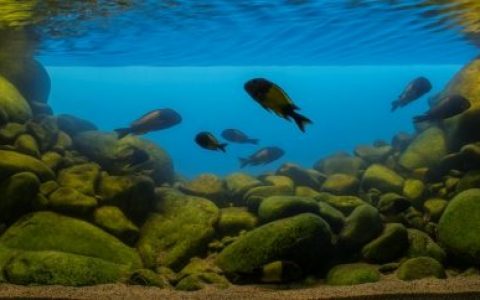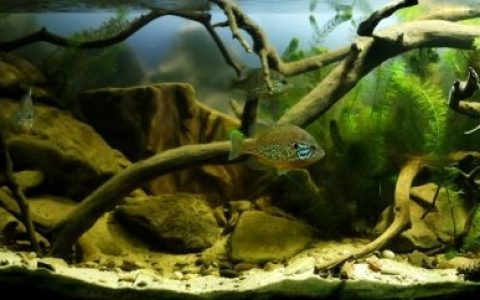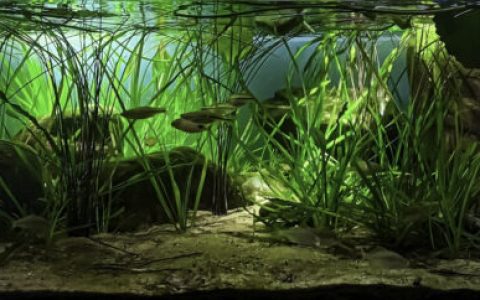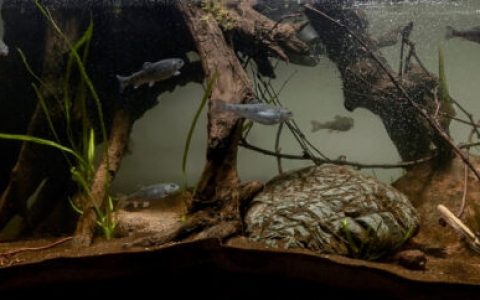
Volume: 345 L 水体容积:345 升
Dimensions: 180x60x32 cm 尺寸:180×60×32 厘米
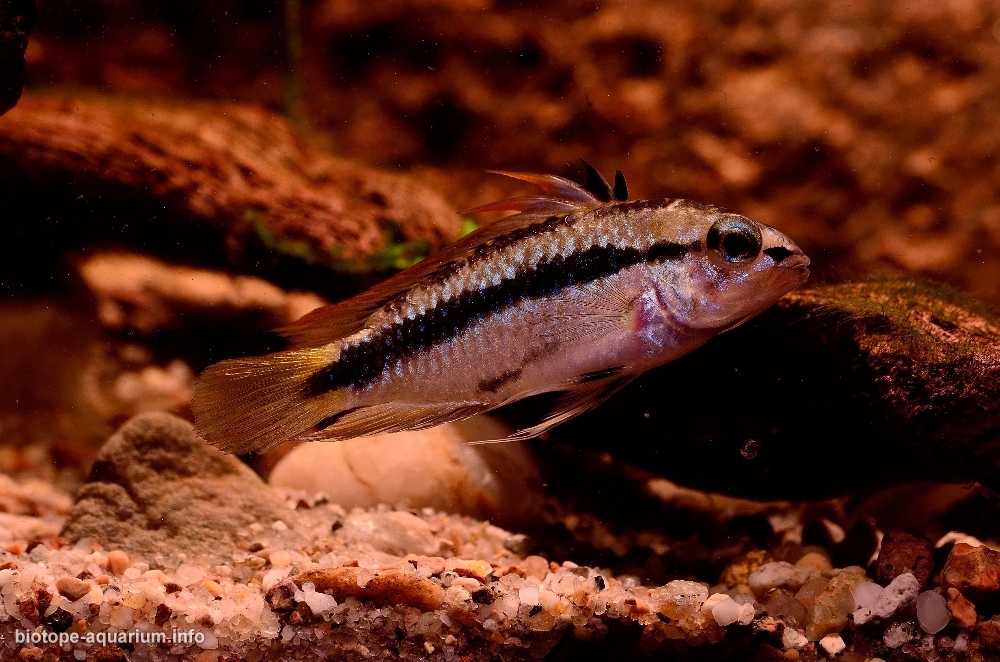
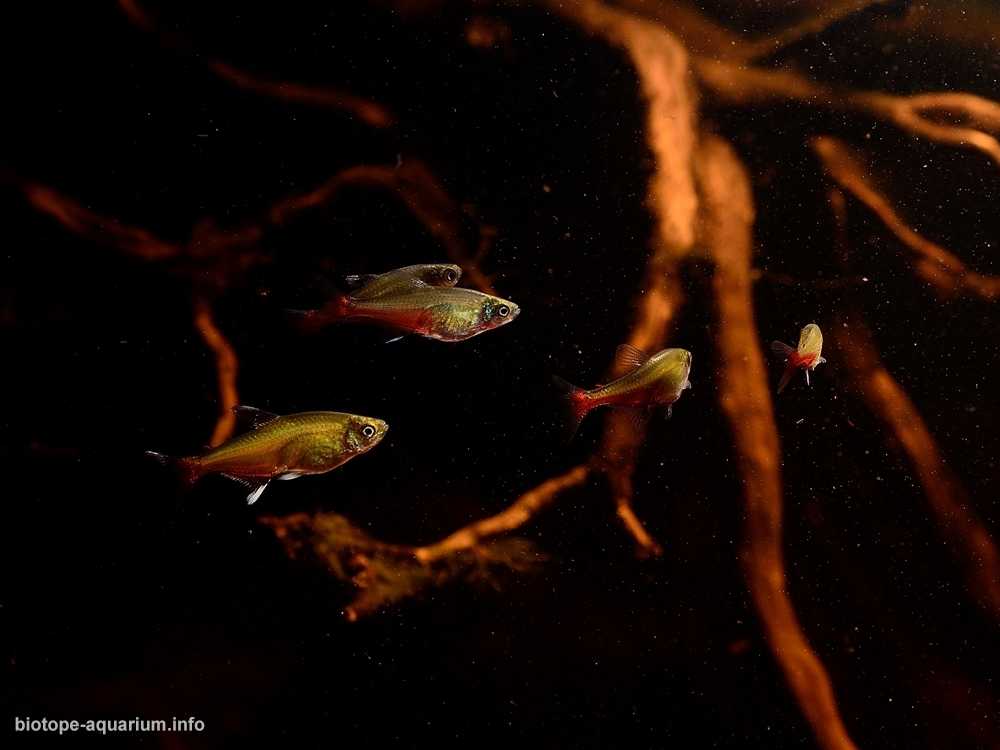
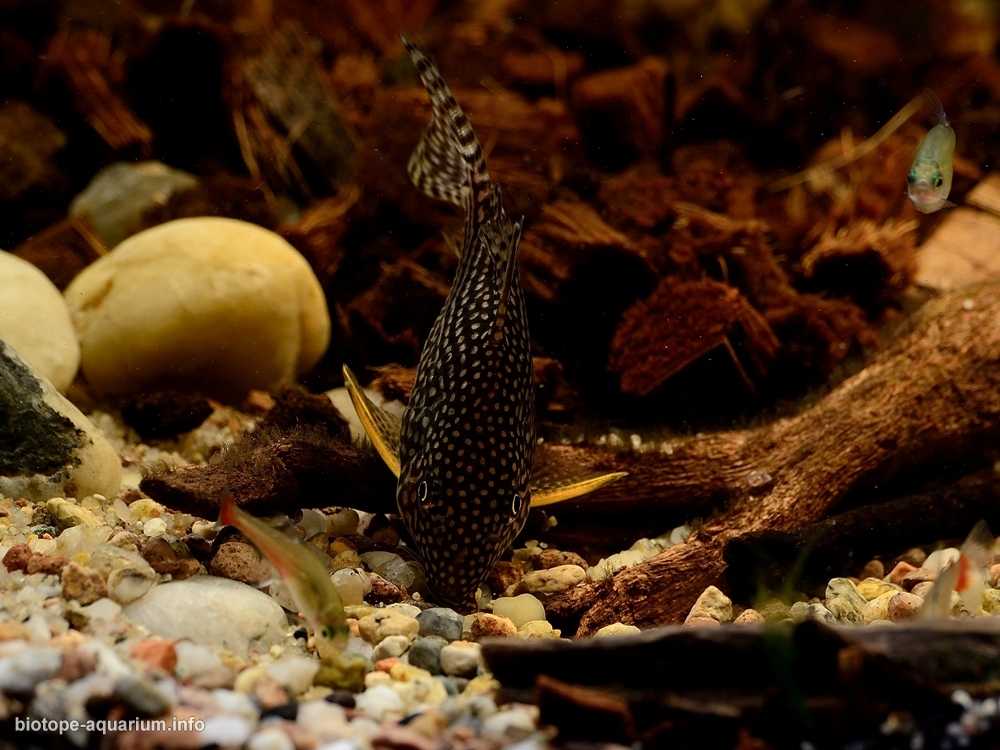
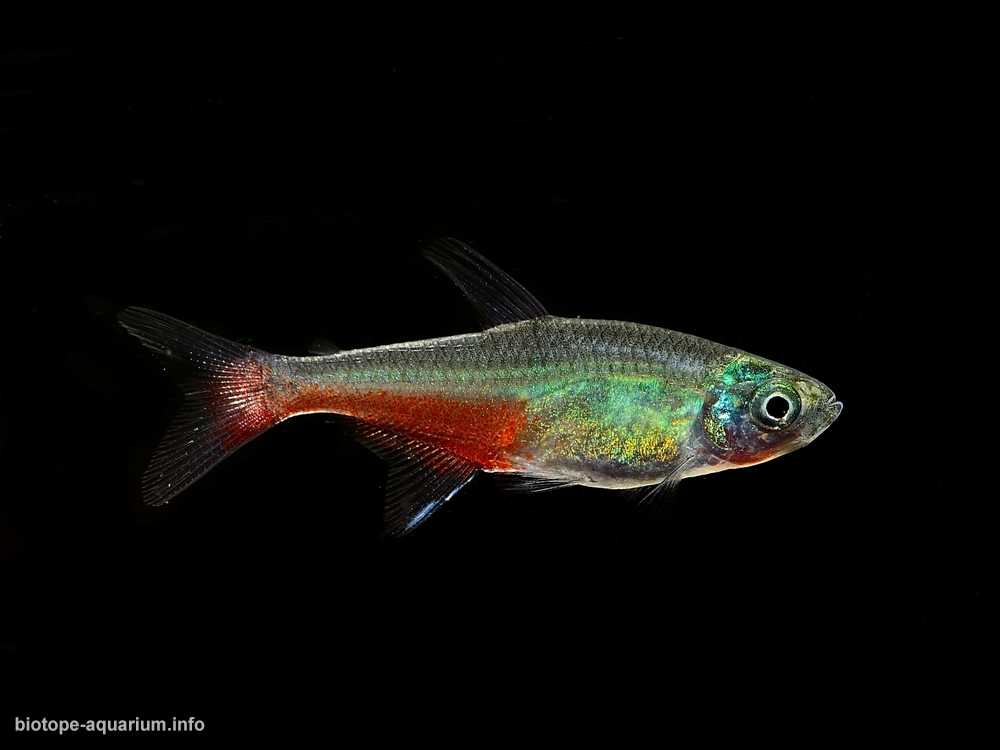
List of fishes: Apistogramma trifasciata, Corydoras sterbai, Aphyocharax rathbuni
鱼类名录:三线短鲷(Apistogramma trifasciata)、斯特巴氏鼠鱼(Corydoras sterbai)、拉氏细脂鲤(Aphyocharax rathbuni)
List of plants: Eichhornia diversifolia, Hydrocotyle leucocephala (emersed mostly)
植物列表:凤眼莲(Eichhornia diversifolia)、水盾草(Hydrocotyle leucocephala,主要为挺水形态)

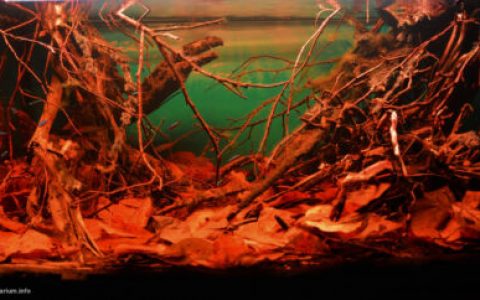
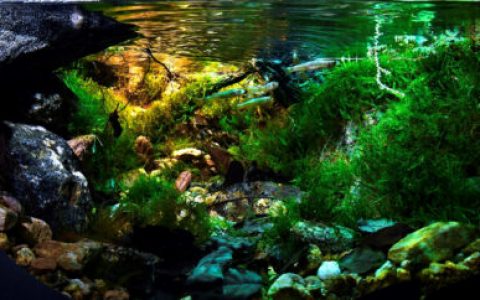
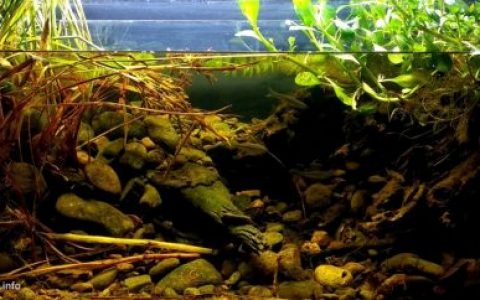
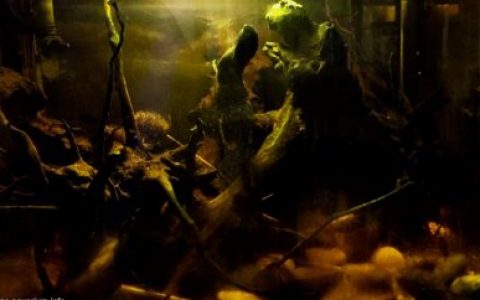
Description of decorations: Roots, branches and twigs covers a sandy substrate (0,4-1,2mm). Mix of peat, leaves, bark and small branches lays in the parts of tank with small current. Few bigger roundish rocks, and some gravel occurs in the main stream bed (place with bigger current on the right)
装饰描述:树根、树枝和细枝覆盖在沙质底床上(粒径 0.4–1.2 毫米)。泥炭、落叶、树皮和小树枝的混合物铺设在水流较缓的区域。几块较大的圆形岩石以及一些砾石出现在主河床中(即右侧水流较强的区域)。
Description of equipment: Eheim 2228 external filter, Eheim skim 350, Rossmont mover M4600 circulation pump, 2 x SANRISE F002 48W lamps (set on 10%), 8x IKEA JANSJÖ 2W lamps
设备描述:伊罕(Eheim)2228 外置过滤器、伊罕 skim 350 蛋白分离器、Rossmont Mover M4600 循环泵、2 盏 SANRISE F002 48W 灯具(设定为 10% 亮度)、8 盏宜家(IKEA)JANSJÖ 2W 灯具。
Water parameters: Temperature varies from 21 to 28 degrees Celsius (depends on time of the year) but for most of it stays in about 23-24 degrees.
水质参数:水温在 21 至 28 摄氏度之间变化(视季节而定),但大部分时间维持在约 23–24 摄氏度。
KH 1, GH 2, pH 6,5-6,8, conductivity 50-100 µS/cm (depends on simulating the rainy and dry season)
KH 1,GH 2,pH 6.5-6.8,电导率 50-100 µS/cm(取决于模拟雨季和旱季)
Additional info: Tank is balanced with flora and fauna numbers to prevent of nitrates and phosphates build up, therefore water changes are needed only to simulate rainy season. The scheme is 3x 30% w/c once a week, and then 4 months without w/c. Main lightning is ment to create “light background” and eight smaller lamps imitates sun beams.
补充信息:水族箱内的动植物数量保持平衡,以防止硝酸盐和磷酸盐积累,因此仅需在模拟雨季时进行换水。具体方案为每周进行一次 3 次 30% 的换水,随后连续 4 个月不换水。主照明旨在营造“明亮背景”,八盏较小的灯则模拟阳光光束。
INFORMATION ABOUT BIOTOPE
关于生物群落的信息
Description of the area surrounding the biotope: Noel Kempff Mercado National Park was created in 1979 (previously named Huanchaca National Park) and is located in zone where Amazonian forest integrates with the dry forest and savanna habitats. Habitat types of the region can be grouped into five different ecosystems: upland evergreen forest, deciduous forest, upland cerrado savanna, savanna wetlands and forest wetlands. The savanna wetlands are linked to the famous Pantanal, so there are similarities in flora and fauna in these regions. Area of 15 838 square kilometers of park provides place for flora and fauna richness that is extremally big and consists almost 2700 plant, 600 bird, 130 mammals, 130 reptiles and 250 fish species. Richness in fish species of area represents 60% of the whole Amazonian ichthyofauna known from Bolivia. The Itenez basin (Rio Itenez is the north border of park) is the only major river system that originates on the Brazilian Shield, causing it to be dramatically different from other rivers of Bolivia in the physical and chemical characteristics of its waters. Some 65 fish species of the Itenez basin either are endemic or have relatively restricted distributions. The high overall diversity reflects the variety of aquatic systems in the park, ranging from small clear water streams to large black water lakes and rivers. Savanna and forest floodplains offers many specialized habitats. Some watersheds of park (Rio Verde, Rio Paucerna) are isolated from the main Itenez drainage by waterfalls and rapids, so there are places when endemic species occur greatly. This isolation may date back more than 6 milion years.
生物群落周边区域描述:诺埃尔·肯普夫·梅卡多国家公园成立于 1979 年(此前名为万查卡国家公园),位于亚马逊雨林与干旱森林及稀树草原栖息地交汇的区域。该地区的栖息地类型可归为五种不同的生态系统:高地常绿林、落叶林、高地塞拉多稀树草原、稀树草原湿地和森林湿地。稀树草原湿地与著名的潘塔纳尔湿地相连,因此这些区域的动植物具有相似性。公园面积达 15,838 平方公里,为极其丰富的动植物提供了栖息地,包含近 2700 种植物、600 种鸟类、130 种哺乳动物、130 种爬行动物和 250 种鱼类。该区域的鱼类物种丰富度占玻利维亚已知整个亚马逊鱼类区系的 60%。伊特内斯河流域(伊特内斯河是公园的北部边界)是唯一发源于巴西地盾的主要河流系统,使其在水体的物理和化学特性上与玻利维亚其他河流显著不同。 伊特内斯河流域约有 65 种鱼类为特有物种或分布范围相对狭窄。整体高度的多样性反映了公园内水生系统的丰富性,从小型清澈溪流到大型黑水湖泊与河流应有尽有。稀树草原和森林洪泛区提供了众多特化生境。公园内的部分流域(如维德河、保塞尔纳河)因瀑布和急流而与伊特内斯主水系隔离,因此成为特有物种高度富集的区域。这种隔离状态可能已持续超过 600 万年。
The principal rivers found in the park are part of Rio Itenez (Guapore) basin, including sub-basins of the Rio Verde, Paucerna and Paragua. Lacustrine systems include lakes derived from rivers, as well as subsidence lakes. Palustrine wetlands are found within the Rio Paragua basin, where they form extensive areas of seasonally flooded forests and savanna wetlands. The largest river in the area is Rio Itenez (northern and north-east border of park). Another important river is the Paragua, lefthand tributary to Itenez, that flows from south to north (western border of the park). These two rivers are considered to be “atypical” black water rivers. Altough the dark coloration, they have almost neutral pH and are more rich in chemicals contrentations than the formally classified Amazonian black water rivers. Black water rivers in park are formed by intensive biodegradation of plant matter in savanna wetlands, which process is responsible for the tannin richness in water. Two other main rivers in park are Rio Paucerna and Rio Verde. Both river systems are characterized by having clear to slightly black water, rapid stream flow, and well defined river channels.
公园内的主要河流属于伊特内斯河(瓜波雷河)流域,包括维尔德河、保塞尔纳河和帕拉瓜河的子流域。湖泊系统包括由河流形成的湖泊以及沉降湖。沼泽湿地分布于帕拉瓜河流域,形成了大面积的季节性泛滥森林和稀树草原湿地。该区域最大的河流是伊特内斯河(位于公园北部和东北部边界)。另一条重要河流是帕拉瓜河,它是伊特内斯河的左岸支流,自南向北流经公园西部边界。这两条河流被视为“非典型”的黑水河。尽管水色深暗,它们的 pH 值接近中性,且化学物质浓度高于传统分类中的亚马逊黑水河。公园内的黑水河是由稀树草原湿地中植物物质的强烈生物降解作用形成的,这一过程导致水中富含单宁。公园内另外两条主要河流是保塞尔纳河和维尔德河。这两个河流系统的特点是水质清澈至略带黑色、水流湍急,并具有清晰的河道。
Rio Paragua has the main channel that vary between 10 and 30m in width, and depth up to 10m. The river banks vary in height but for the most part are abrupt. Beaches are not commonly observed and the bottom is less sandy compared to the Rio Itenez due to higher content of loam and decaying plant matter.
帕拉瓜河的主河道宽度在 10 至 30 米之间,深度可达 10 米。河岸高度不一,但大多陡峭。沙滩并不常见,由于淤泥和腐烂植物物质含量较高,其河床相比伊特内斯河含沙量更低。
Small black water streams that are tributaries of the Paragua river (represented in my aquarium) traverse the lowland plain situated west and south of the Huanchaca plateau. Stream dimensions are small with a maximum width up to 2m, but incease in size considerably during the rainy season. Stream banks vary in height but generally are abrupt; bottoms are either sandy or loamy. Aquatic vegetation varies — streams in the forest shade usually have few aquatic plants, but in clearings streams are dominated by floating and emergent vegetation.
作为帕拉瓜河支流的小型黑水溪流(即本水族箱所模拟的环境)流经位于万查卡高原西部和南部的低地平原。这些溪流规模较小,最大宽度不超过 2 米,但在雨季时水量会显著增加。溪岸高度不一,但通常较为陡峭;河床则为沙质或淤泥质。水生植被因环境而异:处于森林荫蔽下的溪流通常水生植物稀少,而在开阔地带,溪流则以浮水植物和挺水植物为主。
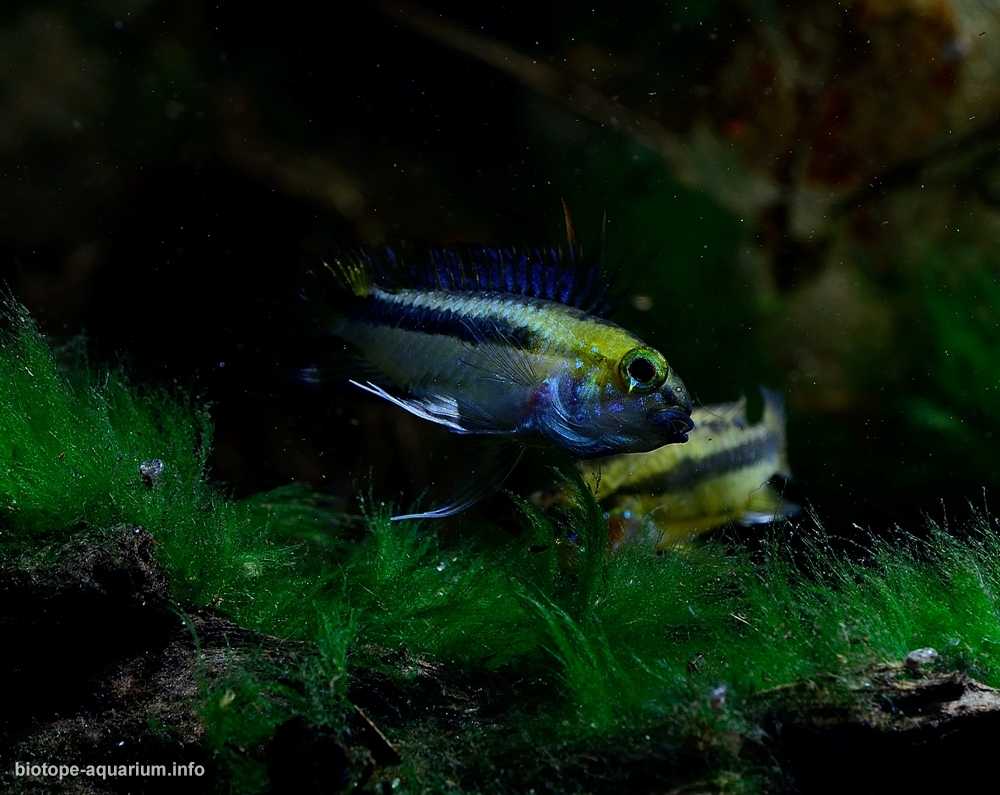
Description of the underwater landscape of the biotope: Almost 2m wide, and 30cm shallow (in dry season) stream tributary to Rio Paragua. “Atypical” blackwater (according to Sioli definition) with water parameters closer to classical clearwater streams. Section with abrupt, eroded bank on the left side, under the roots of nearby tree. Roots slows water current, and it leads to create nice habitat for smaller fish like Apistogramma trifasciata and Aphyocharax rathbuni. Hydrocotyle leucocephala, growing emersed on bank and roots, keep the light low; small twigs, bark, leaves and other sediments gives good shelter and spawning area. Slower current creates a place with abundand food source, which is perfect for fry to raise. In front of bigger wood piece, that lay on the right part of stream section, some Eichhornia diversifolia grows in the area, where sunrays reaches bottom better. Stronger current occurs only in narrow, clear part of stream. Some gravel, and few roundish rocks lays there. This is the spot where mentioned fish swim only while migrating into planted area, or up/down the stream, and where Corydoras sterbai swim while searching for food in the stream bottom. Water is well oxygenated and a little turbid (much more in the rainy season).
生物群落的水下景观描述:这是一条汇入帕拉瓜河的支流,宽度近 2 米,旱季时水深仅 30 厘米。其水质属于“非典型”黑水(按 Sioli 的定义),水体参数更接近经典的清水溪流。该河段左侧为陡峭且受侵蚀的河岸,位于附近树木的根系之下。树根减缓了水流速度,从而为三线短鲷(Apistogramma trifasciata)和拉氏细脂鲤(Aphyocharax rathbuni)等小型鱼类营造了良好的栖息地。水葫芦(Hydrocotyle leucocephala)在河岸和树根上挺水生长,降低了光照强度;细小的树枝、树皮、落叶及其他沉积物则提供了优良的庇护所和产卵区。较缓的水流形成了食物丰富的区域,非常利于鱼苗成长。在横卧于河段右侧的一段较大沉木前方,阳光能更好地照射到水底,此处生长着一些 Eichhornia diversifolia。较强水流仅出现在河道狭窄而清澈的部分,那里散布着一些砾石和少量圆润的石块。上述鱼类仅在迁徙至水草区或沿河上下游动时才会经过此地,而斯特巴氏鼠鱼(Corydoras sterbai)则在此处河底觅食游弋。 水体溶氧充足,略显浑浊(雨季时更为明显)。
Description of the parameters of the habitat: Water parameters varies depends on time of the year, and water is “coloured” with tannins, soft and slightly acidic with parameters: pH 6,3-6,8; hardness 1 odH; electrical conductivity 15-100 µS/cm (depends on the rainy and dry season), temperature 22-28 oC
栖息地参数描述:水质参数随季节变化,水体因单宁而呈“茶色”,质地软且微酸,具体参数为:pH 6.3–6.8;硬度 1°dH;电导率 15–100 µS/cm(随旱季和雨季变化);温度 22–28°C。
List of fishes and invertebrates occurring in the nature biotope: Aphyocharax sp., Acestrorhynchus sp., Hemigrammus sp., Hyphessobrycon sp., Moenkhausia sp., Nannostomus sp., Pyrrhulina sp., Otocinclus sp., Rinelocaria sp., Apistogramma sp. Laetacara sp., Mesonauta sp.
自然生境中出现的鱼类和无脊椎动物名录:Aphyocharax sp.、Acestrorhynchus sp.、Hemigrammus sp.、Hyphessobrycon sp.、Moenkhausia sp.、Nannostomus sp.、Pyrrhulina sp.、Otocinclus sp.、Rinelocaria sp.、Apistogramma sp.、Laetacara sp.、Mesonauta sp.
List of plants found in the nature biotope: Echinodorus sp., Ludwigia sp., Cabomba furcata, Myriophyllum sp., Hydrocotyle sp., Salvinia auriculata, Eichhornia sp., Urticularia sp., Cyperus sp., Xyris sp., Eriocaulon sp.
自然生境中发现的植物名录:Echinodorus sp.、Ludwigia sp.、Cabomba furcata、Myriophyllum sp.、Hydrocotyle sp.、Salvinia auriculata、Eichhornia sp.、Urticularia sp.、Cyperus sp.、Xyris sp.、Eriocaulon sp.
Threats to the ecology: Like everywhere on Earth main threat is human. Exploring of natural resources, cutting trees, planting soy and other crops. Fortunatelly the Bolivian government reacts very good in the area of wetlands, and National Park preserves the natural beauty of the area.
生态面临的威胁:与地球其他地方一样,主要威胁来自人类。包括自然资源的勘探、砍伐树木以及种植大豆和其他作物。幸运的是,玻利维亚政府在湿地保护方面反应积极,国家公园有效维护了该地区的自然美景。
Global problem that affects park is a phenomenon called El Nino. This causes draughts, and therefore creates problems in wetland areas. Also high level of CO2 in atmosphere is predicted to reverse the expansion of tropical rainforests. This process can have impact on vulnerability of rainforests to sustain while draugths.
影响该公园的全球性问题是被称为“厄尔尼诺”的现象。它引发干旱,从而给湿地区域带来问题。此外,大气中二氧化碳浓度的升高预计将逆转热带雨林的扩张趋势。这一过程可能削弱雨林在干旱期间维持生存的能力。
本文部分素材来自网络,如有类似请联系修改,如若转载,请注明出处:http://www.yangyubang.com/?p=3405