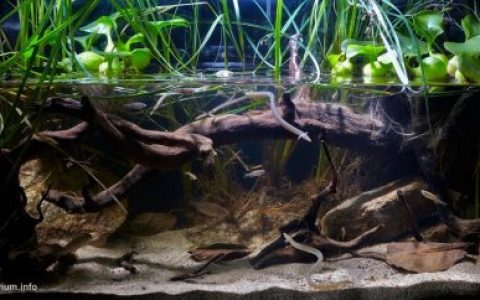
Volume: 276 L 水体容积:276 升
Dimensions: 200×60×50 cm (depth of water 23 cm)
尺寸:200×60×50 厘米(水深 23 厘米)
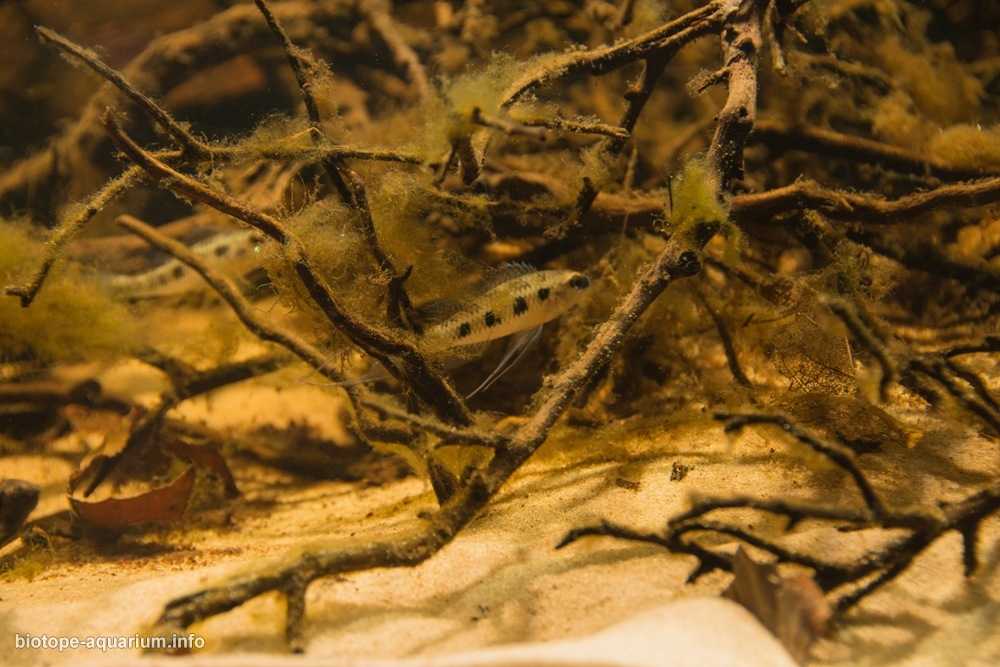
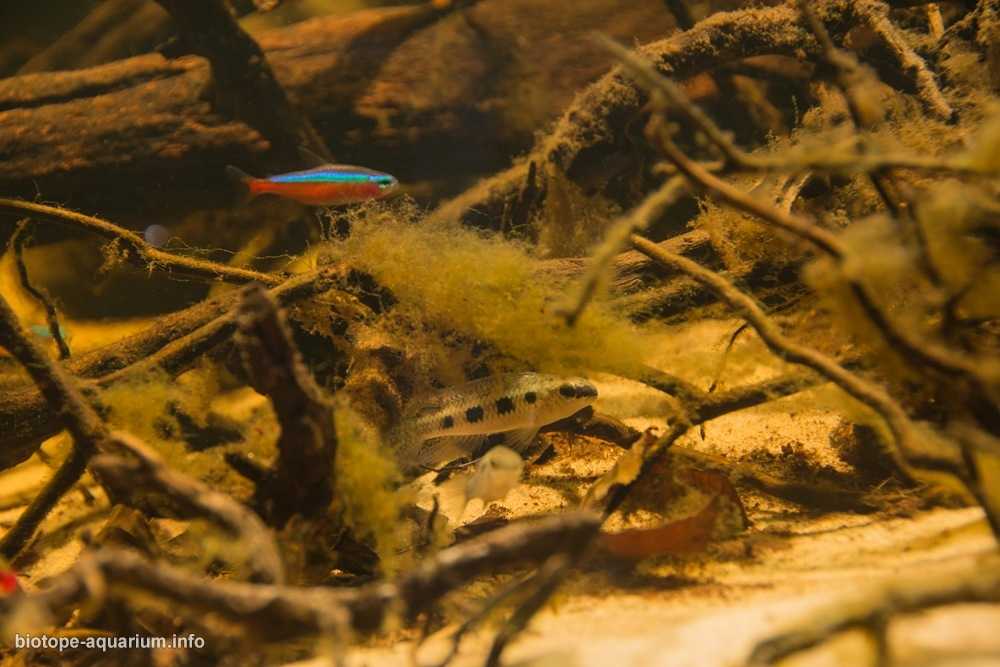
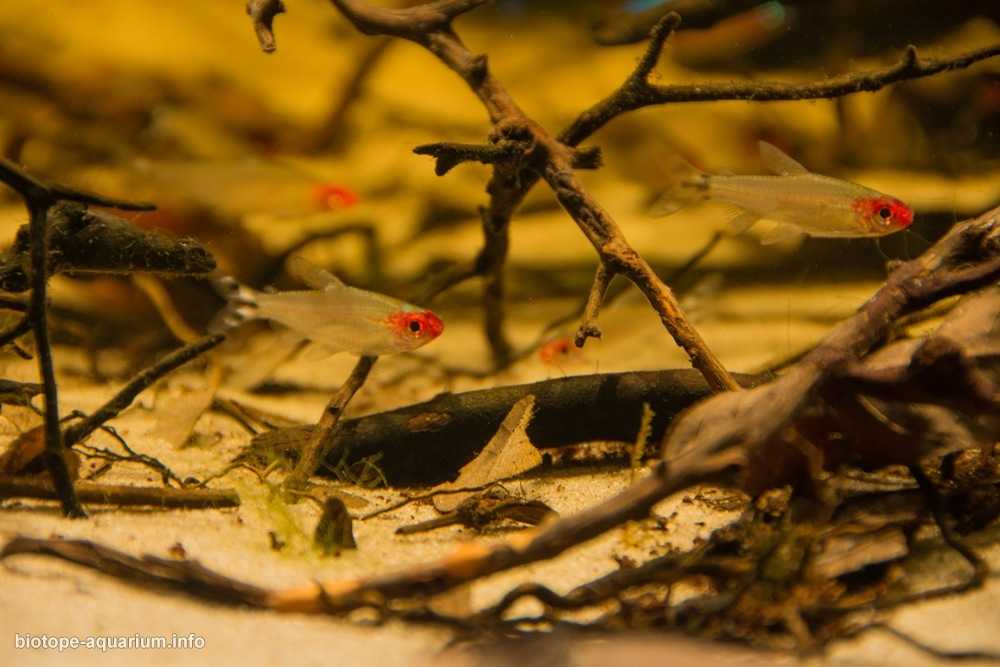
List of fishes: Nannostomus eques, Paracheirodon axelrodi, Hemigrammus bleheri, Dicrossus filamentosus
鱼类名录:旗尾铅笔鱼(Nannostomus eques)、阿氏霓虹脂鲤(Paracheirodon axelrodi)、布氏半线脂鲤(Hemigrammus bleheri)、丝状棋盘鱼(Dicrossus filamentosus)
List of plants: No aquatic plants were found in the habitats I described, only some land plants that were flooded.
植物名录:在我所描述的栖息地中未发现水生植物,仅有一些被淹没的陆生植物。
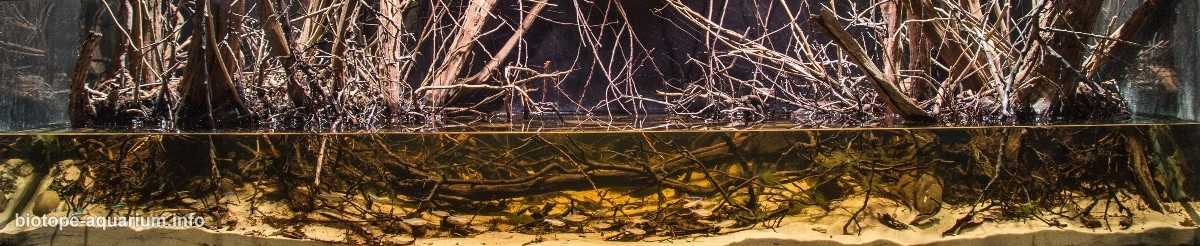
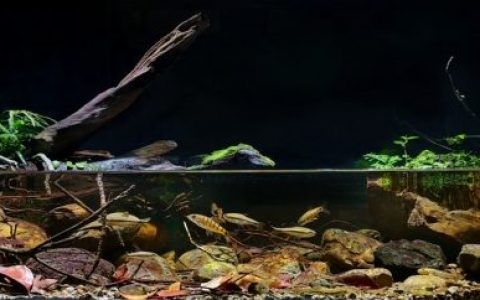
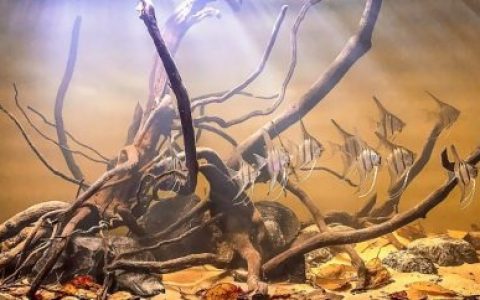
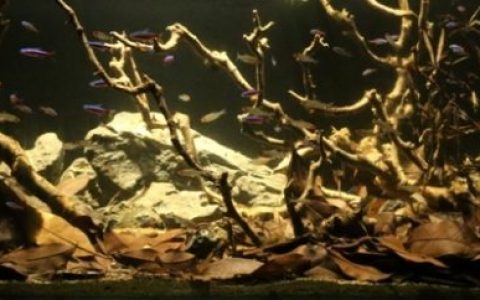
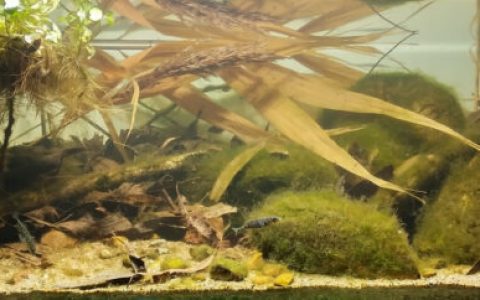
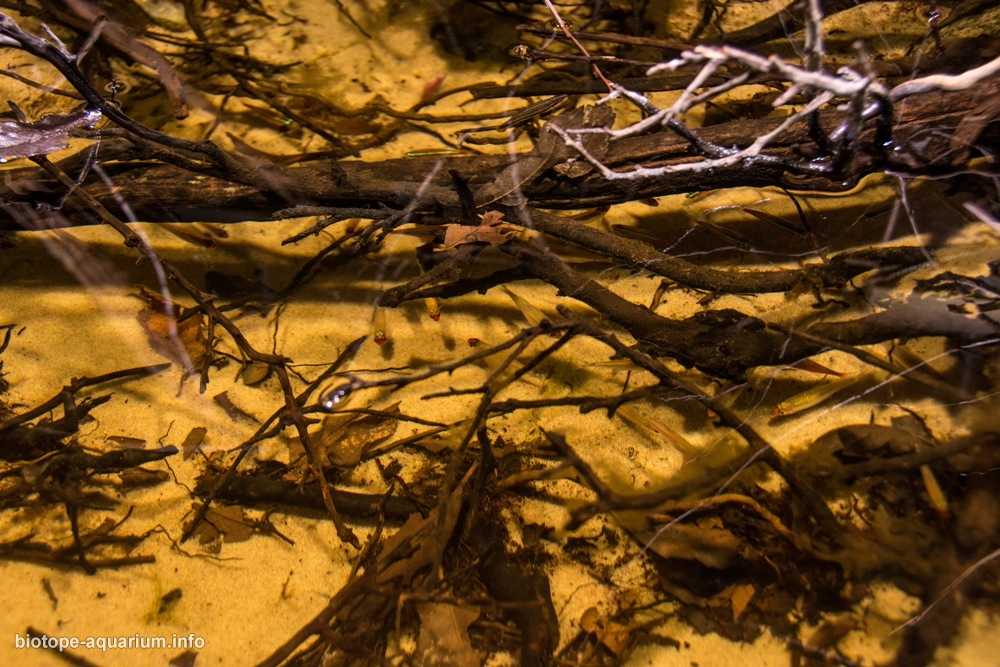
Description of decorations: The materials I chose were collected in rivers, riverbanks and forest parks. Some of them were purchased in China. Material includes drifting trees, branches, dried leaves (oak leaves), natural river sand, peat and coconut soil mixtures to simulate the soil on the forest floor. There are also streamstones of different sizes to simulate the riverbank scene.
装饰描述:我选择的材料采集自河流、河岸和森林公园,部分材料购自中国。材料包括沉木、树枝、干叶(橡树叶)、天然河沙,以及泥炭与椰土的混合物,用以模拟森林地面的土壤。此外还有不同尺寸的溪流石,用于还原河岸景观。
Description of equipment: Filter equipment: ATMAN-CF1200 External Filter ×3 / Pre-filter ×3. Degreasing Film Filter ×2. Lamps: Netlea/Nitley LED 6500K 50W×5 / Spotlight 5W×2. Heating device: EHEIM IHAN heating rod 200W *3 (2 with 1 spare, no heating device used in summer). Others: oxygen pumps×1.
设备描述:过滤设备:ATMAN-CF1200 外置过滤器×3 / 前置过滤器×3;除油膜过滤器×2。灯具:Netlea/Nitley LED 6500K 50W×5 / 射灯 5W×2。加热设备:EHEIM IHAN 加热棒 200W×3(其中 2 根使用,1 根备用,夏季不使用加热设备)。其他:增氧泵×1。
Water parameters: PH: 6.6, GH: 5, TDS: 7, Temperature: 25 ±1. PH: 6.6, GH: 5, TDS: 7.
水质参数:pH:6.6,GH:5,TDS:7,温度:25±1℃。pH:6.6,GH:5,TDS:7。
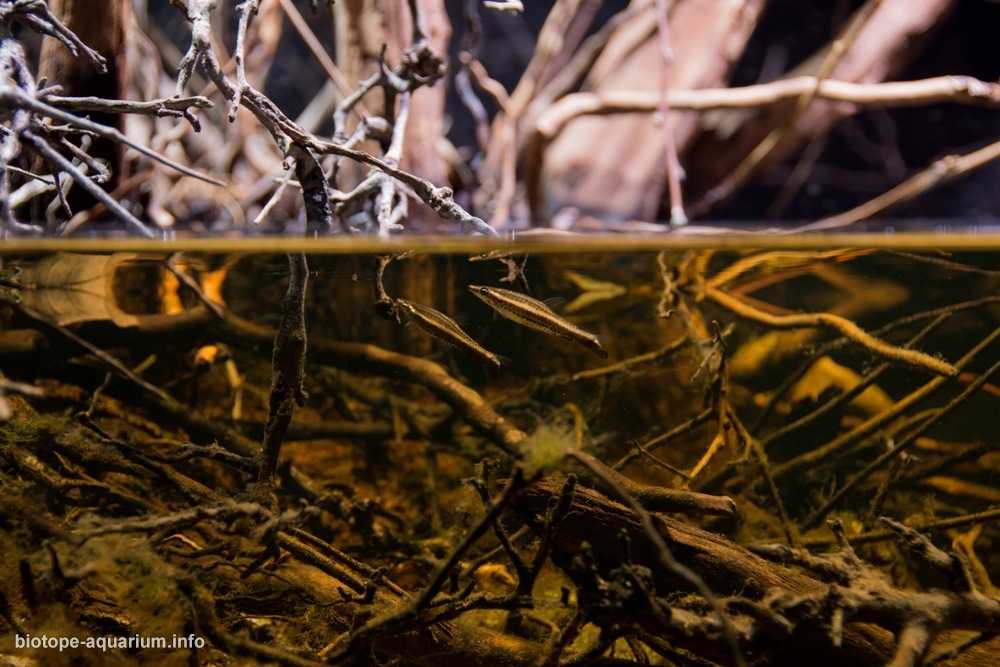
Additional info: In my aquarium, I used a lot of driftwood, branches, dead leaves and a lot of soil to simulate the water and underwater environment of forest streams in the rainy season. I used three larger external filters and two pre-filters for both physical filtration and nitrifying bacteria culture. I use pure water and a small amount of domestic water to mix to ensure the balance of GH/TDS values, because there are a lot of driftwood and dead leaves in the tank, they can control the fluctuation of PH values very well. It’s easy for me to control algae growth by changing water and controlling light time. In daily maintenance, only changing water and cleaning the glass of fish tank. In the photos and videos, you can see that the fish are in excellent condition. They like the ecological environment I simulate very much, and I am very happy about it.
附加信息:在我的水族箱中,我使用了大量沉木、树枝、枯叶以及土壤,以模拟雨季时森林溪流的水体及水下环境。我采用了三个大型外置过滤器和两个前置过滤器,既用于物理过滤,也用于培养硝化细菌。我使用纯水与少量自来水混合,以确保 GH/TDS 值的平衡;由于缸内有大量沉木和枯叶,它们能很好地控制 pH 值的波动。通过换水和控制光照时间,我可以轻松抑制藻类生长。日常维护仅需换水和清洁鱼缸玻璃。从照片和视频中可以看出,鱼儿状态极佳。它们非常喜欢我所模拟的生态环境,对此我感到非常欣慰。
INFORMATION ABOUT BIOTOPE
关于生物群落的信息
Description of the area surrounding the biotope: The Negro River, which means the Black River, is the largest tributary on the North Bank of the Amazon. Its source is the watershed between the Orinoco River and the Amazon River. It is connected with the Orinoco River by the Cassikiahre River. The Negro River is named the Guyana River in Colombia, its source, and its largest tributary is the Vopes River. The Negro River has a total length of 2252.6 km, a basin area of 620,000 square kilometers, an average annual discharge of 30,000 cubic meters per second, an average annual runoff depth of 1,600 mm and suspended mass concentration of 0.007/cubic meters. The largest tributary of the lower Negro River is the Broncou River, which originates from the Rofuma River at the junction of Brazil and Guyana, Brazil and Venezuela. Mountains (Roraima, 2772 m above sea level), the upstream is called Cotingo River, and the downstream is called Surumu River. There are two main tributaries in the upper reaches of the Broncou River: the Takatu River, a tributary of the Ireng River, which is the boundary between Brazil and Guyana, and the Uraricoera River, which originates from the eastern slope of the Parima Mountains on the border between Brazil and Venezuela, and its tributaries are the Auari River and the Paris River. Parima River, Uraricaa River and Majari River. The middle and lower tributaries are Mucajai River, Ajarani River, Anaua River and Catrimani River. From the Urariquilla River, the Broncou River is 1470 km long. It flows through northwest Brazil and southeast, accepting tributaries such as the Broncou River and pouring into the Amazon River 17 kilometers below Manaus. It’s about 2000 kilometers long. The river is winding and winding. The lower reaches of the river are sandy bars with a width of 30-50 kilometers, similar to long lakes. It is navigable below Taproquala. Through the Negro and Cassikiares rivers, the Amazon and Orinoco rivers are interconnected. The watershed is hot and rainy with few people. Because of the humus in the marshes along the coast, the river is dark.
生物群落周边区域描述:内格罗河(意为“黑河”)是亚马逊河北岸最大的支流。其源头位于奥里诺科河与亚马逊河之间的分水岭,并通过卡西基亚雷河与奥里诺科河相连。在哥伦比亚境内,内格罗河上游被称为圭亚那河,其最大支流为沃佩斯河。内格罗河全长 2252.6 公里,流域面积 62 万平方公里,年均流量 30,000 立方米/秒,年均径流深 1,600 毫米,悬浮物浓度为 0.007 克/立方米。内格罗河下游最大的支流是布朗库河,发源于巴西与圭亚那、巴西与委内瑞拉交界处的罗赖马山(海拔 2772 米)附近的罗富马河;其上游段称为科廷戈河,下游段则称为苏鲁穆河。 布朗库河上游有两条主要支流:塔卡图河,它是伊伦格河的支流,而伊伦格河是巴西与圭亚那的界河;以及乌拉里科埃拉河,它发源于巴西与委内瑞拉边境帕里马山脉的东坡,其支流包括奥瓦里河、帕里斯河、帕里马河、乌拉里卡阿河和马贾里河。中下游的支流则有穆卡扎伊河、阿扎拉尼河、阿瑙阿河和卡特里马尼河。从乌拉里基利亚河算起,布朗库河全长 1470 公里。它流经巴西西北部并向东南方向延伸,接纳包括布朗库河在内的多条支流,最终在马瑙斯下游 17 公里处注入亚马逊河。其总长度约为 2000 公里。河道蜿蜒曲折。下游分布着宽达 30 至 50 公里的沙洲,形如狭长的湖泊。自塔普罗夸拉以下可通航。通过内格罗河和卡西基亚雷斯河,亚马逊河与奥里诺科河相互连通。该流域气候炎热多雨,人烟稀少。 由于沿海沼泽中含有腐殖质,河水呈深色。
One of the small tributaries is Igarap do Daracua, located near Barcelona in the depths of the Amazon rainforest. It is covered by rain and needs to be entered by boats. A large number of interlaced drifting trees and fallen leaves (close to dense trees) are accumulated underwater, and some mud flows into the river with the arrival of the rainy season.
其中一条小支流是达拉克瓦溪(Igarap do Daracua),位于亚马逊雨林深处,靠近巴塞罗那。该区域雨水充沛,需乘船进入。水下堆积着大量交错的漂流木和落叶(紧邻茂密树林),随着雨季来临,部分泥沙也随水流汇入河中。
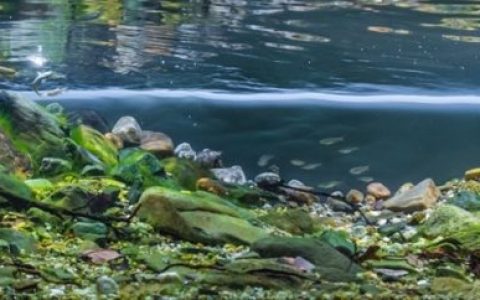
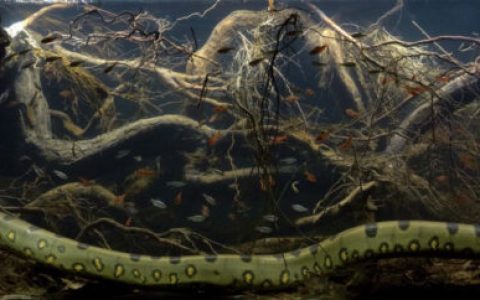
Description of the underwater landscape of the biotope: The habitat I describe is at the beginning of the rainy season, when the water level rises and floods into the surrounding forests. Some of the trees are underwater, and fish swim in large numbers to parts of their native River habitats, completely covered by the canopy of the rainforest. Here, fish produce a lot of aggregation. There, abundant food sources were found and began to breed. Forests are the main source of natural food for juvenile and adult fish. The underwater environment also provides them with perfect habitats and shadows on the water surface to prevent overheating or even excessive drying during the dry season. The bottom bed is sandy, with a lot of drifting trees and fallen leaves and soil at the roots of flooded forests. Many branches are inserted into the water from the surface of the water, providing a good shelter for fish. No water plants were found in the environment I described, only some terrestrial plants submerged in the rainy season. Water carries a large amount of debris, which contains decomposed organic matter.
生物群落水下景观描述:我所描述的栖息地位于雨季初期,此时水位上涨并淹没周边森林。部分树木被水淹没,鱼类大量游向其原生河流栖息地中完全被雨林树冠覆盖的区域。在此,鱼类形成大量集群。那里食物来源丰富,鱼类开始繁殖。森林是幼鱼和成鱼天然食物的主要来源。水下环境还为它们提供了理想的栖息地,并借助水面遮荫,防止在旱季过热甚至过度干涸。河床为沙质,遍布漂流木、落叶以及被淹没森林根部的土壤。许多枝条从水面伸入水中,为鱼类提供良好的庇护所。在我所描述的环境中未发现水生植物,仅有一些在雨季被淹没的陆生植物。水中携带大量碎屑,其中含有分解的有机物质。
Description of the parameters of the habitat: The rainy season begins in September and ends in May. The temperature of water is about 22-24 degrees C and the pH value of water is about 6ph. In the dry season, the water level decreases and the temperature rises from May to September, and the water temperature is about 28-30 degree C. Because of the low water level, there are a lot of leaves and branches on the bottom of the river. The water contains a lot of tannins and dyes the water.
栖息地参数描述:雨季始于九月,止于五月。水温约为 22-24 摄氏度,水的 pH 值约为 6。在旱季(五月至九月),水位下降,气温上升,水温约为 28-30 摄氏度。由于水位较低,河底堆积了大量落叶和树枝。水中富含单宁,使水体呈现染色状态。
List of fishes and invertebrates occurring in the nature biotope: Crenuchus spilurus, Nanostomus eques, Poecilocharax weitzmani, Liosomadoras oncinus, Dicrossus filamentosus, Crenicichla notophthalmus, Mesonauta festivus, Acarichthys heckelii, Crenicichla marmorata, Heros notatus.
自然生境中出现的鱼类和无脊椎动物名录:Crenuchus spilurus、Nanostomus eques、Poecilocharax weitzmani、Liosomadoras oncinus、Dicrossus filamentosus、Crenicichla notophthalmus、Mesonauta festivus、Acarichthys heckelii、Crenicichla marmorata、Heros notatus。
List of plants found in the nature biotope: At the location of the biotope I have described there are no water plants, except the forest flooded plants. The water plants that can be found in the nearby area are Echinodorus horizontalis, Echinodorus tenellus, Eleocharis sp.
自然生境中发现的植物列表:在我所描述的生境位置,除被洪水淹没的森林植物外,并无水生植物。在附近区域可发现的水生植物包括:Echinodorus horizontalis、Echinodorus tenellus 以及 Eleocharis sp.。
Threats to the ecology: Because it was a dense forest stream, people could only reach it by boat, so he was not cut down and mined. But when it rains in the Amazon tropics closer to where humans live, their fate is unfortunate. The annual deforestation of forests has affected the lungs of the Earth. Global warming, deterioration of air quality, abnormal climate and frequent natural disasters. God is warning humans that if it continues, we may be slowly heading for destruction in the absence of winter or summer in many years. Please put down the logging tools in your hands, stop cutting down the Amazon tropical rain, and protect my natural environment.
生态面临的威胁:由于这是一条流经茂密森林的溪流,人们只能乘船抵达,因此它尚未遭到砍伐和开采。然而,在亚马逊热带地区靠近人类居住地的地方,一旦雨季来临,它们的命运便十分悲惨。每年持续的森林砍伐正在侵蚀地球的“肺”。全球变暖、空气质量恶化、气候异常以及自然灾害频发,都是上帝向人类发出的警示:若继续如此,多年后我们可能在没有冬夏之分的境况中缓缓走向毁灭。请放下手中的伐木工具,停止砍伐亚马逊热带雨林,保护我们的自然环境。
本文部分素材来自网络,如有类似请联系修改,如若转载,请注明出处:http://www.yangyubang.com/?p=3490