Volume: 480 L 容积:480 升
Dimensions: 160x50x60 cm 尺寸:160×50×60 厘米
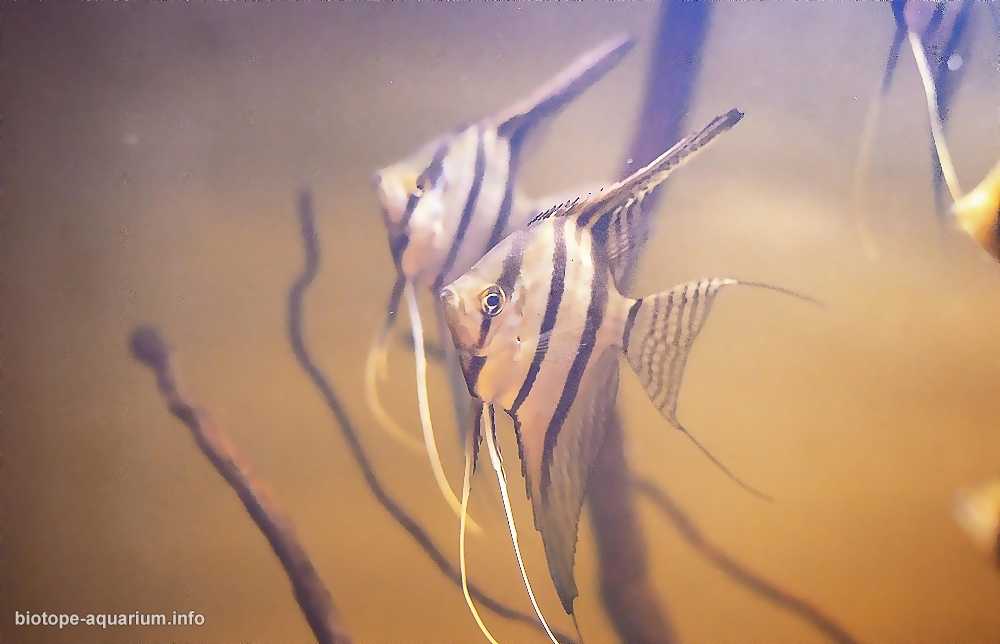
List of fishes: Pterophyllum scalare
鱼类名录:神仙鱼(Pterophyllum scalare)
List of plants: – 植物列表:–
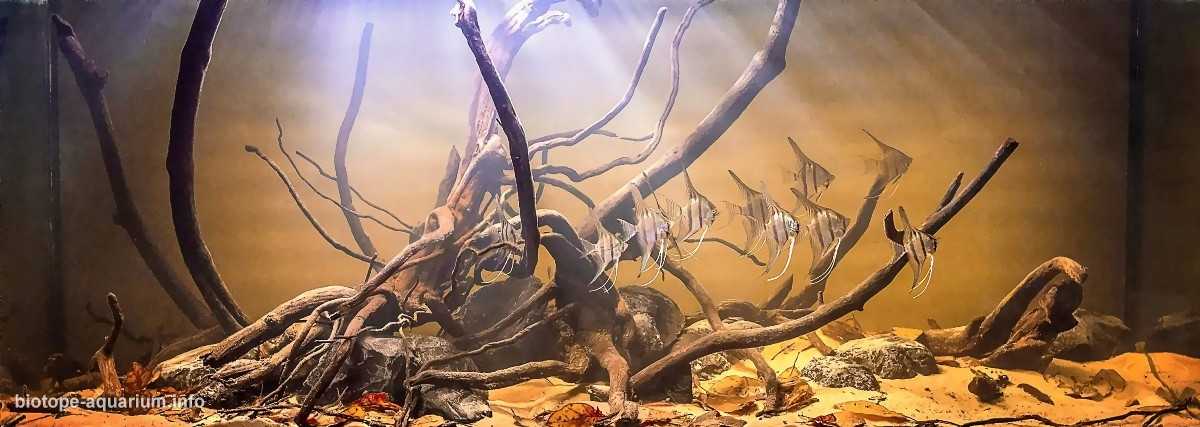
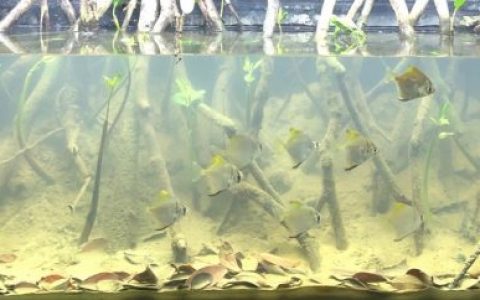
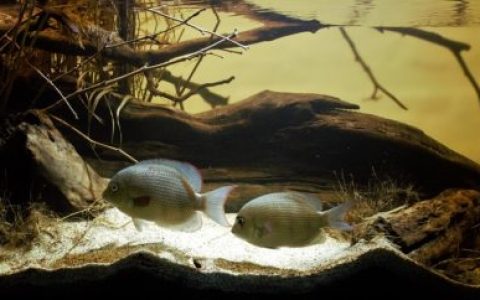
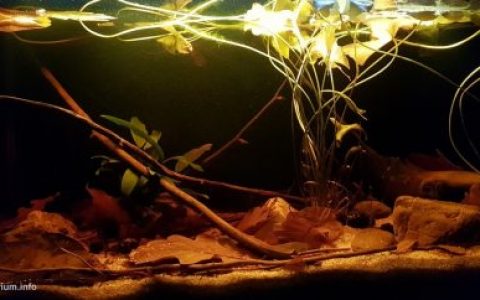
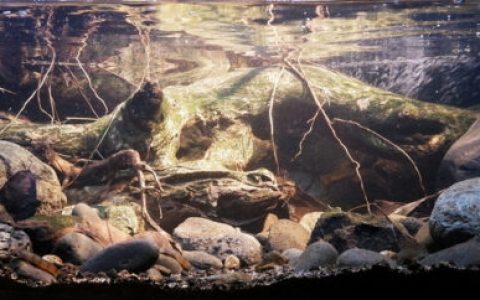
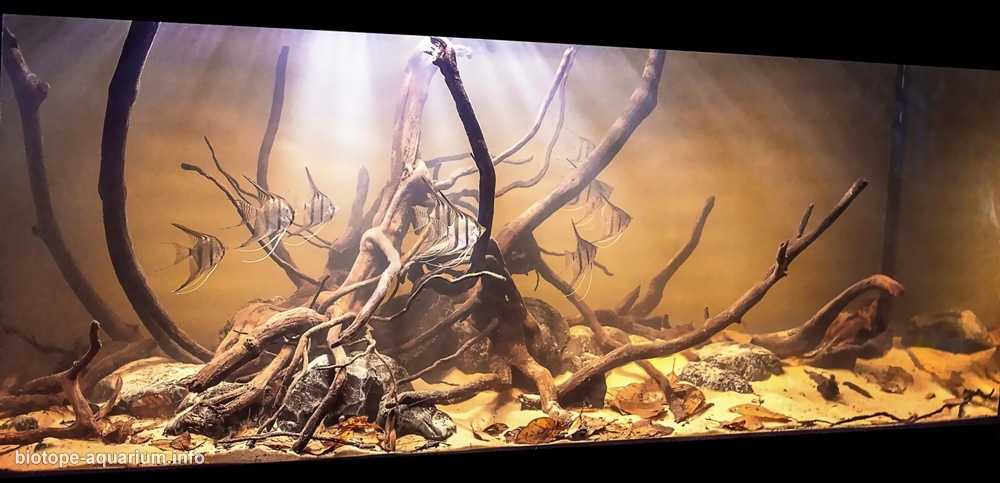
Description of decorations: In the aquarium, I used river sand which, by type and color, corresponds to the sand of the Essekibo River (VIDEO 39.22 min). Rock piles of rock color and texture repeat the rocks of the Acarai mountains, which are widespread throughout most of the river (PHOTO 1, VIDEO 41.20min). In an attempt to repeat the natural environment of the underwater landscape in the aquarium, driftwood of apple, oak and grapes are used, imitating flooded trees during the flood. The deciduous cover resembling the fallen leaves of the flooded trees of this area in the aquarium is made of oak leaves, previously manually cut, in order to give them the natural shape of the corresponding species of the local flora such as Carapa guianensis Aubl. The light brown shade of water inherent in this reservoir (VIDEO 36.17 min) I gave with the help of 15 l of water poured into the aquarium in which the driftwood of oak was repeatedly boiled to the desired shade. The effect of turbid water, which is formed during floods, was created using washed, pre-cleaned quarry sand of a very fine fraction.
装饰说明:在水族箱中,我使用了河沙,其类型和颜色与埃塞奎博河(Essequibo River)的沙子相符(视频 39 分 22 秒)。岩石堆的颜色和纹理重现了阿卡赖山脉(Acarai mountains)的岩石特征,这类岩石广泛分布于该河流的大部分区域(照片 1,视频 41 分 20 秒)。为了在水族箱中再现水下景观的自然环境,我使用了苹果木、橡木和葡萄藤制成的沉木,以模拟洪水期间被淹没的树木。水族箱中类似该地区被淹树木落叶的落叶层,由事先手工修剪过的橡树叶制成,使其呈现出当地植物物种(如圭亚那卡拉帕树,Carapa guianensis Aubl.)的自然形态。该水体特有的浅褐色色调(视频 36 分 17 秒)是通过向水族箱中注入 15 升水实现的,这些水曾反复煮沸橡木沉木直至达到理想的色泽。洪水期间形成的浑浊水效,则是通过使用经过清洗并预先处理的极细粒径采石场砂来实现的。
Description of equipment: External filter Hagen Fluval FX6, SAMP 96 l (volcanic lava – 10 l, JBL MicroMec 650 – 3 l, JBL Cermec – 3 l), LED lamps E27, 30 watts, 6500K, 3300 L, E27, 20 watts 3000K, 1900 L. 2 lamps of 30 watts each T8 4000K (for the background). Heater 300 watts, compressor.
设备描述:外置过滤器 Hagen Fluval FX6,SAMP 96 升(火山岩 10 升、JBL MicroMec 650 3 升、JBL Cermec 3 升),LED 灯 E27 30 瓦 6500K 3300 流明、E27 20 瓦 3000K 1900 流明。另配两盏 T8 30 瓦 4000K 灯具(用于背景照明)。加热器 300 瓦,气泵。
Water parameters: Temperature is 26°C; KH 7; GH 9; PH 6.5.
水质参数:温度 26°C;KH 7;GH 9;pH 6.5。
Additional info: Water changes once a week in the amount of 50% of the total volume of the aquarium. External filter maintenance twice a year. Washing filter socks in SAMP once a month.
补充信息:每周换水一次,换水量为水族箱总水量的 50%。外置过滤器每年维护两次。每月清洗一次 SAMP 中的过滤袋。
INFORMATION ABOUT BIOTOPE
关于生物群落的信息
Description of the area surrounding the biotope: The Iwokrama Nature Reserve of nearly 3,710 square kilometers (1,430 square miles) of central Guyana, located in the heart of the Guiana Shield, is one of the last four untouched tropical forests in the world. It represents an important transitional zone in the areas of precipitation, terrain, human history and biological communities. The ecosystem of the Iwokrama forest is located at the junction of the Amazonian and Guiana flora and fauna. The area is covered by low-lying rainforest, where tall tropical trees dominate with a dense canopy ranging in height from 20 to 30 meters (70-100 feet). The Essequibo River passes through the reserve mainly along the flat terrain with a slow flow. Despite this, on its way there are slight elevations of the landscape during which you can see stone boulders that form piles rising above the water, steep rapids, waterfalls.
生物群落周边区域描述:位于圭亚那中心地带、处于圭亚那地盾核心区域的伊沃克拉马自然保护区,面积近 3,710 平方公里(1,430 平方英里),是全球仅存的四片原始热带雨林之一。该区域在降水、地形、人类历史及生物群落等方面构成了重要的过渡带。伊沃克拉马森林的生态系统坐落于亚马逊与圭亚那动植物区系的交汇之处。该地区覆盖着低地雨林,高大的热带树木占据主导地位,形成浓密的林冠,高度介于 20 至 30 米(70-100 英尺)之间。埃塞奎博河主要流经保护区内平坦的地形,水流缓慢。尽管如此,沿河途中仍可见地势略有起伏之处,那里矗立着由巨石堆叠而成、高出水面的石堆,以及陡峭的急流和瀑布。
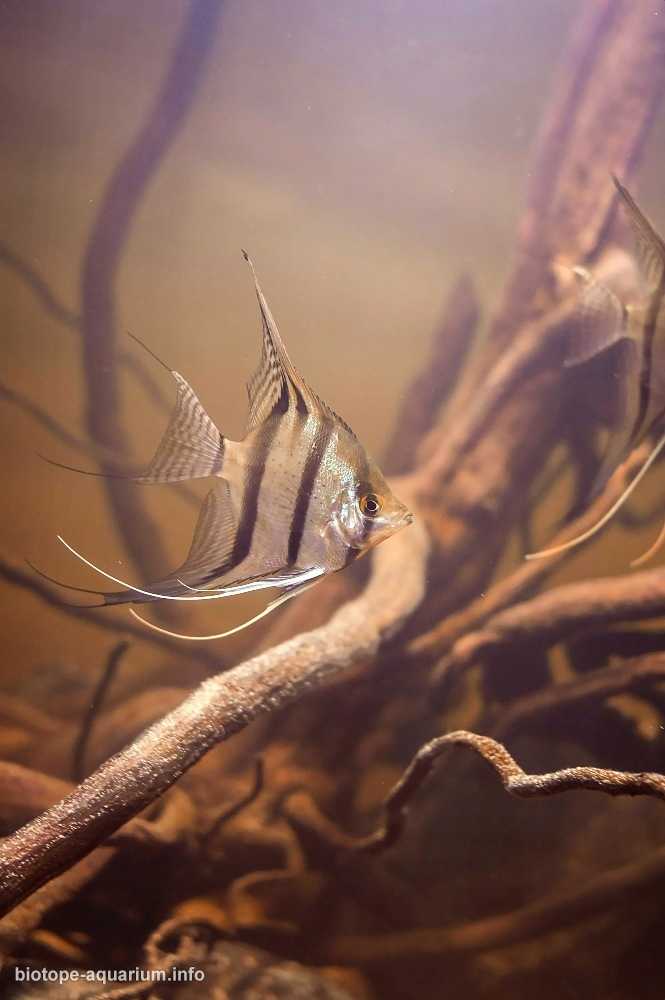
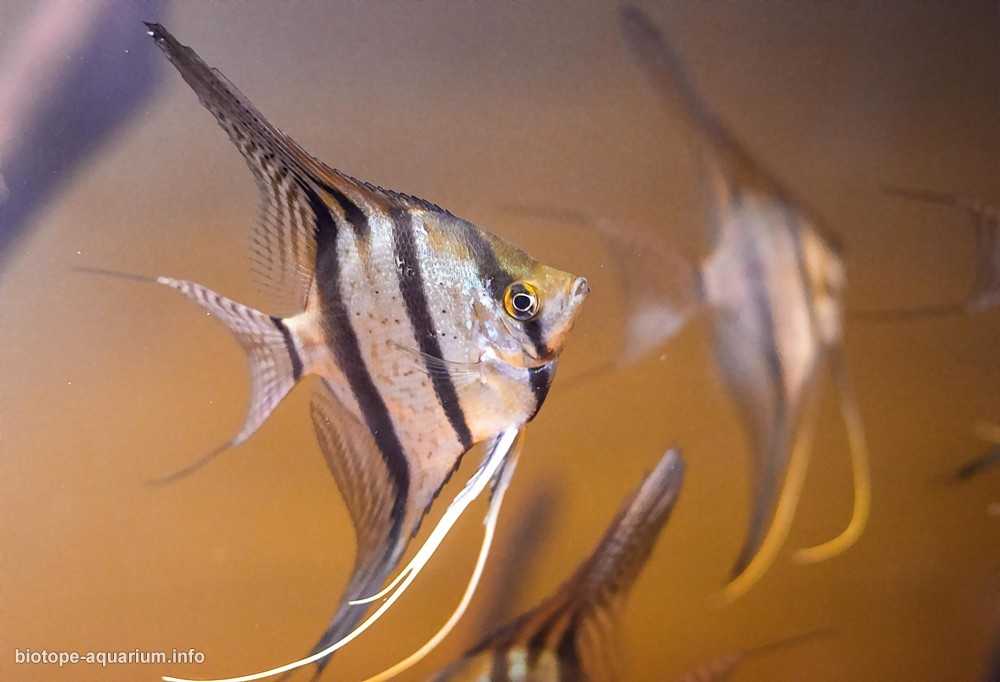
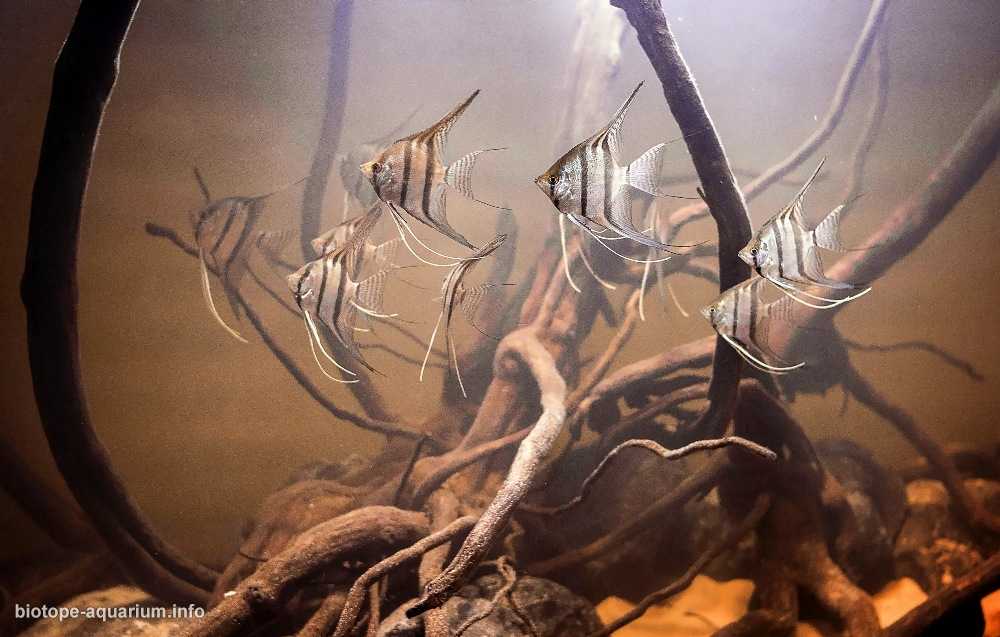
Description of the underwater landscape of the biotope: For my work, the landscape of the flooded coast was selected during the floods on the Essequibo River, the territory of Iwokrama Nature Reserve, Gayana. In one of the photos (PHOTO 1) that I used for my work, you can see a slowly flowing river among the shores of light yellow sand surrounded by dense forests. Between the rainy season, when the water level drops significantly, from time to time exposing lonely stone piles on the coast surface. Some of them have good conditions for the germination of plants and trees between them, as shown in the photo. In a fairly short time, they can turn a gray island consisting of stone boulders and yellowish sand into a green hat rising above the water, as shown in the photo (PHOTO 2). Such islands can often be found along the entire coast of the reserve, creating spectacular views of untouched nature. There is a large number of extinct or endangered species in their former geographical areas. The subequatorial climate is hot and humid in the country. Two rainy seasons from April to August and from November to January, bring floods, causing the Essequibo River to flood significantly increasing its water level. During floods, the upper reaches of the Branco River (part of the Amazon basin) and the Essequibo River are interconnected, providing a level of exchange of aquatic fauna, such as fish, between the two systems. At that time, such stone coasts overgrown with vegetation, small bushes and trees of the type Carapa guianensis Aubl significantly or completely submerged in water, leaving only tree crowns and gray rocky rocks on the surface (PHOTO 3). The arrival of new masses of water also begins to change the underwater landscape, forcing some species of fish to seek a new habitat. I showed this moment in my aquarium, displaying the surface of one of such submerged stone piles off the coast. Caught in the power of the water element. Far from the turbulent currents with calm water, among the roots and branches of trees, securely fixed among stone boulders, they found a haven of Pterophyllum scalare. In the murky light brown water under the playing rays of the rising sun and stretching from the bottom to the surface of the water trunks of sunken trees, they meet their new day.
生物群落水下景观描述:在我的作品中,所选景观为圭亚那伊沃克拉马自然保护区内埃塞奎博河泛滥期间的淹没海岸。在我用于创作的一张照片(照片 1)中,可以看到一条缓缓流淌的河流,其两岸是浅黄色的沙滩,四周环绕着茂密的森林。在雨季之间,当水位显著下降时,海岸表面会不时显露出孤立的石堆。其中一些石堆具备良好的条件,可供植物和树木在其间萌发,正如照片所示。在相当短的时间内,它们能将由灰色巨石和淡黄色沙子构成的岛屿,转变为如照片(照片 2)所示高出水面的绿色冠盖。此类岛屿沿保护区整个海岸线屡见不鲜,营造出原始自然的壮丽景观。在其原有的地理分布区内,存在大量已灭绝或濒危物种。该国属副赤道气候,炎热而湿润。 每年四月至八月和十一月至一月的两个雨季会引发洪水,导致埃塞奎博河水位显著上涨。洪水期间,布朗科河(亚马逊流域的一部分)的上游与埃塞奎博河相互连通,促进了鱼类等水生动物在两大水系之间的交流。此时,覆盖着植被、小型灌木以及圭亚那卡拉帕树(Carapa guianensis Aubl)的石质河岸会被大幅或完全淹没,水面之上仅露出树冠和灰色的岩石(照片 3)。大量新水的涌入也开始改变水下景观,迫使某些鱼类寻找新的栖息地。我在我的水族箱中再现了这一场景,展示了此类被淹没的沿岸石堆之一的表面。置身于水元素的力量之中,远离湍急的水流,在平静的水域里,于树根与树枝之间,牢牢固定于巨石之中,它们为神仙鱼(Pterophyllum scalare)找到了一处庇护所。 在浑浊的浅褐色水域中,初升太阳的光芒嬉戏其间,沉没树木的树干从水底一直延伸至水面,它们在此迎接新的一天。
Description of the parameters of the habitat: River water has a light brown hue. Depending on the season, it may be more cloudy or transparent. Water parameters in a natural biotope: pH 5.0-6.5, hardness 0.5-1, KN 0. Average temperature 21-23C.
栖息地参数描述:河水呈浅褐色。随季节变化,水质可能更为浑浊或清澈。自然生物群落中的水质参数:pH 5.0-6.5,硬度 0.5-1,碳酸盐硬度(KN)0。平均水温 21-23℃。
List of fishes and invertebrates occurring in the nature biotope: Arapaima gigas, Pygocentrus nattereri, Hemigrammus erythrozonus, Carnegiella strigata, Corydoras aeneus, Heros severus, Metynnis argenteus, Hoplosternum thoracatum.
该自然生物群落中出现的鱼类和无脊椎动物名录:巨骨舌鱼(Arapaima gigas)、纳氏臀点脂鲤(Pygocentrus nattereri)、红线灯鱼(Hemigrammus erythrozonus)、斧头鱼(Carnegiella strigata)、青铜鼠鱼(Corydoras aeneus)、塞维罗慈鲷(Heros severus)、银元鱼(Metynnis argenteus)、胸甲 Hoplosternum(Hoplosternum thoracatum)。
List of plants found in the nature biotope: Echinodorus grisebachii, Echinodorus bolivianus, Cabomba furcata, Eleocharis acicularis.
该自然生物群落中发现的水生植物名录:格里斯巴赫皇冠草(Echinodorus grisebachii)、玻利维亚皇冠草(Echinodorus bolivianus)、叉叶节节菜(Cabomba furcata)、针叶荸荠(Eleocharis acicularis)。
本文部分素材来自网络,如有类似请联系修改,如若转载,请注明出处:http://www.yangyubang.com/?p=3344