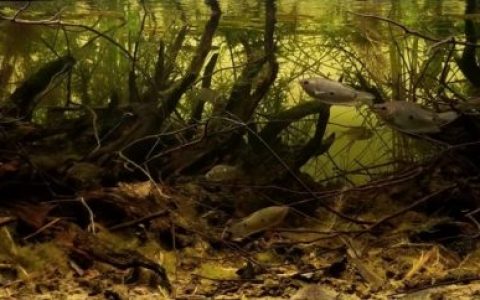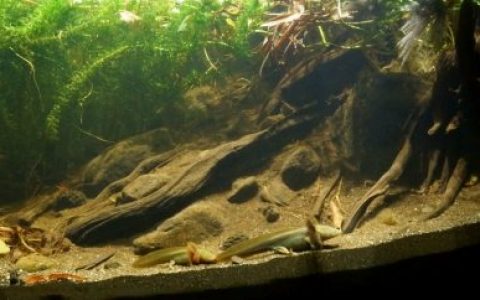
Volume: 288 L 水体容积:288 升
Dimensions: 120×60×40 cm 尺寸:120×60×40 厘米
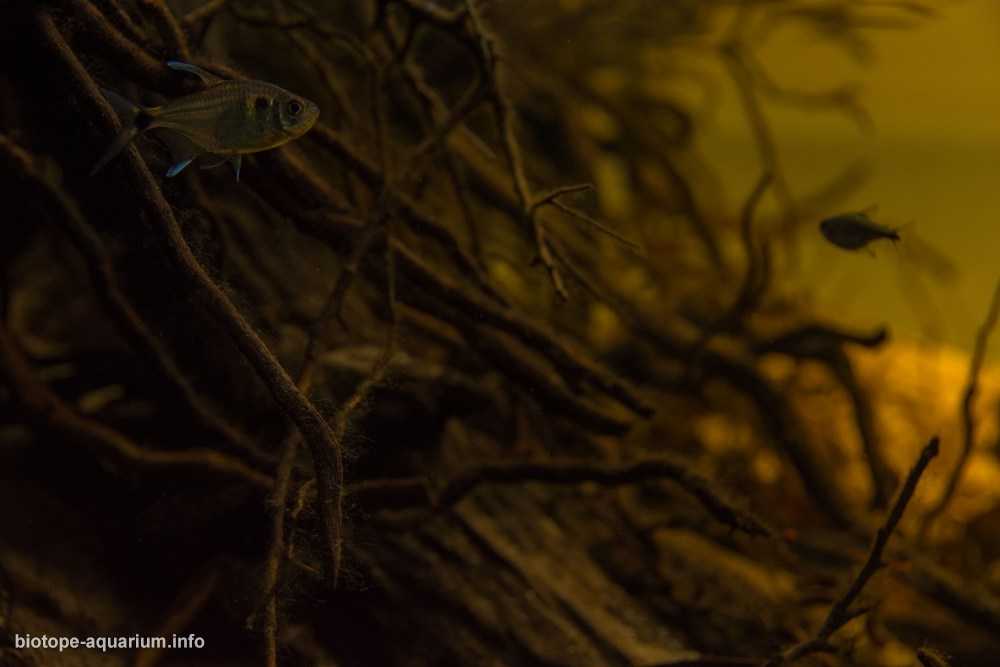
List of fishes: Hemigrammus ocellifer/Hemigrammus erythrozonus/Hemigrammus armstrongi
鱼类名录:眼点半线脂鲤/红线半线脂鲤/阿姆斯特朗半线脂鲤
List of plants: No water plants were found in the ecological environment I described, only some inundated terrestrial plants and some dead terrestrial plants that floated near the river bank.
植物名录:在我描述的生态环境中未发现水生植物,仅有一些被淹没的陆生植物以及一些漂浮在河岸附近的枯死陆生植物。
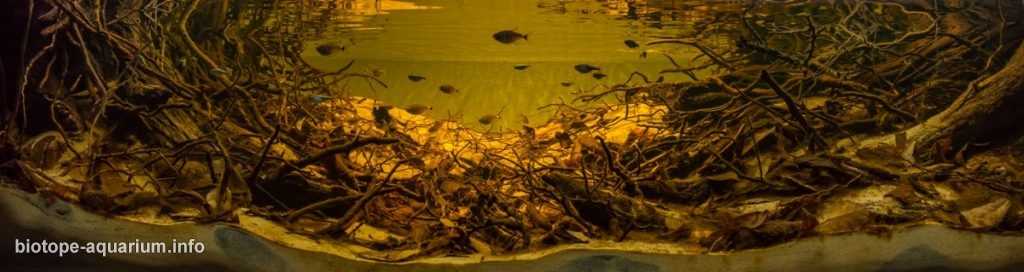
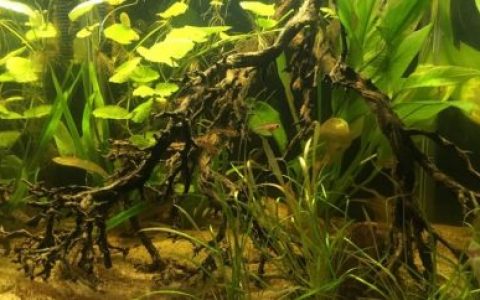
Description of decorations: The materials I chose were collected in rivers, riverbanks and forest parks. Some of them were purchased in China. Here I add some driftwood simulations like trunks and many twigs to simulate the accumulation of trees in the beach and shoal.
装饰物描述:我所选用的材料采集自河流、河岸及森林公园,部分购自中国。在此我添加了一些模拟树干的沉木以及众多细枝,以模拟海滩与浅滩上树木堆积的景象。
Description of equipment: Filter equipment:
设备描述:过滤设备:
ATMAN-CF1200 External Filter ×2 / Pre-filter ×2
ATMAN-CF1200 外置过滤器 ×2 / 前置过滤器 ×2
Degreasing Film Filter ×2
除油膜过滤器 ×2
Lamps: 灯具:
Netlea/Nitley LED 6500K 50W×3 / Spotlight 5W×4
Netlea/Nitley LED 6500K 50W×3 / 聚光灯 5W×4
Heating device: 加热设备:
EHEIM IHAN heating rod 200W ×2 (with one device, without heating device in summer)
EHEIM IHAN 加热棒 200W ×2(配备一台设备,夏季不使用加热装置)
Others: oxygen pumps 其他:增氧泵
Water parameters: Temperature: 25 (±)
水质参数:温度:25 (±)
PH: 6.5 pH 值:6.5
GH:6 GH 值:6
TDS:9 TDS 值:9
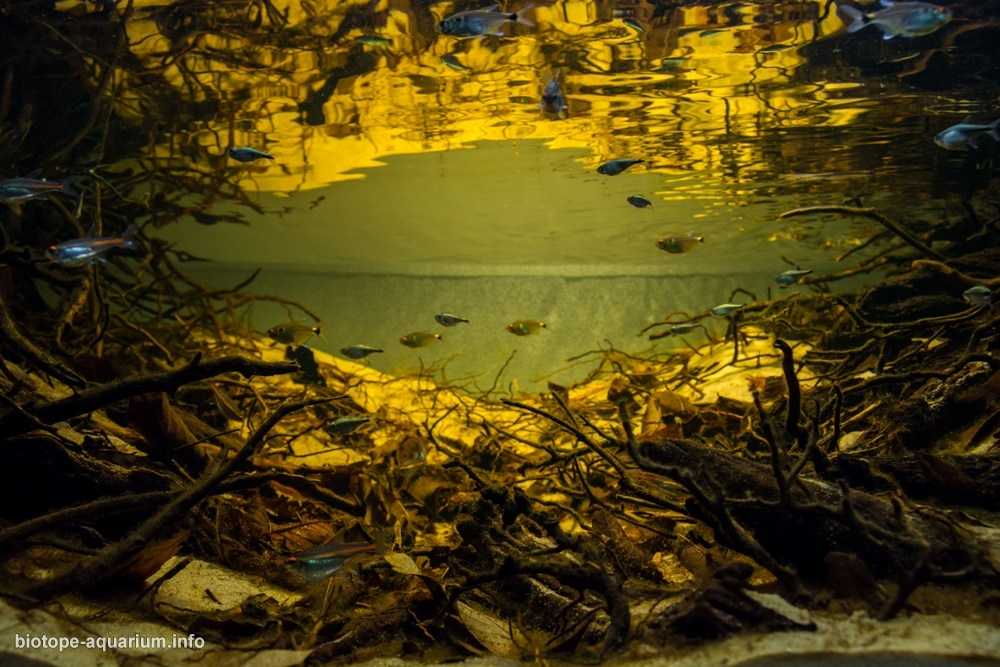
Additional info: In my aquarium, I used a lot of drifting trees, branches and dead leaves to simulate the accumulation of trees and branches along the beach and river bank, and a lot of light background color to simulate the beach color of habitat. I used two larger external filters and two pre-filters for both physical filtration and nitrifying bacteria cultivation. I use pure water and a small amount of domestic water to mix to ensure the balance of GH/TDS values, because there are a lot of driftwood and dead leaves in the tank, they can control the fluctuation of PH values very well. It’s easy for me to control algae growth by changing water and controlling light time. In daily maintenance, only changing water and cleaning the glass of fish tank. In the photos and videos, you can see that the fish are in excellent condition. They like the ecological environment I simulate very much, and I am very happy about it.
补充说明:在我的水族箱中,我使用了大量沉木、树枝和枯叶,以模拟栖息地海滩与河岸沿线树木和树枝的堆积景象,并采用浅色的背景来还原栖息地的沙滩色调。我配置了两台大型外置过滤器及两个前置过滤器,兼顾物理过滤与硝化细菌的培养。我使用纯水与少量自来水混合,以确保 GH 值和 TDS 值的平衡;由于缸内含有大量沉木和枯叶,它们能很好地稳定 pH 值的波动。通过换水和控制光照时长,我可以轻松抑制藻类生长。日常维护仅需换水和清洁鱼缸玻璃。从照片和视频中可以看出,鱼儿状态极佳。它们非常喜爱我所模拟的生态环境,对此我感到十分欣慰。
NFORMATION ABOUT BIOTOPE
关于生物群落的信息
Description of the area surrounding the biotope: The Essequibo River is a river in central Guyana. Originating from the Akali Mountains in the southern part of the Guyana Plateau, it flows northward through the tropical grasslands and rainforests and into the Atlantic Ocean 20 kilometers west of Georgetown. It is about 1,010 kilometers long and is the largest river in Guyana. The main tributaries are the Mazaruni, Kuyuni and Rupununi rivers. The watershed covers more than half of Guyana’s total area. The estuary is 32 kilometers wide and has many islands and beaches. There are many rapids and waterfalls in the upper and middle reaches, which are not conducive to shipping. Ships can travel 81 kilometres from the estuary to Battica. The Escuibo River, which runs north-south in central Guyana, South America, is the largest river between the Amazon and Orinoco rivers. Originating on the northwest slope of the Akali Mountains at the junction of Guyana and Brazil, the river flows northward, through a series of waterfalls and dangerous beaches, across the savanna, and into the Atlantic Ocean 20 km west of Georgetown. The total length of the river is about 1014 km, the area of the river basin is 69,000 square kilometers, the average annual discharge is 2234 cubic meters per second, the average annual runoff is 70.5 billion cubic meters, the maximum measured flow is 8010 cubic meters per second, and the minimum measured flow is 145 cubic meters per second. The basin is situated at 58 10′- 62 40′, 1 23′- 6 58′. It flows northward through damp forests and grasslands. There are many waterfalls on the river, one of which is Kurupkari Falls. There are islands in the middle and lower reaches. When it flows into the Atlantic 21 kilometers north of Georgetown, it forms an estuary 20 kilometers wide, with many islands. The climate is hot and humid, and there are two rainy seasons from April to August and November to January. Guyana’s rainforests are rich in animals and plants, as are rivers, where many kinds of fish live.
生物群落周边区域描述:埃塞奎博河是圭亚那中部的一条河流。它发源于圭亚那高原南部的阿卡里山脉,向北流经热带草原和雨林,最终在乔治城以西 20 公里处注入大西洋。该河全长约 1,010 公里,是圭亚那最大的河流。其主要支流包括马扎鲁尼河、库尤尼河和鲁普努尼河。流域面积覆盖圭亚那国土总面积的一半以上。河口宽达 32 公里,分布着众多岛屿和沙滩。上游和中游河段遍布急流与瀑布,不利于航运。船舶可从河口上行 81 公里抵达巴蒂卡。埃塞奎博河纵贯南美洲圭亚那中部,呈南北走向,是亚马逊河与奥里诺科河之间最大的河流。它发源于圭亚那与巴西交界处的阿卡里山脉西北坡,向北流淌,穿越一系列瀑布和险滩,经过稀树草原,最终在乔治城以西 20 公里处汇入大西洋。 该河全长约 1014 公里,流域面积 69,000 平方公里,年均流量为每秒 2234 立方米,年均径流量为 705 亿立方米,实测最大流量为每秒 8010 立方米,实测最小流量为每秒 145 立方米。流域位于西经 58°10′至 62°40′、北纬 1°23′至 6°58′之间。河流向北流经湿润的森林和草原。河上瀑布众多,其中之一是库鲁普卡里瀑布(Kurupkari Falls)。中下游分布有多个岛屿。在乔治敦以北 21 公里处注入大西洋时,形成宽达 20 公里的河口,其中岛屿星罗棋布。气候炎热潮湿,每年有两个雨季,分别为 4 月至 8 月和 11 月至次年 1 月。圭亚那的热带雨林动植物资源丰富,河流中亦栖息着多种鱼类。
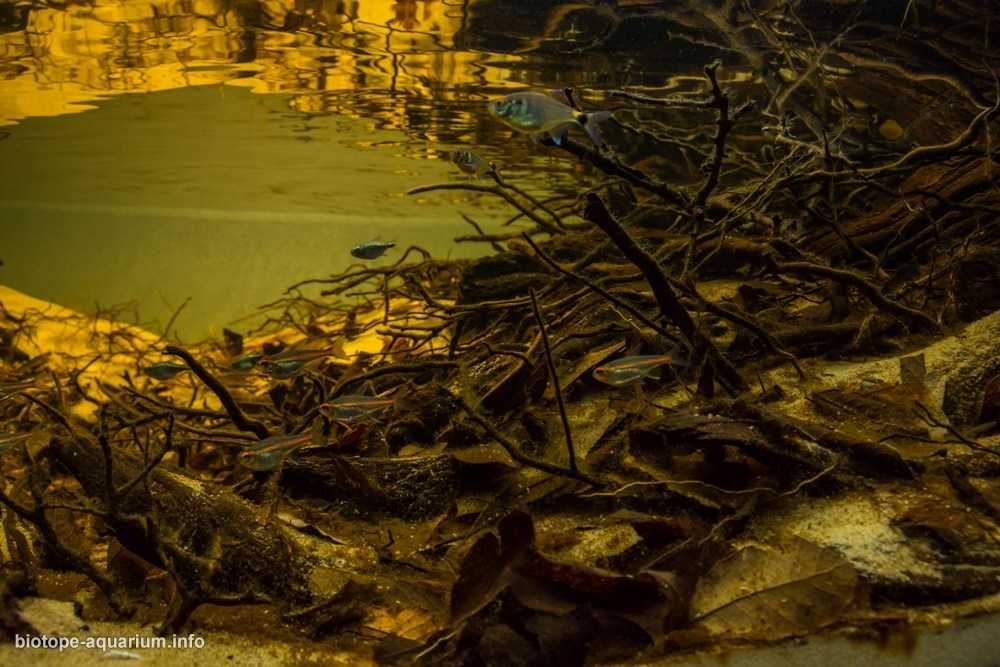
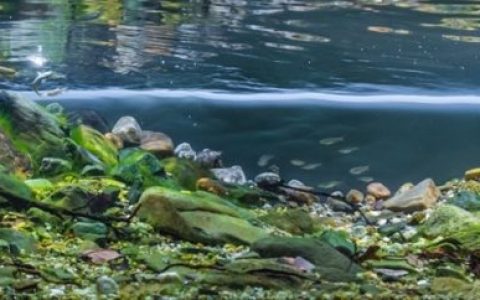
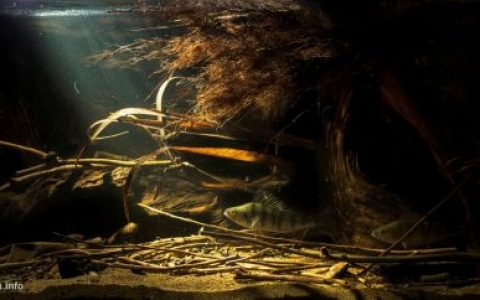
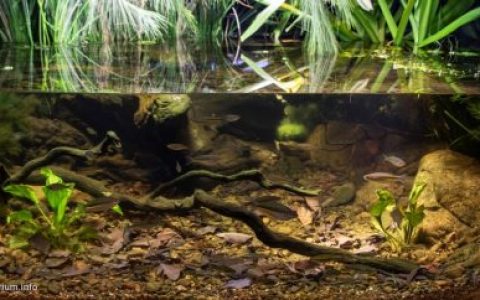
Description of the underwater landscape of the biotope: It belongs to the tropical rainforest climate with rich and diverse species. The water is yellowish and somewhat turbid, but the fish like this environment. The bottom of the river is mostly composed of sand and drifting wood and deciduous leaves. It is very suitable for fish to inhabit and reproduce. When the rainy season comes, the river floods its banks. It is originally a habitat for birds, and in a twinkling it becomes a paradise for fish.
生物群落的水下景观描述:该地区属于热带雨林气候,物种丰富多样。水体呈微黄色且略显浑浊,但鱼类却喜爱这样的环境。河床主要由沙子、漂流木和落叶构成,非常适宜鱼类栖息与繁殖。雨季来临时,河水漫溢两岸。这里原本是鸟类的栖息地,转瞬之间便成为鱼类的天堂。
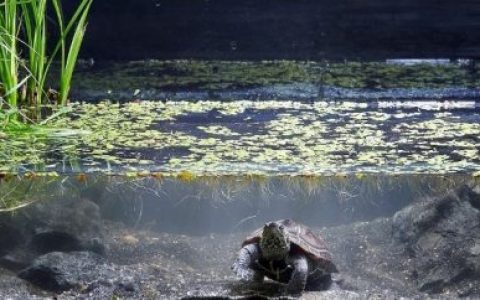
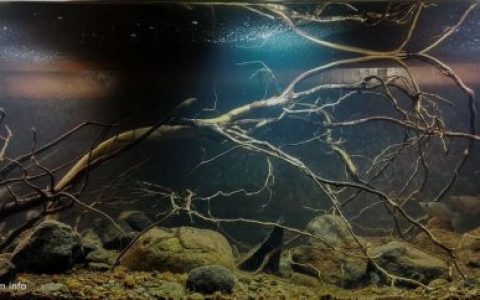
The simulated habitat is the beach (shoal) on both sides of the river. When the rainy season comes, the river rises, a large number of beaches are submerged, and the shore (shoal) accumulates a large number of driftwood, forming a unique underwater landscape. This is a perfect combination of sand and wood, showing the unique creativity of nature.
模拟的生境为河流两侧的滩涂(浅滩)。雨季来临时,水位上涨,大量滩涂被淹没,岸边(浅滩)堆积起众多漂流木,形成独特的水下景观。这是沙与木的完美结合,展现了大自然独有的创造力。
Description of the parameters of the habitat: The Potalo River is a large tributary of the middle reaches of the Escuibo River, with many sandy beaches. It originates from the eastern slope of the Karima River, which borders Guyana and Brazil. It flows from west to East through the famous Kaieteur Falls and Marina Falls, and flows into the Escuibo River 10 km east of Tumatu Mali. The average annual discharge of the river is 521 cubic meters per second, the maximum discharge is 2223 cubic meters per second and the minimum discharge is 44 cubic meters per second.The water of a river may be more turbid or transparent and brown depending on the season. Natural habitat water parameters: pH 5.0-6.5, hardness 0.5-1 dgh, KH 0.
栖息地参数描述:波塔罗河是埃塞奎博河中游的一条大型支流,拥有众多沙滩。它发源于圭亚那与巴西边境的卡里马山东坡,自西向东流经著名的凯厄图尔瀑布和马里纳瀑布,最终在图马图马利以东 10 公里处汇入埃塞奎博河。该河年平均流量为每秒 521 立方米,最大流量为每秒 2223 立方米,最小流量为每秒 44 立方米。河水随季节变化可能更为浑浊,或呈现透明的褐色。自然栖息地水质参数:pH 5.0–6.5,硬度 0.5–1 dGH,KH 0。
The illumination time is about 5 hours in rainy season, less than 7 hours in dry season. The water quality in rainy season is about 6-6.5, the temperature is about 24 C. The water level in dry season decreases, the temperature is about 5, the temperature is about 28-32 C. The tannic acid content of deciduous trees accumulates in the river bottom increases, and the water is “tea-colored”. The bottom is covered with fine sand, sometimes silted. Because this part of the river is located in the forest zone, there are fragments of branches and leaves at the bottom. During the flood, the water level rose and some of the trees growing along the coast were flooded. Because of the rapid flow of water and the scarcity of aquatic vegetation, it can only be found in coastal areas, relatively shallow waters or backwater.
雨季光照时间约为 5 小时,旱季则少于 7 小时。雨季水质 pH 值约为 6-6.5,水温约 24℃。旱季水位下降,气温约 5℃,水温则在 28-32℃之间。落叶树木释放的单宁酸在河底不断累积,使水体呈现“茶色”。河床覆盖着细沙,有时会有淤泥沉积。由于该河段位于森林地带,河底散落着树枝和树叶碎片。洪水期间水位上涨,部分沿岸生长的树木会被淹没。因水流湍急且水生植被稀少,相关生物仅能见于沿岸区域、相对较浅的水域或回水区。
List of fishes and invertebrates occurring in the nature biotope: Arapaima gigas, Pygocentrus nattereri, Hemigrammus erythrozonus, Carnegiella strigata, Corydoras aeneus, Heros severus, Metynnis argenteus, Hoplosternum thoracatum, Guianacara geayi
自然生境中出现的鱼类和无脊椎动物名录:巨骨舌鱼(Arapaima gigas)、纳氏臀点脂鲤(Pygocentrus nattereri)、红线黑带灯(Hemigrammus erythrozonus)、斧头鱼(Carnegiella strigata)、青铜鼠鱼(Corydoras aeneus)、塞维罗慈鲷(Heros severus)、银元鱼(Metynnis argenteus)、胸甲 hoplo 鲇(Hoplosternum thoracatum)、盖亚那卡拉鲷(Guianacara geayi)。
List of plants found in the nature biotope: Echinodorus grisebachii, Echinodorus bolivianus, Cabomba furcata, Eleocharis acicularis.
自然生境中发现的植物名录:格里斯巴赫皇冠草(Echinodorus grisebachii)、玻利维亚皇冠草(Echinodorus bolivianus)、叉叶节节菜(Cabomba furcata)、针叶荸荠(Eleocharis acicularis)。
Threats to the ecology: The main oil reserves along Guyana’s coast have been discovered. Both the local government and oil companies in Guyana denounce the country’s “unthinkable wealth”. However, the general concern of the public is that this is a disaster for Guyana and the whole planet. Nigeria, Angola, Chad and Guyana’s neighbours, Venezuela, for example, are all corrupt, environmentally disastrous and over-reliant on a single economy because of oil production. Oil companies and a few people have become extremely wealthy, while ordinary people have little to do with their livelihoods. There are already signs to follow in this regard. At the same time, it seems that the impact of oil production on global climate change, which is a very big threat to life on the planet, has not been noticed. Exxon Mobil Oil is valued at more than 3.2 billion barrels of oil in its franchise so far. Once used, more than one billion tons of carbon dioxide will be emitted into the atmosphere. Guyana will be transformed from a primitive tropical rainforest country into a carbon emitter.
生态面临的威胁:圭亚那沿海的主要石油储量已被发现。圭亚那当地政府与石油公司均将该国形容为拥有“难以想象的财富”。然而,公众普遍担忧这将是圭亚那乃至整个地球的灾难。例如,尼日利亚、安哥拉、乍得以及圭亚那的邻国委内瑞拉,皆因石油生产而陷入腐败、环境灾难且经济过度依赖单一产业。石油公司与少数人变得极其富有,而普通民众却难以从中改善生计。此类迹象已初现端倪。与此同时,石油生产对全球气候变化的影响似乎尚未引起重视,而气候变化正是对地球生命构成的巨大威胁。埃克森美孚石油公司目前在其特许经营权内估测拥有超过 32 亿桶石油储量。一旦开采使用,将向大气排放逾十亿吨二氧化碳。圭亚那将从一个原始的热带雨林国家转变为碳排放国。
本文部分素材来自网络,如有类似请联系修改,如若转载,请注明出处:http://www.yangyubang.com/?p=3527