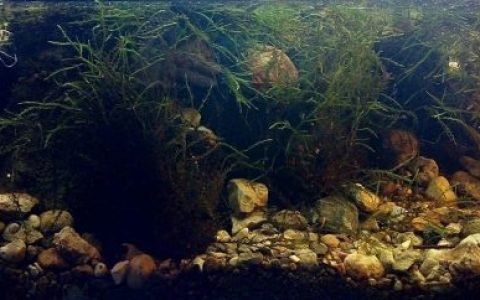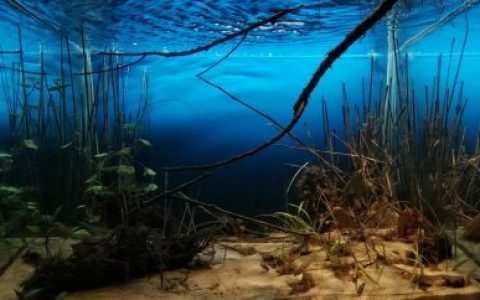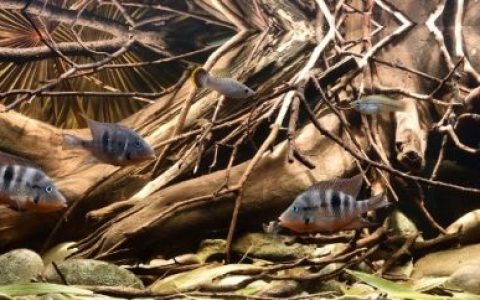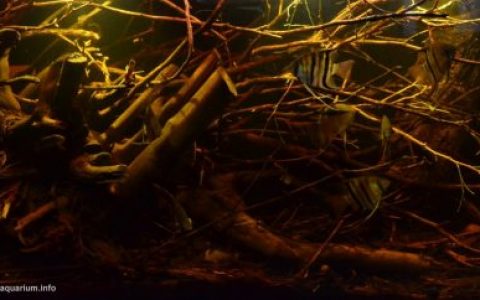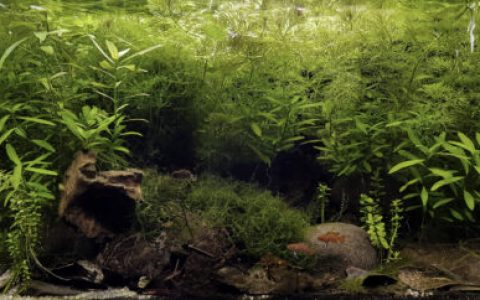
Volume: 84 L 容积:84 升
Dimensions: 70х35х40 cm 尺寸:70×35×40 厘米
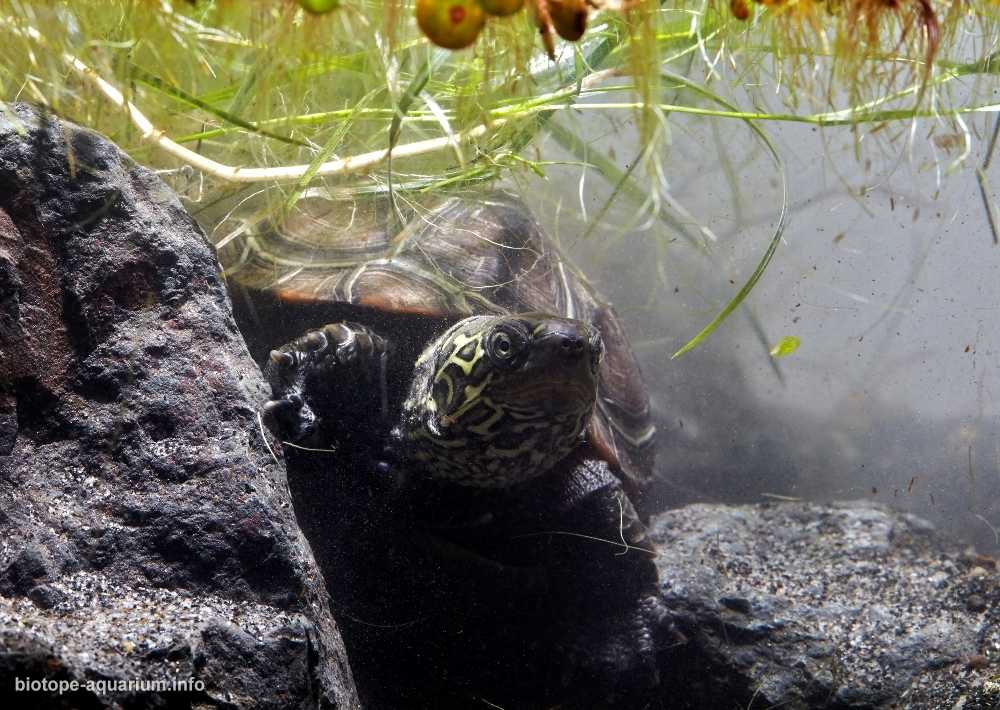
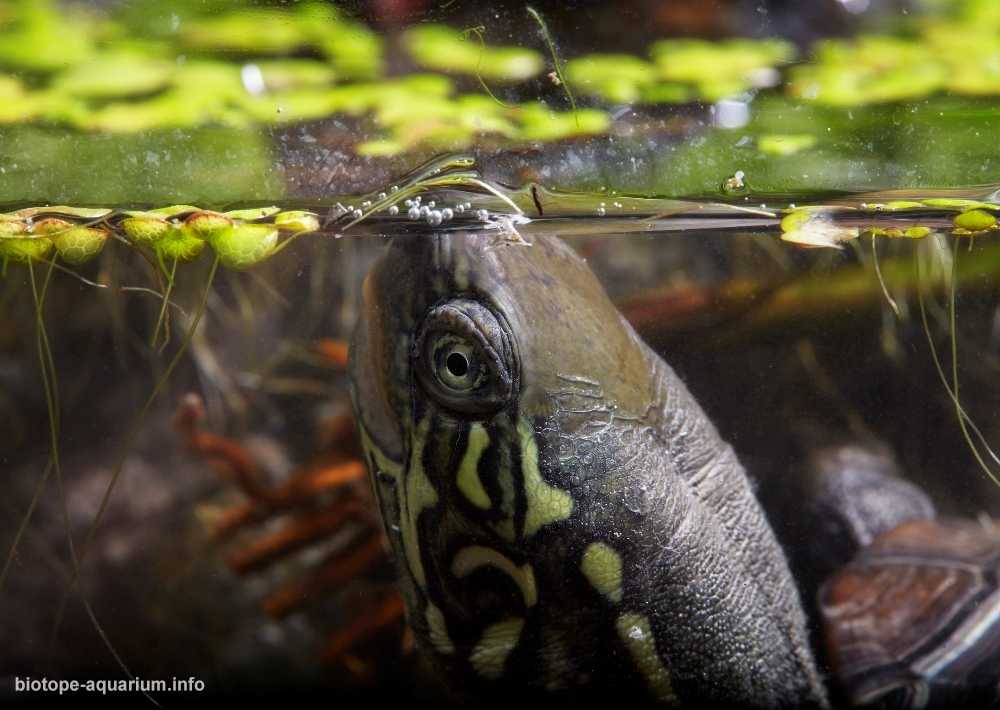
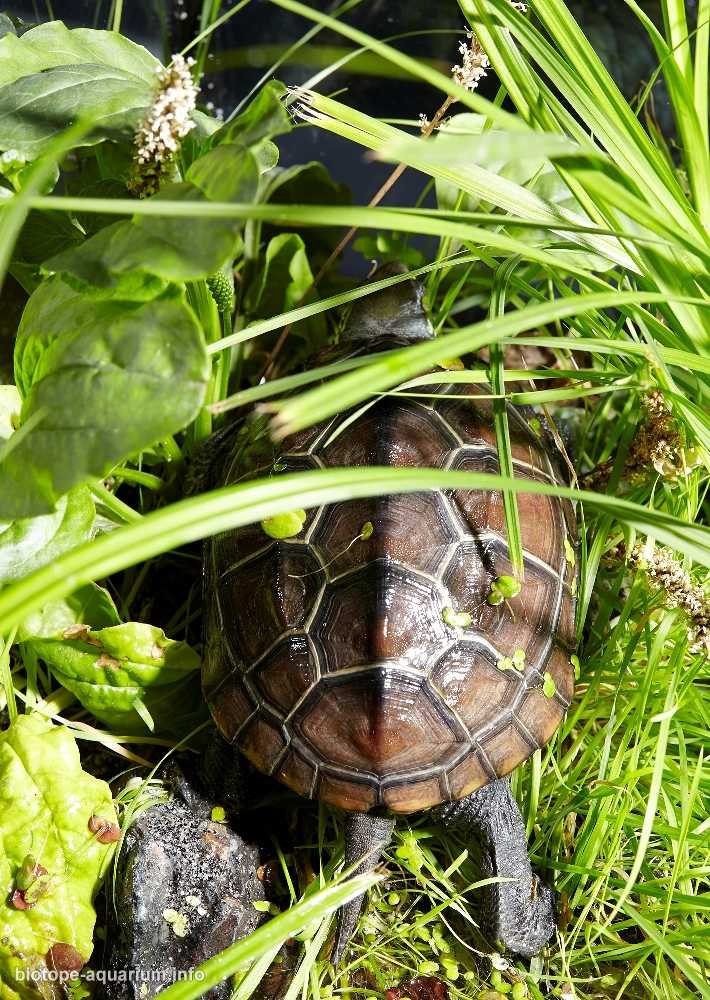
List of fishes: Chinemys reevesii
鱼类名录:中华草龟(Chinemys reevesii)
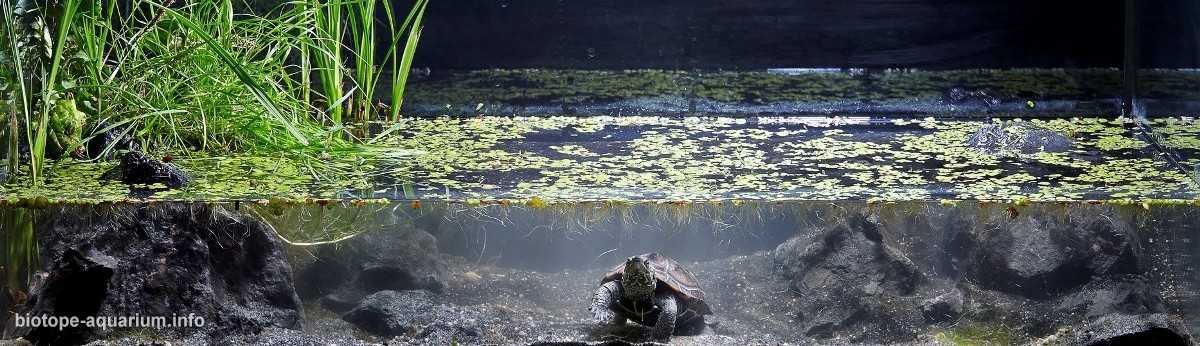
List of plants: Carex, Plantago, Lemna. These plants may not correspond with plants in nature, due to the lack of accurate data, but similar species are presented in the aquarium.
植物列表:薹草属、车前属、浮萍属。由于缺乏准确数据,这些植物可能与自然环境中的物种不完全对应,但水族箱中展示了相似的物种。
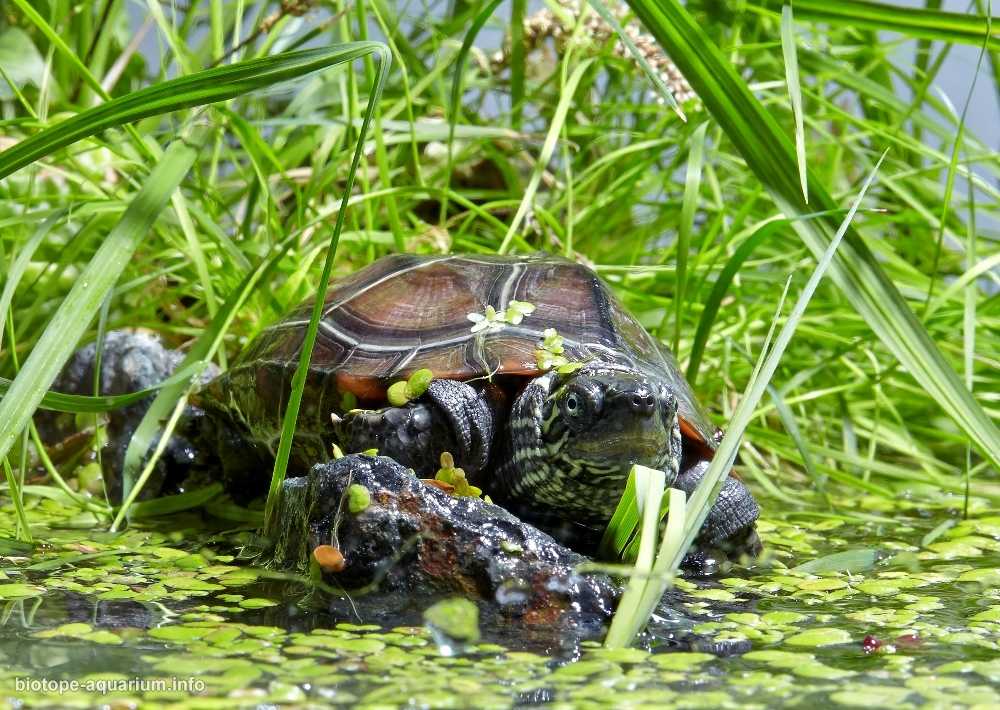
Description of decorations: DECOTOP Jaya stones were used as decorations, they look like fragments of a mountain. The soil is dark, imitation of silt with sand.
装饰描述:使用 DECOTOP Jaya 石作为装饰,其外观如同山体碎片。底床为深色,模拟含沙的淤泥。
Description of equipment: TETRA Tetronic LED ProLine 780 lamp, AQUAEL ULTRA HEATER 50W heater, AQUAEL ASAP 500 filter.
设备描述:TETRA Tetronic LED ProLine 780 灯具、AQUAEL ULTRA HEATER 50W 加热棒、AQUAEL ASAP 500 过滤器。
Water parameters: Temperature 26 degrees C, pH 6.5, KH 3, GH 5, NO3 – 50 mg / L, NO2 – 0
水质参数:温度 26℃,pH 6.5,KH 3,GH 5,NO3–50 mg/L,NO2–0
Additional info: – 附加信息:–
INFORMATION ABOUT BIOTOPE
关于生物群落的信息
Description of the area surrounding the biotope: The Yangtze River is 6300 km, and its basin area is 1 808 500 km². Its source is located in the eastern part of the Tibetan foothills at an altitude of ~ 5600 meters above sea level. The river flows through Qinghai province and then turns south and into a deep valley (here the main drop in altitude occurs: from 5 thousand to 1 thousand m. Here the river changes direction several times and forms deep gorges) and reaches Yunnan. Closer to the city of Yibin, which is located at the entrance of the river to the Sichuan basin, the river drops to a height of 305 m, and near the city of Chongqing, the height of the river relative to the sea is 192 m. The Yangtze merges with the large inflows of Minjiang and Jialing, which significantly increases its volume. On a 320 kilometer stretch from Chongqing to Yichang, the Yangtze drops its height to 40 m, flowing through deep gorges that are known for their beauty and navigation complexity. Making its way further through the Wushan Mountains, the river serves as a natural border between the provinces of Chongqing and Hubei. The world’s largest hydropower plant, Sansya, was built in this area. Before flowing into the East China Sea, the river changes direction several times, thereby forming many gorges, such as: “Jumping Tiger Gorge”, “Three Gorges”. The Yangtze regime is monsoon; in summer, the water level in the Sichuan basin rises by 20 m, and in the plains up to 10-15 m. Sea tides spread along the river 700 km from the mouth. The Yangtze flows through sandy and clay soils, so the water in most of the river is cloudy. The Yangtze makes many floods.
生物群落周边区域描述:长江全长 6300 公里,流域面积达 1,808,500 平方公里。其源头位于青藏高原东缘山麓,海拔约 5600 米。河流流经青海省后转向南行,进入深邃峡谷(此处发生主要海拔落差:从 5000 米降至 1000 米;河段在此多次改道并形成深切峡谷),最终抵达云南省。接近宜宾市(该市地处四川盆地入口)时,河面海拔降至 305 米;至重庆市附近,相对海平面高度为 192 米。长江在此汇入岷江与嘉陵江两大支流,水量显著增加。从重庆至宜昌长达 320 公里的河段中,长江海拔进一步降至 40 米,穿行于以景色壮丽和航行艰险著称的深邃峡谷之间。继续穿越巫山山脉后,该河成为重庆市与湖北省之间的天然界河。世界最大的水电站——三峡水电站即建于此区域。 在流入东海之前,长江多次改变流向,从而形成了许多峡谷,例如:“虎跳峡”和“三峡”。长江流域受季风气候影响;夏季,四川盆地水位上涨可达 20 米,平原地区则上涨 10 至 15 米。海潮可沿河道上溯至距河口 700 公里处。长江流经沙质与黏土土壤,因此大部分河段水体浑浊。长江洪水频发。
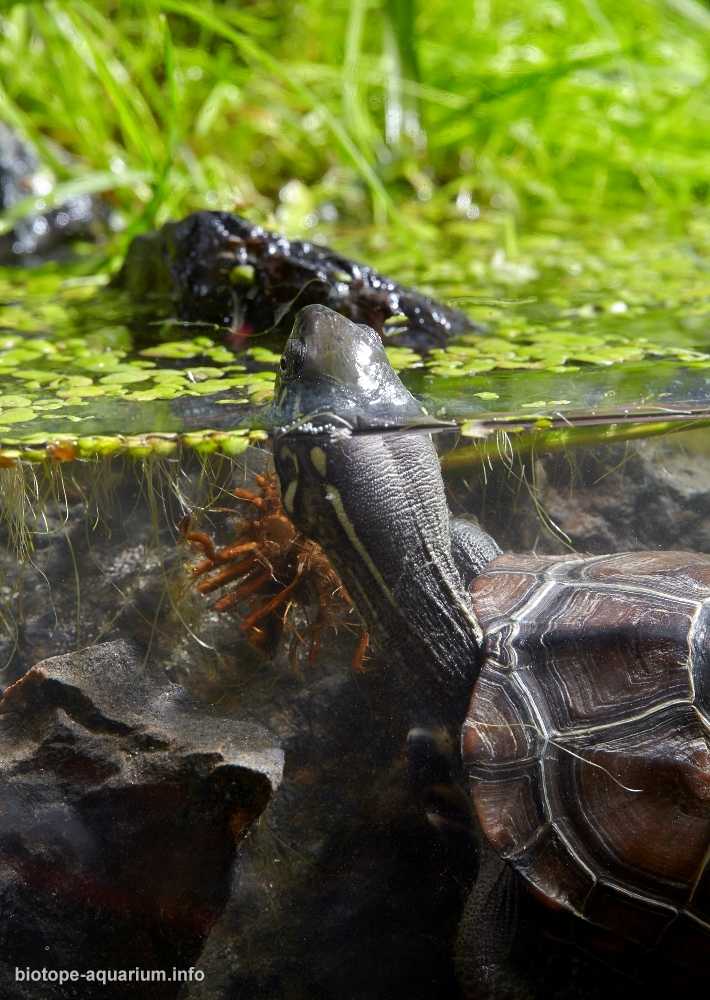
Description of the underwater landscape of the biotope: The southern part of Hubei is flat, fenced by low mountains from almost all sides.
生物栖息地水下景观描述:湖北省南部地势平坦,几乎四周均由低山环绕。
Description of the parameters of the habitat: The water is clear or cloudy yellow, the temperature of the biotope could not be found.
栖息地参数描述:水体清澈或呈浑浊的黄色,该生物栖息地的水温数据未能查到。
List of fishes and invertebrates occurring in the nature biotope: Cynops orientalis, Chinemys reevesii, Cyprinidae, Amblycipitidae, Cobitidae.
自然生物栖息地中出现的鱼类及无脊椎动物名录:东方蝾螈(Cynops orientalis)、乌龟(Chinemys reevesii)、鲤科(Cyprinidae)、钝头鮠科(Amblycipitidae)、鳅科(Cobitidae)。
List of plants found in the nature biotope: Dracaena sanderiana, Ricccia fluitans, Spirogyra porticalis, Carex, Plantago, Lemna.
自然生境中发现的植物名录:龙血树属桑德氏种(Dracaena sanderiana)、浮苔(Riccia fluitans)、螺旋水绵(Spirogyra porticalis)、薹草属(Carex)、车前属(Plantago)、浮萍属(Lemna)。
Threats to the ecology: The Yangtze River is the place in which the Chinese alligator and the Chinese paddlefish (Psephurus) lived and may still have lived. Now they are listed in the Red Book, although they used to quietly inhabit our planet. Almost half of all Chinese waste is discharged into the Yangtze River every year. More than 600 km of the river are in critical condition, and 30% of its tributaries are heavily polluted. The Chinese alligator began to disappear due to the loss of its habitat. Most of the population lived in areas where agriculture is actively conducted, which is why conflicts sometimes occurred between the alligator and humans. Alligator skin was also highly valued on the black market, and its organs were widely used in Chinese medicine. Now there are only 130-200 of them. And they live in drainage grooves, in ponds near small farms, and in the Yangtze. Psephurus. Its meat and caviar were very much appreciated and it was taken out of the Yangtze by tens of tons in the twentieth century. In 1980, the paddlefish began to disappear sharply; to date, only a few individuals have been caught. The main reason for the extinction, according to scientists, was the construction of hydroelectric power stations, overfishing and water pollution. Psephurus fishing has been banned since 1983; it is not known for certain whether the Chinese paddlefish is alive.
生态威胁:长江曾是中国短吻鳄和中国白鲟(白鲟属)的栖息地,或许至今仍有少量存活。尽管它们曾经安静地生存在我们的星球上,如今却已被列入红色名录。每年,中国近一半的废弃物被排入长江。超过 600 公里的河段处于危急状态,其 30% 的支流遭受严重污染。中国短吻鳄因栖息地丧失而开始消失。其大部分种群生活在农业活动频繁的区域,因此有时会发生短吻鳄与人类之间的冲突。短吻鳄的皮在黑市上价值极高,其器官也被广泛用于中医药。目前仅存 130 至 200 只,它们生活在排水沟、小型农场附近的池塘以及长江中。至于中国白鲟,其肉和鱼子酱备受珍视,在二十世纪曾有数十吨被捕捞自长江。自 1980 年起,白鲟数量急剧减少;迄今为止,仅捕获到极少数个体。 科学家认为,导致其灭绝的主要原因是水电站建设、过度捕捞和水体污染。自 1983 年起已禁止捕捞白鲟;目前尚不确定中国白鲟是否仍然存活。
本文部分素材来自网络,如有类似请联系修改,如若转载,请注明出处:http://www.yangyubang.com/?p=2745