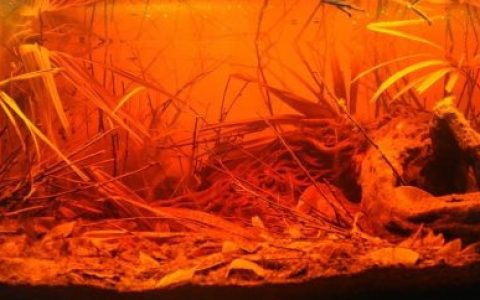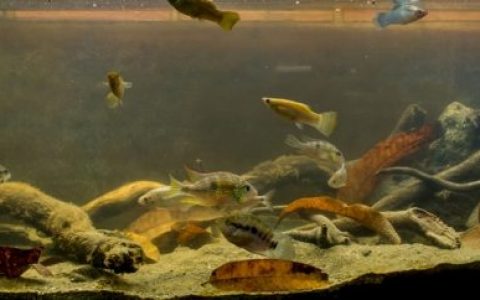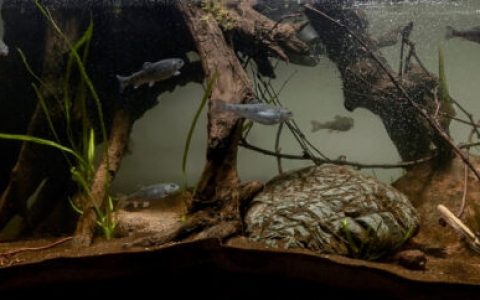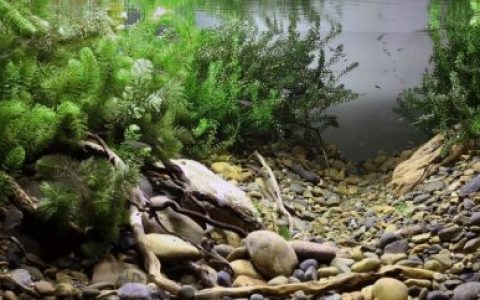
Volume of aquarium: 240 水族箱容积:240 升
Dimensions of aquarium: 120x40x50 cm
水族箱尺寸:120x40x50 厘米
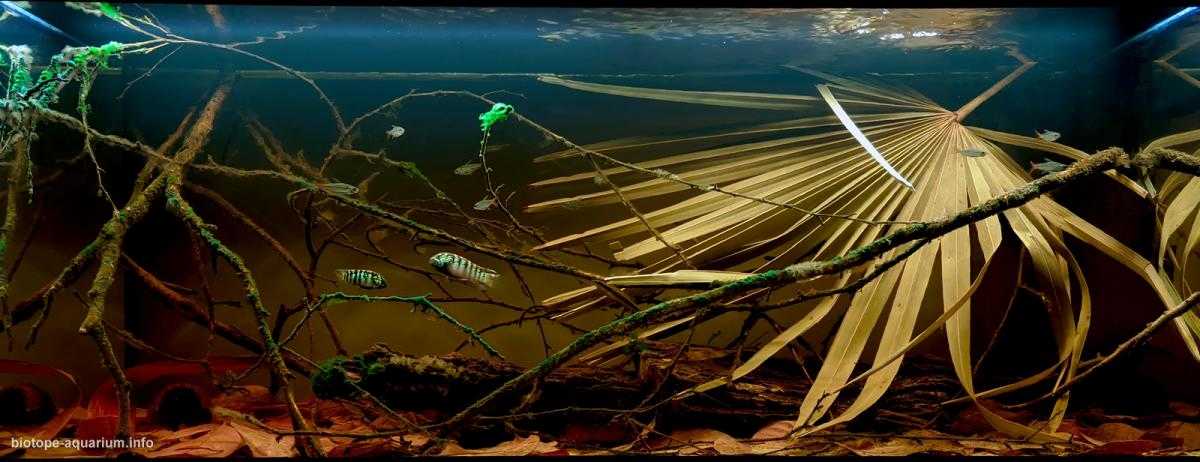
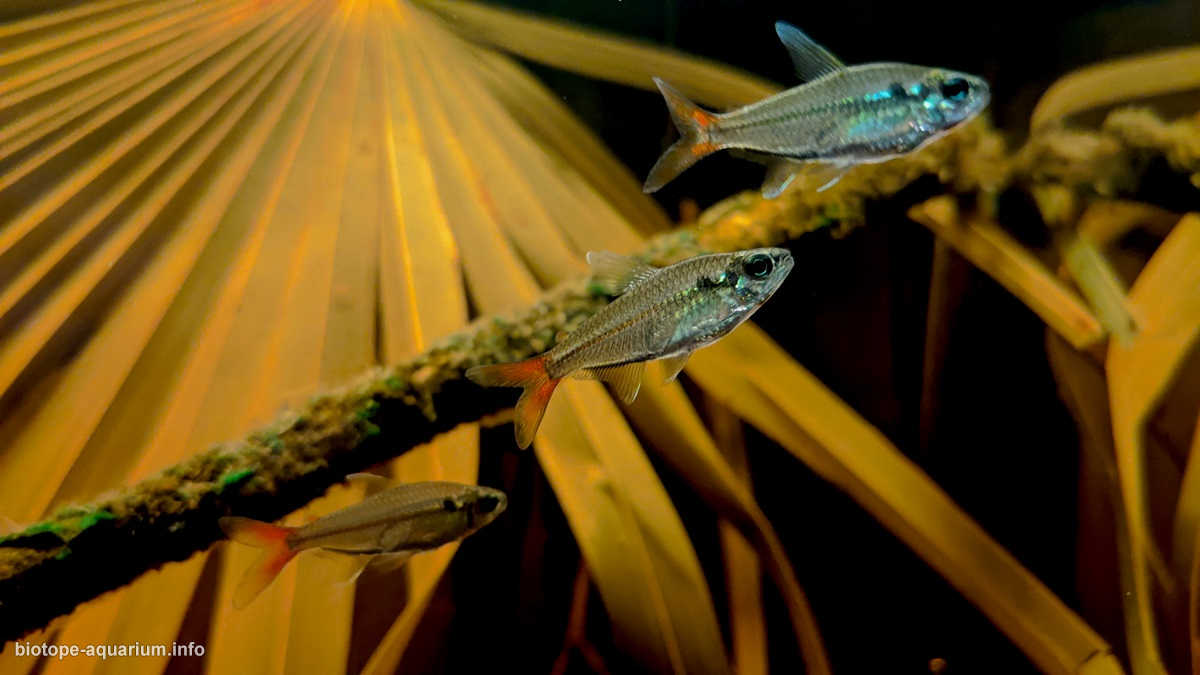
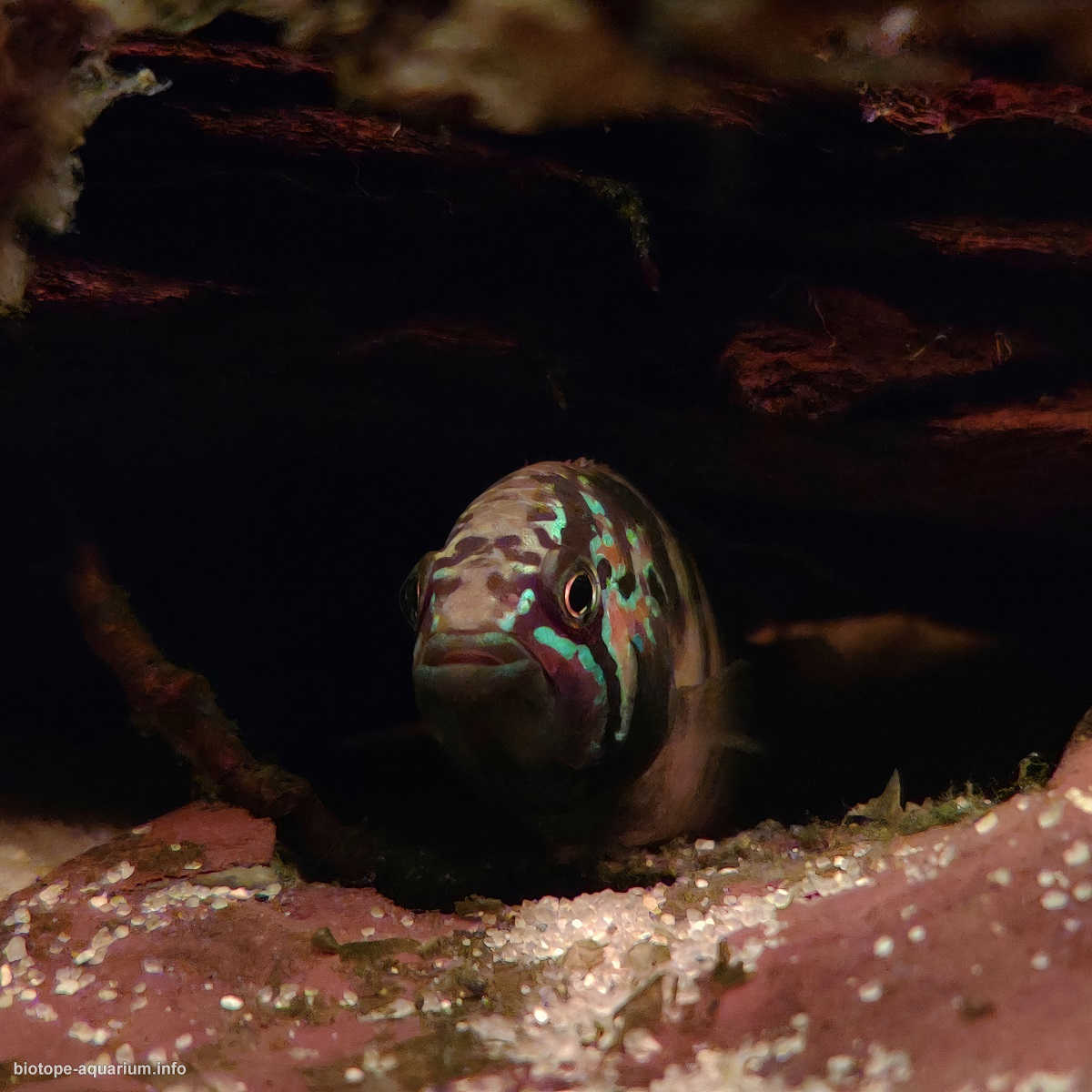
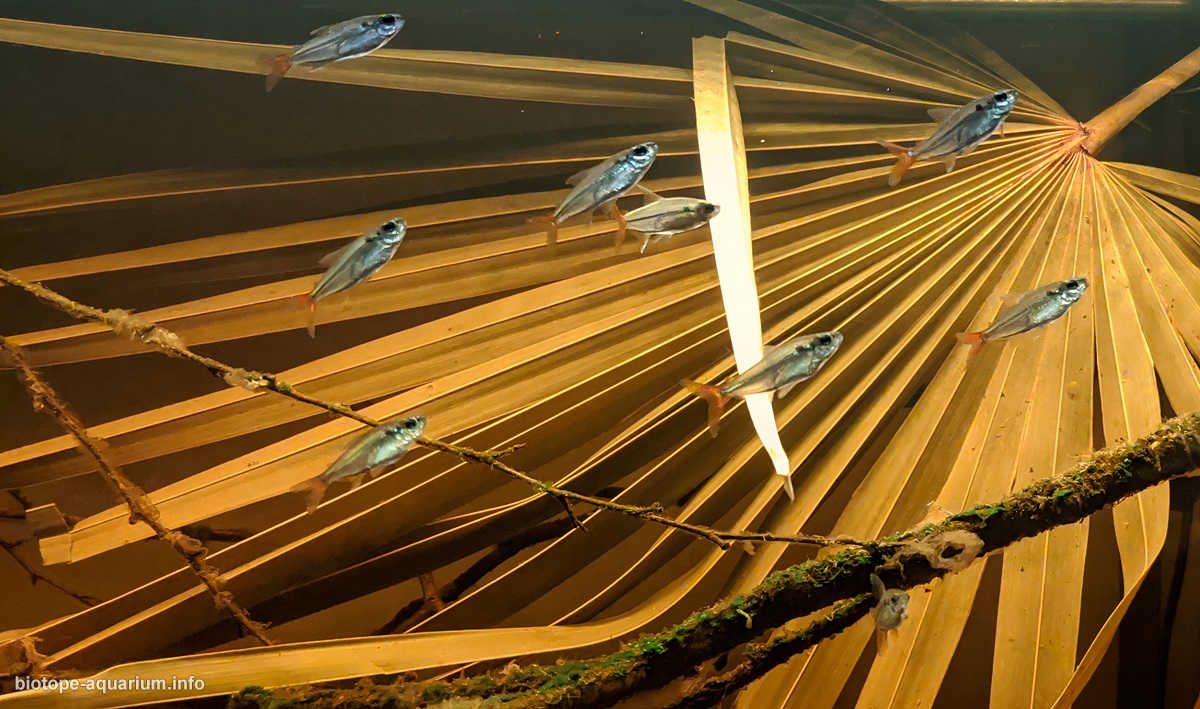
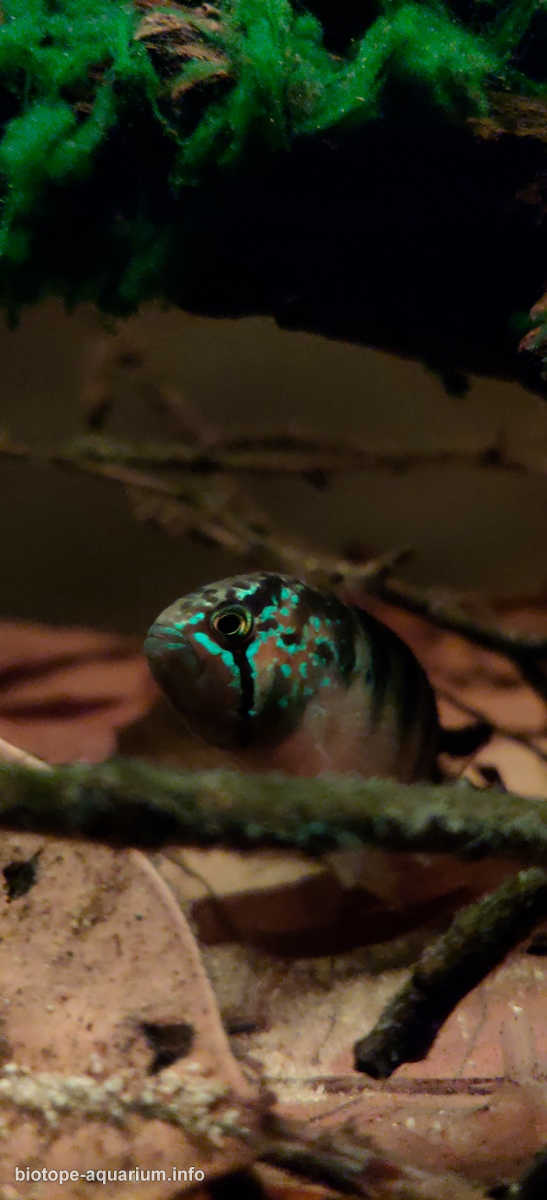
List of fishes: Ivanacara adoketa, Crenicichla regani, Moenkhausia sp. (collettii or copei)
鱼类名录:Ivanacara adoketa、Crenicichla regani、Moenkhausia sp.(collettii 或 copei)
List of plants: N/A 植物名录:无
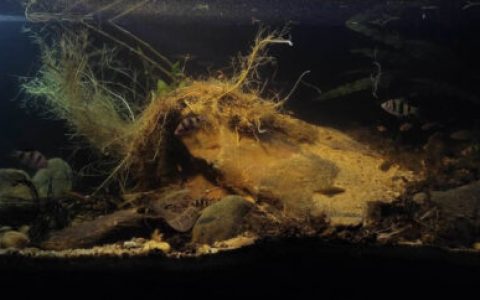
Description of Decorations and Substrate: Substrate: natural beige sand 0.1-0.3 mm, bought in the local zoo shop.
装饰与底床描述:底床:天然米色细沙(粒径 0.1–0.3 毫米),购自当地水族店。
Decorations: 装饰:
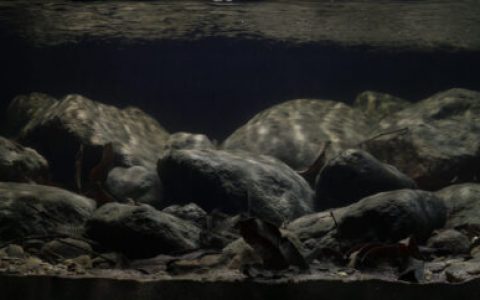
The mix of catappa, banana tree, and mostly jackfruit tree leaves covers most part of the substrate as it is in a natural biotope. A few small pods provide hiding places for fishes and also do not stand out from the natural habitat. One big dry leaf of unknown palm.
榄仁叶、香蕉树叶以及主要是菠萝蜜树叶的混合物覆盖了大部分底床,正如在自然生境中一样。几个小型豆荚为鱼类提供了藏身之处,同时也与自然环境融为一体而不显突兀。还有一片未知棕榈树的大干叶。
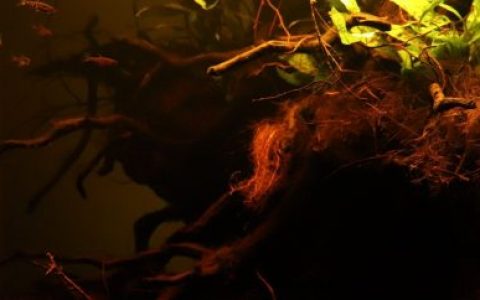
Plenty of birch twigs which were collected in a local park approximately a half year ago. Initialy, birch does not look like a suitable tree for the Rio Negro biotope aquarium, but over time, most of them begin to become covered with algae and become very similar to branches from many underwater videos from the Rio Negro. There are 2 medium-size driftwoods (probably mangrove) which are also slightly covered with algae and leaves.
大量桦树枝条,约半年前在当地公园采集。起初,桦树似乎并不适合用于内格罗河生境水族箱,但随着时间的推移,大多数枝条开始被藻类覆盖,变得与内格罗河水下视频中常见的树枝非常相似。另有两根中等大小的沉木(可能是红树林木),表面也略微覆盖着藻类和叶片。
Description of Equipment: External filter: Aquael Ultra 1400
设备说明:外置过滤器:Aquael Ultra 1400
Lighting: 1×16,3 Watt Eheim classicLED daylight (6500k)
照明:1×16.3 瓦 Eheim classicLED 日光型(6500K)
Heater: Eheim thermocontrol 150
加热棒:Eheim thermocontrol 150
Osmosis system for water changes: Osmotech Professional 150 GPD
换水用反渗透系统:Osmotech Professional 150 GPD
Water Parameters: Temperature: 25-26°C
水质参数:温度:25-26°C
PH: 5.5 pH 值:5.5
TDS: 40 mg/L 总溶解固体(TDS):40 mg/L
GH/KH: < 1 总硬度/碳酸盐硬度(GH/KH):< 1
Additional Info: Normally, around 15-20% of the water is changed every week with pure RO/DI osmosis water and adding a couple of new cappa leaves for keeping PH on a moderately low level.
补充信息:通常每周更换约 15–20% 的水,使用纯反渗透/去离子(RO/DI)水,并添加几片新的卡帕树叶,以将 pH 值维持在适度较低的水平。
Also on the video you can see how changeable the color of Ivanacara adoketa is. Some of the shots were made before spawning, where they are in full glory, and some after an unsuccessful spawning, where they are in a stressful color.
在视频中,您还可以看到伊万卡拉多克塔鱼(Ivanacara adoketa)体色的多变性。部分镜头拍摄于产卵前,此时它们展现出最绚丽的色彩;另一些则拍摄于一次失败的产卵之后,此时它们呈现出因压力而产生的体色。
Description of the Area Surrounding the Biotope: Paraná Ataú is a group of small forest streams in Rio Negro, the largest tributary of the Amazon River. It’s located near the bottom part of the Rio Preto, which is one of the affluents of the Rio Negro. Probably because it’s located not so close to Barcelos, which is an important place for the ornamental fish export industry, there is still not as much information about this biotope as from other places near Barcelos, like Igarapé Daracuá. Nevertheless, this area looks like a dense forest with lots of vegetation that is flooded by the river in the rainy season, so the only way to get to this area is by boat.
生物栖息地周边环境描述:巴拉那阿塔乌(Paraná Ataú)是内格罗河(Rio Negro)流域中的一群小型森林溪流,而内格罗河是亚马逊河最大的支流。它位于普雷托河(Rio Preto)下游附近,普雷托河是内格罗河的支流之一。或许由于该地距离巴塞洛斯(Barcelos)较远,而巴塞洛斯是观赏鱼出口产业的重要枢纽,因此关于这一生物栖息地的信息仍不如巴塞洛斯附近其他地区(如达鲁夸溪 Igarapé Daracuá)那样丰富。尽管如此,该区域呈现为一片茂密的森林,植被繁盛,雨季时会被河水淹没,因此前往此地唯一的交通方式是乘船。
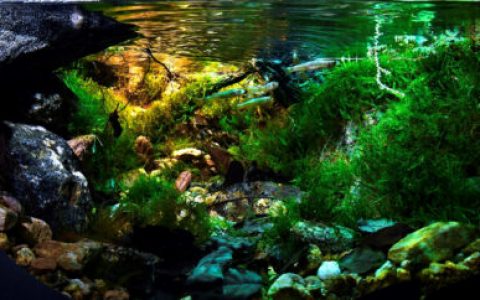
Description of the Underwater Landscape of the Biotope: The typical landscape of this area looks like slowly to medium moving blackwater streams. Due to a lot of organic, humic acids or compounds in the water, it’s tea-colored, depending on the season it may have a different brightness of the color from slightly yellowish to dark brown. The depth of the water also depends a lot on the season which is lower in the dry season and obviously higher in the rainy season, but the flooded forest areas might have a depth around a couple of meters. The substrate in this area is bright sand that has a small grain size and is mostly covered with red-brownish leaf litters. Apart from the countless amount of leaves, in the bottom part of the landscape, there are a lot of branches, driftwoods, and sprouts of young plants in the flood season. All of them provide plenty of hiding places that attract the small inhabitants of this area, so naturally, the bottom is full of snorkeling dwarf cichlids like Crenicara punctulata, dwarf Crenicichlas (regani or notophthalmus), Apistogramma sp., and others. Of course, there are also a lot of Paracheirodon axelrodi here as one of the most popular tetras in Rio Negro. The middle-top part of the water is saturated by other small “piabas” like Moenkhausia sp. and Hemigrammus sp, and bigger cichlids like Crenicichla sp., Pterophyllum leopoldi, Heros notatus. In the flooded forest area, it also may contain hanging leaves or branches from flooded trees, such as the palm leaves as in the featured aquarium.
生物群落的水下景观描述:该区域的典型景观呈现为流速缓慢至中等的黑水溪流。由于水中含有大量有机质、腐殖酸或相关化合物,水体呈茶色;随季节变化,其色泽亮度会有所不同,从微黄到深褐不等。水深也高度依赖季节:旱季时水位较低,雨季时则明显升高,而淹没林区的水深可达数米。该区域的底质为颗粒细小的浅色沙层,表面多覆盖着红褐色的落叶层。除了数量庞大的落叶外,在景观底部还分布着大量枝条、沉木以及洪水期萌发的幼嫩植物芽体。这些结构提供了丰富的藏身之处,自然吸引了该区域的小型栖息者,因此底层常见潜游的短鲷类鱼类,如点纹慈丽鱼(Crenicara punctulata)、矮小矛耙丽鱼(Crenicichlas regani 或 notophthalmus)、阿氏短鲷(Apistogramma sp.)及其他种类。 当然,这里也有大量的宝莲灯鱼(Paracheirodon axelrodi),它们是内格罗河最受欢迎的脂鲤之一。水体中上层则栖息着其他小型“皮亚巴”鱼类,如莫氏脂鲤属(Moenkhausia sp.)和半线脂鲤属(Hemigrammus sp.),以及体型较大的慈鲷,如矛丽鱼属(Crenicichla sp.)、利奥波德神仙鱼(Pterophyllum leopoldi)和带纹英雄鱼(Heros notatus)。 在淹没森林区域,水中还可能漂浮着被淹树木垂下的叶片或枝条,例如本展示水族箱中所用的棕榈叶。
Description of the Habitat Parameters: Unfortunately, there are no measurements from Paraná Ataú, but as a matter of the fact that this place is part of the Rio Negro basin, most probably the water parameters are the same. The water in the Rio Negro is famous for consisting of a super low amount of mineral content that makes its conductivity is very low (around 17.0 ± 15.2 S/cm) and solute-poor (TDS here is 7.1 ± 6.7 mg/l). The parameters of the water depend on the season, but in general, it’s extremely acidic and has pH around 4.5 ± 0.9. During the dry season the temperature might be quite high due to the dark coloration of the water, it absorbs more solar radiation than clear-water rivers, so might exceed 28-29°C. In the rainy season it calms down up to 23-24°C.
栖息地参数描述:遗憾的是,巴拉那阿塔乌(Paraná Ataú)暂无实测数据,但鉴于该地属于内格罗河(Rio Negro)流域,其水质参数很可能与内格罗河一致。内格罗河的水以矿物质含量极低而闻名,导致其电导率非常低(约 17.0 ± 15.2 µS/cm),溶解固体总量(TDS)也极低(此处为 7.1 ± 6.7 mg/l)。水质参数随季节变化,但总体而言呈强酸性,pH 值约为 4.5 ± 0.9。在旱季,由于水体颜色较深,比清水型河流吸收更多的太阳辐射,水温可能相当高,甚至超过 28–29°C;而在雨季,水温则会回落至 23–24°C。
List of Fishes and Invertebrates Occurring in the Nature Biotope: Dicrocuss filamentous
自然生境中出现的鱼类和无脊椎动物名录:Dicrocuss filamentous
Crenicara punctulata
Crenicichla regani
Crenicichla notophthalmus
尖吻矛丽鱼
Hemigrammus bellotti 贝氏半线脂鲤
Hemigrammus analis 阿纳利斯半线脂鲤
Hemigrammus coeruleus 蓝半线脂鲤
Heros notatus 赫罗鱼(Heros notatus)
Moenkhausia collettii 科莱蒂莫恩克豪西亚鱼(Moenkhausia collettii)
Laetacara thayeri 泰耶拉塔卡拉鱼(Laetacara thayeri)
Ivanacara adoketa 阿多凯塔伊万纳卡拉鱼(Ivanacara adoketa)
Paracheirodon axelrodi 阿氏霓虹脂鲤
Pterophyllum leopoldi 利奥波德神仙鱼
List of Plants Found in the Nature Biotope: Due to extreme conditions such as super acidic water and lack of light due to the color of the water, aquatic plants are not found in this location.
在自然生境中发现的植物列表:由于水质呈强酸性且因水色导致光照不足等极端条件,该区域未发现水生植物。
Threats to the Ecology of the Biotope: Obvously, it’s super important for us to look after the health of Rainforests, because it’s the unique system that is also calling as ‘lungs’ of the planet, which is the super importnat nowadays when the ecological situation in the Earth is quite bad due to the climate change and the amount of emissions.
生物群落生态面临的威胁:显然,维护雨林的健康对我们至关重要,因为它是被称为“地球之肺”的独特生态系统。在当今气候变化和排放量增加导致全球生态状况恶化的背景下,这一点显得尤为重要。
But not everyone knows that our hobby can help save rainforests. Some studies show that due to the low demand for wild fish imported from Rio Negro, local fishermen leave their jobs and start working in logging or cattle breeding, which often has a much more detrimental effect on the ecology of these places. In addition, the population of wild fish in Rio Negro is sustainable, plus, unfortunately, one way or another, most of them still die in the dry season, so they can find a new life in home aquariums.
但并非所有人都知道,我们的爱好有助于拯救雨林。一些研究表明,由于对从内格罗河进口的野生鱼类需求低迷,当地渔民被迫放弃原有工作,转而从事伐木或养牛业,而这些活动往往对这些地区的生态造成更为严重的破坏。此外,内格罗河的野生鱼类种群具有可持续性;况且不幸的是,无论如何,大多数鱼类仍会在旱季死亡,因此它们可以在家庭水族箱中获得新生。
2 out of 3 species in the shown aquarium are wild fishes from Brazil (Moenkhausia sp. and Crenicicla regani). Of course, wildcaught fishes are usually more difficult than local breeded, because they require the special adoption to the local water and more strict rules regarding the quarantine, but I believe that buying these wildcaught fishes we at least may try to help the ecology of this region.
图中水族箱内的三种鱼类中有两种是来自巴西的野生鱼(Moenkhausia sp. 和 Crenicichla regani)。当然,野生捕捞的鱼类通常比本地繁殖的更难饲养,因为它们需要特别适应当地水质,并且检疫要求更为严格。但我相信,购买这些野生鱼类至少有助于保护该地区的生态环境。
本文部分素材来自网络,如有类似请联系修改,如若转载,请注明出处:http://www.yangyubang.com/?p=3878