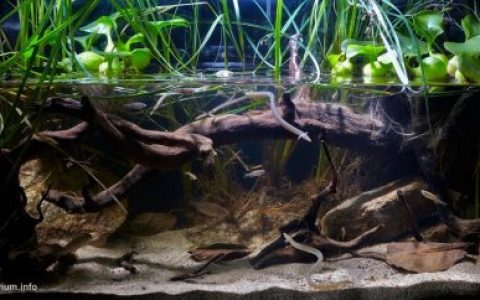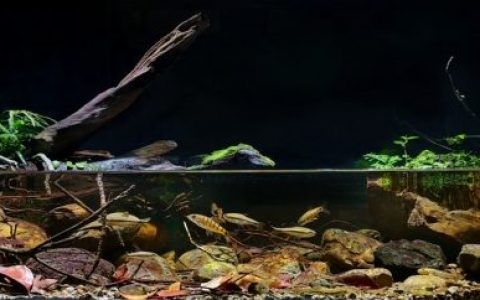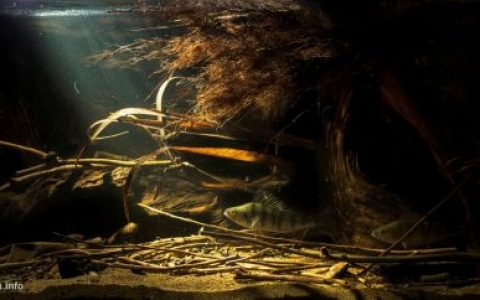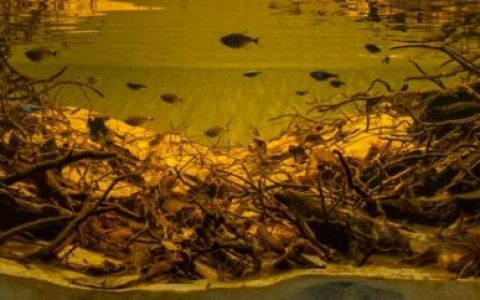
Volume: c.50L 容量:约 50 升
Dimensions: 60cm x30cm x30cm
尺寸:60 厘米 × 30 厘米 × 30 厘米
List of fishes: radix auriculária
鱼类名录:耳状萝卜螺(radix auriculária)
Theodoxus fluviatilis 河蜑螺
Anguilla anguilla 欧洲鳗鲡
Salamandra salamandra 火蝾螈
Sympetrum fonscolombii ?
红脉蜻蜓?
unidentified species 未鉴定物种
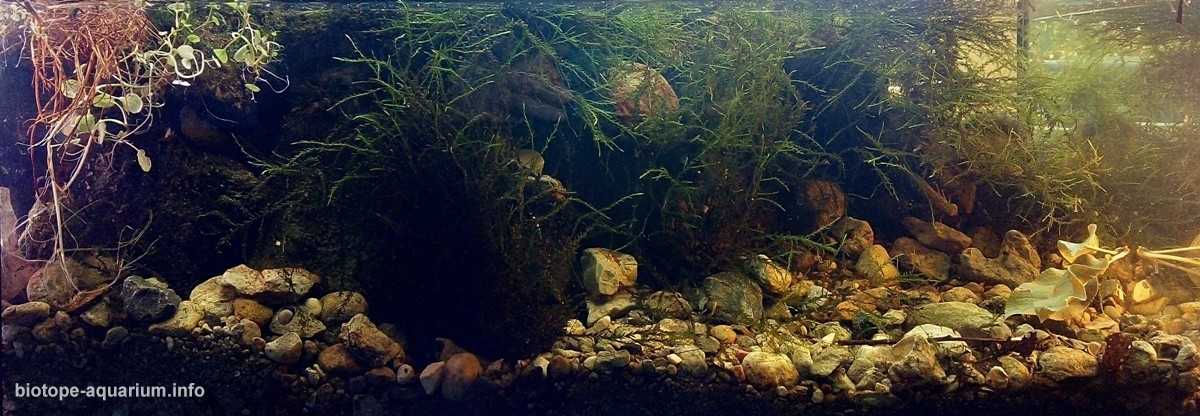
List of plants: Nasturtium officinale
植物列表:西洋菜(Nasturtium officinale)
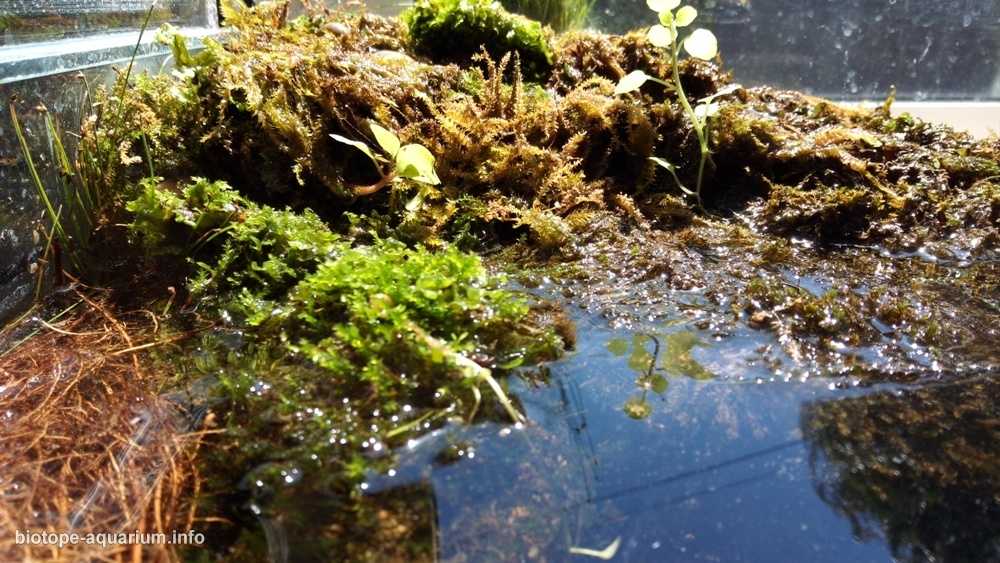
Fontinalis antipyretica 溪苔属(Fontinalis antipyretica)
Metzgeriales ? 叶苔目(Metzgeriales)?
Description of decorations: stone gravel from the place
装饰描述:就地取材的石砾
Description of equipment: tecatlantis easy flux 600 650 l/h
设备描述:tecatlantis easy flux 600,流量 650 升/小时
Water parameters: t. 20°C PH. 7.2
水质参数:温度 20°C,pH 7.2
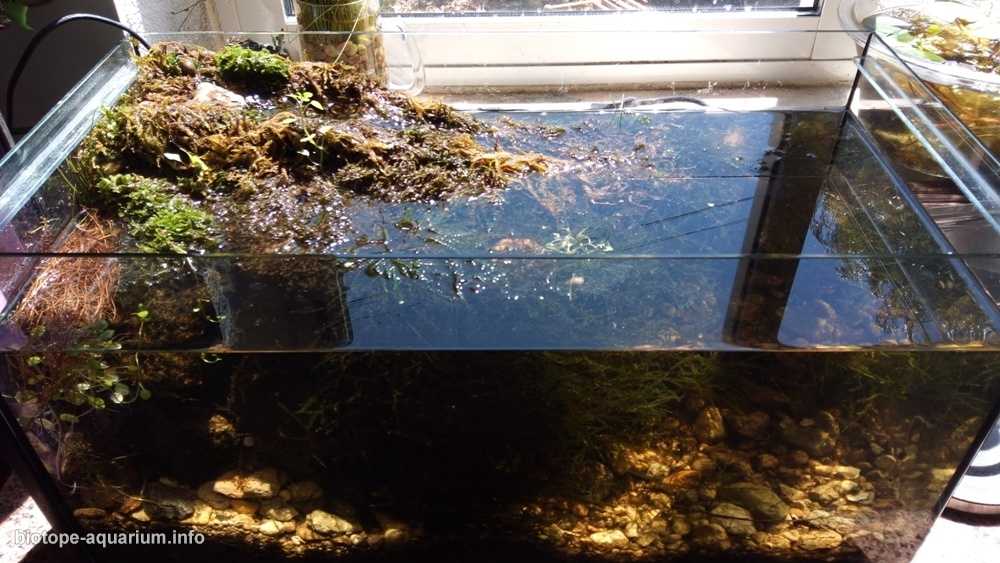
Additional info: The Ribeira da Mata biotope aquarium has as its main purpose to educate my children in the concept that to preserve it is necessary to know, and for that nothing better than to start with what is right in front of our door.
补充说明:Ribeira da Mata 生物群落水族箱的主要目的是教育我的孩子们理解“保护始于认知”的理念,而最好的起点莫过于从我们家门口的自然开始。
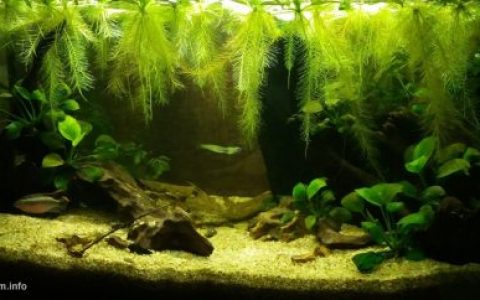
It has been mounted for 3 months, as naturally and simply as possible, it is installed in front of a window that provides relatively the same hours of natural light as there is in the habitat to be recreated, because the dense surrounding trees and the depth of the valley are significant.
该缸已运行 3 个月,布置尽可能自然简洁。它被安置在一扇窗户前,此处提供的自然光照时长与待复原的栖息地基本一致,因为那里树木茂密且山谷深邃,光照条件特殊。
I make 20% partial water changes weekly, feed the aquarium fauna with live food, mosquito larvae, cyclops, and small shrimps, so that the animals, being mostly predators, do not lose their hunting instincts as they will be released. at the end of the process (no due date). I have in the aquarium also a specimen I collected on site (like everything else) that I can not identify, (photo6) species of anemone or soft coral clinging to the rocks with the “tentacles” floating, if you can help me identify thank you.
我每周进行 20% 的部分换水,并以活饵(如蚊幼虫、剑水蚤和小型虾类)喂养水族生物,以确保这些多为掠食性的动物在最终放归(无具体日期)前不丧失捕猎本能。缸内还有一株我在现场采集的标本(与其他物品一样),目前尚无法鉴定(见图 6):这是一种附着在岩石上的海葵或软珊瑚物种,其“触手”随水流漂浮。若您能协助鉴定,不胜感激。
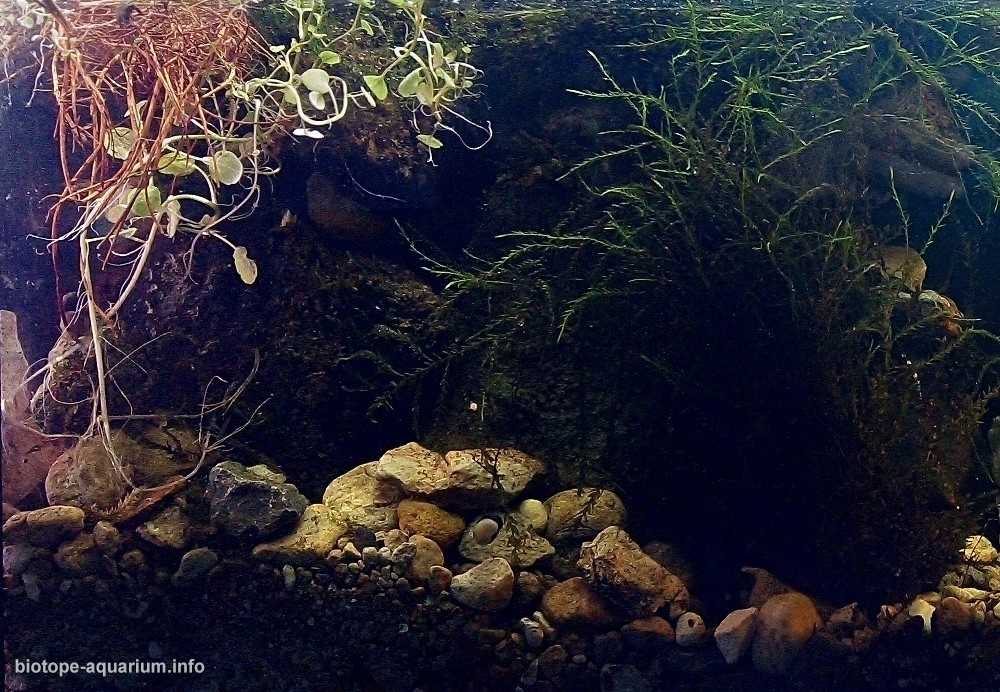
Another aspect of these ponds chosen with reference to the brook has to do with issues related to human activity. At this point of the river there was a Roman bridge that the construction of the current tar bridge eliminated the last vestiges, so this is the only road that passes on this river, and it is the drain point of that same road, which therefore suffers the most. human presence but still, the Fontinalis antipyretic dances in the almost crystal clear waters of an almost stagnant puddle in the summer.
这些池塘在参照溪流进行选址时,另一个考量因素与人类活动有关。在此河段曾有一座罗马桥,而现今沥青桥的修建彻底抹去了其最后遗迹;因此,这是跨越该河流的唯一道路,也是该道路的排水点,因而受人类活动影响最为显著。然而即便如此,夏季里,在近乎停滞、清澈如晶的水洼中,仍可见抗火泉藓(Fontinalis antipyretica)翩翩起舞。
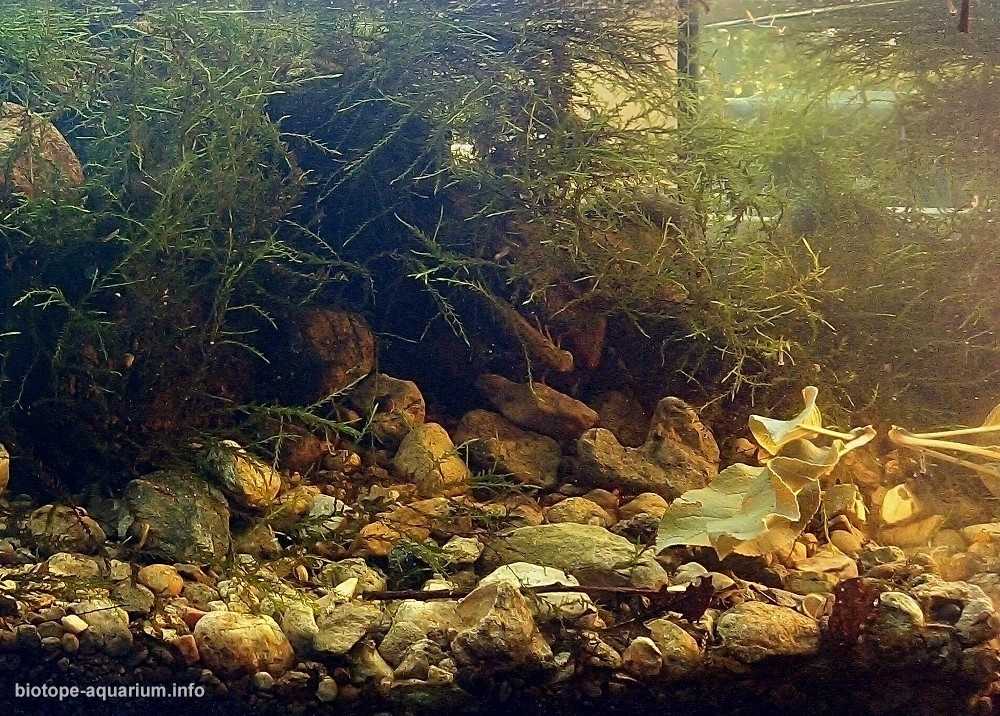
This overlaps an archaeological layer with the biotope as mosses grow on man-cut stones over millennia, collecting, hunting, fishing, farming here, and the anthropological functionality of an exalted Roman bridge on this disturbing new tar bridge.
这一景象使生物群落与考古层相互叠合:千百年来,苔藓生长在人工开凿的石块上,此处曾有人类采集、狩猎、捕鱼与农耕;而一座昔日备受尊崇的罗马桥,其人类学功能如今却寄托于这座令人不安的新建沥青桥之上。
That is why I also inserted in the decoration of the aquarium stones carved by man, as if it were the base of a small wall already dismembered through which a trickle of water flows quietly.
正因如此,我在水族箱的造景中也加入了人工雕琢的石块,仿佛它们是一座已被拆解的小型墙体的基座,一缕清流正从中静静淌过。
I feel and love this place also because I grew up in this valley in search of the rare leper Mauremys, which thanks to the gods of natural preservation I never found (I still have scars from these adventures today). The history and strength of geology, hard stone versus water precision, the affectation of human life versus the tenacity of natural life is what makes this place and this project so special.
我之所以感受并热爱这个地方,还因为我曾在这片山谷中成长,寻找稀有的摩尔闭壳龟;感谢自然守护之神,我从未找到过它们(直到今天,这些冒险仍在我身上留下疤痕)。地质的历史与力量、坚硬的岩石与精准的水流之间的较量,人类生命的矫饰与自然生命的坚韧之间的对比,正是让这个地方和这个项目如此特别的原因。
INFORMATION ABOUT BIOTOPE
关于生物群落的信息
Description of the area surrounding the biotope: The Ribeira da Mata basin contains rocks of the volcano-sedimentary complex (sandstones, shales and carbonates), quartzites, shales, rare limestones, turbidites, sands, claystones, sandstones, conglomerates, granite, syenite and gabbro-diorite (Massif de Sintra). Both streams have seven different land use classes. The largest portion of the surface is composed of complex crop patterns (heterogeneous agriculture). There are areas of natural vegetation, coniferous forest, areas occupied by agriculture with significant presence of natural vegetation, areas of undergrowth and chaparros, areas of permanent irrigation and discontinuous urban fabric. They show a higher agricultural pressure compared to urban pressure. As a tree canopy, among the endemic species of the Mediterranean riparian galleries predominate alders (Alnus glutinosa), and ash (Fraxinus angustifolia), sometimes white willows (Salix salviifolia). Shrubs such as hawthorn (Crataegus monogyna) and elderberry (Sambucus nigra), herbaceous plants such as saponaria (Saponaria officinalis) and weed (Oenanthe crocata) and, in the most drenched soils, willow (Lytrhum salicaria) bufonius, Juncus squarrosus, Scirpus holoschoenus) and the boards (Thypha sp).(Celin 2010)
生物群落周边区域描述:里贝拉达马塔流域包含火山沉积杂岩(砂岩、页岩和碳酸盐岩)、石英岩、页岩、少量石灰岩、浊积岩、沙土、泥岩、砂岩、砾岩、花岗岩、正长岩以及辉长闪长岩(辛特拉地块)。两条溪流流经七种不同的土地利用类型。地表最大部分由复杂的作物格局(异质性农业)构成。此外还存在天然植被区、针叶林区、农业用地中天然植被显著分布的区域、灌木丛与矮林区、永久灌溉区以及不连续的城市建成区。该区域承受的农业压力高于城市压力。在树冠层中,地中海河岸廊道的特有种以桤木(Alnus glutinosa)和白蜡树(Fraxinus angustifolia)为主,有时也可见白柳(Salix salviifolia)。 灌木如山楂(Crataegus monogyna)和接骨木(Sambucus nigra),草本植物如肥皂草(Saponaria officinalis)和水毒芹(Oenanthe crocata),而在最湿润的土壤中,则有柳树(Lytrhum salicaria)、bufonius、Juncus squarrosus、Scirpus holoschoenus 以及香蒲属(Thypha sp.)。(Celin 2010)
Description of the underwater landscape of the biotope: stones (some carved by humans) sometimes with mosses or bare with gravel hole and small waterfalls and their holes and crevices from the water erosion, also presents trunks of fallen trees and apparently no visible animal life, except for the auricular radix and
该生物群落水下景观的描述:石头(部分经人工雕琢),有时覆盖苔藓,或裸露并带有砾石坑;小型瀑布及其因水流侵蚀形成的孔洞与裂缝;此外还有倒伏的树干,表面上看不到明显的动物生命,除了耳状根螺和
Theodoxus fluviatilis. Theodoxus fluviatilis。
Description of the parameters of the habitat: running water in winter, almost clear water, wiht annual average temperature from 15 ° C to 16 ° c (celin 2010) but in summer 18 ° c and pH 7.4 (data collected by me)
栖息地参数描述:冬季为流动水体,水质近乎清澈,年平均气温为 15 °C 至 16 °C(Celin 2010),但夏季水温为 18 °C,pH 值为 7.4(本人采集数据)。
List of fishes and invertebrates occurring in the nature biotope: radix auriculária
自然生境中出现的鱼类和无脊椎动物名录:耳萝卜螺(Radix auricularia)
Theodoxus fluviatilis 河蜑螺(Theodoxus fluviatilis)
Anguilla anguilla 欧洲鳗鲡(Anguilla anguilla)
Salamandra salamandra 火蝾螈
Sympetrum fonscolombii 赤蜻
Mauremys leprosa 石龟
List of plants found in the nature biotope: Nasturtium officinale
自然生境中发现的植物列表:西洋菜
Fontinalis antipyretica 水藓
Metzgeriales 叶苔目
Oenanthe crocata 毒芹
Lytrhum salicaria 千屈菜
bufonius
Juncus squarrosu
Scirpus holoschoenus
Thypha sp
Threats to the ecology: Essentially human, agricultural and road pressure are the biggest risk of the Habitat, as it has been for millennia. fortunately, I have not seen traces of Procambarus clarkii, gambusia affinis or Trachemys scripta elegans, for example from species that are invasive in Portugal, from the plant point of view, there are problems, with Arundo donax and Lemna minor for example. The risk of eutrophication is not too pronounced because the shade does not allow many algae to grow.
生态面临的威胁:本质上,人类活动、农业开发和道路建设是该栖息地数千年来面临的最大风险。幸运的是,我尚未发现如克氏原螯虾(Procambarus clarkii)、食蚊鱼(Gambusia affinis)或红耳龟(Trachemys scripta elegans)等入侵物种的踪迹;但从植物角度来看,确实存在问题,例如巨芦竹(Arundo donax)和浮萍(Lemna minor)。由于树荫遮蔽限制了藻类的大量生长,水体富营养化的风险并不显著。
本文部分素材来自网络,如有类似请联系修改,如若转载,请注明出处:http://www.yangyubang.com/?p=2736