Volume: 180 L 容积:180 升
Dimensions of your aquarium: 60x60x50 cm
您的水族箱尺寸:60×60×50 厘米
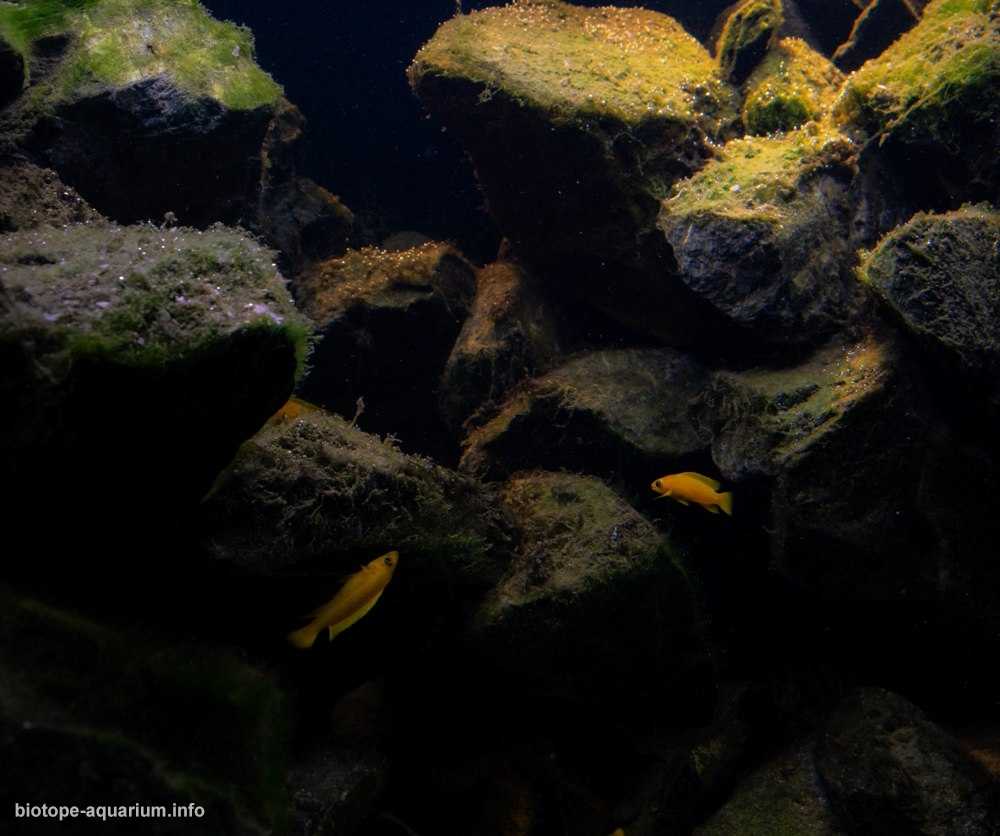
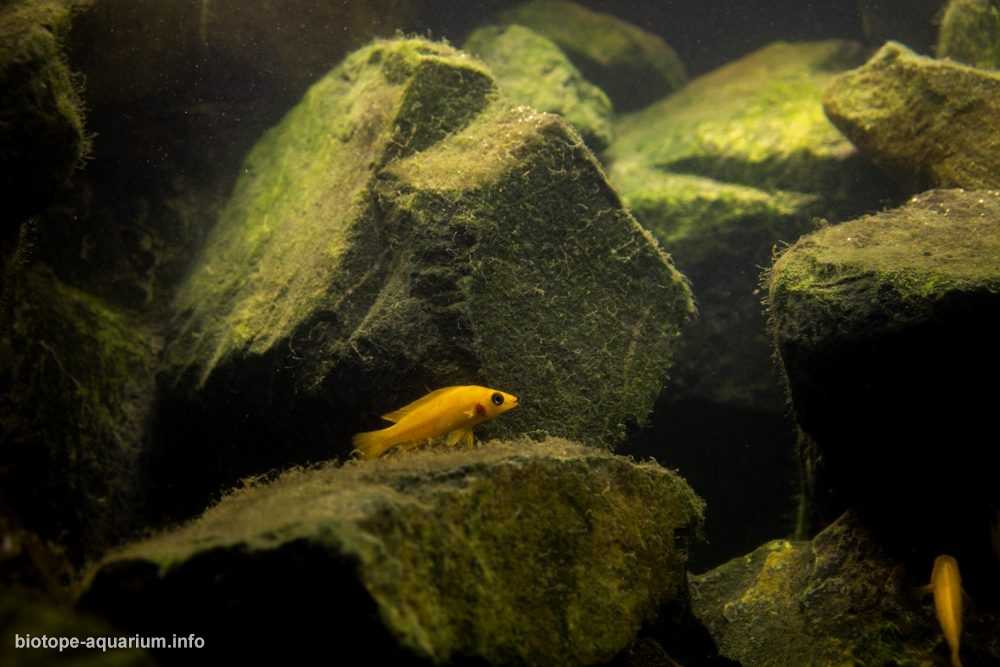
List of fishes and invertebrates: Neolamprologus pulcher, Neolamprologus leleupi
鱼类和无脊椎动物名录:美丽新亮丽鲷(Neolamprologus pulcher)、黄帆一点贝(Neolamprologus leleupi)
List of plants: – 植物列表:–
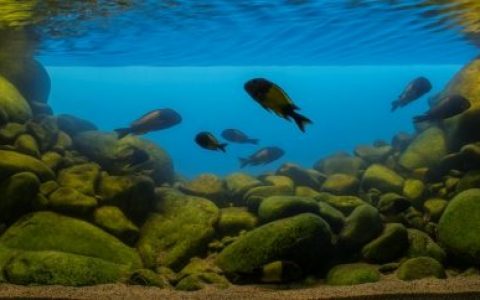
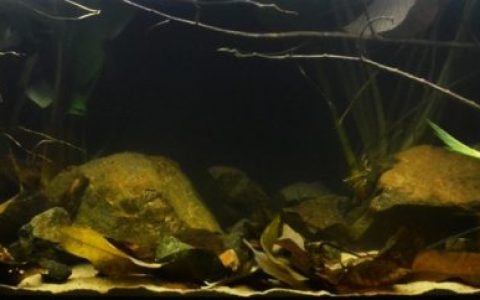
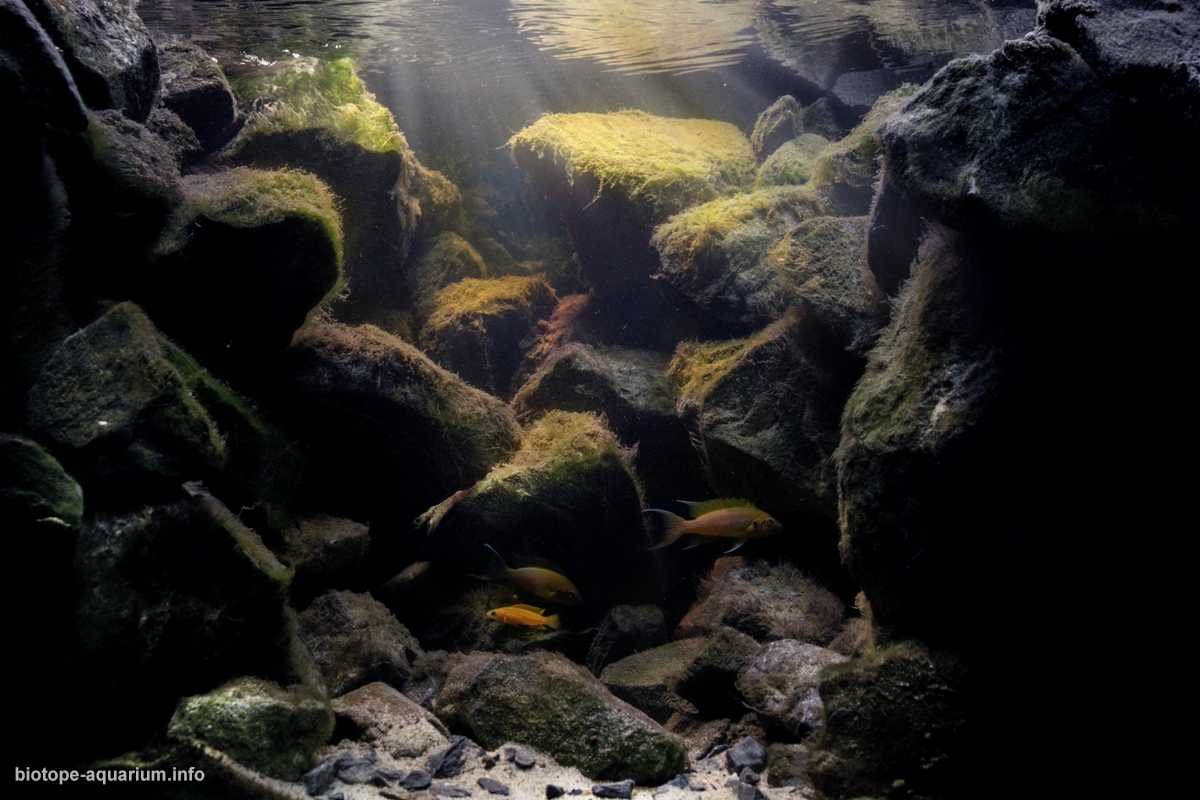
Description of decorations and substrate: I used 45 kg rock in total I collected from nature in my design. I placed the rocks in accordance with the sample visions of rock structure of the region. As N. pulcher and N.leleupi use rock caverns as breeding nests by their very nature, this is what I paid attetention to most in my design.The rocks were large in the upper parts, smaller and flat in the middle and medium in size in the lower parts.My aim is to make the fish lay eggs between the rocks that look like caves in the middle parts of the aquarium and make the offspring feel safer in this area.When positioning the rocks in this area, I planned to make the light coming from the surface cut off in the middle area and make the fish feel safe in the dim light.The rocks I used on the ground were used to give the appearance of small fragments that were detached from the large rocks in the lake.Since there is a small amount of sand in the habitat, I obtained silica sand from a mine that has the closest appearance to the sand I saw in the visuals.
装饰与底质描述:我在设计中总共使用了 45 公斤从自然界采集的岩石。我按照该区域岩石结构的典型样貌来布置这些岩石。由于亮丽鲷(N. pulcher)和雷勒鲷(N. leleupi)天生会利用岩洞作为繁殖巢穴,因此我在设计中最注重这一点。上部的岩石较大,中部较小且扁平,下部则为中等尺寸。我的目标是让鱼类在水族箱中部的仿洞穴岩石间产卵,并使幼鱼在该区域感到更安全。在布置这一区域的岩石时,我计划让来自水面的光线在中部区域被遮挡,使鱼类在昏暗的光线下感到安全。底部使用的岩石旨在呈现湖中大型岩石脱落的小碎块外观。由于该栖息地中沙量较少,我从一处矿山获取了硅砂,其外观与我于影像资料中所见的沙子最为接近。
Description of equipment: As a habitat, I would like to point out that the area receives intense sunlight as it is close to the surface.Based on this situation, I installed a daylight system for the aquarium. While I provided the general lighting of the aquarium with 4x24W Aquastar fluorescent lamps, I positioned the halogen lamp at 45 degrees and 90 degrees to adapt the daylight to the aquarium. I preferred a hang on filter for filtration. Considering the volume of the aquarium, I used Haqos Expro 500. In filtering, I use substrate-based iltration to keep the pH balance and biological cycle stable. I provide heating with a JBL 200 w aquarium heater. In order to avoid the rocks’ damaging the glass, the heat insulating and non-oscillating foamboards were glued to the other three glasses except the front glass of the aquarium. I fixed the rocks on these foamboards.
设备描述:作为栖息地,我想指出该区域因靠近水面而接受强烈的阳光照射。基于这一情况,我为水族箱安装了日光模拟系统。在提供水族箱整体照明方面,我使用了 4 盏 24 瓦的 Aquastar 荧光灯,并将卤素灯分别以 45 度和 90 度角放置,以使日光效果更贴合水族箱环境。过滤方面,我选择了外挂式过滤器;考虑到水族箱的容积,我采用了 Haqos Expro 500 型号。在过滤过程中,我使用基于底材的过滤方式,以维持 pH 值的平衡和生物循环的稳定。加热则由一台 200 瓦的 JBL 水族加热器提供。为避免岩石损坏玻璃,除水族箱前侧玻璃外,其余三面玻璃均粘贴了具有隔热且不振动的泡沫板,并将岩石固定在这些泡沫板上。
INFORMATION ABOUT BIOTOPE
关于生物群落的信息
Description of the area surrounding the biotope: Tanganyika Lake in East Africa, one of the Great African Lakes, located in the East African rift zone. The lake is divided among four countries, Tanzania, Democratic Republic of the Congo (DRC), Burundi, and Zambia. It covers an area of 34400 km², is the longest freshwater lake in the world and the deepest African lake. The lake is located at an altitude of 773m above sea level. The average depth is 570 m, while the maximum reaches 1435m. The lake is located in the tropical climate zone. The average annual rainfall is 200mm. Average annual temperature around 20C. Bulu Point is located in Tanzania on the eastern shore of the lake (5 ° 27’42 “S, 29 ° 44’50” E). The described biotope is located in the zone of Litoral.
生境周边区域描述:坦噶尼喀湖位于东非,是非洲大湖之一,地处东非裂谷带。该湖分属四个国家:坦桑尼亚、刚果民主共和国(金)、布隆迪和赞比亚。其面积为 34,400 平方公里,是世界上最长的淡水湖,也是非洲最深的湖泊。湖面海拔 773 米,平均水深 570 米,最大深度达 1,435 米。该湖位于热带气候区,年均降水量为 200 毫米,年平均气温约为 20℃。布卢角位于坦桑尼亚境内,处于该湖东岸(南纬 5°27′42″,东经 29°44′50″)。所述生境位于沿岸带区域。
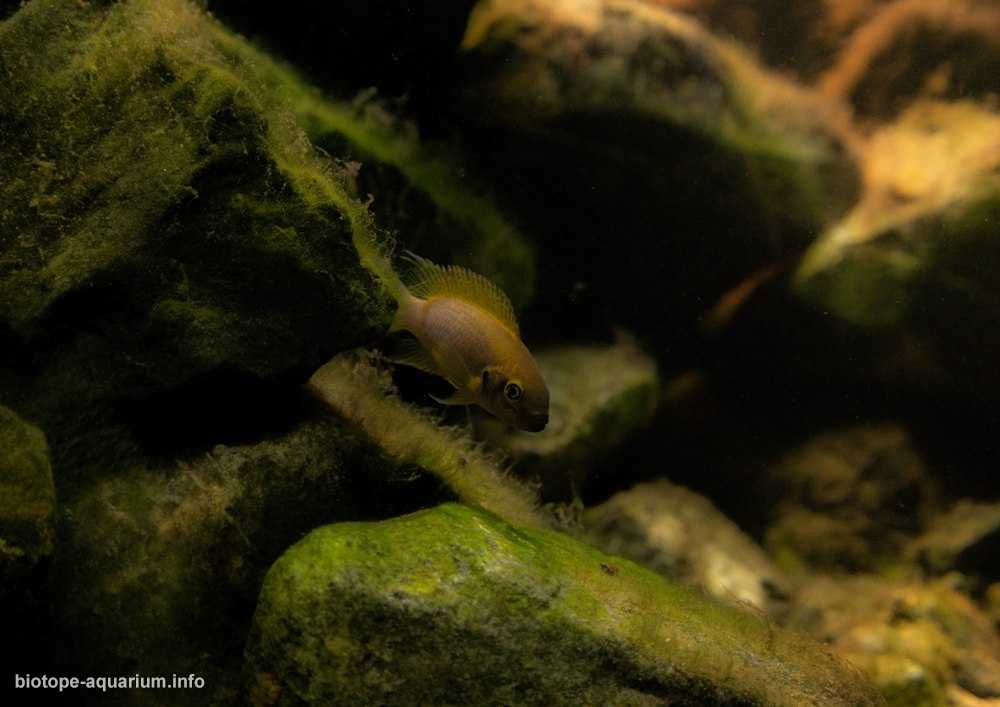
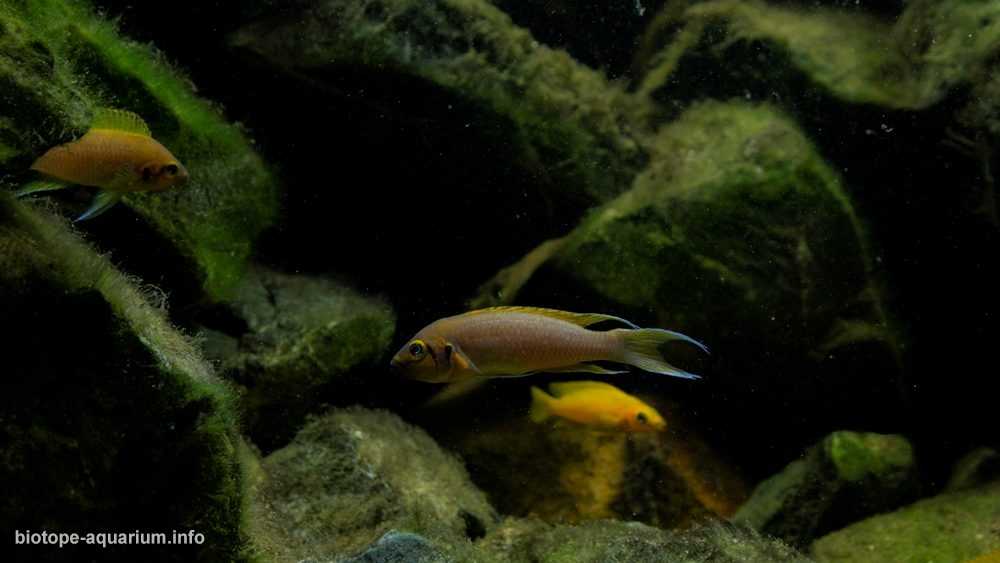
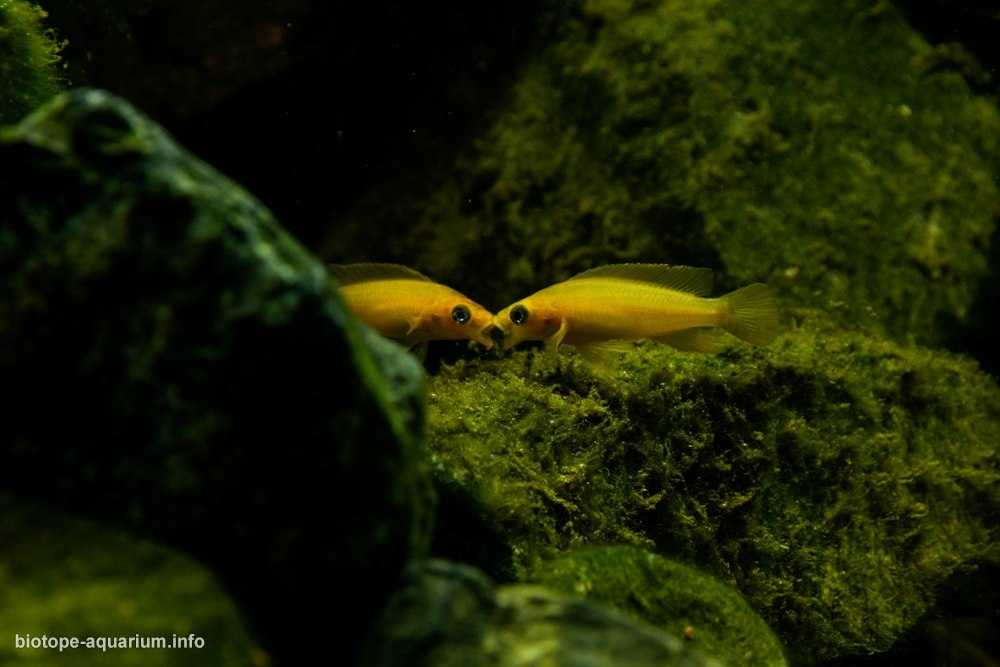
Description of the underwater landscape of the biotope: The intermediate habitat consists of sandy bottom with numerous rocks which provide shelter for the species-rich community. The rocky part can cover up to three quarters of the sandy bottom. The most important characteristic is the gradual inclination of the bottom. The biocover on the rocks is usually overlaid with a thin layer of fine sand. There is no real depth restriction for this habitat, but it is most heavily populated between 5 and 40 meters. The intermediate habitat harbours the most species rich communities of the lake. The Lamprologini tribe contains seven genera and nearly 100 species of African Cichlids, most of which are found in Lake Tanganyika, though a few species are found in the Congo River Basin and one species in the Malagarasi River in Tanzania. The Neolamprologus genus is the largest genus of cichlids in Lake Tanganyika, containing 50 or so species. The fish in this genus are all closely related but they are split between “shelldwellers” and “rockdwellers”, yet all are substrate spawners. This genus is also the largest group in the tribe Lamprologini. N. leleupi is collected from several locations along both the east and west coasts of the lake, particularly from Bulu Point, Tanzania, Bemba and Zaire. Not all leleupis are orange or yellow. Even though the yellowish orange variant is significantly more abundant in the lake, two other color morphs are not infrequently seen occupying the same habitats: silvery-beige and brownish-black. The Daffodil Cichlid, Neolamprologus pulcher (previously Lamprologus pulcher) was described by Trewavas and Poll in 1952. These fish are endemic to Lake Tanganyika, Africa and are widespread in the southern part of the lake. They are found along the rocky coastlines of the countries of Burundi, the Democratic Republic of the Congo, Tanzania, and Zambia. There are number of different geographical varieties. The variety known as the “Daffodil” is very popular and is found along the steep rocky slopes of Kantalamba and Kambwinba.
生境的水下景观描述:过渡性生境由沙质底部和大量岩石组成,这些岩石为物种丰富的群落提供庇护。岩石区域可覆盖沙质底部的四分之三。该生境最重要的特征是底部的平缓倾斜。岩石表面的生物覆盖层通常被一层细沙薄薄覆盖。此生境并无严格的深度限制,但在 5 至 40 米之间种群最为密集。过渡性生境孕育了坦噶尼喀湖中物种最丰富的群落。罗非鱼科中的蓝带慈鲷族(Lamprologini)包含七个属、近 100 种非洲慈鲷,其中大多数分布于坦噶尼喀湖,少数种类见于刚果河流域,另有一种分布于坦桑尼亚的马拉加拉西河。新蓝带慈鲷属(Neolamprologus)是坦噶尼喀湖中最大的慈鲷属,包含约 50 个物种。该属鱼类亲缘关系密切,但分为“贝栖型”和“岩栖型”,均为底产卵者。该属也是蓝带慈鲷族中最大的类群。N. leleupi 分布于坦噶尼喀湖东、西两岸的多个地点,尤其常见于坦桑尼亚的布卢角(Bulu Point)、本巴(Bemba)以及扎伊尔。并非所有 leleupi 都呈橙色或黄色。尽管湖中黄橙色变种数量最为丰富,但另外两种色型——银米色与棕黑色——也常在同一栖息地中出现。水仙慈鲷(Neolamprologus pulcher,旧称 Lamprologus pulcher)由特雷瓦瓦斯(Trewavas)和波尔(Poll)于 1952 年描述。该鱼种为非洲坦噶尼喀湖特有,广泛分布于湖泊南部区域,见于布隆迪、刚果民主共和国、坦桑尼亚和赞比亚等国的岩石海岸线。存在多个不同的地理变种。其中被称为“水仙”的变种极为受欢迎,分布于坎塔兰巴(Kantalamba)和坎布因巴(Kambwinba)陡峭的岩坡地带。
Description of the parameters of the habitat: The water of the Lake Tanganyika is very basic and its pH varies between 8.6 and 9.5. Due to the high algae photosynthesis on the water surface, there is a low concentration of carbon dioxide and the pH is slightly higher. Total hardness is 11-17 dH, carbonate hardness is 16-19 dH. Water is mostly clear, the water is rich in oxygen at the first 40 meters. The water temperature on the surface varies between 24.5 degrees C and 27.5 degrees C.
栖息地参数描述:坦噶尼喀湖的水质呈强碱性,pH 值介于 8.6 至 9.5 之间。由于水面藻类光合作用旺盛,二氧化碳浓度较低,导致 pH 值略高。总硬度为 11–17 dH,碳酸盐硬度为 16–19 dH。水体大多清澈,前 40 米水深范围内溶氧丰富。表层水温介于 24.5°C 至 27.5°C 之间。
List of fishes and invertebrates occurring in the nature biotope: Ctenochromis horei, Cyathopharynx sp. aff. Foae, Cyprichromis microlepidotus, Eretmodus marksmithi, Gnathochromis pfefferi, Julidochromis regani, Neolamprologus furcifer, Lobochilotes labiatus, Neolamprologus modestus, Neolamprologus Pulcher, Neolamprologus savoryi, Perissodus microlepis, Neolamprologus tretocephalus, Petrochromis ephippium, Tropheus sp. Black, Tropheus annectens, Tropheus sp. Black, Altolamprologus compressiceps, Neolamprologus Brevis, Neolamprologus Similis, Tanganicodus irsacae.
自然栖息地中出现的鱼类和无脊椎动物名录:Ctenochromis horei、Cyathopharynx sp. aff. Foae、Cyprichromis microlepidotus、Eretmodus marksmithi、Gnathochromis pfefferi、Julidochromis regani、Neolamprologus furcifer、Lobochilotes labiatus、Neolamprologus modestus、Neolamprologus Pulcher、Neolamprologus savoryi、Perissodus microlepis、Neolamprologus tretocephalus、Petrochromis ephippium、Tropheus sp. Black、Tropheus annectens、Tropheus sp. Black、Altolamprologus compressiceps、Neolamprologus Brevis、Neolamprologus Similis、Tanganicodus irsacae。
本文部分素材来自网络,如有类似请联系修改,如若转载,请注明出处:http://www.yangyubang.com/?p=3388