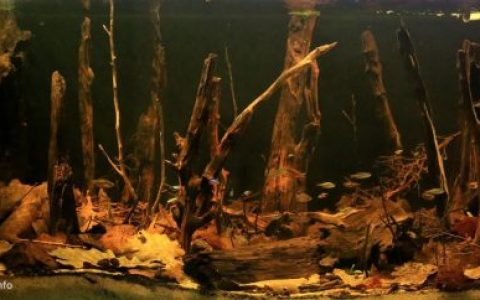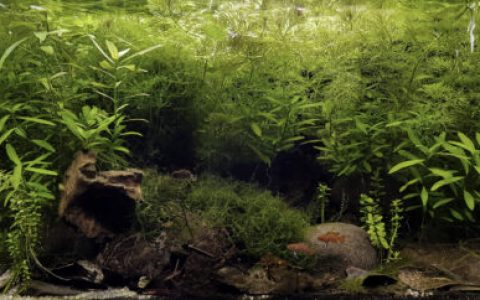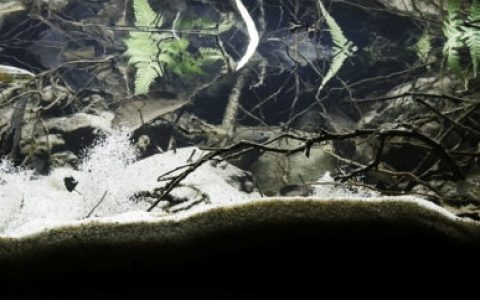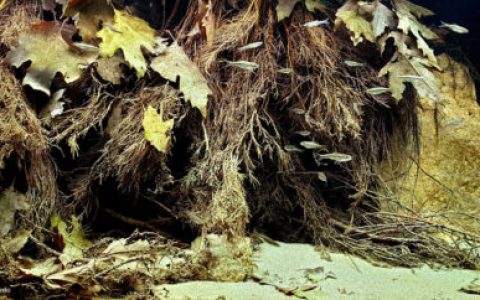
Volume: 536 L 水体容积:536 升
Dimensions: 150x65x55 cm 尺寸:150×65×55 厘米
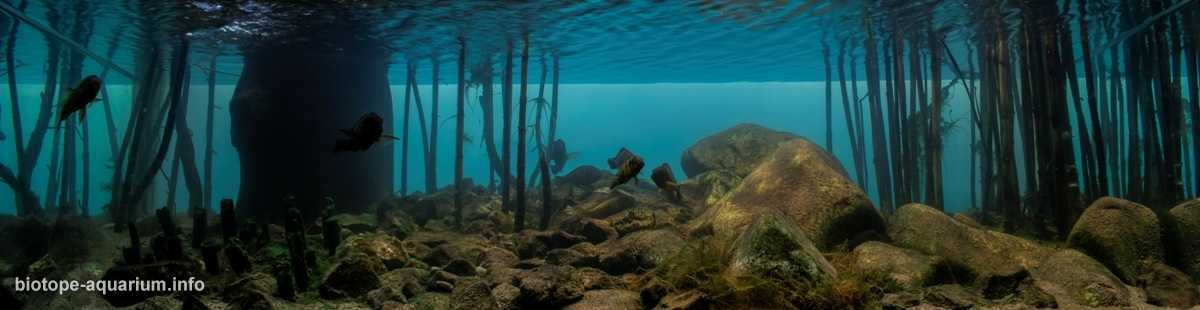
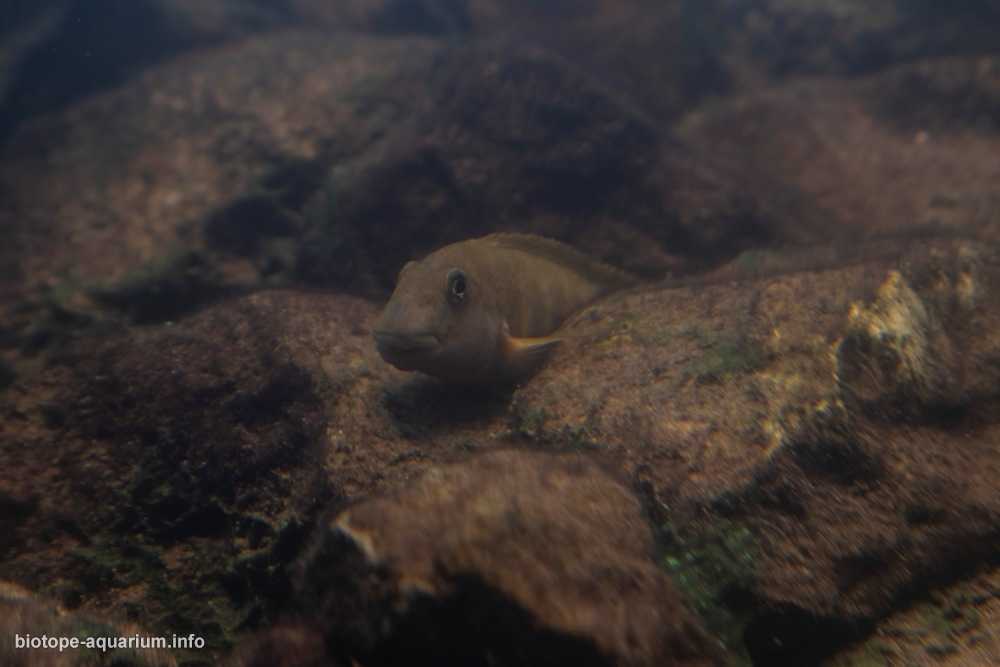
List of fishes: Tropehues brichardi Kipili, Eretmodus cyanostictus, Telmatochromis vittatus
鱼类名录:基皮利布氏慈鲷(Tropehues brichardi Kipili)、蓝点桨鳍丽鱼(Eretmodus cyanostictus)、条纹坦鲷(Telmatochromis vittatus)
List of plants: Phragmites australis (Common Reed)
植物名录:芦苇(Phragmites australis,Common Reed)
Description of decorations: 1- 40 kg of natural argonit sand (well known brand, taken from sea floor)
装饰物描述:1- 40 公斤天然文石砂(知名品牌,采自海床)
2- 25 kg of natural soil suitable for plants (taken from lake where reeds are collected)
2- 25 公斤适用于植物的天然土壤(采自采集芦苇的湖泊)
3- 20 kg of Lecat for bottom of plants (Physically processed natural clay)
3- 20 公斤用于植物底部的 Lecat(经物理加工的天然黏土)
4- 120 kg of rocks in variable sizes
4- 120 公斤大小不一的岩石
5- Turquaz Transparent Background
5- 绿松石色透明背景
6- Watered Pearl Tree Root Part
6- 水浸珍珠树根部分
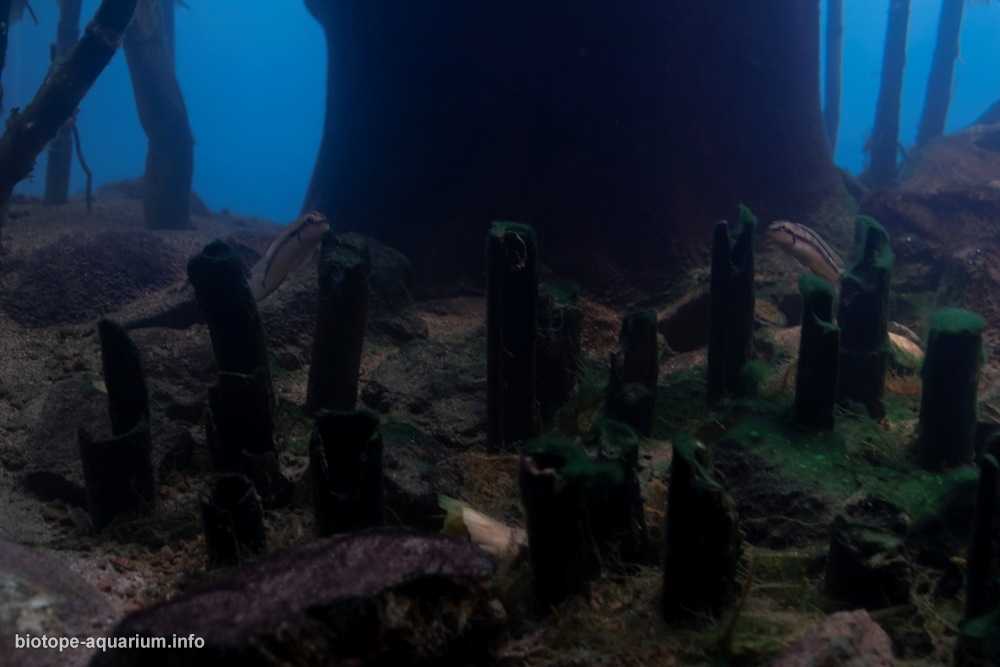
7- Roots and parts of dead reeds
7- 树根与枯芦苇残段
Description of equipment: Ligthining: 2 x led fluorescent (24 watt,120 cm,6500 K, Dayligth), 6 x Led Ufo Bulbs (26 watt, 6500 K, Dayligth), Pink coloured T8 Fluorescent (30 W,850 Lm)
设备说明:照明:2 支 LED 荧光灯(24 瓦,120 厘米,6500 K,日光色),6 个 LED UFO 灯泡(26 瓦,6500 K,日光色),1 支粉色 T8 荧光灯(30 瓦,850 流明)
2- Filtering: 2x External Filters, Fall Filter Totaly 3500 L/H
2- 过滤:2 台外置过滤器,瀑布式过滤器,总流量 3500 升/小时
3- Heating: 300 watt heater.
3- 加热:300 瓦加热棒。
Water parameters: Ph: 8,4-8,6, Temp: 25,3°C, Electirical Conductivity:660 µS, GH:16, KH:12 in addition Nitrate: 5-10 ppm and Nitrite: 0 ppm
水质参数:pH 值 8.4–8.6,温度 25.3°C,电导率 660 µS,GH 16,KH 12;此外,硝酸盐含量为 5–10 ppm,亚硝酸盐含量为 0 ppm。
Additional info: To avoid accumulation of h2s from dead organics %10 Water change in every three days. In weekly maintenance; glasses are cleaned and %20 water change done by vacuuming bottom for unnecessary dead organics. In every sixth months filters and pipes are cleaned in a weekly row.
补充说明:为避免死亡有机物积累产生硫化氢(H₂S),每三天换水 10%。每周维护时,清洁缸壁并吸尘清理底部不必要的死亡有机物,同时换水 20%。每六个月进行一次为期一周的集中维护,清洗过滤器及管道。
INFORMATION ABOUT BIOTOPE
关于生物群落的信息
Description of the area surrounding the biotope: Lake Tanganyika is a lake in central Africa (3° 20′ to 8° 48′ South and from 29° 5′ to 31° 15′ East). After Lake Baikal in Siberia it’s the second deepest and largest lake by volume in the world. It’s divided between four countruies.(1) Surrounding area effects to underwater life dramaticly because of Lake prime importance for the regional economy in East Africa (*,3) Lake is surrounded by mountains and extension of these mountains can be regonized underwater. Three major river feeds Tangayika is the Malagarasi River, the Ruzizi River, and the Kalambo River and it has one outflow the Lukuga River,(1,*) Main water loss is caused by evaporation.(2) Lake experiences two seasons annualy they are wet seasons between October and April with high percipitation ,thurnderstorms and dry seasons from May until the end of August with continuous winds and little precipitation.(3) My biotope point is from Kipili Shores (7°26’40.0″S 30°35’32.0″E) (11) which is flooded in wet season so some parts of surrounding area left underwater. Surrounding area in this part of lake has slowly rising bushy,grassy and partly rocky shores. Vegetation of area is consist of cyperus papyrus, phragmites australis, grassy small plants and various small busyh trees.(4,5,7,*) After shores land rises and thick bushy forests starts. Area is heavily residented in purpose of tourism and fisheries.(4,*) During flooded period flora of land stays underwater , grassy plants and bushy trees cant survive underwater but Phragmites australis and Cyperus papyrus existance gets stronger.(*,7) For getting advantage of Phragmites australis and cyperus papyrus’s camoflage ability famous Tanganyika’s water cobras and alligators come to area. (*,8)
生物群落周边区域描述:坦噶尼喀湖是位于非洲中部的湖泊(南纬 3°20′至 8°48′,东经 29°5′至 31°15′)。继西伯利亚的贝加尔湖之后,它是世界上深度第二、蓄水量最大的湖泊。该湖由四个国家共同管辖。(1) 由于坦噶尼喀湖对东非地区经济具有至关重要的意义,其周边环境对水下生命产生显著影响 (*,3)。湖泊四周群山环抱,这些山脉的水下延伸部分清晰可辨。注入坦噶尼喀湖的三条主要河流分别是马拉加拉西河、鲁济济河和卡兰博河,而其唯一的出水口为卢库加河 (1,*)。湖水流失的主要原因是蒸发作用。(2) 该湖每年经历两个季节:雨季为十月至次年四月,期间降水充沛并伴有雷暴;旱季则从五月持续至八月底,以持续强风和少量降水为特征。(3) 我的生物群落采样点位于基皮利湖岸(南纬 7°26′40.0″,东经 30°35′32.0″)(11),该区域在雨季会被淹没,导致周边部分地区长期处于水下。湖泊此段周边的湖岸地势缓升,分布着灌木丛、草地及部分岩石地带。 该区域的植被由纸莎草、芦苇、小型草本植物和各种小型灌木树组成。(4,5,7,*) 湖岸之后地势升高,茂密的灌木森林开始出现。该区域因旅游业和渔业而人口密集。(4,*) 在洪水期,陆地植被被淹没,草本植物和灌木树无法在水下生存,但芦苇和纸莎草的长势反而更加旺盛。(*,7) 为了利用芦苇和纸莎草的伪装能力,著名的坦噶尼喀水眼镜蛇和鳄鱼会来到该区域。 (*,8)
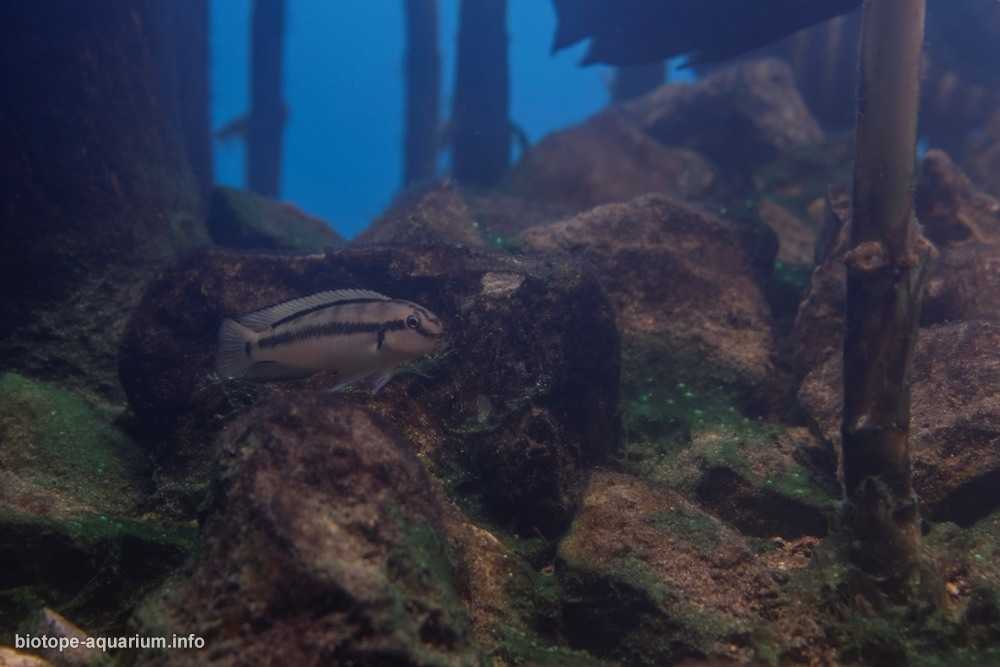
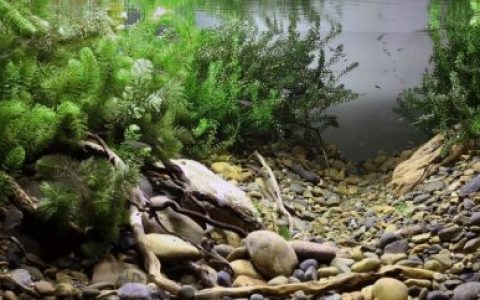
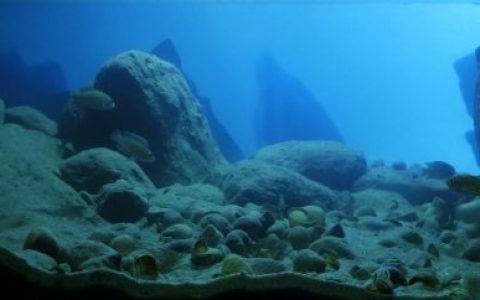
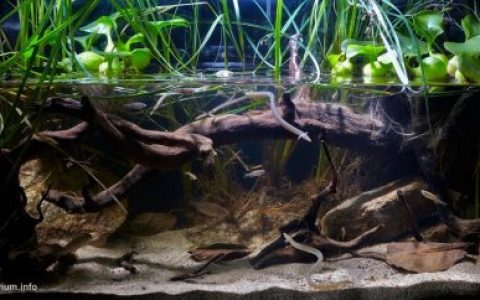
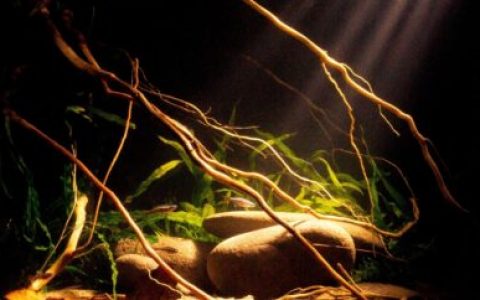
Description of the underwater landscape of the biotope: My bitope (7°26’40.0″S 30°35’32.0″E) (11) is not one of well known kind of Tanganyika biotopes. I think main reason for these kind of biotopes mostly not filmed or studied is danger of alligators and water cobras around. In terms of bottom structure’s type and formation of my biotepe is one of typicall examples of Tanganyika litoral rocky/stoney biotopes but because of being underwater temporarly this habitat has so many dying or dead organic existances from surrounding land area and Phragmites australis starts thriving. It is only 0,5-1,5 meters deep and bottom is fully covered round or sligthly sharp edged stones whereever there s a empty place not covered with stones you can see dead grassy bushes, roots of phragmites australis or itself. This habibat temporarly is like a feast for underwater habitants omnivors, herbivors or carnivors because various kind of organic exsitance from land is now underwater and defendlessly waiting to be consumed. So lots of species which lives around in litoral areas comes to that new habitat to get feed. When needed stoney bottom helps them to shelter from each others or dangers from out of water. By help of strong waves on low depth organic waste which left underwater can’t effect quality of lake blurry and oxygen rich waters. Phragmites australis, which has been waiting for meeting with water on land, starts to build it’s reed bed as soon as it’s underwater.(*,7) Lack of another livestock to surpass, exsitance of strong Africa sun ligth and organic waste of flooded land creates perfect habitat for Phragmites australis, as a invasive specie first it sends it’s leaves out of water to reach sun ligth then produce enegry to move inside soil to create new branches. But fastly living people around trims upper leaves of reeds in order to continue transportation and avoid danger of alligators.(*,9,7) So new temporary life cycle starts underwater which will continue until dry season comes. Because of high comsume of nutrients by phragmites and being temporarly underwater only thin algea firm exists on stones. Growing algea consumed by species fastly . Sediment left from land can be found in habitat.(*,9) Tree trunks so rarely found in biotopes of lake Tanganyika. But one is found in this habitat. Sand type is dark coloured fine sand mixed with very tiny pebbles.Sizes of stones are variable but mostly middle size stones.(*,7)
该生物群落水下景观的描述:我的生物群落(南纬 7°26’40.0″,东经 30°35’32.0″)(11) 并非坦噶尼喀湖中广为人知的生物群落类型之一。我认为,此类生物群落大多未被拍摄或研究的主要原因,是周围存在鳄鱼和水眼镜蛇的危险。就底部结构的类型和形成而言,我的生物群落是坦噶尼喀湖沿岸岩石/碎石生物群落的典型范例之一;但由于该栖息地暂时处于水下,来自周边陆地区域的大量有机体正在死亡或已经死亡,而芦苇(Phragmites australis)开始繁茂生长。此处水深仅 0.5–1.5 米,底部完全覆盖着圆形或边缘略尖的石头;凡是没有被石头覆盖的空隙处,均可看到枯死的草丛灌木、芦苇的根系或其植株本身。这一栖息地在暂时被水淹没期间,宛如一场盛宴,供各种杂食性、草食性或肉食性的水下居民享用,因为来自陆地的各类有机物质如今已沉入水下,毫无防备地等待被摄食。因此,许多生活在沿岸区域的物种纷纷来到这一新栖息地觅食。 在需要时,石质底部有助于它们彼此躲避或防范来自水外的危险。得益于浅水区的强劲波浪,留在水下的有机废物不会影响坦噶尼喀湖浑浊且富氧的水质。芦苇(Phragmites australis)曾在陆地上等待与水相遇,一旦淹没于水下,便立即开始构建其芦苇床。(*,7)由于缺乏其他牲畜与之竞争,加上强烈的非洲阳光以及被淹土地的有机废物,为作为入侵物种的芦苇创造了完美的栖息环境:它首先将叶片伸出水面以获取阳光,随后产生能量向土壤内部延伸以萌发新枝。然而,附近居民为了维持交通并规避鳄鱼的威胁,会迅速修剪芦苇的上部叶片。(*,9,7)因此,一种新的临时生命周期在水下开启,并将持续至旱季来临。由于芦苇大量消耗养分,且仅在短期内处于淹没状态,石块上仅存在一层薄薄的藻类膜。生长的藻类很快被各类生物摄食殆尽。来自陆地的沉积物亦可在该栖息地中发现。(*,9)树干在坦噶尼喀湖的生物群落中极为罕见。 但该栖息地中确实存在一种鱼类。底质为深色细沙,混有极细小的砾石。石块大小不一,但以中等尺寸为主。(*,7)
Description of the parameters of the habitat: Alkaline with a ph 9 water can be found around depths 0-100 meters and at deepest it s 8,3. Electirical conductivity 670 μS/cm in the upper part to 690 μS/cm in the deepest. Surface temperature varies seasonably from 24 °C to 29 °C. But depths greater then 400 meters temperature is very stable between 23,1 °C- 23,4 °C. Oxygen devoid in deepest sections are without life except bacteria. (20)
栖息地参数描述:水体呈碱性,pH 值在 0–100 米水深范围内约为 9,最深处降至 8.3。电导率在上层为 670 μS/cm,至最深处升至 690 μS/cm。表层水温随季节变化,介于 24 °C 至 29 °C 之间;而水深超过 400 米时,温度则非常稳定,维持在 23.1 °C 至 23.4 °C 之间。最深层区域因缺氧,除细菌外无其他生命存在。(20)
Tempeture: Changing according to seasons (wet season/dry season) between 24-28°C, but at depths greater then 400 meters is more stable between 23,1-23,4°C, (1)
温度:随季节(雨季/旱季)在 24-28°C 之间变化,但在深度超过 400 米处则更为稳定,介于 23.1-23.4°C 之间,(1)
Ph: Around 9 at depths of 0-100 meters, 8,7 below this and 8,3 at deepest parts, (1)
酸碱度(pH):在 0-100 米深度约为 9,此深度以下为 8.7,最深处为 8.3,(1)
Electirical Conductivity: Upper parts 670 and deepest parts 690, (1)
电导率:上层水域为 670,最深处为 690,(1)
Other Parameters: GH 12-20, and the KH 10-15. (*)
其他参数:总硬度(GH)12-20,碳酸盐硬度(KH)10-15。(*)
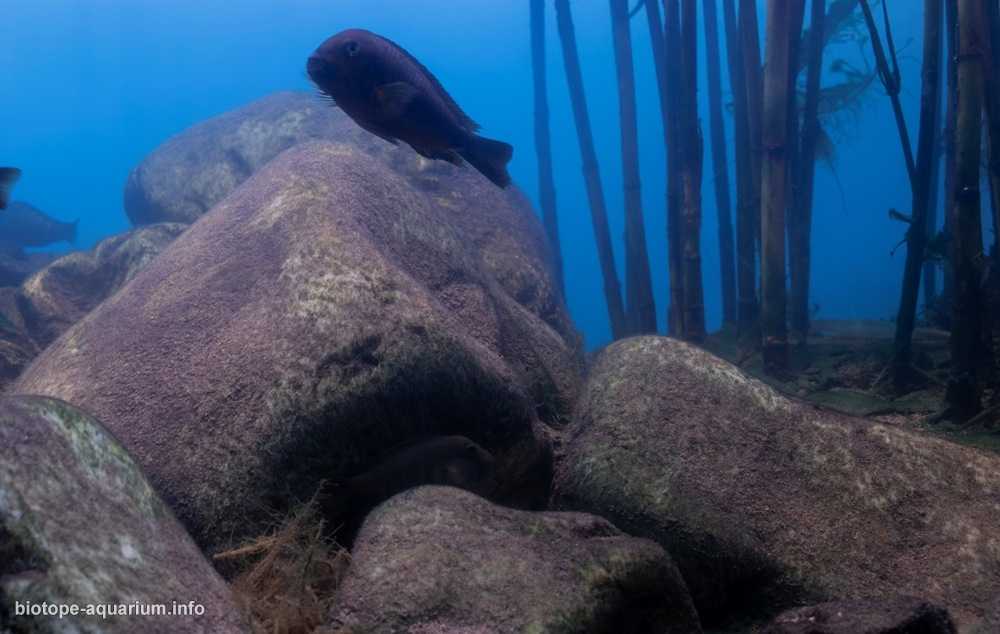
List of fishes and invertebrates occurring in the nature biotope: If we accept region as Ulwile,
该自然生境中出现的鱼类和无脊椎动物名录:若将区域认定为乌尔维勒(Ulwile),
Altolamprologus compressiceps, Chalinochromis cyanophleps, Chalinochromis sp. ‘bifrenatus’ , Cunningtonia longiventralis, Cyathopharynx foae, exLamprologus callipterus, exLamprologus lemairii, Haplotaxodon microlepis, Haplotaxodon trifasciatus, Lepidiolamprologus elongatus, Lepidiolamprologus kamambae, Lepidiolamprologus mimicus, Lepidiolamprologus profundicola ,Neolamprologus furcifer, Neolamprologus sexfasciatus, Neolamprologus tetracanthus, Neolamprologus timidus, Ophthalmotilapia nasuta, Ophthalmotilapia ventralis, Perissodus microlepis, Perissodus paradoxus, Perissodus straeleni, Petrochromis ephippium, Petrochromis famula, Petrochromis polyodon, Petrochromis sp. ‘kipili brown’ , Petrochromis sp. ‘macrognathus rainbow’, Petrochromis sp. ‘texas blue’, Telmatochromis dhonti, Telmatochromis vittatus, Tropheus brichardi, Xenotilapia nasus, Xenotilapia sp. ‘papilio sunflower’, various invertabres.(10)
Altolamprologus compressiceps、Chalinochromis cyanophleps、Chalinochromis sp. ‘bifrenatus’、Cunningtonia longiventralis、Cyathopharynx foae、原 Lamprologus callipterus、原 Lamprologus lemairii、Haplotaxodon microlepis、Haplotaxodon trifasciatus、Lepidiolamprologus elongatus、Lepidiolamprologus kamambae、Lepidiolamprologus mimicus、Lepidiolamprologus profundicola、Neolamprologus furcifer、Neolamprologus sexfasciatus、Neolamprologus tetracanthus、Neolamprologus timidus、Ophthalmotilapia nasuta、Ophthalmotilapia ventralis、Perissodus microlepis、Perissodus paradoxus、Perissodus straeleni、Petrochromis ephippium、Petrochromis famula、Petrochromis polyodon、Petrochromis sp. ‘kipili brown’、Petrochromis sp. ‘macrognathus rainbow’、Petrochromis sp. ‘texas blue’、Telmatochromis dhonti、Telmatochromis vittatus、Tropheus brichardi、Xenotilapia nasus、Xenotilapia sp. ‘papilio sunflower’,以及多种无脊椎动物。(10)
List of plants found in the nature biotope: Phragmites australis (Common Reed), Cyperus papyrus and some grassy aquatic plants.
该自然生境中发现的植物名录:芦苇(Phragmites australis)、纸莎草(Cyperus papyrus)以及一些水生禾本科植物。
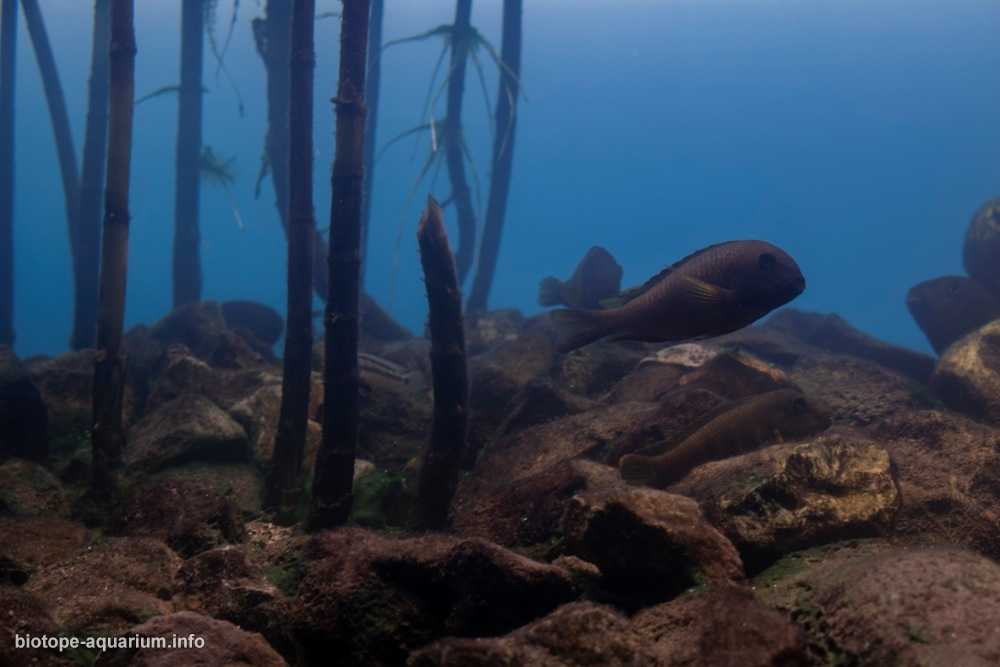
Threats to the ecology: Unfortunately what i expose you here as a biotope actually is a proof of Lake Tanganyika demolishing underwater habitat. It is a well know fact that Phragmites Australis (Common Reed) is seen whereever and whenever water quality is dropped and habitat is diminishing. When invasive It shapes habitat according to it’s own needs and mostly doesn’t let other species thrieve around. There are lots of threads lake Tanganyika faces like other places in world. Main threads are overfishing, sedimentation, overpopulation, pollution and climate change (global warming). Even succesfully evolved to survive from lots of disasters during it’s long history this time lake can’t resist. Because now source of all these threads are we human. None of actions or measures will be enough effective to save lake unless we learn to respect nature and only take what we need from nature in a rigth way. But main thing we never need to forget is that at the end the one who wins will be always nature unless we learn to get along with it. What i learned from times passed in hard conditions in nature is that our high technology can’t stop nature if it decides to make human extinct.(12-19,*)
生态面临的威胁:不幸的是,我在这里向您展示的这种生物群落,实际上证明了坦噶尼喀湖正在摧毁其水下栖息地。众所周知,芦苇(Phragmites australis)的出现往往标志着水质下降和栖息地退化。作为一种入侵物种,它会按照自身需求重塑栖息地,通常抑制其他物种的繁衍。与世界其他地区一样,坦噶尼喀湖也面临诸多威胁,主要包括过度捕捞、泥沙淤积、人口过剩、污染以及气候变化(全球变暖)。尽管该湖在漫长的历史中成功演化以抵御多次灾难,但此次却难以招架,因为如今所有这些威胁的根源正是我们人类。除非我们学会尊重自然,并以正确的方式仅取所需,否则任何行动或措施都不足以拯救该湖。但我们永远不应忘记的是:最终胜出的永远是自然,除非我们学会与之和谐共处。我在自然界艰苦环境中历经岁月所学到的是:如果自然决定让人类灭绝,我们的高科技也无法阻止。(12-19,*)
本文部分素材来自网络,如有类似请联系修改,如若转载,请注明出处:http://www.yangyubang.com/?p=3464