Volume: 68 L 容积:68 升
Dimensions: 60x45x25 cm 尺寸:60×45×25 厘米
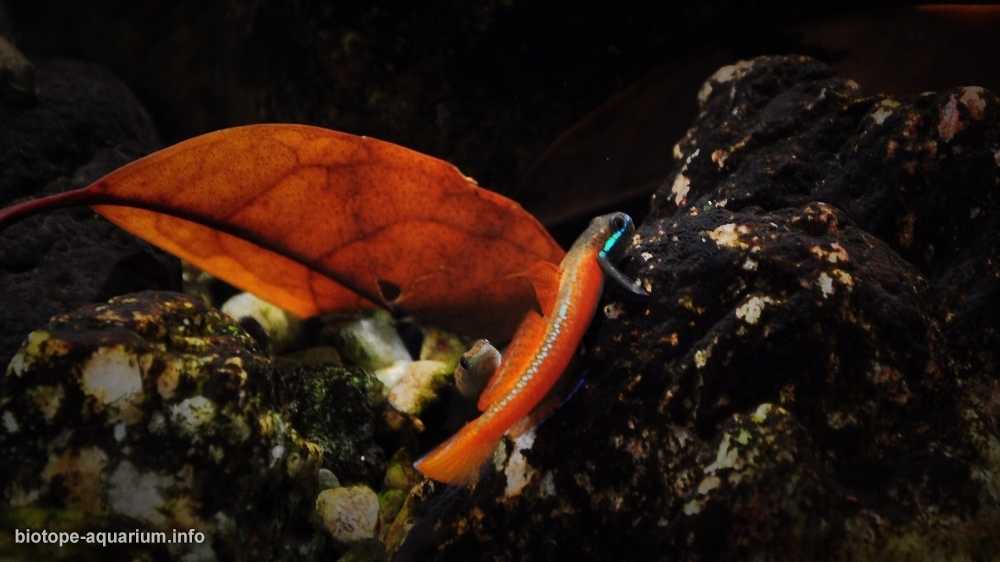
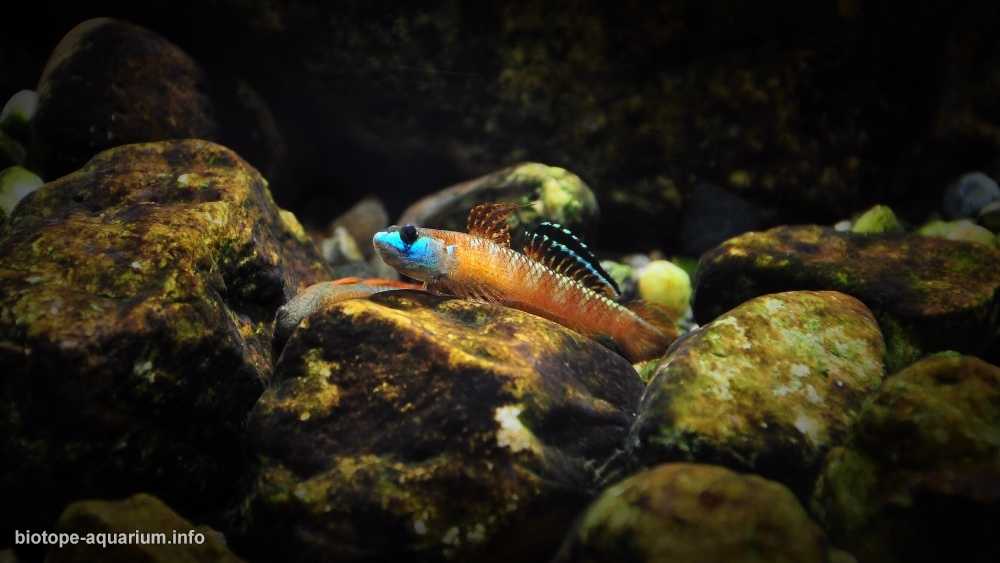
List of fishes: Stiphodon annieae, Stiphodon rutilaureus, Stiphodon semoni
鱼类名录:Stiphodon annieae、Stiphodon rutilaureus、Stiphodon semoni
List of plants: In the habitat I described, there were no aquatic plants except those that were flooded during the rainy season.
植物名录:在我所描述的栖息地中,除雨季被淹没的植物外,并无其他水生植物。
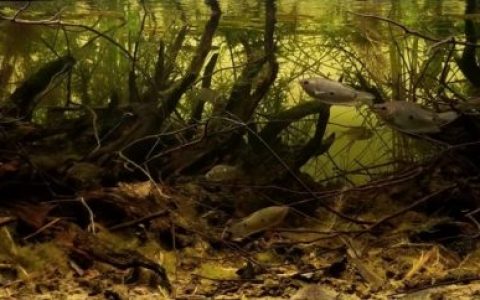
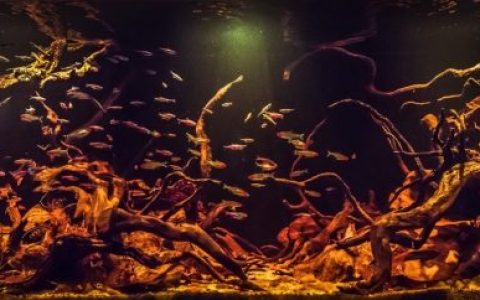
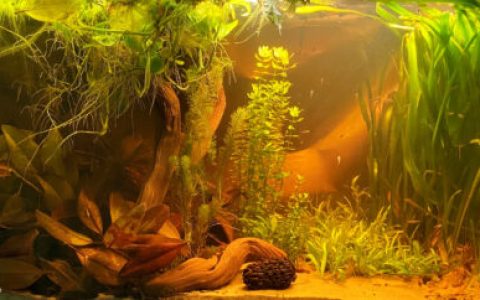
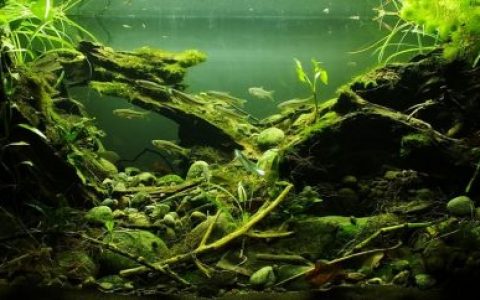
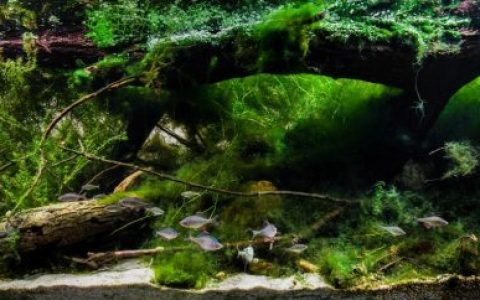
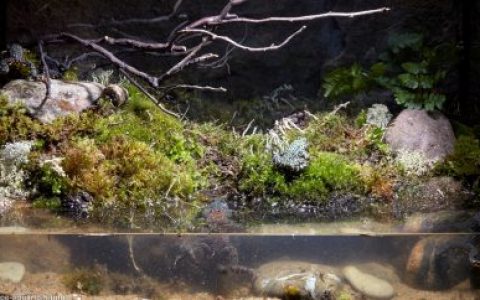
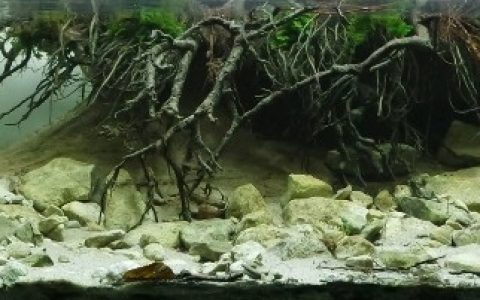
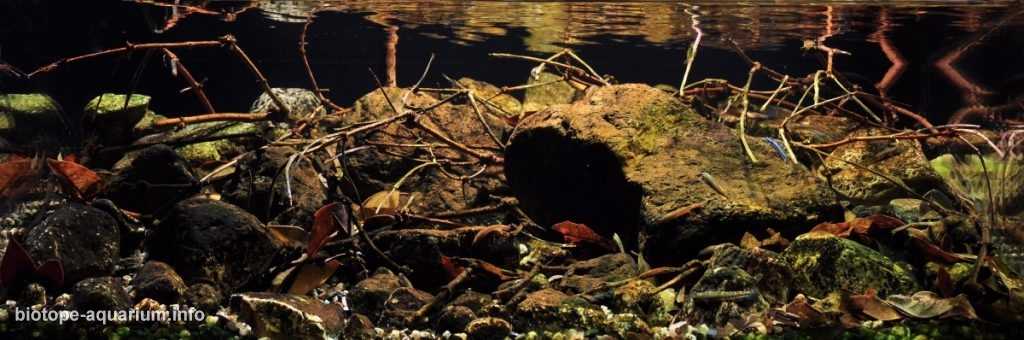
Description of decorations: All the elements used in my aquarium, such as driftwoods, leaves, stones, rocks, substrates were collected from a wild stream. The substrate of the aquarium is sand with dark color. I piled up a slope with sand and placed some stones on top of substrate to simulate the gradient of the real riverbed. The lowest depth of the water is only 3 cm, and the highest point is nearly 20 cm. Some broken branches and fallen leaves are randomly arranged in the cylinder which slowly and naturally decomposed with the establishment of the ecological environment. These corrupted fallen leaves not only provide shelter space for the Stiphodon annieae but also provide additional food sources. The landscape is just a small reflection of the real nature environment of the slow flowing stream which I want to demonstrate. Prosperity, decline, ablation, and regeneration are just a microcosm of the natural ecological cycle.
造景描述:水族箱中使用的所有元素,如沉木、落叶、石块、岩石及底砂,均采集自野生溪流。水族箱底砂为深色沙质。我用沙子堆砌出斜坡,并在底床上放置若干石块,以模拟真实河床的坡度变化。水体最浅处仅 3 厘米,最高点则接近 20 厘米。一些断裂的枝条与落叶被随意布置于缸内,随着生态系统的建立而缓慢自然地分解。这些腐烂的落叶不仅为安妮氏枝牙虾虎提供庇护空间,同时也成为额外的食物来源。整个景观仅是我所希望呈现的缓流溪流真实自然环境的一个微小缩影。繁荣、衰败、侵蚀与再生,不过是自然生态循环的微观写照。
Description of equipment: EHEIM 600 classic filter (1000L/H), Netlea 50w LED, 7500k color temperature
设备描述:伊罕(EHEIM)600 经典款过滤器(流量 1000 升/小时)、Netlea 50 瓦 LED 灯,色温 7500K
Water parameters: The water is clear. Temperature is from 23 to 27°C, PH is 7, GH is 7
水质参数:水体清澈。温度介于 23 至 27°C 之间,pH 值为 7,GH 为 7
Additional info: 2 times of water change in a week
补充信息:每周换水两次
INFORMATION ABOUT BIOTOPE
关于生物群落的信息
Description of the area surrounding the biotope: Halmahera, also known as Jailolo or Gilolo, is the largest island in the Maluku Islands. It is located east of Sulawesi in western New Guinea. It is part of the North Maluku province of Indonesia. Sofifi, the capital of the province, is located on the west coast of the island. This island is consisting of 5 regencies: Halmahera Timur / east Halmahera, Halmahera Selatan / south halmahera, Halmahera Barat / west halmahera, Halmahera Utara / north Halmahera, and Halmahera Tengah / central Halmahera.
生物栖息地周边环境描述:哈马黑拉岛(Halmahera),又称贾伊洛洛(Jailolo)或吉洛洛(Gilolo),是马鲁古群岛中最大的岛屿。它位于苏拉威西岛以东、新几内亚岛西部,隶属于印度尼西亚北马鲁古省。该省首府索非菲(Sofifi)坐落于岛屿西海岸。全岛共辖五个县:东哈马黑拉(Halmahera Timur)、南哈马黑拉(Halmahera Selatan)、西哈马黑拉(Halmahera Barat)、北哈马黑拉(Halmahera Utara)以及中哈马黑拉(Halmahera Tengah)。
Most of the Halmahera Island is in the mountains. Small and narrow island is covered by luxuriant tropical rain forests. Due to the influence of the Kuroshio Current flows through the northern equator, the island has a humid climate throughout the year. The island is shaped in K letter, it almost like a miniature of Sulawesi island. By having white sandy beaches, pristine forests and spectacular Mamuya Mountain in the distance, the island offers stunning scenery.
哈马黑拉岛大部分地区为山地。这座狭小的岛屿被茂密的热带雨林所覆盖。受流经赤道以北的黑潮影响,该岛全年气候湿润。岛屿呈”K”字形,几乎堪称苏拉威西岛的微缩版。这里拥有洁白的沙滩、原始森林以及远处壮观的玛穆亚山,景色令人叹为观止。
Weda, the place I described, is situated in Halmahera Tengah and its geographical coordinates are 0° 21′ 0″ North, 127° 52′ 0″ East. There are many cherished species of birds in Weda, such as White Cockatoos, Eclectus Parrots, Redcheek Parrots, Dusky Scrubfowl, Hornbills, Paradise Crows, Goliath Coucals, Sombre Kingfishers, Halmahera Cuckoo Shrikes, Moluccan Cuckoo Shrikes. Every morning the jungle fills up with the singing of the legendary Standardwing Bird of Paradise (Semioptera Wallacei), the Ivory Breasted Pitta and the Common Paradise Kingfisher. Later at the day, the Wallace’s Golden Birdwing Butterfly (Ornithoptera croesus) and many other butterflies and can bee seen here. At least 28 endemic species of birds and countless species of insects have their habitat here.
我所述的韦达位于哈马黑拉中部,其地理坐标为北纬 0°21′0″、东经 127°52′0″。韦达栖息着众多珍稀鸟类,如白凤头鹦鹉、折衷鹦鹉、红颊鹦鹉、暗色冢雉、犀鸟、极乐鸟、歌利亚鸦鹃、灰背翠鸟、哈马黑拉杜鹃鵙、摩鹿加杜鹃鵙。每天清晨,丛林中回荡着传奇物种标准翅极乐鸟(Semioptera wallacei)、象牙胸八色鸫和普通极乐鸟翠鸟的鸣唱。到了日间,华莱士金鸟翼蝶(Ornithoptera croesus)以及许多其他蝴蝶在此可见。这里至少是 28 种特有鸟类和无数昆虫物种的栖息地。
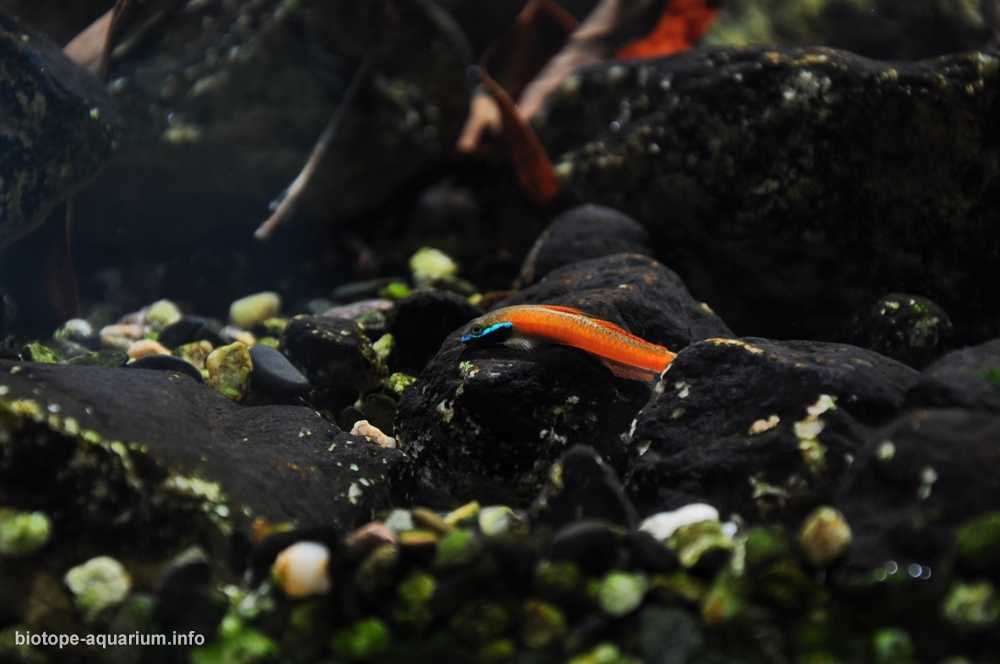
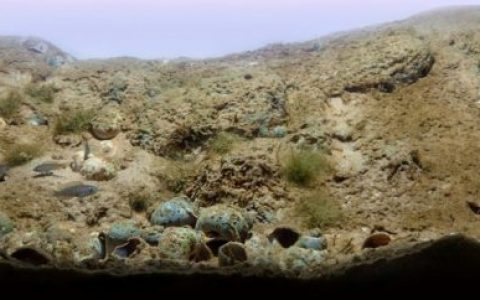
Description of the underwater landscape of the biotope: The coastal stream, with clear and oxygenated water, goes through the forest. The lower course of river is characterized by rocky substrates, with boulders and pebbles. In the dry season, the river is very shallow, up to 40cm in the depth. there are no aquatic plants except for the plants that are submerged during the rainy season. During the rainy season, the water level rises and is poured into the surrounding forest. Many branches, driftwood and fallen leaves drop into the water. These provide abundant food and shelter for fish. Under the long-term sunshine, the stones are covered with brown algae and other algae. Stiphodon annieae, Stiphodon rutilaureus and Stiphodon semoni live on the bottom of the river, on top of rocks but it is also often seen swimming in open water in the current between rocks. They feed on algae and small invertebrates scraping them on the surface of rocks.
生物群落的水下景观描述:这条沿海溪流拥有清澈且富含氧气的水流,穿行于森林之中。河流下游以岩石基质为特征,分布着巨石和鹅卵石。在旱季,河水非常浅,深度不超过 40 厘米。除了雨季时被淹没的植物外,这里没有其他水生植物。到了雨季,水位上涨并漫溢至周围的森林中。许多树枝、沉木和落叶落入水中,为鱼类提供了丰富的食物和庇护所。在长期的阳光照射下,石头表面覆盖着褐藻及其他藻类。安妮氏枝牙虾虎(Stiphodon annieae)、金红枝牙虾虎(Stiphodon rutilaureus)和塞蒙氏枝牙虾虎(Stiphodon semoni)栖息于河底及岩石之上,但也常可见它们在岩石间的水流中开阔水域游动。它们通过刮食岩石表面的藻类和小型无脊椎动物为生。
Description of the parameters of the habitat: The rainy season begins from July to ends in October. During the rainy season, the water level of the stream rises and the water temperature drop. The dry season starts from November to June. During the dry season, the water level in the stream decreased and the water temperature rise. The water temperature of the stream is between 24 and 30 degrees Celsius. The pH of the water is about 7 and the GH hardness is about 7.
栖息地参数描述:雨季从 7 月开始,至 10 月结束。雨季期间,溪流的水位上升,水温下降。旱季从 11 月持续至次年 6 月。旱季期间,溪流的水位下降,水温上升。溪流水温介于 24 至 30 摄氏度之间。水的 pH 值约为 7,GH 硬度也约为 7。
List of fishes and invertebrates occurring in the nature biotope: Stiphodon annieae (Keith&Hadiaty, 2015, This species is only found in Halmahera of Indonesia), Stiphodon rutilaureus (Watson, 1996, This species occurs in Indonesia including Halmahera, Bali and Papua, Papua New Guinea, Solomon, Fiji, Vanuatu et. ), Stiphodon semoni (Weber, 1895, This species is widely distributed in Indonesia including Halmahera, Sumatra, Java, Bali, Sulawesi and Papua, Papua New Guinea and Australia)
自然生境中出现的鱼类和无脊椎动物名录:安妮氏枝牙虾虎鱼(Stiphodon annieae,Keith & Hadiaty, 2015;该物种仅发现于印度尼西亚的哈马黑拉岛)、金辉枝牙虾虎鱼(Stiphodon rutilaureus,Watson, 1996;该物种分布于印度尼西亚,包括哈马黑拉岛、巴厘岛和巴布亚,以及巴布亚新几内亚、所罗门群岛、斐济、瓦努阿图等地)、塞蒙氏枝牙虾虎鱼(Stiphodon semoni,Weber, 1895;该物种广泛分布于印度尼西亚,包括哈马黑拉岛、苏门答腊岛、爪哇岛、巴厘岛、苏拉威西岛和巴布亚,以及巴布亚新几内亚和澳大利亚)。
List of plants found in the nature biotope: In this shallow stream, there are no aquatic plants except for the plants that are submerged during the rainy season.
自然生境中发现的植物名录:在这条浅溪中,除雨季期间被淹没的植物外,没有其他水生植物。
Threats to the ecology: Sicydiine communities exhibit behaviours that are fostered by a number of environmental factors such as free passage, natural vegetation cover, unmodified flows, quality of estuaries, or the absence of introduced species. Reduced or disrupted surface flow of streams and rivers represents on of the greatest threats to population viability. Loss of connectivity disrupts contributions to the marine larval pool and post-larval recruitment to freshwater, while also reducing stream habitat required for reproduction. Climate chage may indirectly influence migratory behaviour.
生态面临的威胁:枝牙虾虎鱼群落的行为受多种环境因素促进,例如畅通无阻的通道、天然植被覆盖、未受干扰的水流、河口质量以及缺乏外来物种。溪流与河流地表径流的减少或中断,是对种群生存能力最大的威胁之一。连通性的丧失不仅阻碍了对海洋幼体库的贡献及后期幼体向淡水的补充,同时也减少了繁殖所需的溪流栖息地。气候变化可能间接影响其洄游行为。
With the continuous deforestation of forests and mineral resources, many tropical islands in Indonesia, including the Halmahera Island, are at risk of large-scale destruction of ecosystems, including endemic organisms including the Stiphodon annieae. Some green organizations and environmentalists are actively working to protect the environment in which countless lives depend on and to realize the harmonious coexistence of human survival and development and natural ecology. May these beautiful elves in the tank not become the last “living fossils” of this species left in the world.
随着森林砍伐和矿产开发的持续,包括哈马黑拉岛在内的印度尼西亚许多热带岛屿正面临生态系统大规模破坏的风险,其中也波及到如安妮氏枝牙虾虎(Stiphodon annieae)等特有生物。一些绿色组织和环保人士正积极努力,保护无数生命赖以生存的环境,以实现人类生存发展与自然生态的和谐共存。愿水族箱中这些美丽的精灵,不要成为该物种留存于世的最后“活化石”。
本文部分素材来自网络,如有类似请联系修改,如若转载,请注明出处:http://www.yangyubang.com/?p=3513