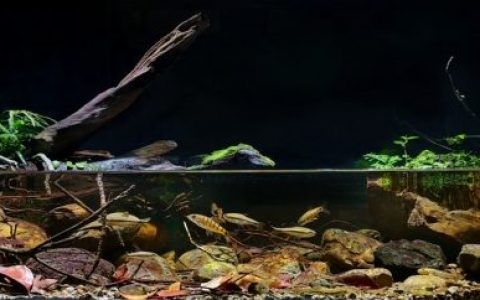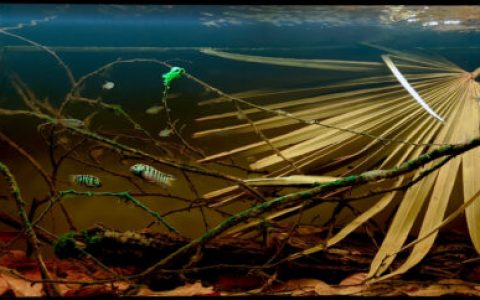
Volume: 60 L 容积:60 升
Dimensions: 60x40x25 cm 尺寸:60×40×25 厘米
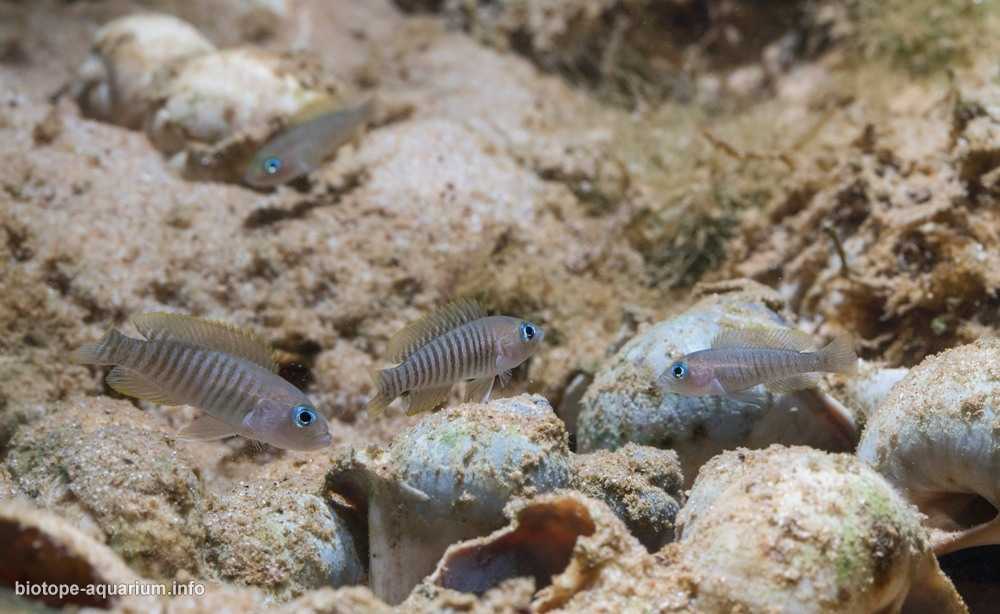
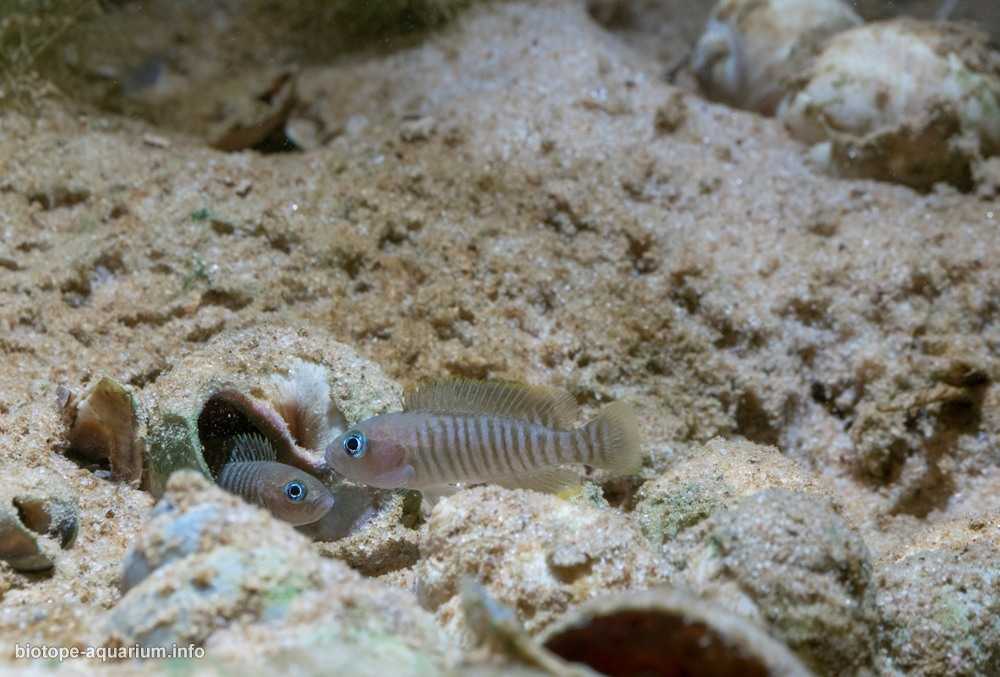
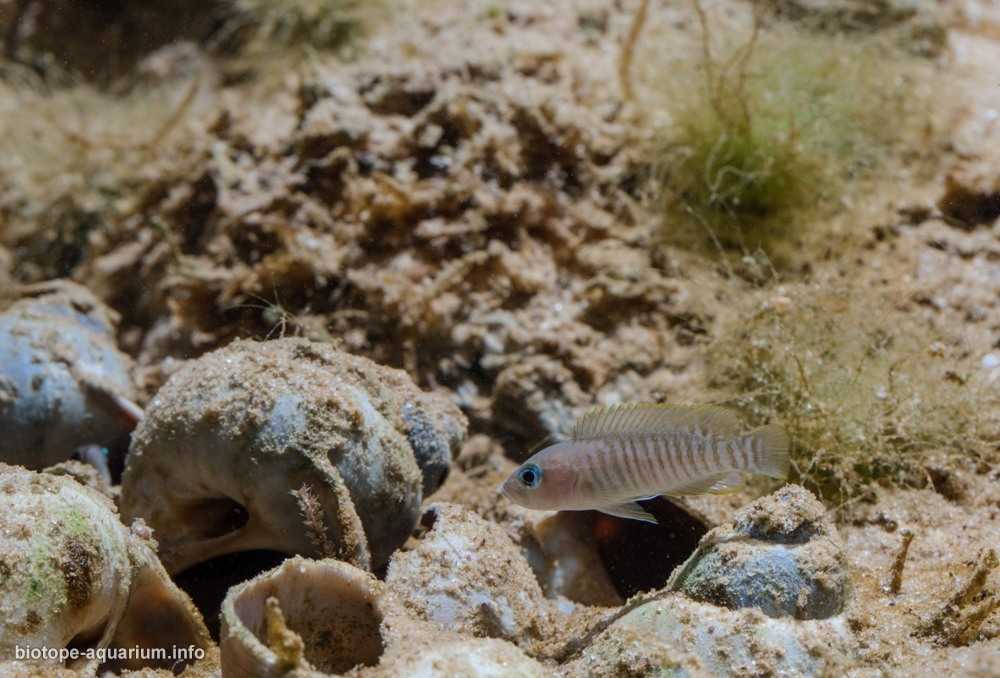
List of fishes: Neolamprologus multifasciatus (Boulenger, 1906)
鱼类名录:多带新亮丽鲷(Neolamprologus multifasciatus,Boulenger, 1906)
List of plants: – 植物列表:–
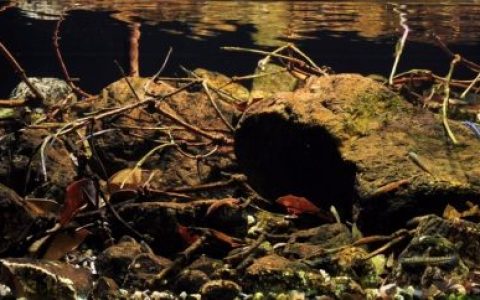
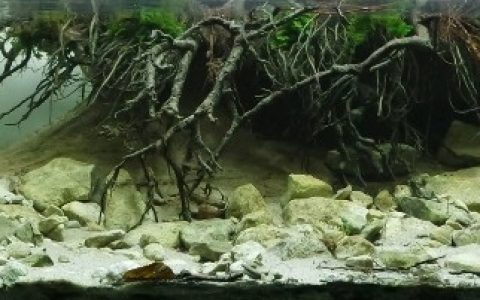
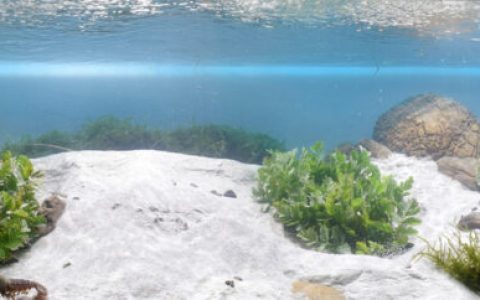
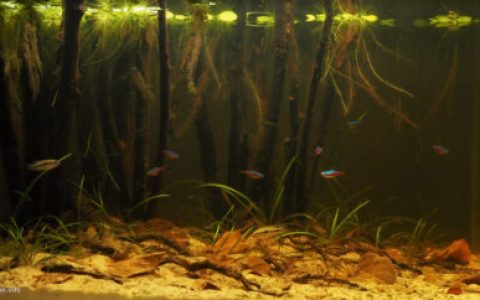
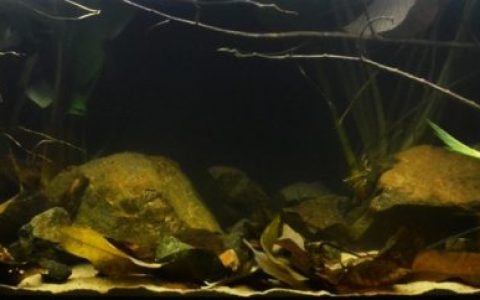
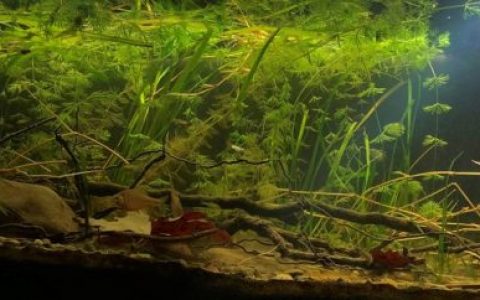
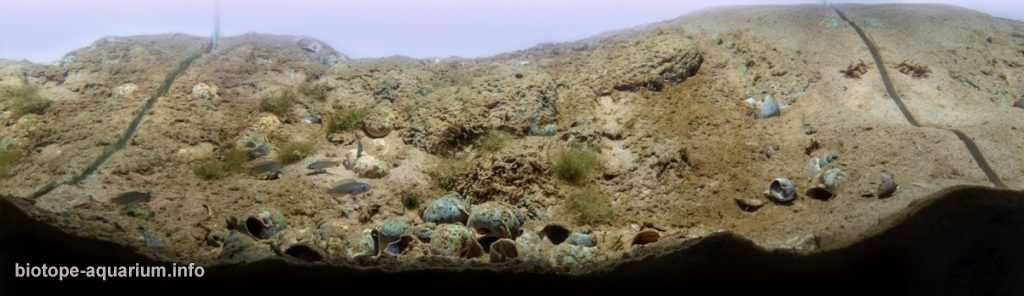
Description of decorations: I used large amount of coral bone as substrate. Stones and styrofoam were used to create high low landforms. Thick layers of fine sand covered on the top. I couldn’t find where to get the real nature shell, so I used the similar ones instead. With long time exposure to light, algae were blossom though it’s still not enough due to the limit time.
装饰说明:我使用了大量珊瑚骨作为底床材料,并用石块和聚苯乙烯泡沫塑造出高低起伏的地形,表层覆盖厚厚的细沙。由于未能找到天然贝壳,我以相似的人造贝壳替代。经过长时间光照,藻类已开始生长,但受限于时间,其覆盖度仍显不足。
Description of equipment: Two EHEIM classic350, 620L/H, ZETLIGHT ZE8300, 96W, Simulated sunrise and sunset, Homemade led background light
设备描述:两台 EHEIM classic350 过滤器(流量 620 升/小时),ZETLIGHT ZE8300 灯具(96 瓦,模拟日出日落),自制 LED 背景灯。
Water parameters: Temperature 24°C. The parameters of water are PH8.5 and the hardness of carbonates is 17dH.
水质参数:水温 24°C。pH 值为 8.5,碳酸盐硬度为 17dH。
NFORMATION ABOUT BIOTOPE
关于生物群落的信息
Description of the area surrounding the biotope: Lake Tanganyika is the largest of the three large lakes of the African Rift Valley, with a surface area of 32.600 km², with 673 km of length, 72 km in it´s widest point and with a coastline of 1,828 km. Its the second largest freshwater lake in the world by volume and the second deepest after lake Baikal in Siberia, with 1470m. and an average depth of 570m.
生物栖息地周边环境描述:坦噶尼喀湖是非洲大裂谷三大湖泊中最大的一个,表面积达 32,600 平方公里,全长 673 公里,最宽处 72 公里,海岸线总长 1,828 公里。按水量计算,它是世界第二大淡水湖,深度仅次于西伯利亚的贝加尔湖,最大深度达 1,470 米,平均深度为 570 米。
The lake is surrounded by four countries; Burundi in the Northeast, Democratic Republic of the Congo in the West, Tanzania in the East and Zambia in the South, forming a surface of 231.000 Km². Nearly one-sixth of the world’s freshwater is located on Lake Tanganyika. The lake is an important freshwater resource for people living in its vicinity.
该湖被四个国家环绕:东北部的布隆迪、西部的刚果民主共和国、东部的坦桑尼亚以及南部的赞比亚,共同构成总面积约 231,000 平方公里的流域。全球近六分之一的淡水资源蕴藏于坦噶尼喀湖中。对于居住在湖区周边的人们而言,该湖是至关重要的淡水资源。
The lake contains at least 250 species of cichlid fish (Cichlidae) and 150 other species of non-cichlid fish, most of which live on the shore of the lake, at a depth of 180 m. The lake is also an important site of study on the evolution of species. Almost all (90%) of the cichlid species of Tanganyika are endemic to the lake. This high degree of endemic species also occurs with many lake invertebrates, such as molluscs, crabs, copepods, shrimp, jellyfish, leeches, etc.
该湖至少拥有 250 种慈鲷科鱼类(Cichlidae)和 150 种其他非慈鲷科鱼类,其中大多数栖息于湖岸附近,水深可达 180 米。该湖也是研究物种进化的重要场所。坦噶尼喀湖中几乎全部(90%)的慈鲷物种均为该湖特有。这种高度的特有性也见于许多湖泊无脊椎动物,如软体动物、螃蟹、桡足类、虾、水母、水蛭等。
This aquarium represents the Ndole Bay area in Zambia, which is adjacent to Nkamba Bay in Nsumbu National Park on Lake Tanganyika.
本水族箱再现了赞比亚恩多勒湾(Ndole Bay)区域的生态环境,该区域毗邻位于坦噶尼喀湖恩苏姆布国家公园内的恩坎巴湾(Nkamba Bay)。
Ndole Bay is part of Cameron Bay. It is located at 8 ° 28’1.14 “S of latitude and 30 ° 28’29.45” E. of longitu
恩多勒湾属于卡梅伦湾(Cameron Bay)的一部分,其地理位置为南纬 8°28’1.14″,东经 30°28’29.45″。
Description of the underwater landscape of the biotope: Lake Tanganyika has different habitats.At a distance of tens of meters, the habitats of Ndole Bay change drastically, and different species evolved to adapt to them. In front of the beach, it’s found an habitat based on large rock and sand plates. Followed by these large rock plates, begins a great plain of sand. To the east, as the depth increases, the bottom of the lake has a new change, a dense area of sand and fine sediment with fields of Neothauma snail shells. In the North of the beach, two small habitats were created, each with its set of species, a coast filled by a dense canefield and rocks of little size. On the south coast there is also a reed, but without rocks with a thick base of mud. Rock structures resembling a reef run parallel to the beach and are separated by bands of sand for only a few meters. It is a shallow area with a good water movement. A large number of fish inhabit rocky and sandy areas where they find protection, food, and their breeding grounds. Different species have different requirements in terms of territory.
生物群落的水下景观描述:坦噶尼喀湖拥有多种不同的栖息地。在数十米的距离内,恩多勒湾的栖息地发生剧烈变化,不同物种随之演化以适应这些环境。海滩前方是一个由巨大岩石和沙板构成的栖息地。紧随这些大型岩板之后,是一片广阔的沙质平原。向东延伸,随着水深增加,湖底再次发生变化,出现一片密集的细沙与沉积物区域,其间散布着新塔螺(Neothauma)的螺壳田。在海滩北侧,形成了两个小型栖息地,各自拥有独特的物种组合:一处是密布芦苇丛并点缀着小块岩石的海岸;南侧海岸同样生长着芦苇,但此处没有岩石,底部覆盖着厚厚的淤泥。类似珊瑚礁的岩石结构与海滩平行延伸,其间仅被数米宽的沙带隔开。这是一片水浅且水流良好的区域。大量鱼类栖息于岩石与沙地之中,在此寻找庇护、食物以及繁殖场所。不同物种对领地有着各异的需求。
Description of the parameters of the habitat: The water in Lake Tanganyika is alkaline, with a pH between 8.5 – 9.0 depending on the depth and alkalinity surrounding the 650µS. The water temperature of the lake is very stable, due to the large body of water. The surface temperature of Lake Tanganyika ranges from 23-27°C, and the hypolimnion temperatura ranges from 23–24°C, although most fish inhabit areas with a temperature of 24-27°C.
栖息地参数描述:坦噶尼喀湖的水体呈碱性,pH 值介于 8.5–9.0 之间,具体数值取决于水深,其碱度约为 650µS。由于水体庞大,该湖水温非常稳定。坦噶尼喀湖表层水温范围为 23–27°C,深层(均温层)水温为 23–24°C,尽管大多数鱼类栖息在水温为 24–27°C 的区域。
List of fishes and invertebrates occurring in the nature biotope: Altolamprologus sp. “Sumbu” (Boulenger, 1898), Lamprologus ocellatus (Steindachner, 1909), Lepidiolamprologus cunningtoni (Boulenger, 1906), Neolamprologus multifasciatus (Boulenger, 1906), Neolamprologus tetracanthus (Boulenger, 1899), Telmatochromis temporalis (Boulenger, 1898)
自然生境中出现的鱼类和无脊椎动物名录:卷贝鱼属”Sumbo”种(Altolamprologus sp.”Sumbu”,Boulenger, 1898)、眼斑桨鳍丽鱼(Lamprologus ocellatus,Steindachner, 1909)、 Cunnington 氏铲鼻丽鱼(Lepidiolamprologus cunningtoni,Boulenger, 1906)、多带新亮丽鲷(Neolamprologus multifasciatus,Boulenger, 1906)、四刺新亮丽鲷(Neolamprologus tetracanthus,Boulenger, 1899)、时序潭丽鱼(Telmatochromis temporalis,Boulenger, 1898)。
本文部分素材来自网络,如有类似请联系修改,如若转载,请注明出处:http://www.yangyubang.com/?p=3506