Volume: 1680 L 水体容积:1680 升
Dimensions: – 尺寸:–
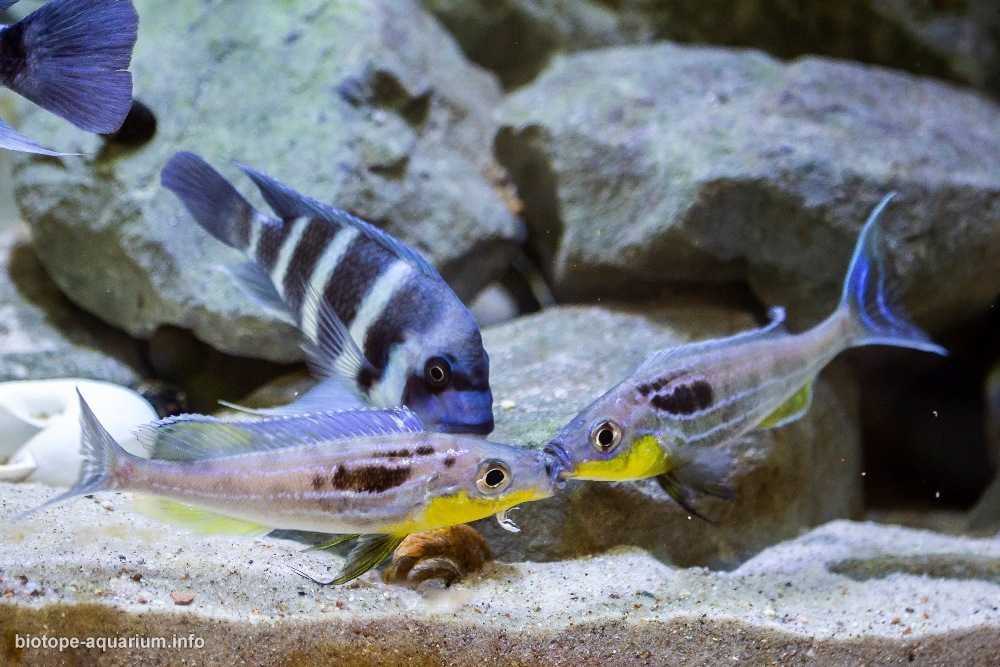
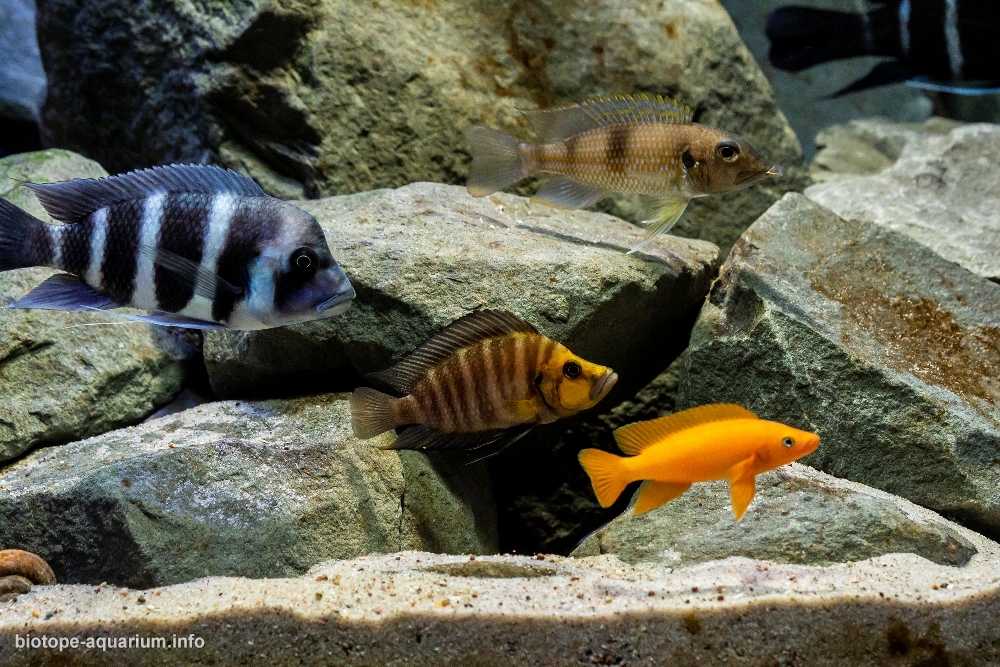
List of fishes: – Cyphotilapia Gibberosa Blue Zaire Kapampa (3M / 6F)
鱼类名录:– 蓝扎伊尔卡潘帕高身六间(3 雄/6 雌)
– Gnathochromis Permaxillaris (1/1)
– 颚色鲷(1 雄/1 雌)
– Haplotaxodon Microlepis (3M / 4F)
– 小鳞单唇鲷(3 雄/4 雌)
– Benthochromis Horii (2M / 3F)
– 霍氏底栖鲷(2 雄/3 雌)
– Altolamprologus Co mpressiceps Gold Head (1/1)
– 金头尖嘴鲷(1 雄/1 雌)
– Neolamprologus Leleupa (1/1)
– 雷勒帕新亮丽鲷(Neolamprologus leleupi)(1/1)
– Mastacembelus Cunningtoni (1M)
– 康宁顿刺鳅(Mastacembelus cunningtoni)(1 雄)
List of plants: Vallisneria
植物列表:苦草(Vallisneria)
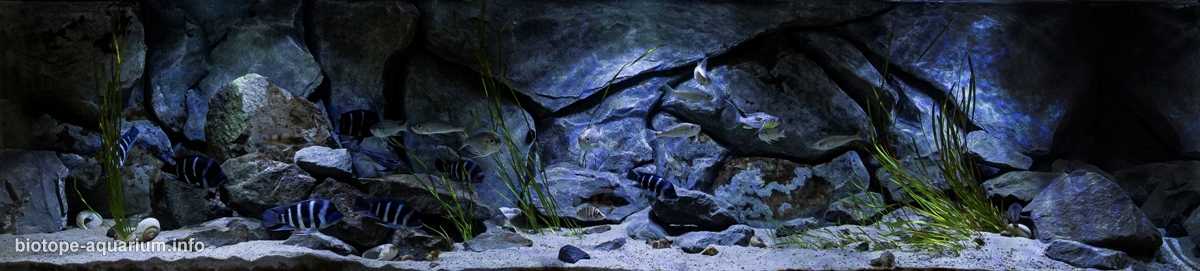
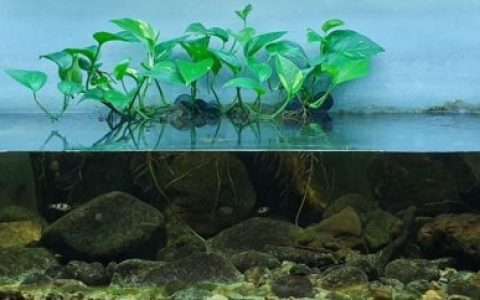
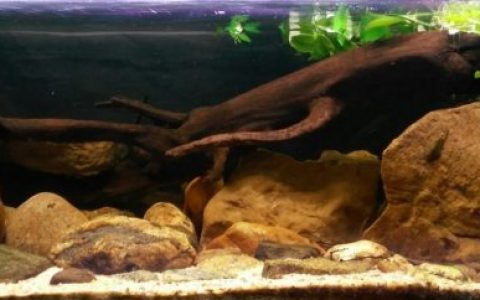
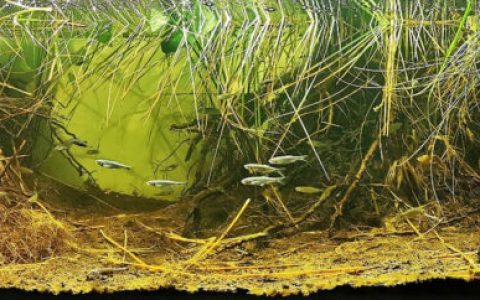
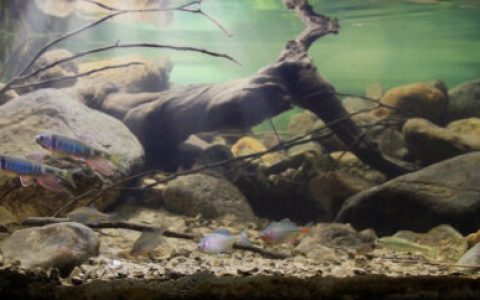
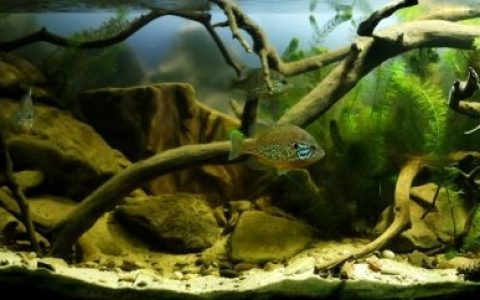
Description of decorations: will begin my description of the interior decoration from the structural background. The background was made of polystyrene, resistant to moisture and mortars and paints safe for living organisms. I tried to make the background similar to the rocks found in nature. The aquarium has a lot of nooks and gaps, where young and adult fish can be protected. I took 200 kg of gray rocks to the background, as they reminded me that they reflected the bottom of the lake in the area of Congo. As for the substrate, I used a few granulations of natural sand (0.5-1.2mm), a total of about 150 kg and 50 kg of gravel (2-2,5mm), which most closely reflects the view from biotope films. To complete the decorations, you can find the shells of the Tanganyican snail Neothauma tanganyicense scattered around the aquarium.
装饰描述:我将从结构背景开始介绍内部装饰。背景由聚苯乙烯制成,具有防潮性,并使用了对生物安全的灰浆和涂料。我力求使背景类似于自然界中的岩石。水族箱内设有许多角落和缝隙,可供幼鱼和成鱼藏身。我为背景添加了 200 公斤灰色岩石,因为它们让我联想到刚果区域湖底的景象。至于底床,我使用了天然沙(粒径 0.5–1.2 毫米)约 150 公斤,以及砾石(粒径 2–2.5 毫米)50 公斤,这种组合最贴近原生地纪录片中所呈现的景观。为完善装饰,水族箱中还散落着坦噶尼喀湖特有螺类——坦噶尼喀新塔螺(Neothauma tanganyicense)的螺壳。
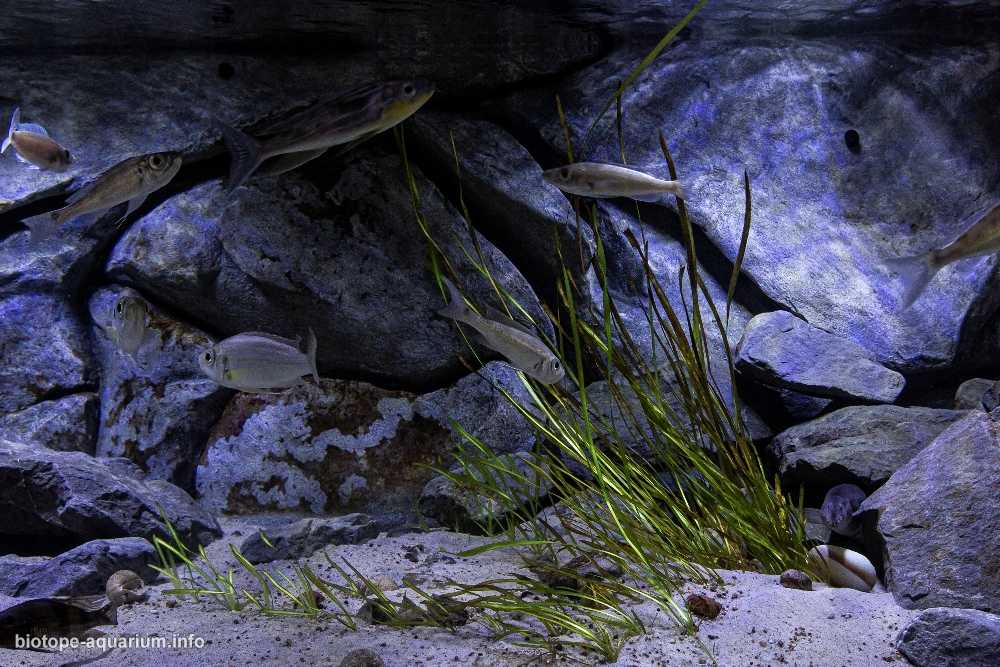
Description of equipment: Filtration (SUMP) 150x60x50h ( 450l ) pomp Jebao DCP 20,000 L / min. Aeration pump Hailea ACO-318 3600L / h. Aquael 300W heater. The lighting consists of 3 LED lights , each with 8W. One lamp has 14 white LEDs (10,000K) and 4 blue LEDs (15 000K). SINUS PRO INVERTER 12V 500W UPS VOLT and gel battery 120 ah.
设备描述:过滤系统(底滤缸)尺寸为 150×60×50 厘米(高),容量 450 升,配备捷宝(Jebao)DCP 水泵,流量 20,000 升/分钟。增氧泵为海利(Hailea)ACO-318 型号,流量 3,600 升/小时。加热棒采用雅柏(Aquael)300W 型号。照明由 3 盏 LED 灯组成,每盏功率 8 瓦。其中一盏灯包含 14 颗白色 LED(色温 10,000K)和 4 颗蓝色 LED(色温 15,000K)。备用电源系统包括正弦波专业逆变器(SINUS PRO INVERTER)12V 500W、UPS VOLT 稳压装置以及 120 安时的胶体电池。
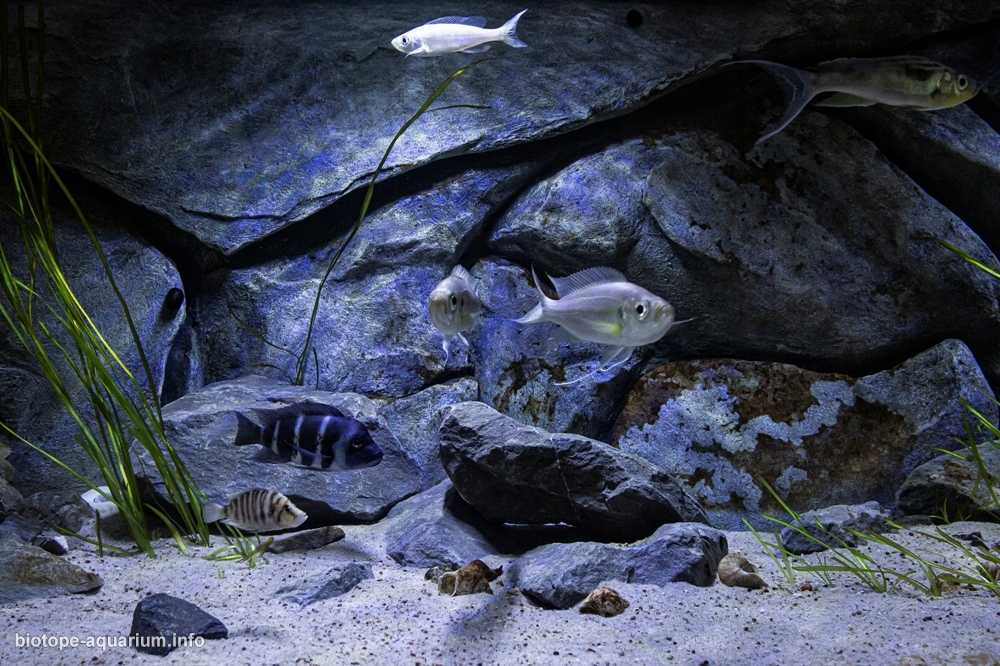
Water parameters: The water in my aquarium is very clear and clean. The water temperature is stable and is 25 degrees Celsius. PH-8.0, GH-10, KH-15, water conductivity within the limits of 600-620 μS
水质参数:我的水族箱中的水体非常清澈洁净。水温稳定在 25 摄氏度。pH 值为 8.0,总硬度(GH)为 10,碳酸盐硬度(KH)为 15,水电导率维持在 600–620 μS 范围内。
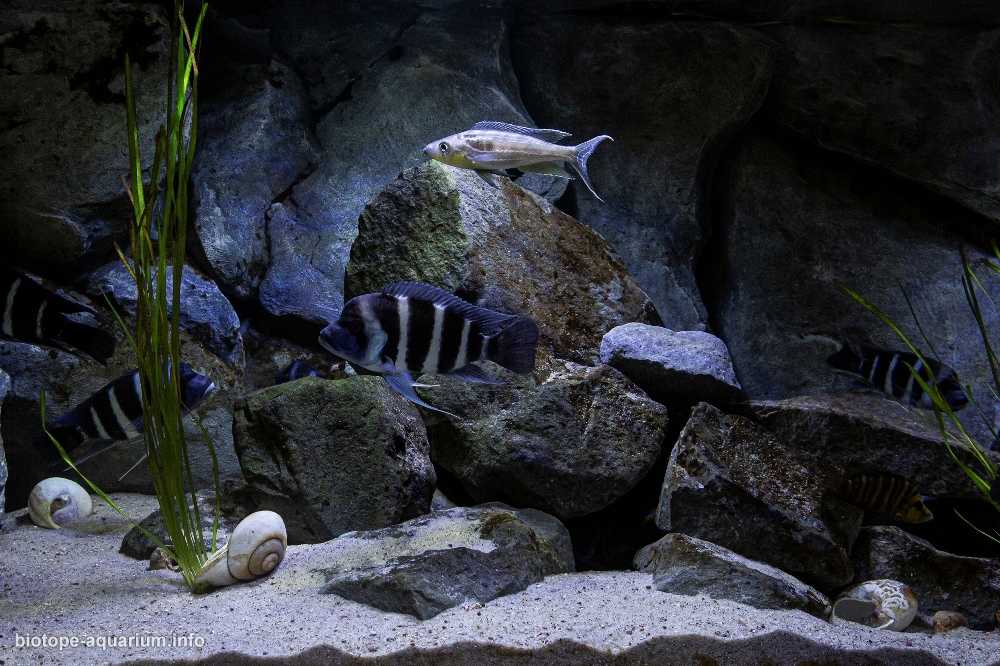
Additional info: I will describe in brief my SUMP type filtration. The aquarium is separated into four filtration chambers. The first chamber contains sponges responsible for mechanical filtration. In the second chamber there is a fluidized bed filtration filled with 30 liters of kaldnes deposit (aerated with an aeration pump of 3600l / h).The penultimate chamber is a spray chamber, where 40kg of coral grit and almost 1200 balls of biobal drops the spraying water. In the last chamber there is a JEBAO DCP-20000 l / h filter pump. Thanks to such a filter, the tank is very stable. Thanks to the SUMP type filtration and the use of two types of filtration in it, i.e. fluidized filtration and filtration with a sprinkled bed, the water in the aquarium is very oxygenated, which significantly influences the behavior and development of the fish. The aquarium is also equipped with an automatic water refill and excess water is discharged into the sewage system, thanks to this the NO3 level is very low. The whole aquarium – in case of power failure – is supported by UPS emergency power supply, which is enough for about 2 days of power failure.
附加信息:我将简要描述我的底滤(SUMP)系统。该水族箱分为四个过滤仓。第一仓装有海绵,负责物理过滤。第二仓为流化床过滤,填充了 30 升卡尔德尼斯(Kaldnes)滤材,并由一台流量为 3600 升/小时的气泵进行曝气。倒数第二仓是喷淋仓,40 公斤珊瑚砂和近 1200 个生物球在此接受喷淋水的冲刷。最后一仓安装了一台捷宝(JEBAO)DCP-20000 升/小时的过滤水泵。得益于这样的过滤系统,鱼缸水质非常稳定。由于采用了底滤系统,并结合了流化床过滤与喷淋床过滤两种方式,缸内水体溶氧量极高,这对鱼类的行为表现和生长发育有着显著影响。此外,该水族箱还配备了自动补水装置,多余的水则排入下水道,因此硝酸盐(NO3)水平极低。整个水族箱在停电情况下由 UPS 不间断电源支持供电,可维持约两天的电力供应。
INFORMATION ABOUT BIOTOPE
关于生物群落的信息
Description of the area surrounding the biotope: Lake Tanganyika is located in East Africa in the area of the Great African Trench between the states of Burundi, Congo, Tanzania and Zambia. The geographical coordinates for this lake are from 03 ° 20 ‘to 08 ° 48’ south latitude and from 29 ° 05 ‘to 29 ° 31’ east longitude. The average width of the lake is about 50 km. It is the longest freshwater lake on Earth – 650 km long. Its total area is 32800 km2. In terms of depth, it is the second lake on Lake Baikal and is 1470 m deep. Along almost the entire coastline ( 1828 km long) there are mountain ranges. Lake Tanganyika was created – similarly to other large lakes from this area – as aresult of tectonic movements from the beginning of the neogene (tertiary period). The lake’s age is estimated at about 10 million years. Lake Tanganyika is located in the medium-humid tropical climate zone. The average annual rainfall is there about 200 mm, and the annual average temperature of about 20 ° C. The climate is quite humid and hot , especially on the east and west banks, while from the north it is slightly colder (high mountains). Large water surface of the reservoir by evaporation of water has an impact on the creation of a specific microclimate on the lake itself, and this in turn on the physio-chemical properties of the lake’s waters. It is estimated that almost 90% of annual precipitation to the lake evaporates back. The lake has been isolated from other African water systems for over 6 million years, resulting in the evolution of a huge number of endemic species of fauna and flora. The coastline with a length of over 2,000 kilometers are very diverse. The most interesting from the point of view of the aquariums are steep rocks list fragments of the coast, which are a refuge for many species of fish, but the lake also has sandy and sandy-rocky beaches. The longest fragments of the rocky coastline can be found along the three most important reservoir basins: Zon gwe, Kalemie and Kigoma. The lake has several islands, among which the most important are: Kavala Island and Mamba Island – Keyenda. On the line there is Lake Tanganyika. Along the shores of the lake there are growing oil palms, which are characteristic for the flora of the most – southern Africa. Rice and crops are grown around the edges, and fishing matters. Hippos and crocodiles abound, and the life of birds is different.
生物群落周边区域描述:坦噶尼喀湖位于东非大裂谷地带,地处布隆迪、刚果、坦桑尼亚和赞比亚之间。该湖的地理坐标为南纬 03°20′至 08°48′,东经 29°05′至 29°31′。湖泊平均宽度约为 50 公里,是地球上最长的淡水湖,全长 650 公里,总面积达 32,800 平方公里。就深度而言,它仅次于贝加尔湖,为世界第二深湖,最大深度为 1,470 米。几乎整个湖岸线(长达 1,828 公里)均被山脉环绕。坦噶尼喀湖与该地区其他大型湖泊一样,形成于新近纪(第三纪)初期的构造运动,其年龄估计约为 1,000 万年。坦噶尼喀湖地处中等湿润的热带气候区,年均降水量约 200 毫米,年平均气温约为 20°C。整体气候相当湿热,尤其在东岸和西岸更为明显;而北部因高海拔山脉影响,气温略低。 水库广阔的水面因水分蒸发,对坦噶尼喀湖本身特定微气候的形成产生影响,进而影响湖水的物理化学性质。据估计,每年降入湖中的降水有近 90% 会重新蒸发。该湖已与其他非洲水系隔离超过 600 万年,从而演化出大量特有的动植物物种。其海岸线全长超过 2000 公里,地貌极为多样。从水族箱造景的角度来看,最引人入胜的是沿岸陡峭的岩壁片段,它们是众多鱼类的庇护所;此外,湖区也分布着沙质及沙石混合的海滩。最长的岩质海岸片段分布在三个最重要的湖盆区域:宗格韦(Zongwe)、卡莱米(Kalemie)和基戈马(Kigoma)。湖中散布着数座岛屿,其中最重要的是卡瓦拉岛(Kavala Island)和曼巴岛–肯延达(Mamba Island – Keyenda)。坦噶尼喀湖就位于这条线上。沿湖岸边生长着油棕,这是非洲最南部地区植物区系的典型特征。 边缘地带种植着水稻和各类作物,渔业活动也十分重要。河马与鳄鱼数量众多,鸟类的生存状态则各不相同。
Description of the underwater landscape of the biotope: The rocky shore biotope can be divided into three different parts: the rocky sediment-free habitat, and the rocky sediment covered habitat. Close to the surface, you will find the shallow rock biotope and its inhabitants. As you proceed farther down, you will enter the steep rocky environment where no sediment can congregate – the rocky sediment-free habitat. Below this biotope is the rocky sediment covered habitat. Shallow rocky coast habitat. The habitat is characterized by the presence of rocks, which can vary in size from small pebbles to big footballs. The Tanganyika cichlids are a part of the habitat, you should ideally provide them with a lot of differently sized rocks. The shallow rocky coast habitat does not have to be extremely shallow; it can actually be found as far down as 22 meters in Certain parts of Lake Tanganyika. In most regions of the lake, it is however much shallower. The shallow rocky coast habitat provides a quiet setting for suitable grounds. In order to stay camouflaged, many cichlids native to this habitat feature a shallow water background. When living in shallow waters you do not have to stay away from predator aquatic species – birds will also be a constant threat. This barred group provides the fish for the shimmering waves. Rocky sediment free habitat The rocky sediment free habitat does not have a lot of pebbles; the rocks are instead of medium to large in size. Boulders many meters across, and more than 1 meter in diameter. The sediment free habitat is usually very steep and there is no sand for the rocks to rest upon. Since there is no sediment, the entire habitat can be covered in algae. Herbivore cichlids from this habitat will appreciate lush algae growth in the aquarium and many of them need occasional meaty treats from wild algae carpet when grazing, thus receiving necessary protein. Rocky sediment covered habitat This habitat is located next to 3 and 14 meters . The habitats described above. It will still provide enough for the small cichlid species that you can find sheltering between the rocks
生物群落的水下景观描述:岩石海岸生物群落可分为三个不同部分:无沉积物的岩石栖息地、被沉积物覆盖的岩石栖息地,以及靠近水面的浅水岩石生物群落及其居民。随着深度增加,您将进入陡峭的岩石环境,此处无法积聚沉积物——即无沉积物的岩石栖息地。在该生物群落下方则是被沉积物覆盖的岩石栖息地。浅水岩石海岸栖息地的特征是有岩石存在,其大小从小卵石到大如足球的石块不等。坦噶尼喀湖慈鲷是该栖息地的一部分,理想情况下应为其提供大量不同尺寸的岩石。浅水岩石海岸栖息地未必极浅;在坦噶尼喀湖的某些区域,它实际上可深达 22 米。然而在湖泊的大多数区域,其水深要浅得多。浅水岩石海岸栖息地为适宜的产卵场提供了安静的环境。为了保持伪装,许多原产于该栖息地的慈鲷具有适应浅水环境的体色背景。 在浅水区生活时,鱼类不仅要躲避水生捕食者,鸟类也是持续的威胁。这种带有条纹的群体为波光粼粼的水面增添了生机。无沉积物的岩石栖息地:此类栖息地几乎没有小卵石,取而代之的是中等至大型的岩石。巨石直径可达数米,甚至超过一米。无沉积物的栖息地通常非常陡峭,岩石下方没有沙层支撑。由于缺乏沉积物,整个栖息地表面都可能被藻类覆盖。来自该栖息地的草食性慈鲷在水族箱中会受益于茂盛的藻类生长;许多种类在啃食野生藻垫时,还需要偶尔摄取富含蛋白质的肉类食物以补充必要营养。有沉积物覆盖的岩石栖息地:该栖息地位于上述描述的栖息地旁,水深介于 3 至 14 米之间。它仍能为小型慈鲷提供足够的空间,使其可在岩石缝隙间藏身。
Description of the parameters of the habitat: The waters of Lake Tanganyika are characterized by alkaline reaction (pH 7.5-9.2) and high hardness (carbonate hardness 7-11 degrees German, general hardness 16-18 degrees German). The secret is the fairly stable water temperature, which varies between 24 and 29 degrees Celsius and only slightly differs on the surface and in the depths of the lake. Oxygen is present only in the upper part of the reservoir, which reaches 200 m deep into the south and up to 100 m in the northern part. Below is a “dead zone” in which, due to lack of oxygen and high saturation with sulfur compounds, there is almost no life. Despite the strong winds blowing on the surface, the waters of these two zones do not mix with each other. Conductivity 606- 620 (μS) (generalized). The water in the lake is very clean, its transparency is about 20 meters .
栖息地参数描述:坦噶尼喀湖的水域呈碱性反应(pH 值 7.5–9.2),硬度较高(碳酸盐硬度 7–11 德国度,总硬度 16–18 德国度)。其关键在于水温相当稳定,介于 24 至 29 摄氏度之间,且湖面与湖深处的温差极小。氧气仅存在于水体上层,该层在南部可延伸至 200 米深,在北部则可达 100 米。在此之下是“死亡区”,由于缺氧并富含硫化物,几乎无生命存在。尽管湖面常有强风,但这两层水域彼此并不混合。电导率为 606–620 μS(综合值)。湖水极为清澈,透明度约为 20 米。
List of fishes and invertebrates occurring in the nature biotope: The lake contains at least 250 species of cichlids (Cichlidae) and 150 other species of non-cichlid fish, most of which live on the shore of the lake at a depth of180 meters . The lake is also an important place for research on the evolution of species. Almost all (98%) cichlids from Tanganyika are endemic to the lake. In addition to many species of endemic cichlids, which are a kind of showpiece of the lake, you can also find here a rich representation of molluscs and crustaceans. 68 species of snails (45 endemic) and 15 species of molluscs (9 endemic) were found in the lake’s waters. Endemic species of snails (eg Tiphobia horei) have unusual thickening of the shells typical of freshwater species, characteristic of sea snails. Snails occur in large quantities in the lake, and their shells (especially of the species Neothauma tanganyicense), which due to the water parameters do not decompose, are used by the shellfish of the genus Lamprologus and Neolamprologus.
自然生境中出现的鱼类和无脊椎动物名录:该湖至少拥有 250 种慈鲷(Cichlidae)和 150 种其他非慈鲷鱼类,其中大多数栖息于湖畔水深 180 米处。该湖也是研究物种演化的重要场所。坦噶尼喀湖的慈鲷几乎全部(98%)为该湖特有种。除了作为湖泊标志性景观的众多特有慈鲷物种外,这里还拥有丰富的软体动物和甲壳类动物。湖水中已发现 68 种螺类(45 种为特有种)和 15 种贝类(9 种为特有种)。特有螺类物种(例如霍氏尖螺 Tiphobia horei)具有淡水物种中罕见的贝壳增厚现象,而这通常是海螺的特征。螺类在湖中大量存在,其贝壳(尤其是坦噶尼喀新螺 Neothauma tanganyicense 的贝壳)因水质参数而不易分解,被亮丽鲷属(Lamprologus)和新亮丽鲷属(Neolamprologus)的鱼类所利用。
List of plants found in the nature biotope: Ceratophyllum demersum, Myriophyllum spicantum, Najas marina spp. Armata, Hydrilla verticillata, Anubias barteri var . Nana, Hygrophila corymbosa, Microsorum pteropus, Vallisneria americana ( gigantea )
自然生境中发现的植物列表:金鱼藻(Ceratophyllum demersum)、穗状狐尾藻(Myriophyllum spicantum)、臂状茨藻(Najas marina spp. Armata)、轮叶黑藻(Hydrilla verticillata)、小水榕(Anubias barteri var. Nana)、大红叶(Hygrophila corymbosa)、细叶铁皇冠(Microsorum pteropus)、美国苦草(Vallisneria americana (gigantea))
Threats to the ecology: Currently, too much intensity of trapping species from Lake Tanganyika for both consumption and commercial purposes is so high that in some regions it has been restricted or completely banned due to the imbalance in the biological balance of some populations. The next threat, as shown by recent studies on the climate of Lake Tanganyika, the mixing of water layers is weakening due to global warming (the temperature of the water increases in proportion to the increase of air temperature above the lake). This has a negative impact on changes in the lake’s ecosystems, biological balance is disturbed as a result of limited supply of nutrients for organisms that form the basis of food chains.
生态面临的威胁:目前,从坦噶尼喀湖捕捞物种供食用及商业目的的强度过高,导致某些地区因部分种群生物平衡失调而实施限制或完全禁止捕捞。另一项威胁来自近期关于坦噶尼喀湖气候的研究:由于全球变暖(湖水温度随湖面上方气温升高而成比例上升),水体各层之间的混合正在减弱。这对湖泊生态系统产生负面影响,生物平衡受到扰乱,原因是构成食物链基础的生物所能获得的营养供给受限。
本文部分素材来自网络,如有类似请联系修改,如若转载,请注明出处:http://www.yangyubang.com/?p=2923