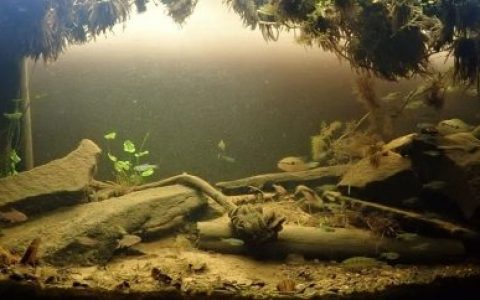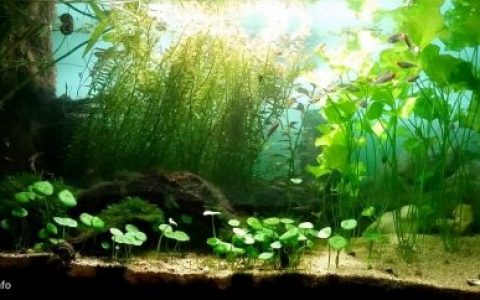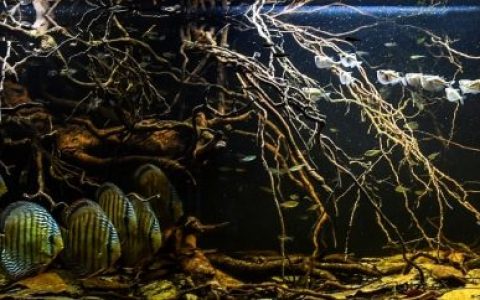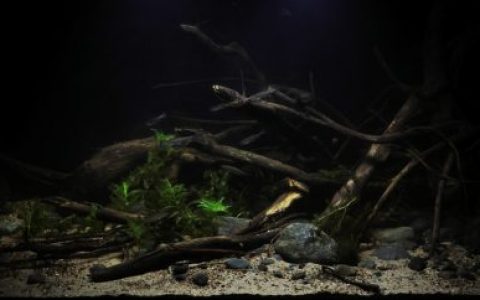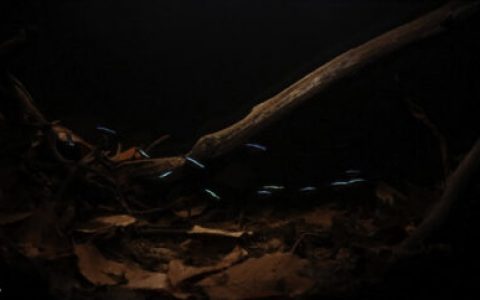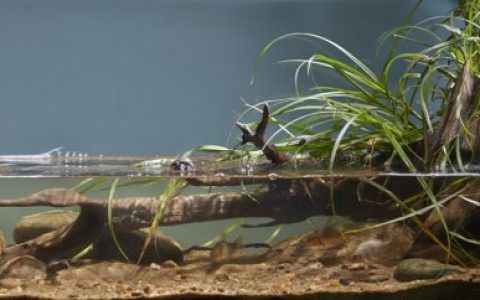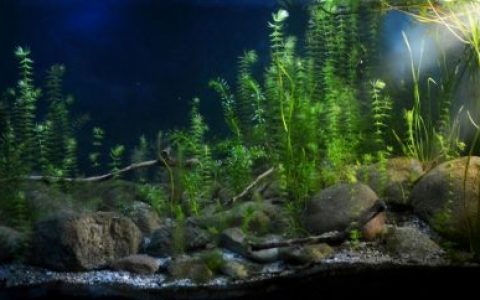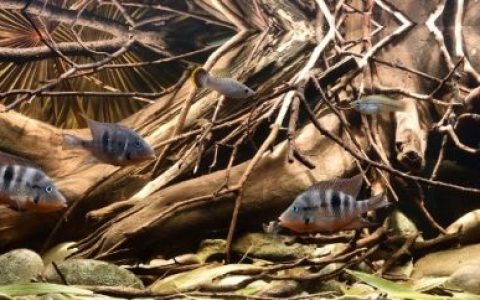
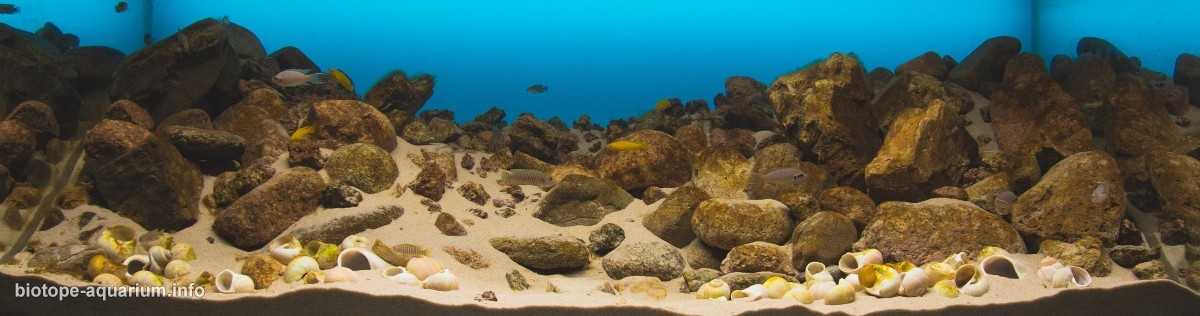
Volume: 288 L 水体容积:288 升
Dimensions: 120×60×40 CM 尺寸:120×60×40 厘米
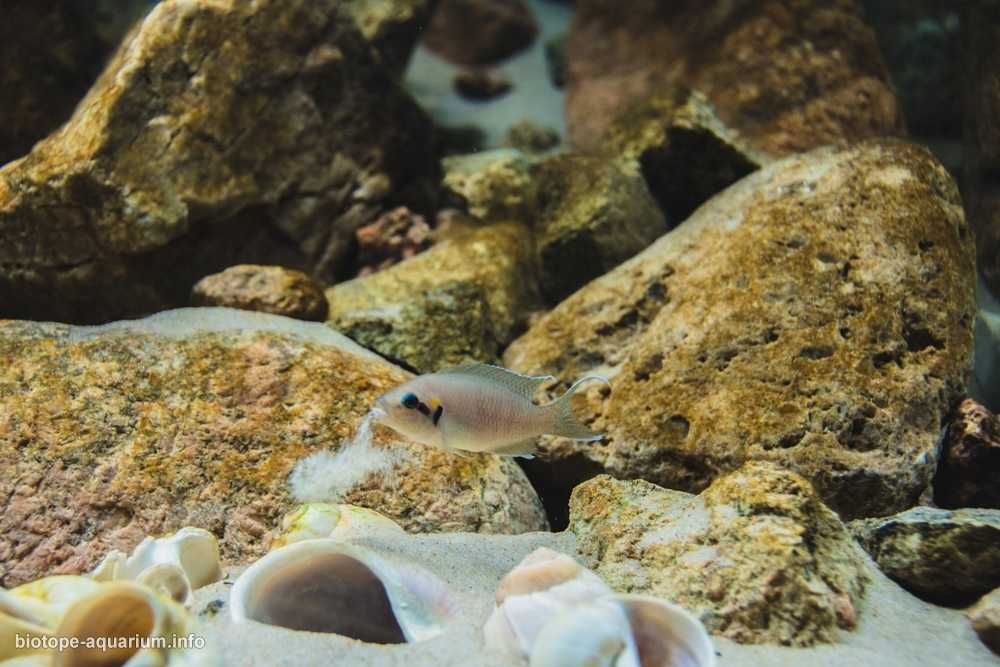
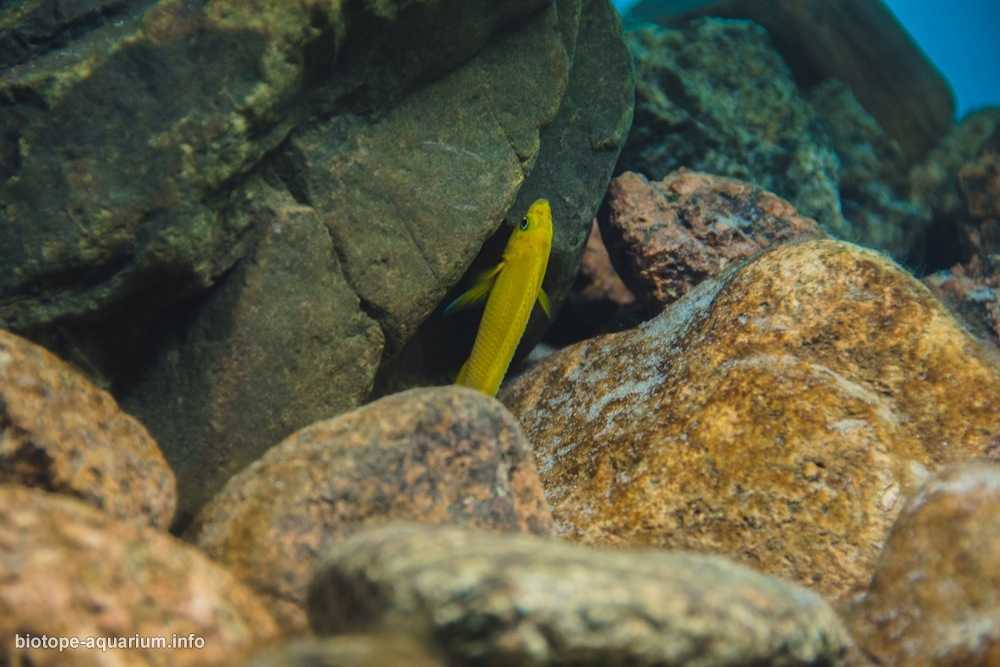
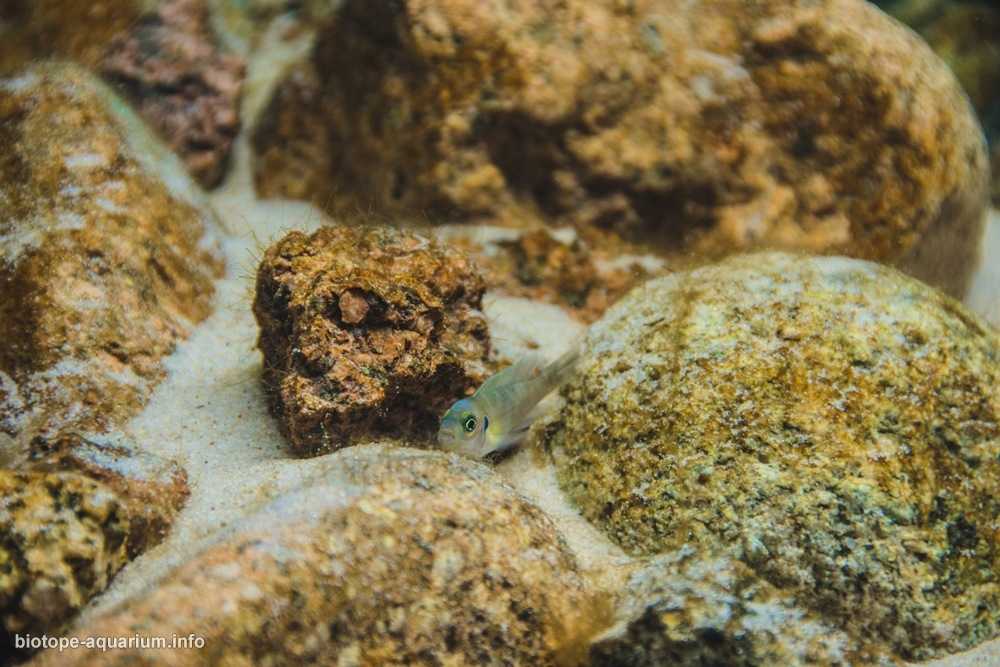
List of fishes: Neolamprologus similis/Lamprologus brevis/Neolamprologus pulcher/Neolamprologus leleupi
鱼类名录:贝氏拟丽鱼(Neolamprologus similis)/短身亮丽鲷(Lamprologus brevis)/美体拟丽鱼(Neolamprologus pulcher)/黄帆一点贝(Neolamprologus leleupi)
List of plants: N / A.
植物列表:无。
Description of decorations: The materials I chose were collected in rivers and riverbanks.
装饰物描述:我所选用的材料采集自河流及河岸。
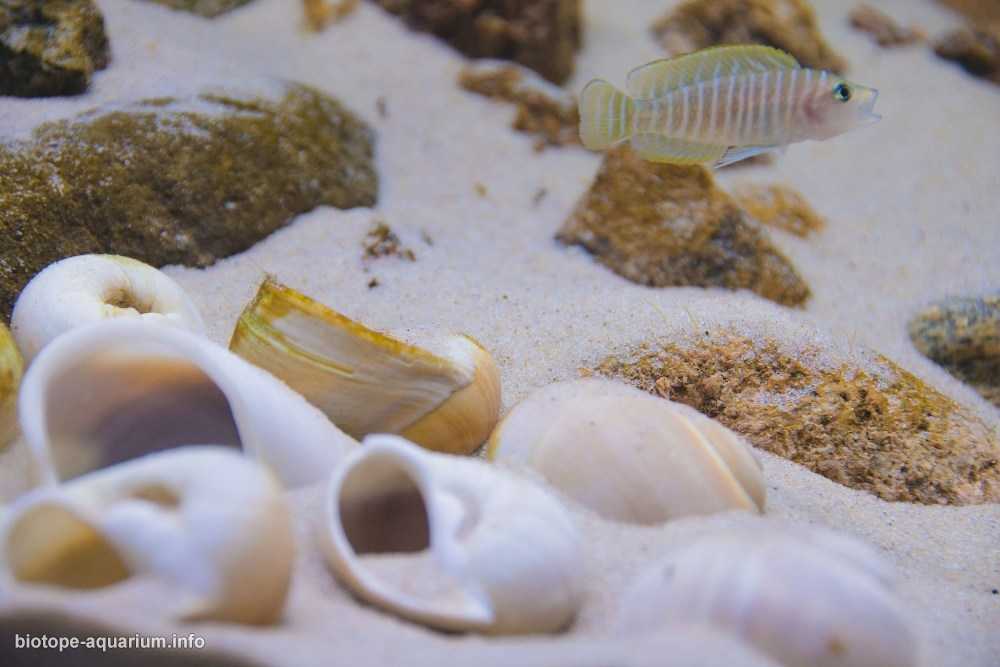
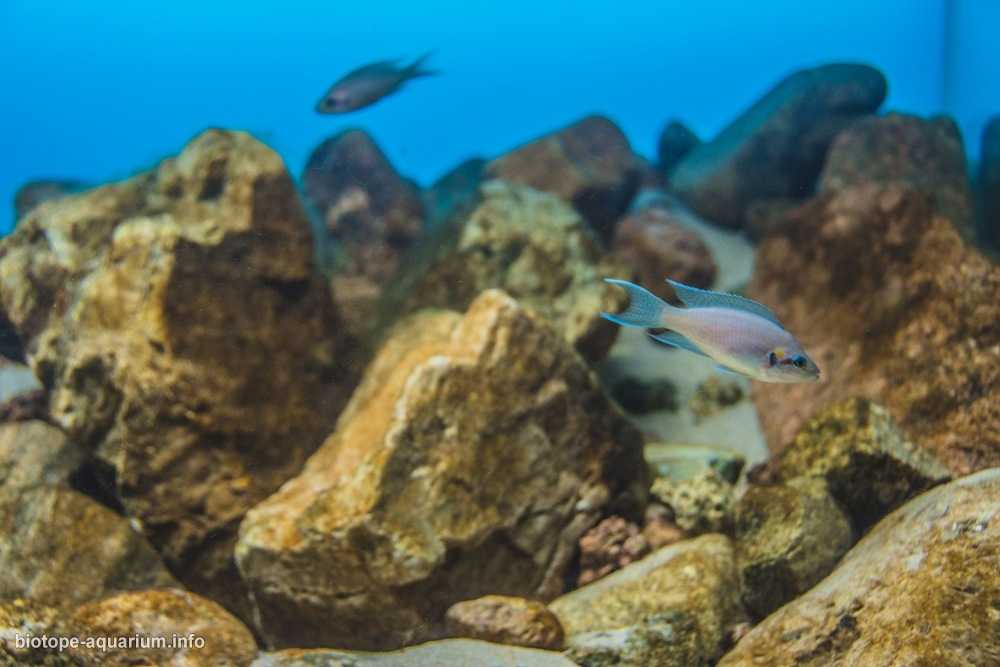
Material includes: light natural sand, rocks of different sizes, stream stones and some gravel (using tools to crush them). I tried to pick out rocks of similar colour and shape, which were similar to those in natural waters, and eventually presented the scene of this habitat.
材料包括:浅色天然沙、不同尺寸的岩石、溪流石以及一些砾石(使用工具将其破碎)。我尽量挑选颜色和形状相近的岩石,使其与天然水域中的岩石相似,最终呈现出该栖息地的景象。
Description of equipment: Filter equipment:
设备描述:过滤设备:
ATMAN-CF1200 External Filter ×2 / Pre-filter ×2
ATMAN-CF1200 外置过滤器 ×2 / 前置过滤器 ×2
Degreasing Film Filter ×2
除油膜过滤器 ×2
Lamps: 灯具:
Netlea/Nitley LED 6500K 50W×3
Heating device: 加热设备:
EHEIM IHAN heating rod 200W ×2 (1 with 1 spare, no heating device used in summer)
EHEIM IHAN 加热棒 200W ×2(1 根使用,1 根备用,夏季不使用加热设备)
Others: oxygen pumps×1 其他:增氧泵×1
Water parameters: Temperature: 25 ±1
水质参数:温度:25 ±1℃
PH: 8.8 pH 值:8.8
GH:5 总硬度(GH):5
TDS:7 溶解性总固体(TDS):7
HK:27 碳酸盐硬度(HK):27
Additional info: In my aquarium, I used light natural bottom sand, rocks of different sizes, stream stones and some crushed stones (using tools to crush them). I tried to pick out rocks of similar colour and shape, which were similar to those in natural waters, and eventually presented the scene of this habitat. On the placement of stones, I want to highlight a large area of rock. I try to put them out of their natural habitat and make them look magnificent and have a certain perspective. I used two larger external filters and two pre-filters, physical filtration and cultivation of nitrifying bacteria. A lot of coral bones were added to the filter material to improve the GH value of water to simulate the original ecological environment. I use pure water and a small amount of domestic water to mix to ensure the balance of GH / TDS values, because there are a lot of rocks in the tank, they can control the fluctuation of PH values very well. It’s easy for me to control algae growth by changing water and controlling light time. In daily maintenance, only changing water and cleaning the glass of fish tank. In the photos and videos, you can see that the fish are in excellent condition. They like the ecological environment I simulate very much, and I am very happy about it.
附加信息:在我的水族箱中,我使用了浅色天然底砂、不同尺寸的岩石、溪流石以及一些碎石(使用工具敲碎)。我尽量挑选颜色和形状相近的岩石,使其与自然环境中的岩石相似,从而还原该栖息地的景观。在布石方面,我希望突出大面积的岩区,尝试将它们从自然生境中提取出来进行艺术化呈现,使其显得宏伟并具有一定的透视感。我使用了两个较大的外置过滤器和两个前置过滤器,以实现物理过滤并培养硝化细菌。滤材中添加了大量珊瑚骨,以提高水体的 GH 值,模拟原始生态环境。我使用纯水与少量自来水混合,以确保 GH 和 TDS 值的平衡;由于缸内岩石众多,它们能很好地稳定 pH 值的波动。通过换水和控制光照时间,我可以轻松抑制藻类生长。日常维护仅需换水和清洁鱼缸玻璃。从照片和视频中可以看出,鱼只状态极佳。 它们非常喜欢我模拟的生态环境,对此我感到非常高兴。
INFORMATION ABOUT BIOTOPE
关于生物群落的信息
Description of the area surrounding the biotope: Lake Tanganyika is a freshwater lake in central Africa. Located between 3 degrees 20’S, 29 degrees 5’E and 8 degrees 48’S and 31 degrees 15’E, Lake Tanganyika is located in the western part of the Great Rift Valley of East Africa. It belongs to fault lake. The winding shoreline of the lake is 1900 kilometers long. The main rivers entering the lake are the Malagarasi River, the Ruziji River and the Kalambo River. The only outlet of the lake is the Lukuga River. It is about 679 kilometers long and 50.134 kilometers wide, including 1828 kilometers of coastline (570 meters deep on average). The deepest part is located in the north of Lake Tanganyika, and the deepest part is 1470 meters, second only to Lake Baikal. It is the second deepest lake in the world. With an area of 32900 km, it is the sixth largest lake in the world. The Lake contains at least 250 species of Cichlidae and 150 other species of non-Cichlidae, most of which live on the shore and are 180 meters deep. The lake is also an important place for the study of species evolution. Almost all (90%) of the species in Tanganyika are endemic to lakes. This highly endemic species also occurs in many Lake invertebrates, such as mollusks, crabs, copepods, shrimps, jellyfish, leeches and so on.
生物群落周边区域描述:坦噶尼喀湖是位于非洲中部的一座淡水湖。其地理位置介于南纬 3 度 20 分、东经 29 度 5 分至南纬 8 度 48 分、东经 31 度 15 分之间,坐落于东非大裂谷的西段,属于断层湖。该湖蜿蜒的岸线长达 1900 公里。注入湖泊的主要河流包括马拉加拉西河、鲁济济河和卡兰博河,而唯一的出水口则是卢库加河。湖泊全长约 679 公里,宽 50.134 公里,拥有 1828 公里的湖岸线,平均深度为 570 米。湖的最深处位于北部,深达 1470 米,仅次于贝加尔湖,是世界第二深的湖泊。其面积达 32900 平方公里,为世界第六大湖。湖中至少栖息着 250 种慈鲷科鱼类以及 150 种其他非慈鲷科鱼类,其中大多数生活在沿岸区域,分布深度可达 180 米。该湖也是研究物种演化的重要场所。坦噶尼喀湖中几乎全部(90%)的物种均为该湖特有。 这种高度特有物种也存在于许多坦噶尼喀湖的无脊椎动物中,如软体动物、螃蟹、桡足类、虾、水母、水蛭等。
Lake Tanganyika has six main types of community habitats: rocky coast, surge, sandy bottom, muddy bottom, oceanic waters and seabed waters. The Ikola coastline 1 km deep includes rock coastal biota types, where stones are located on rocks or on sand. At 1-3 meters, it consists of mostly brown and green algea-covered stones, which are interesting nutrients for herbivores and omnivores. Strong waves and currents bring many nutrients from oceans and curved waters, such as dead organisms or invertebrates, which are valuable to carnivores. The bottom is covered with very fine grayish-brown sand, but due to the density of the rocks along the shore, part of it is visible. Stones of all sizes create shelters for species that inhabit the lake. Stones usually have rounded edges, almost the same as sand. The upper part of the stone is covered with green algea, while the lower part is covered with brown algea. At 5-12 meters, sediments cover more rocks than algea. In these depths, caves formed by rocks and low-flow caves provide perfect shelter for matrix spawning. Strong waves and flows blur the water, enrich it with oxygen and have high PH levels. Because of its low depth, sunlight is sufficient to reach the bottom and support the growth of organisms.
坦噶尼喀湖拥有六种主要的群落生境类型:岩石海岸、激浪区、沙质底部、泥质底部、远洋水域以及近底水域。伊科拉(Ikola)沿岸水深达 1 米的区域包含岩石海岸生物群落类型,那里的石块分布于岩床或沙地之上。在水深 1 至 3 米处,主要由覆盖着褐色和绿色藻类的石块构成,这些是草食性和杂食性鱼类有趣的营养来源。强劲的海浪和水流从远洋及弯曲水域带来大量营养物质,例如死亡生物体或无脊椎动物,这对肉食性鱼类而言极具价值。湖底覆盖着极细的灰褐色沙子,但由于沿岸岩石密集,部分沙地依然可见。各种尺寸的石块为栖息于湖中的物种提供了庇护所。这些石块通常边缘圆润,质感几乎与沙子无异。石块上部覆盖着绿色藻类,而下部则覆盖着褐色藻类。在水深 5 至 12 米处,沉积物覆盖的岩石面积超过了藻类。在这些深度,由岩石形成的洞穴以及低流速的窟窿为基质产卵提供了完美的庇护所。强劲的海浪和水流使水体变得浑浊,增加了氧气含量,并维持了较高的 pH 值。 由于其水深较浅,阳光足以照射到水底,支持生物的生长。
Description of the underwater landscape of the biotope: Rocky coastal biota can be divided into three different parts: shallow rock coastal habitats, rock sediment-free habitats and rock sediment-covered habitats. Close to the surface, you will find shallow rock communities and their inhabitants. As you move on, you will enter a steep rock environment where no sediment can accumulate – no sediment habitat for rocks. Below this community is the third and last rock community, a habitat covered by rock sediments. The bottom is covered with large stones. In the deeper part, the stones become smaller and smaller, the bottom is covered with sand and shells, the water in the lake is very clear, and the transparency is about 15-20 meters.
该生境的水下景观描述:岩石海岸生物群落可分为三个不同部分:浅水岩石海岸栖息地、无沉积物岩石栖息地和覆盖沉积物的岩石栖息地。靠近水面处,可见浅水岩石群落及其栖居生物。继续向下,便进入陡峭的岩石环境,此处无法积聚沉积物,即无沉积物岩石栖息地。在此群落之下是第三也是最后一个岩石群落——被岩石沉积物覆盖的栖息地。底部铺满大块石块;在较深区域,石块逐渐变小,底部则由沙子和贝壳覆盖。湖水极为清澈,透明度约为 15 至 20 米。
Description of the parameters of the habitat: Bulu Point is located in Tanzania on the eastern coast of Lake Tanzania, the cusp of the Western protrusion of the northern tip of the Mahale Mountain National Park peninsula. 2 KM east of Karilani Island and Karilani Island. Its diving collection site is 1.5 kilometers northwest of Bulu Point, opposite Sitolo Bay, West Toro Bay. The water in the lake is alkaline, with a pH value of about 9 and a depth of 0-100 m, which is about 8.7, and gradually decreases to 8.3-8.5 in the deepest part of the lake. The surface temperature is usually about 24 C.
栖息地参数描述:布卢角位于坦桑尼亚,地处坦噶尼喀湖东岸,马哈勒山国家公园半岛北端向西突出部分的尖端。其位置在卡里拉尼岛以东 2 公里处,邻近卡里拉尼岛。潜水采集点位于布卢角西北 1.5 公里处,正对西托洛湾和西托罗湾。湖水呈碱性,表层水体(深度 0–100 米)的酸碱度约为 9,向湖底深处逐渐降至 8.3–8.5。表层水温通常约为 24℃。
List of fishes and invertebrates occurring in the nature biotope: Petrochromis sp/Altolamprologus compressiceps/Aulonocranus dewindti/Cyathopharynx foae /Cyphotilapia frontosa/Cyprichromis leptosoma /Cyprichromis microlepidotus / exGnathochromis pfefferi/
自然生境中出现的鱼类和无脊椎动物名录:石首丽鱼属未定种/高身亮丽鲷/德温氏拟丽鱼/福氏杯咽丽鱼/额斑六间/细身亮丽鲷/微鳞亮丽鲷/原胡椒亮丽鲷/
Haplotaxodon microlepis /Julidochromis regani/Lepidiolamprologus attenuatus/Neolamprologus savoryi/Petrochromis famula/Tropheus brichardi/Xenotilapia spilopterus
微鳞单唇丽鱼/雷氏卷贝鲷/窄体亮丽鲷/萨沃利亮丽鲷/法氏石首丽鱼/布里查氏蝴蝶鲷/翼纹细身丽鱼
List of plants found in the nature biotope: Unfortunately, I haven’t found any aquatic plants.
自然生境中发现的植物名录:遗憾的是,我尚未发现任何水生植物。
Threats to the ecology: Tanganyika lake is the second deep lake in the world, and the waterway connects Burundi, Congo (Jin), Tanzania and Zambia. Factories along Lake Tanganyika intentionally discharge untreated solid waste and wastewater into the lake. In addition, Lake Tanganyika is also threatened by illegal buildings. Some people illegally build buildings on the nearshore lake, which also pollutes the lake water. With the development of social economy and the rapid growth of population along the lake, Lake Tanganyika is facing the threat of environmental pollution. In order to reveal the import of heavy metals from Lake Tanganyika.
生态面临的威胁:坦噶尼喀湖是世界第二深的湖泊,其水域连接布隆迪、刚果(金)、坦桑尼亚和赞比亚。沿湖工厂故意将未经处理的固体废物和废水排入湖中。此外,坦噶尼喀湖还受到非法建筑的威胁。一些人在近岸湖区违法建造建筑物,这也污染了湖水。随着社会经济的发展以及沿湖人口的快速增长,坦噶尼喀湖正面临环境污染的威胁。为了揭示坦噶尼喀湖中重金属的来源。
本文部分素材来自网络,如有类似请联系修改,如若转载,请注明出处:http://www.yangyubang.com/?p=3071