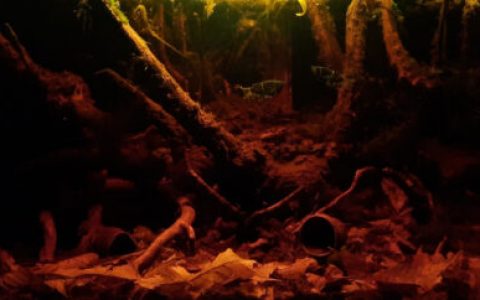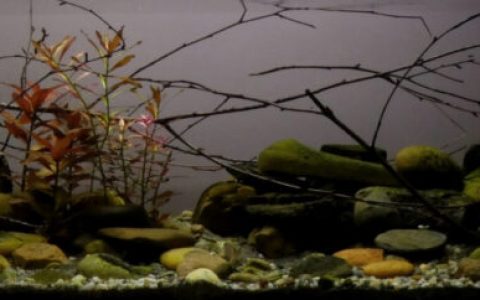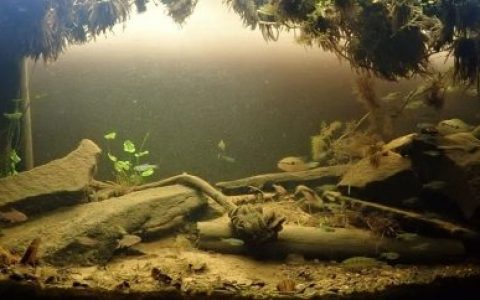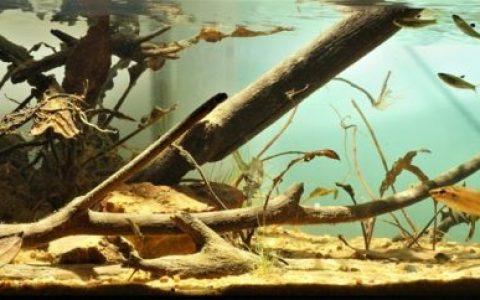
Volume of aquarium: 84 liters
水族箱容积:84 升
Dimensions of aquarium: 60x40x35
水族箱尺寸:60x40x35
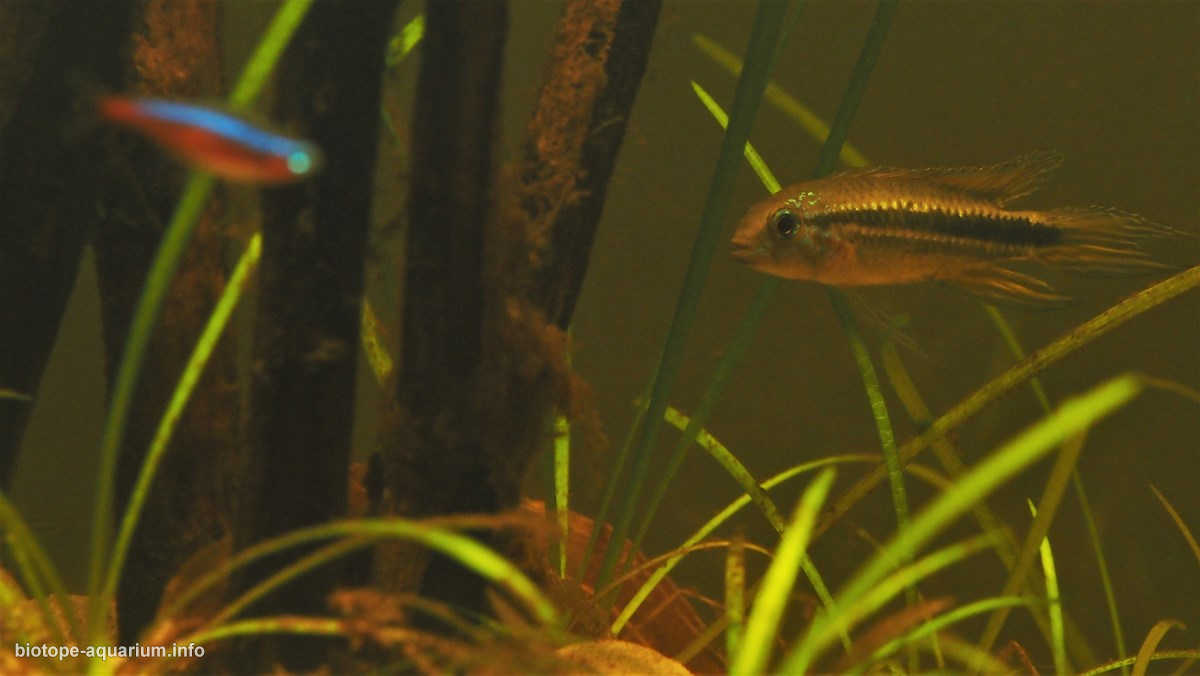
List of fishes: Apistogramma mendezi (Santa Isabel), Paracheirodon axelrodi.
鱼类名录:Apistogramma mendezi(圣伊莎贝尔)、Paracheirodon axelrodi。
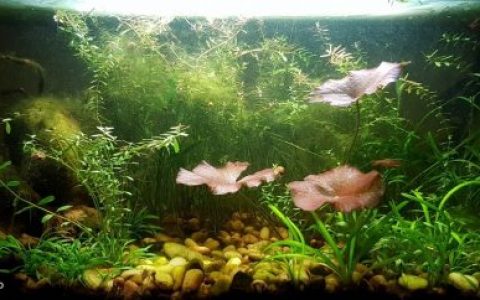
List of plants: Echinodorus tenellus, Limnobium laevigatum.
植物名录:Echinodorus tenellus、Limnobium laevigatum。
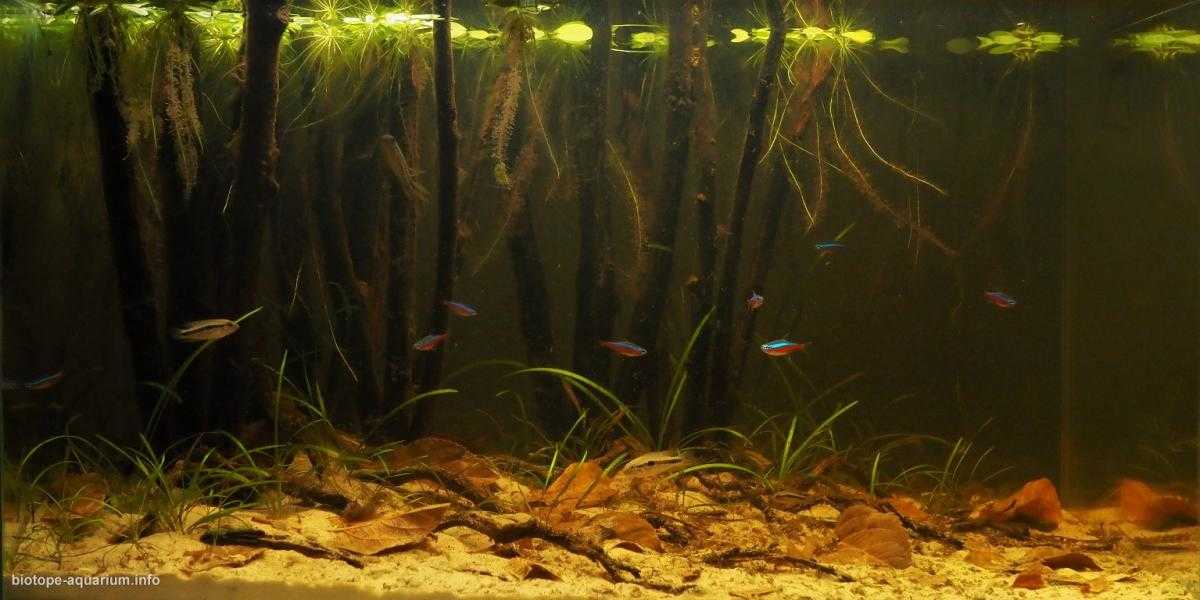
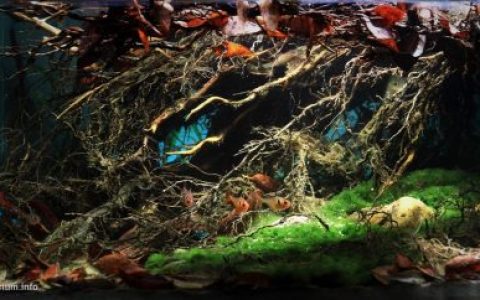
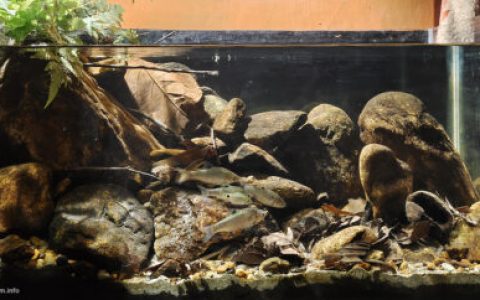
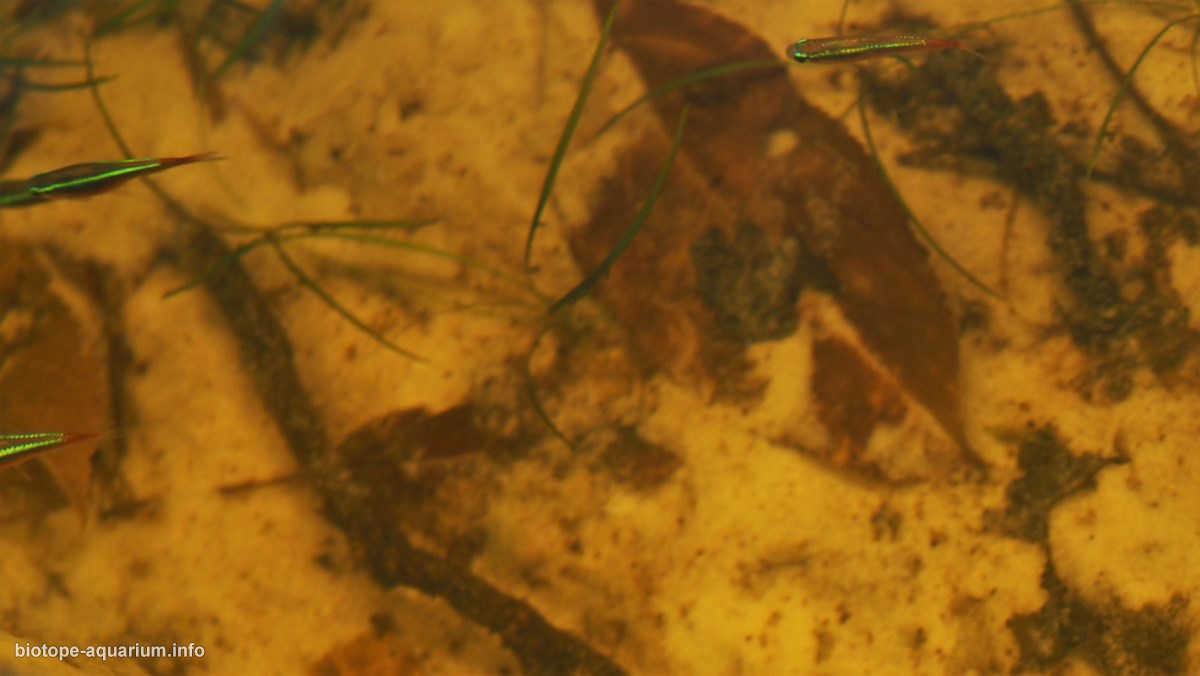
Description of Decorations and Substrate: Vertical pieces of wood representing young trees were used to simulate the flooded forest floor. The base is finished with light fine sand and dry leaves. Every material representing a still water stream resembles a habitat.
装饰与底床描述:使用代表幼树的垂直木块来模拟被淹没的森林地面。底部铺设浅色细沙和干枯落叶。所有用于表现静水溪流的材质都旨在还原其自然栖息地。
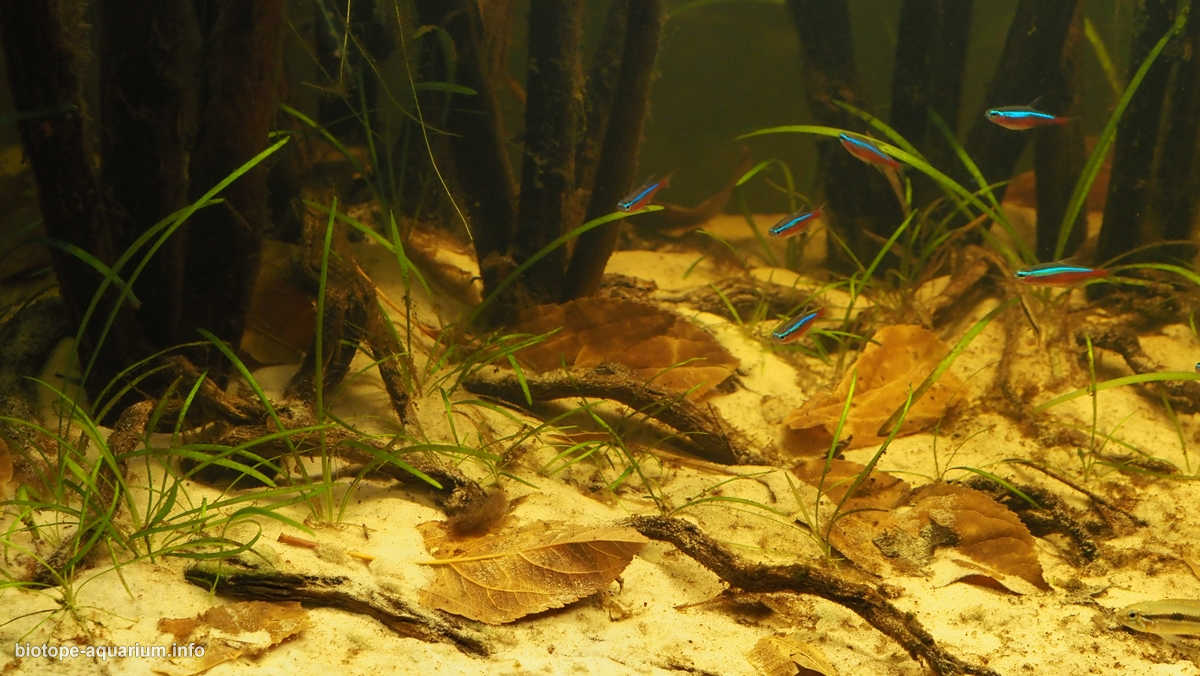
Description of Equipment: Dophin cf-300 brand external filter, Jbl 300 watt heater, 20 watt-6 K led lighting.
设备描述:Dophin cf-300 品牌外置过滤器、Jbl 300 瓦加热棒、20 瓦 6K LED 照明灯。
Water Parameters: Temperature 25 °C, pH 4.9, Tds 23 ppm, kH 0, Nitrate 0-5 mg.
水质参数:温度 25 °C,pH 4.9,TDS 23 ppm,kH 0,硝酸盐 0–5 mg/L。
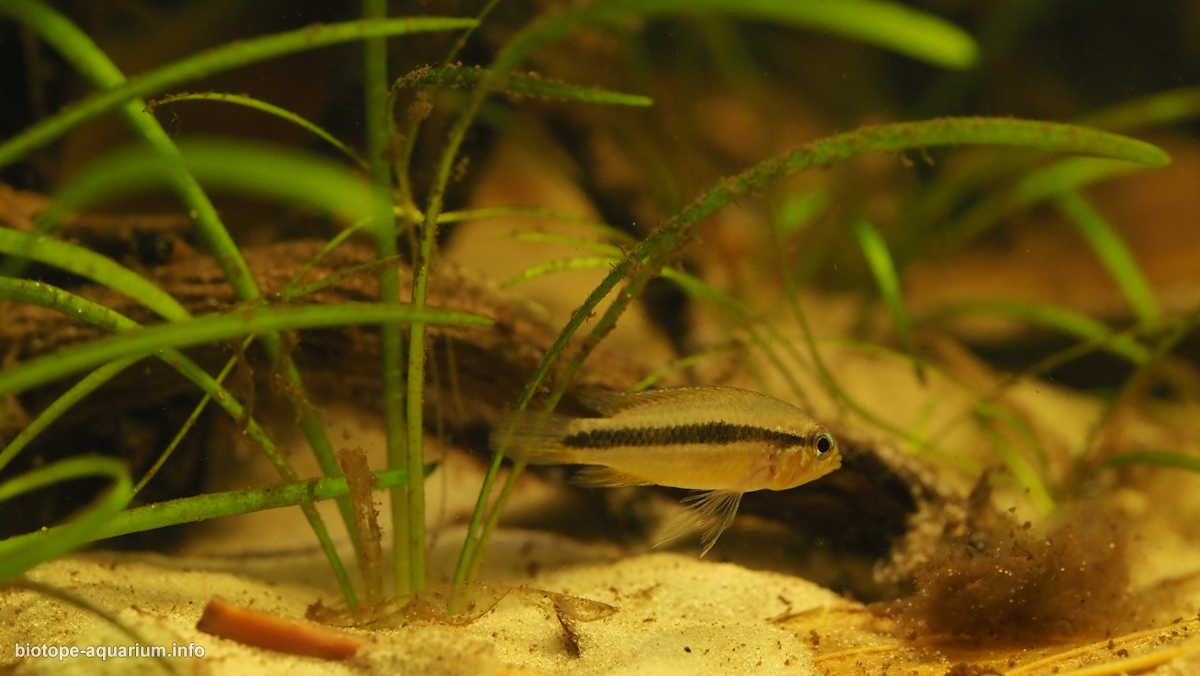
Additional Info: Regular water changes and maintenance are done every two weeks. Black water additive is used in the peat and change water in the filter. The water changes of the tank are provided with ro water.
补充信息:每两周进行一次常规换水和维护。在过滤系统中使用泥炭并添加黑水添加剂;鱼缸换水均采用反渗透(RO)水。
Aquarium video: 水族箱视频:
https://disk.yandex.com.tr/i/RlcX686psY2WGg
Description of the Area Surrounding the Biotope: The Rio Negro (Portuguese: Rio Negro [ˈʁi.u neɡɾu]; Spanish: Río Negro [ˈri.o ˈneɣɾo] “Black River”), or Guainía as it is known in its upper part, is the largest left tributary of the Amazon River (accounting for about 14% of the water in the Amazon basin), the largest blackwater river in the world,[4] and one of the world’s ten largest rivers by average discharge.
生物群落周边区域描述:内格罗河(葡萄牙语:Rio Negro [ˈʁi.u neɡɾu];西班牙语:Río Negro [ˈri.o ˈneɣɾo],意为“黑河”),其上游段又称瓜伊尼亚河,是亚马逊河最大的左岸支流(约占亚马逊流域水量的 14%),也是世界上最大的黑水河 [4],并按平均流量位列世界十大河流之一。
Upper course 上游河段
The source of the Rio Negro lies in Colombia, in the Department of Guainía where the river is known as the Guainía River.[5] The young river generally flows in an east-northeasterly direction through the Puinawai National Reserve, passing several small indigenous settlements on its way, such as Cuarinuma, Brujas, Santa Rosa and Tabaquén. After roughly 400 km the river starts forming the border between Colombia’s Department of Guainía and Venezuela’s Amazonas State. After passing the Colombian community of Tonina and Macanal the river turns Southwest. Maroa is the first Venezuelan town the river passes. 120 km further downstream the river receives the Casiquiare canal from the right-hand, forming a unique link between the Orinoco and the Amazon river basin. Henceforth the river is called Rio Negro.
内格罗河发源于哥伦比亚的瓜伊尼亚省,在该河段被称为瓜伊尼亚河。[5] 这条年轻的河流总体呈东—东北方向流经普伊纳瓦伊国家保护区,沿途经过若干小型原住民聚居点,如夸里努马、布鲁哈斯、圣罗莎和塔巴肯。流经约 400 公里后,该河开始构成哥伦比亚瓜伊尼亚省与委内瑞拉亚马孙州之间的边界。在流经哥伦比亚的托尼纳和马卡纳尔社区后,河流转向西南。马罗阿是河流流经的第一座委内瑞拉城镇。再向下游 120 公里,河流从右侧接纳卡西基亚雷运河,从而在奥里诺科河与亚马逊河流域之间形成一条独特的联络水道。自此,该河始称内格罗河。
Middle course 中游
The river now continues in a southeastern direction passing the Venezuelan town of San Carlos de Río Negro, its largest settlement on the river, and Colombia’s San Felipe. In this stretch the river is constantly fed with tributaries from both sides, and it quickly grows in size creating large river islands, a common feature for all rivers in the Amazon basin. After forming the border between Colombia and Venezuela for 260 km the Rio Negro reaches the Piedra del Cocuy, an igneous rock formation from the Precambrian era, belonging to the Guyana Shield. Here the Tripoint of Colombia, Venezuela and Brazil is found in the middle of the river and it now completely enters Amazonas State, Brazil. After passing Cucuí, the river continues south, only temporarily turning west for several kilometers. In Missão Boa Vista the Içana River joins the Rio Negro and in São Joaquim the Uaupes River, the largest tributary of the Rio Negro, also enters from the right hand side. The Rio Negro now turns markedly towards the east, forming several rapids and small islets on its way. It then passes Sao Gabriel da Cachoeira an important commercial city. After several more rapids and imposing views of the Adormecida mountain chain the river leaves the Guyana shield it traversed in its upper and middle course.
河流继续向东南方向流淌,途经委内瑞拉的圣卡洛斯 – 德里奥内格罗(San Carlos de Río Negro)——这是该河沿岸最大的定居点,以及哥伦比亚的圣费利佩(San Felipe)。在这一河段,两岸不断有支流汇入,使河流迅速变宽,并形成大型江心洲,这是亚马逊流域所有河流的共同特征。在作为哥伦比亚与委内瑞拉边界长达 260 公里后,内格罗河抵达科库伊岩(Piedra del Cocuy),这是一处属于圭亚那地盾的前寒武纪火成岩构造。此处,哥伦比亚、委内瑞拉和巴西的三国交界点位于河道中央,此后河流完全进入巴西的亚马孙州。流经库库伊(Cucuí)后,河流继续向南,仅在数公里范围内短暂转向西行。在博阿维斯塔传教站(Missão Boa Vista),伊萨纳河(Içana River)汇入内格罗河;而在圣若阿金(São Joaquim),乌阿乌佩斯河(Uaupes River)——内格罗河最大的支流——也从右岸注入。此时,内格罗河明显转向东流,沿途形成多处急流和小岛。随后,它流经重要的商业城市圣加布里埃尔 – 达卡绍埃拉(Sao Gabriel da Cachoeira)。 在经历了更多急流并饱览阿多尔梅西达山脉的壮丽景色后,这条河流离开了其上游和中游所穿越的圭亚那地盾。
Lower course 下游河段
After the Marié River enters the Rio Negro the river continues its eastward course forming many large islands and becoming very wide at several locations. It passes local communities such as Santa Isabel do Rio Negro. During the wet season, the river floods the country far and wide here, sometimes to a width of 30 km (19 mi), for long distances. During this season, from April until October, it is a succession of lagoons, full of long islands and intricate channels with a lot of water wildlife. Near Carvoeiro the last major tributary of the Rio Negro, the Branco River joins the Rio Negro and the river temporarily forms the border between the state of Roraima and Amazonas State, Brazil. The river now takes a more southeastern course, becoming again very wide in many stretches before reaching the biggest city on its course Manaus.
马里埃河汇入内格罗河后,河流继续向东流淌,形成众多大型岛屿,并在多处变得极为宽阔。它流经圣伊莎贝尔 – 杜里奥内格罗等当地社区。在雨季,河水在此处广泛泛滥,有时宽度可达 30 公里(19 英里),并持续很长距离。在这一季节(从四月到十月),河道变成一连串的泻湖,遍布狭长的岛屿和错综复杂的水道,水生生物丰富。在卡沃埃罗附近,内格罗河的最后一条主要支流布朗库河汇入其中,此时河流暂时成为巴西罗赖马州与亚马孙州之间的界河。随后,河流转向更偏东南的方向流动,在抵达其流域内最大城市马瑙斯之前,许多河段再次变得极为宽阔。
The Anavilhanas National Park, a 350,018 hectares (864,910 acres) conservation unit that was originally an ecological station created in 1981, protects part of the Anavilhanas river archipelago in this part of the river.[6] Below the archipelago, it meets the Solimões River to form the Amazon River, creating a phenomenon known as the Meeting of Waters.
阿纳维利亚纳斯国家公园是一个占地 350,018 公顷(864,910 英亩)的自然保护区,最初于 1981 年建立为生态站,保护着该河段部分阿纳维利亚纳斯河群岛。[6] 在群岛下游,它与索利蒙伊斯河汇合形成亚马逊河,造就了著名的“黑水白水交汇”奇观。
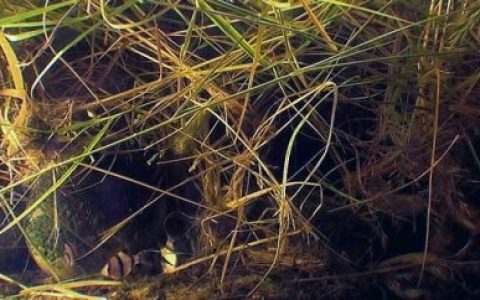
Description of the Underwater Landscape of the Biotope: The Aiuana Stream rises during rainy times, covering the forested land floor. Tree trunks and terrestrial plants are submerged. This stagnant flow of shallow water, which collects tree roots and dry leaves on its ground, creates habitats for living things. In soils that are constantly wet, minerals are leached and the ground is covered with a layer of white sand.
生物群落水下景观描述:艾乌阿纳溪流在雨季水位上涨,淹没森林地面。树干和陆生植物被浸没。这种停滞的浅水流在地面聚集树根和枯叶,为生物创造了栖息地。在常年湿润的土壤中,矿物质被淋溶,地面覆盖着一层白沙。
Description of the Habitat Parameters: The water is blackwater. The stream has an average seasonal temperature of 25-30 °C, a pH of 3.5-6.0 and a conductivity of 0-60 microsiemens.
栖息地参数描述:水质为黑水。溪流季节性平均温度为 25-30°C,pH 值为 3.5-6.0,电导率为 0-60 微西门子。
List of Fishes and Invertebrates Occurring in the Nature Biotope: Paracheirodon axelrodi, Hemigrammus bleheri, Apistogramma hipollytae, Apistogramma diplotaenia, Apistogramma pertensis, Apistogramma gibbiceps, Apistogramma paucisquamis, Apistogramma mendezi, Nannostomus trifasciatus, Nannostomus eques, Pterophyllum scalare, Dicrossius sp, Corydoras burgessi,
自然生物群落中出现的鱼类和无脊椎动物名录:Paracheirodon axelrodi、Hemigrammus bleheri、Apistogramma hipollytae、Apistogramma diplotaenia、Apistogramma pertensis、Apistogramma gibbiceps、Apistogramma paucisquamis、Apistogramma mendezi、Nannostomus trifasciatus、Nannostomus eques、Pterophyllum scalare、Dicrossius sp、Corydoras burgessi,
List of Plants Found in the Nature Biotope: Eleocharis acicularis, Eleocharis parvula, Echinodorous horizontalis, Echinodorus tenellus, Eichhornia crassipes, Сabomba, Salvinia oblongifolia, Limnobium laevigatum.
自然生物群落中发现的水生植物名录:Eleocharis acicularis、Eleocharis parvula、Echinodorous horizontalis、Echinodorus tenellus、Eichhornia crassipes、Сabomba、Salvinia oblongifolia、Limnobium laevigatum。
Threats to the Ecology of the Biotope: The Negro River comprises a multi compartmentalized environment which links Los Andes mountains with the Atlantic Ocean. Due to its relevance in terms of industries, intensive agriculture production and population is considered the second Argentinean river in importance; however, these economic activities have increased the environmental pressure, raising concerns. For instance, the intensive agriculture joint with urban settlements and industries have lead to the introduction of several Persistent Organic Pollutants, including legacy compounds (such as DDT and HCHs), new generation pesticides (endosulfan) and urban-industrial POPs (PCBs, PBDEs). In addition, several matrix have been shown to receive and accumulate heavy metal loads, including As, Cd, Cr, Co, Cu, Fe, Hg, Mn, Ni, Pb and Zn. Metal bioaccumulation and transference between environmental compartments (water, sediments, fish and mollusks) have been demonstrated to occur through the years. The anthropic activities have also induced changes in the aquatic macroinvertebrate assemblages of the Negro River, where both, water quality and invasive species, appear to be main drivers of the change. Added to this, from 17 fish species, only 9 are native, leading to a low zoogeographic integrity coefficient. Finally, the environmental quality threats, climate change and hydroelectric facilities pose synergistic new risks which are addressed in this chapter and further discussed.
该生物栖息地生态面临的威胁:内格罗河是一个多 compartmentalized 的环境,连接着安第斯山脉与大西洋。由于其在工业、集约化农业生产和人口方面的重要性,它被认为是阿根廷第二重要的河流;然而,这些经济活动加剧了环境压力,引发了担忧。例如,集约化农业与城市聚居区及工业相结合,导致引入了多种持久性有机污染物,包括遗留化合物(如 DDT 和六氯环己烷)、新一代农药(硫丹)以及城市工业源持久性有机污染物(多氯联苯、多溴二苯醚)。此外,已证实多种介质接收并积累了重金属负荷,包括砷、镉、铬、钴、铜、铁、汞、锰、镍、铅和锌。多年来,金属在环境各隔室(水体、沉积物、鱼类和软体动物)之间的生物富集与转移已被证实发生。 人为活动也导致了内格罗河水生大型无脊椎动物群落的变化,其中水质和入侵物种似乎是主要驱动因素。此外,在 17 种鱼类中,仅有 9 种为本地种,导致动物地理完整性系数较低。最后,环境质量威胁、气候变化以及水电设施带来了协同的新风险,本章将对这些风险进行阐述并进一步讨论。
本文部分素材来自网络,如有类似请联系修改,如若转载,请注明出处:http://www.yangyubang.com/?p=3677