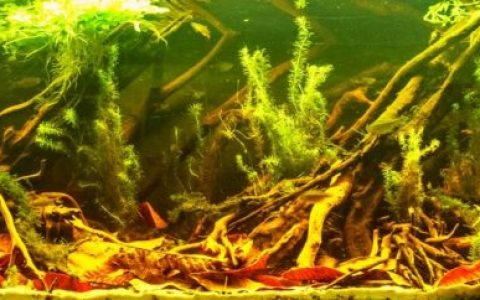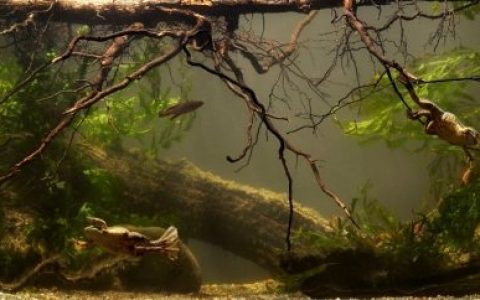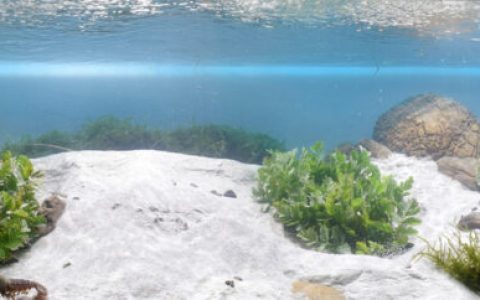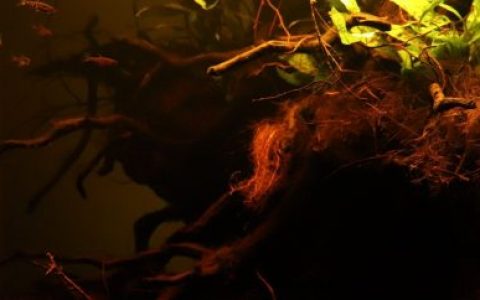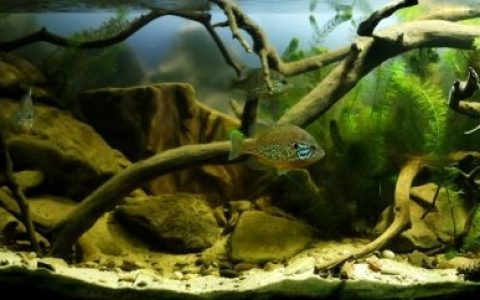
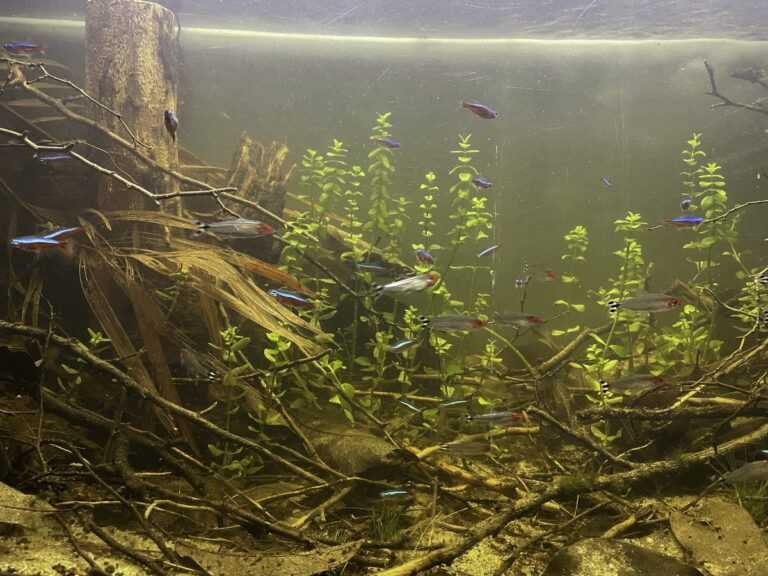
Volume of your aquarium: 240 liters
水族箱容积:240 升
Dimensions of your aquarium: 120x40x50cm
水族箱尺寸:120x40x50 厘米
List of fishes: Paracheirodon axelrodi, Carnegiella strigata, Corydoras aeneus, Hemigrammus rhodostomus
鱼类名录:Paracheirodon axelrodi、Carnegiella strigata、Corydoras aeneus、Hemigrammus rhodostomus
List of plants: Bacopa monnieri , Eleocharis sp
植物名录:Bacopa monnieri、Eleocharis sp
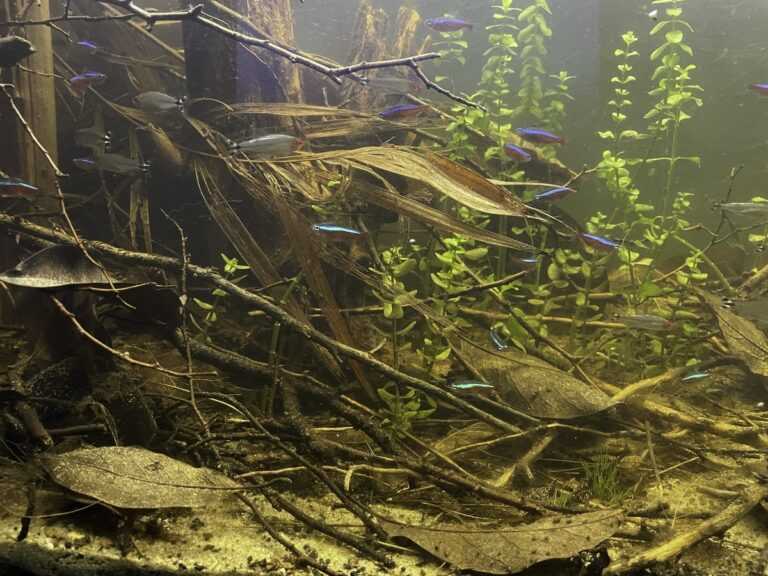
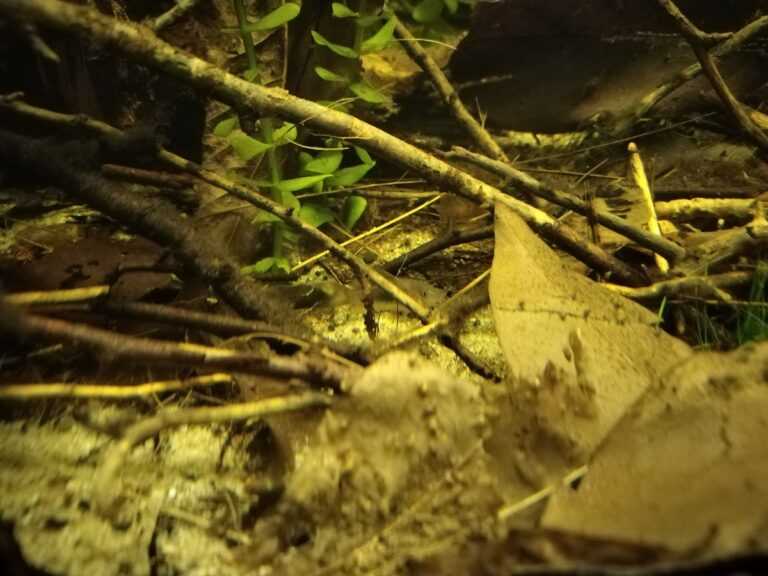
Description of Decorations and Substrate: I used the roots of birch, which very much resembles the base of the trees in this region. The fine sand is very similar to that of the RioOrinoco, palm pod and leaves, magnolia leaves.
装饰与底砂描述:我使用了桦树根,其形态与该地区树木的基部极为相似。细沙非常接近奥里诺科河的河沙,并搭配了棕榈果壳、棕榈叶以及木兰叶。
Description of Equipment: Filter Sunsun hw403 A (1400l/h), flow pump 500l/h, NICREW classic led 18w 7000k, Heater 200w
设备描述:过滤系统为森森(Sunsun)HW403 A(流量 1400 升/小时),造浪泵流量 500 升/小时,照明采用 NICREW Classic LED 18W 7000K,加热棒功率 200W。
Water Parameters: Temperature is 27°C, Ph is 6.2, gH is 5
水质参数:水温 27°C,pH 值 6.2,总硬度(gH)5。
Additional Info: 50% water change every week by rainwater
补充信息:每周使用雨水更换 50% 的水量。
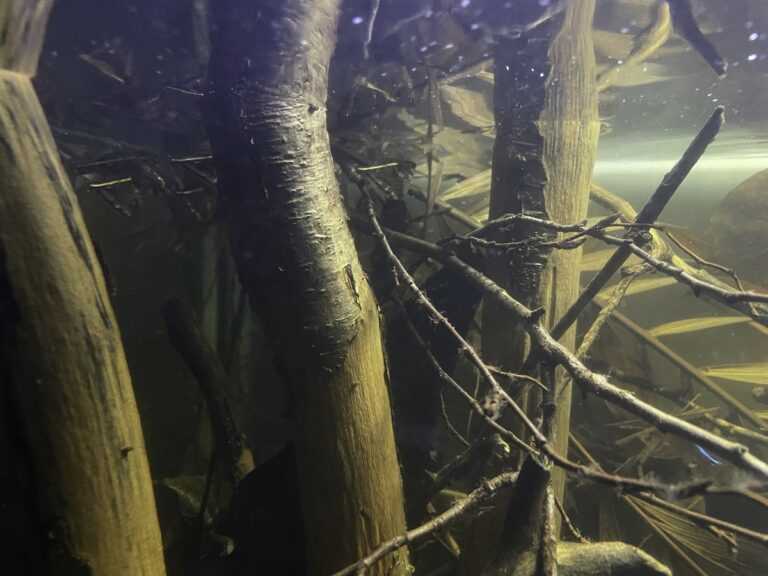
Description of the Area Surrounding the Biotope: The Morichal Largo River is located in Llanos, north of Venezuela. It takes its name from a woman. In the vicinity are various Morichal Palms and deciduous trees.
生物群落周边环境描述:莫里查尔拉戈河位于委内瑞拉北部的亚诺斯平原。其名称源自一位女性。周边分布着多种莫里查尔棕榈树和落叶乔木。
Orinoco River, Spanish Río Orinoco, major river of South America that flows in a giant arc for some 1,700 miles (2,740 km) from its source in the Guiana Highlands to its mouth on the Atlantic Ocean. Throughout most of its course it flows through Venezuela, except for a section that forms part of the frontier between Venezuela and Colombia. The Orinoco and its tributaries constitute the northernmost of South America’s four major river systems. Bordered by the Andes Mountains to the west and the north, the Guiana Highlands to the east, and the Amazon watershed to the south, the river basin covers an area of about 366,000 square miles (948,000 square km) It encompasses approximately four-fifths of Venezuela and one-fourth of Colombia. For most of its length, the Orinoco flows through impenetrable rain forest or through the vast grassland (savanna) region of the Llanos (“Plains”), which occupies three-fifths of the Orinoco basin north of the Guaviare River and west of the lower Orinoco River and the Guiana Highlands. Since the 1930s this region has been developing into one of the most industrialized areas of South America. Below the town of Esmeralda, some of the waters of the Orinoco flow south into the Casiquiare River (Brazo Casiquiare; sometimes called the Casiquiare Channel). This channel, a feature peculiar to the Orinoco River system, is a natural passage that flows generally south until it combines with the Guainía River to form the Negro River, thus linking the Orinoco and Amazon river systems. The Llanos encompasses nearly all of the western lower Orinoco basin, occupying some 220,000 square miles; most of the land is less than 1,000 feet above sea level. The High Plains (Llanos Altos) are most conspicuous near the Andes, where they form extensive platforms between rivers and are some 100 to 200 feet above the valley floors. Away from the mountains they are increasingly fragmented, as in the dissected tableland of the central and eastern Llanos (the Sabana de Mesas) and the hill country (serranía) south of the Meta River in Colombia. The Low Plains (Llanos Bajos) are defined by two rivers, the Apure in the north and the Meta in the south. The lowest portion of the Llanos is an area that lies to the west of the lower Orinoco valley; this area is converted annually into an inland lake by flooding. The climate of the Orinoco basin is tropical, with the seasons marked by differences in rainfall rather than in temperature. The year is divided into two seasons—rainy and dry (locally known as winter and summer)—the former extending from April to October or November and the latter most marked from November through March or April. The wet and dry seasons result from the annual migration of the intertropical convergence zone, a low-pressure trough between the hemispheric easterlies, or trade winds; the passage of the zone northward from its summertime position south of the Equator brings the rainy winter period. In contrast to precipitation, temperature differences in the basin are slight throughout the year; and no month averages more than 69 °F (21 °C) or less than 64 °F (18 °C). Whatever the average temperature, there is little difference from month to month. The only marked variation is from day to night, being greater than that from month to month. On the Llanos, daily maximum temperatures rise above 95 °F (35 °C) in the dry period; the dry winds and nocturnal cooling bring relief with normal minimum temperatures between 65 and 75 °F (18 and 24 °C). More than 1,000 species of birds frequent the Orinoco region; among the more spectacular are the scarlet ibis, the bellbird, the umbrella bird, and numerous parrots. The great variety of fish include the carnivorous piranha, the electric eel, and the laulao, a catfish that often attains a weight of more than 200 pounds. The Orinoco crocodile is one of the longest of its kind in the world, reaching a length of more than 20 feet. Among other inhabitants of the rivers are caimans (an alligator-like reptile) and snakes, including the boa constrictor. The arrau, or side-necked turtle, the shell of which grows to a length of about 30 inches, nests on the sandy islands of the river. Insects include butterflies, beetles, ants, and mound-building termites.
奥里诺科河(西班牙语:Río Orinoco)是南美洲的主要河流,发源于圭亚那高地,呈巨大弧形奔流约 1,700 英里(2,740 公里),最终注入大西洋。其大部分河段流经委内瑞拉,仅有一部分构成委内瑞拉与哥伦比亚的边界。奥里诺科河及其支流构成了南美洲四大水系中最北端的一个。该河流域西面和北面以安第斯山脉为界,东面为圭亚那高地,南面则与亚马逊河流域相邻,总面积约为 366,000 平方英里(948,000 平方公里),涵盖了委内瑞拉国土的大约五分之四以及哥伦比亚的四分之一。奥里诺科河的大部分流程穿越难以通行的热带雨林,或流经广阔的草原(稀树草原)地区——即利亚诺斯(”平原”);该区域占据了瓜维亚雷河以北、下奥里诺科河以西以及圭亚那高地西侧的奥里诺科盆地面积的三分之二。自 20 世纪 30 年代以来,该地区已发展成为南美洲工业化程度最高的区域之一。 在埃斯梅拉达镇以南,奥里诺科河的部分水流向南汇入卡西基亚雷河(Brazo Casiquiare;有时称为卡西基亚雷水道)。这条水道是奥里诺科河水系独有的特征,是一条自然通道,大致向南流动,最终与瓜伊尼亚河汇合形成内格罗河,从而将奥里诺科河与亚马逊河两大水系连接起来。利亚诺斯地区涵盖了几乎整个奥里诺科河下游西部流域,面积约 22 万平方英里;大部分土地海拔低于 1,000 英尺。高平原(Llanos Altos)在安第斯山脉附近最为显著,它们在河流之间形成广阔的平台,高出谷底约 100 至 200 英尺。远离山脉后,这些高地逐渐变得支离破碎,例如中部和东部利亚诺斯被切割的台地(萨瓦纳·德·梅萨斯,Sabana de Mesas),以及哥伦比亚梅塔河以南的丘陵地带(serranía)。低平原(Llanos Bajos)则由北部的阿普雷河和南部的梅塔河两条河流所界定。 亚诺斯低地是位于奥里诺科河下游河谷以西的一片区域,每年因洪水泛滥而变成内陆湖泊。奥里诺科河流域属热带气候,季节更替主要取决于降雨量的变化而非气温差异。一年分为两个季节——雨季和旱季(当地分别称为冬季和夏季);前者从四月持续至十月或十一月,后者则主要集中在十一月至次年三月或四月。干湿两季的形成源于热带辐合带的年度迁移;该辐合带是半球信风之间的低压槽,其从赤道以南的夏季位置向北移动时,便带来了多雨的“冬季”。与降水相比,流域内全年气温差异甚微;没有任何月份的平均气温超过 69°F(21°C)或低于 64°F(18°C)。无论平均气温如何,各月之间几乎无差别。唯一显著的变化出现在昼夜之间,其幅度甚至大于月际变化。 在亚诺斯平原,旱季的日间最高气温可升至 95°F(35°C)以上;干燥的微风与夜间降温带来舒缓,夜间最低气温通常介于 65 至 75°F(18 至 24°C)之间。奥里诺科地区栖息着超过 1,000 种鸟类,其中尤为壮观的包括美洲红鹮、钟伞鸟、伞鸟以及众多鹦鹉。鱼类种类繁多,包括肉食性的食人鱼、电鳗,以及常重达 200 磅以上的鲇鱼——劳劳鲇(laulao)。奥里诺科鳄是世界上体型最长的鳄鱼之一,体长可超过 20 英尺。河流中的其他居民还包括凯门鳄(一种类似短吻鳄的爬行动物)和蛇类,如蟒蛇。侧颈龟(arrau)的背甲长度可达约 30 英寸,它们在河中的沙洲上筑巢产卵。昆虫包括蝴蝶、甲虫、蚂蚁以及筑 mound 的白蚁。
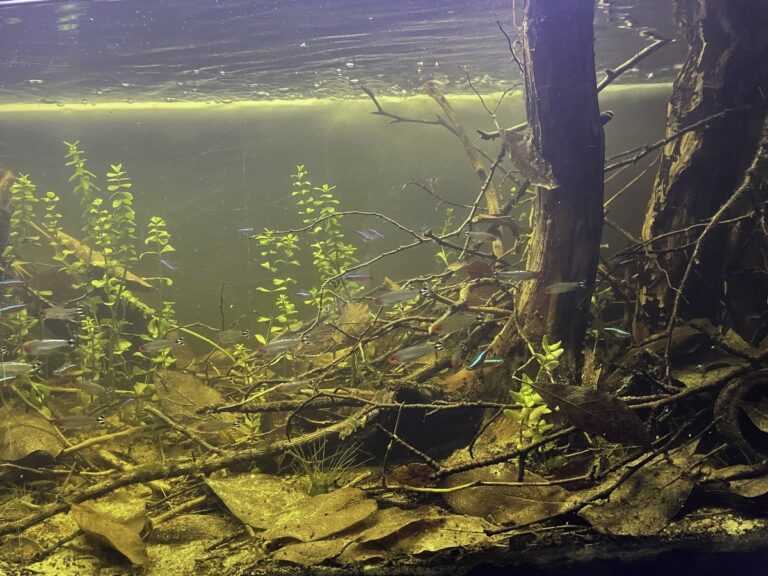
Description of the Underwater Landscape of the Biotope: Venezuela, Bolivarian Republic of, Amazonas
生物群落水下景观描述:委内瑞拉玻利瓦尔共和国,亚马孙州
Morichales get their name from the Moriche Palm (Mauritia flexuosa) which is a palm which only grows and thrives where its roots can be underwater. Morichales is just the name given in Spanish to a large group of Moriche Palms.
莫里查尔(Morichales)得名于莫里切棕榈(Mauritia flexuosa),这是一种只有根部浸没在水中才能生长繁茂的棕榈树。”莫里查尔”只是西班牙语中对大片莫里切棕榈林的统称。
As Morichales usually get their water from underground water springs, they maintain the crystal clear water all year round. They are places teeming with life where we find one of the highest concentrations of animal and plant species.
由于莫里查尔的水源通常来自地下泉水,因此全年都能保持水质清澈晶莹。这里是生机勃勃之地,拥有极高的动植物物种集中度。
It is very difficult to find small or medium size rocks; rather, its rocks are the size of a football field. It is an environment comparable to the oasis in the desert where you only see sand and suddenly you come across of a wooden area full of water and life but in this case you will see plains of tall grass and suddenly find this tropical forests full of palm, trees and marsh plants.
在这里很难找到小型或中型的岩石;这里的岩石往往大如足球场。这种环境堪比沙漠中的绿洲:放眼望去尽是黄沙,却突然遇见一片充满水源与生命的林地;只不过在此处,您看到的是广袤的高草平原,而后骤然邂逅这片布满棕榈、乔木和沼泽植物的热带森林。
The place where they are located is so flat that if you had an eagle’s eye view you could cross from Colombia to Venezuela. These springs, the Morichales, are the arteries that carry their waters to the main channel, the colossal Orinoco River and serve as habitat for small fish such as tetras and Apistogramma, where large predators feed and where their small fry grow to maturity.
它们所在的地方地势极为平坦,若从鹰的视角俯瞰,甚至可以直接从哥伦比亚飞抵委内瑞拉。这些被称为”Morichales”的泉眼如同动脉,将水流汇入主干——宏伟的奥里诺科河;这里既是灯鱼和短鲷等小型鱼类的栖息地,也是大型掠食者觅食的场所,更是幼鱼成长至成熟的摇篮。
Description of the Habitat Parameters: Water information
栖息地参数描述:水质信息
Water type : Fresh water
水体类型:淡水
Water color : Clear water or clear amber water
水色:清澈或清亮的琥珀色
Water transparency : High
水体透明度:高
Concentration of sediments : No
沉积物浓度:无
Water temperature : 26-30 °C
水温:26-30 °C
Water flow/curent : Slow
水流/流速:缓慢
Chemical parameters 化学参数
pH 6.0
Conductivity : GH 6 mg/l
电导率:GH 6 mg/l
KH 7 mg/l
List of Fishes and Invertebrates Occurring in the Nature Biotope: Acestrorhynchus falcatus, Acestrorhynchus microlepis, Gnathocharax steindachneri, Heterocharax virgulatus, Paracheirodon axelrodi , Anostomus ternetzi, Apistogramma guttata, Sternarchorhynchus mendesi, Mesonauta Insignis, Mikrogeophagus Ramirezi, Paracheirodon Simulans, Hemigrammus rhodostomus , Cichlasoma Bimaculatum, Corydoras aeneus, Crenicichla sp., Heros Severus, Hoplias Malabaricus, Nannostomus sp., Rineloricaria sp., Carnegiella strigata, Ancistrus sp.
自然生境中出现的鱼类和无脊椎动物名录:镰吻脂鲤(Acestrorhynchus falcatus)、小鳞吻脂鲤(Acestrorhynchus microlepis)、斯坦氏颌唇脂鲤(Gnathocharax steindachneri)、鞭纹异脂鲤(Heterocharax virgulatus)、阿氏霓虹脂鲤(Paracheirodon axelrodi)、特氏上口脂鲤(Anostomus ternetzi)、点纹短鲷(Apistogramma guttata)、门德斯电鳗(Sternarchorhynchus mendesi)、显赫美鲷(Mesonauta insignis)、拉氏微短鲷(Mikrogeophagus ramirezi)、拟霓虹脂鲤(Paracheirodon simulans)、红鼻剪刀鱼(Hemigrammus rhodostomus)、双斑丽体鱼(Cichlasoma bimaculatum)、青铜鼠鱼(Corydoras aeneus)、矛丽鱼属未定种(Crenicichla sp.)、塞维鲁英雄鱼(Heros severus)、马拉巴狼牙鱼(Hoplias malabaricus)、铅笔鱼属未定种(Nannostomus sp.)、管口鱼属未定种(Rineloricaria sp.)、条纹斧头鱼(Carnegiella strigata)、直升机异形属未定种(Ancistrus sp.)。
List of Plants Found in the Nature Biotope: Phyllanthus Fluitans, Egeria Densa, Pistia Stratiotes, Bacopa monnieri, Ceratophyllum Demersum, Salvinia Auriculata, Sagittaria Subulata, Hydrocotyle Leucocephala, Echinodorus sp., Cabomba Aquatica, Pistia Stratiotes, Mayaca Fluviatilis, Eleocharis sp
自然生境中发现的植物列表:浮水叶下珠、伊乐藻、大薸、假马齿苋、金鱼藻、耳状槐叶萍、针叶慈姑、白水草、皇冠草属、水蕴草、大薸、河苔草、荸荠属
Threats to the Ecology of the Biotope: Abundant water in the Orinoco River Basin supports the needs of people, agriculture, energy and industry (oil and gas) that are vital for Colombia’s social and economic development. But the basin faces increasing pressures from the expansion of mining (942 concessions for 2014), oil and gas (8 million ha under exploration), agro-industry (320,829 ha), and infrastructure, which if not adequately planned and implemented can disrupt the hydrology and ecosystem services of the region. Additionally, the Orinoco Basin’s seasonal rainfall patterns will potentially face further extremes and unpredictability from climate change, leading to greater droughts, flooding, and fires. Maintaining the health of the Orinoco River Basin is vital to support adequate water and services critical for people, the economy, and nature.
该生物群落生态面临的威胁:奥里诺科河流域丰富的水资源支撑着人口、农业、能源及工业(石油和天然气)的需求,这些对哥伦比亚的社会经济发展至关重要。然而,该流域正面临日益加剧的压力,包括采矿扩张(2014 年授予 942 项特许权)、石油和天然气勘探(800 万公顷)、农工产业(320,829 公顷)以及基础设施建设;若规划与实施不当,这些活动可能破坏该地区的水文状况和生态系统服务。此外,受气候变化影响,奥里诺科河流域的季节性降雨模式可能变得更加极端且难以预测,从而导致更严重的干旱、洪水和火灾。维持奥里诺科河流域的健康,对于保障人类、经济和自然所必需的水资源及相关服务至关重要。
本文部分素材来自网络,如有类似请联系修改,如若转载,请注明出处:http://www.yangyubang.com/?p=3825