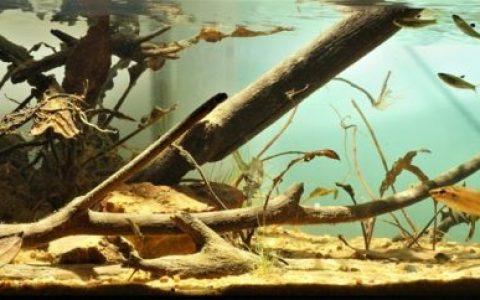
Volume of aquarium: 160 litres
水族箱容积:160 升
Dimensions of aquarium: 100x40x40 cm
水族箱尺寸:100x40x40 厘米
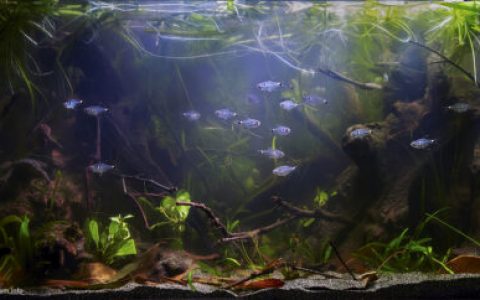
List of fishes: Paracheirodon innesi, Thayeria boehlkei, Carnegiella strigata, Corydoras trilineatus
鱼类名录:Paracheirodon innesi、Thayeria boehlkei、Carnegiella strigata、Corydoras trilineatus
List of plants: Limnobium laevigatum, Pistia stratiotes
植物列表:光滑槐叶萍(Limnobium laevigatum)、大薸(Pistia stratiotes)

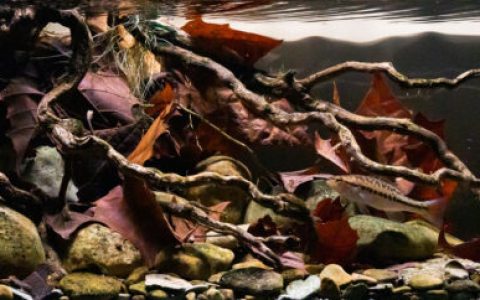
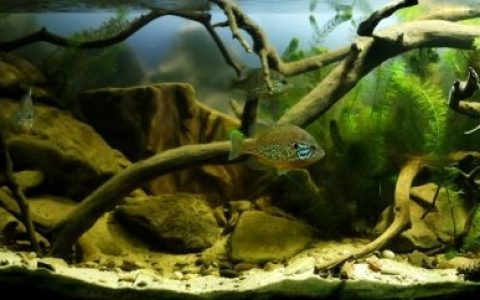
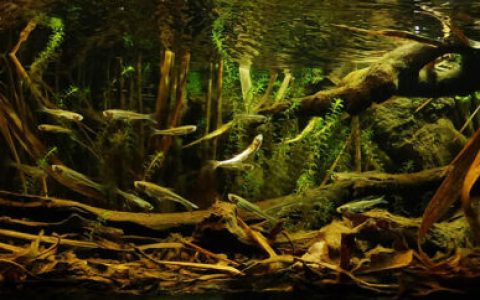
Description of Decorations and Substrate: There are roots and branches to represent dwarf white-sand forest that provide shelter for fishes. On the bottom is white fine sand with a layer of leaf litter – I used magnolia and guava leaves. On the surface flows Limnobium laevigatum and Pistia stratiotes. And one Sapucaia nut on the bottom as well.
装饰与底床描述:缸内布置了树根和树枝,以模拟矮小的白沙森林环境,为鱼类提供庇护所。底部铺设白色细沙,并覆盖一层落叶——我使用了木兰叶和番石榴叶。水面漂浮着光滑槐叶萍和大薸。底部还放置了一颗 Sapucaia 坚果。

Description of Equipment: External filter Tetra Tec EX 800 Plus – 790lph
设备描述:外置过滤器 Tetra Tec EX 800 Plus(流量 790 升/小时)
Aquael 100 Watt heater
Aquael 100 瓦加热棒
2x 10 Watt LED spotlight – 4000K, 800 lm
2 盏 10 瓦 LED 射灯 – 4000K,800 流明
Water Parameters: Water temperature is 25°C, pH is 6.2, GH is 5
水质参数:水温 25°C,pH 值 6.2,总硬度(GH)5
Additional Info: Water changes are done once a month at 30% with RO water. And once a week I add KNO3 to water, because nitrate values are very low.
补充信息:每月进行一次 30% 的换水,使用反渗透(RO)水。每周向水中添加硝酸钾(KNO3),因为硝酸盐含量非常低。

Aquarium video: 水族箱视频:
https://disk.yandex.com/d/CG6YD0JEMIDqpw
Description of the Area Surrounding the Biotope: The habitat I want to describe is a small creek that flows into the Pobreza stream near Quebrada Pobreza campsite (6km from the main course of Rio Blanco). Pobreza stream runs into Rio Blanco consequently, the tributary of Rio Tapiche, which runs into Rio Ucayali near Requena, a town in the Loreto Region in northeastern Peru.
生物栖息地周边环境描述:我所描述的栖息地是一条小溪,流入位于秘鲁洛雷托地区东北部 Requena 镇附近的 Tapiche-Blanco 区域的 Pobreza 溪流旁 Quebrada Pobreza 露营地(距 Rio Blanco 主河道 6 公里)。Pobreza 溪流随后汇入 Rio Blanco,而 Rio Blanco 是 Rio Tapiche 的支流,最终在 Requena 附近注入 Ucayali 河。
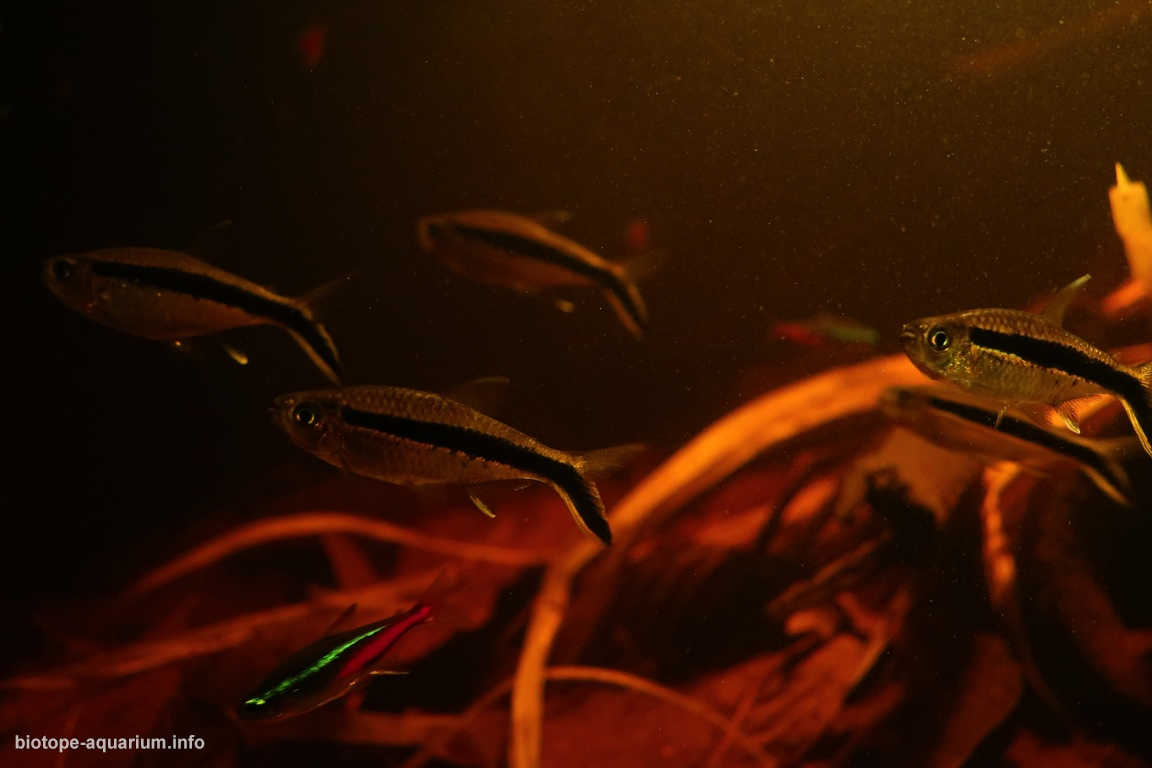
The Tapiche-Blanco region epitomizes Loreto’s extraordinary landscape diversity. It harbors large expanses of wetlands and peatland forests, white-sand forests, and hyperdiverse upland forests, and these are drained by a variety of black, white, and clearwater streams. Located within the global epicenter of amphibian, mammal, and bird diversity, and highlighted by recent maps as possessing the largest aboveground carbon stocks in Peru, the region has maintained continuous forest and a high conservation value despite a long history of unregulated logging, hunting, and fishing. Blackwater creeks in this area harbor dozens of fish species valued for their ornamental properties, in the genera Paracheirodon, Carnegiella, Hyphessobrycon, Thayeria, Corydoras, Monocirrhus, and Apistogramma.
塔皮切 – 布兰科地区是洛雷托非凡景观多样性的缩影。这里拥有广阔的湿地和泥炭林、白沙林以及物种极度丰富的高地森林,并由各式各样的黑水、白水和清水溪流所滋养。该地区位于全球两栖动物、哺乳动物和鸟类多样性的中心地带,近期地图更显示其拥有秘鲁最大的地上碳储量;尽管长期存在不受监管的伐木、狩猎和捕捞活动,该地区仍保持着连续的森林覆盖和极高的保护价值。此地的黑水溪流中栖息着数十种极具观赏价值的鱼类,涵盖霓虹脂鲤属(Paracheirodon)、斧头鱼属(Carnegiella)、魮脂鲤属(Hyphessobrycon)、泰氏鱼属(Thayeria)、 Corydoras 属(鼠鱼)、单鳍鲈属(Monocirrhus)以及短鲷属(Apistogramma)。
Description of the Underwater Landscape of the Biotope: This acidic blackwater creeks are located in a low-lying forest area (known as igapó) with pure water with low levels of salts and nutrients. Forests are growing on white sands and the bottom of the creek is covered with a fine layer of leaf litter and organic material and shallow-soil roots that limit erosion and retain nutrients and salts necessary for plants and animals.
生物群落的水下景观描述:这些酸性黑水溪流位于地势低洼的森林区域(称为伊加波泛滥林),水质纯净,盐分和营养物质含量极低。森林生长于白沙之上,溪底覆盖着一层细腻的枯枝落叶和有机物质,以及浅层土壤中的植物根系,这些根系有助于限制侵蚀,并保留动植物所需的养分和盐分。

Description of the Habitat Parameters: Water color is dark brown with medium transparency and average temperature is around 25°C. pH is around 4-5, GH 0.
栖息地参数描述:水色呈深褐色,透明度中等,平均水温约为 25°C。pH 值在 4–5 之间,总硬度(GH)为 0。
List of Fishes and Invertebrates Occurring in the Nature Biotope: Astronotus ocellatus, Paracheirodon innesi, Carnegiella strigata, Thayeria boehlkei, Hyphessobrycon agulha, Hemigrammus analis, Crenuchus spilurus, Ammocryptocharax elegans, Copella nigrofasciata, Gasteropelecus sternicla, Corydoras napoensis, Corydoras trilinineatus
自然生物群落中出现的鱼类和无脊椎动物名录:Astronotus ocellatus、Paracheirodon innesi、Carnegiella strigata、Thayeria boehlkei、Hyphessobrycon agulha、Hemigrammus analis、Crenuchus spilurus、Ammocryptocharax elegans、Copella nigrofasciata、Gasteropelecus sternicla、Corydoras napoensis、Corydoras trilinineatus。
List of Plants Found in the Nature Biotope: There are no aquatic plants found in the habitat I described, only floating plants like Limnobium laevigatum and Pistia stratiotes and some submerged terrestrial plants.
自然生物群落中发现的植物名录:在我所描述的栖息地中未发现水生植物,仅有浮水植物如 Limnobium laevigatum 和 Pistia stratiotes,以及一些沉水的陆生植物。

Threats to the Ecology of the Biotope: 1. Unstable and insecure land tenure:
该生物群落生态面临的威胁:1. 土地权属不稳定且缺乏保障:
A very low percentage of communities that possess title to their land, despite a long history of occupation and use.
尽管当地社区长期占据并使用这些土地,但拥有正式地契的社区比例极低。
Two indigenous communities on the Tapiche River that are on the brink of disappearing (Nueva Esperanza and Yarina Frontera Topal); their disappearance would worsen the unstable land tenure situation, since these are titled communities.
塔皮切河(Tapiche River)沿岸有两个土著社区(Nueva Esperanza 和 Yarina Frontera Topal)正面临消失的边缘;由于这两个是已获确权的社区,它们的消失将进一步加剧土地权属不稳定的局面。
A phantom community (Nuevo Trujillo) created under false pretenses by illegal loggers in Requena to gain logging rights via a bosque local permit.
一个名为 Nuevo Trujillo 的“幽灵社区”由雷奎纳(Requena)地区的非法伐木者通过虚假手段建立,旨在利用“地方林区”(bosque local)许可证获取采伐权。
2. Illegal or informal logging operations that have serious negative impacts on social and biological communities:
2. 非法或非正规伐木作业对社会和生物群落造成严重负面影响:
The pervasiveness of illegal and informal logging throughout the region; irregularities in concessions and permits are the rule
非法和非正规伐木在整个地区普遍存在;特许权和许可证的违规现象屡见不鲜。
Weak government oversight of logging in the region and the failure of the concessions system.
政府对该地区伐木活动的监管薄弱,特许权制度失效。
Misinformation and uncertainty regarding the legal status and location of logging concessions and permits, and regarding the steps needed to obtain logging rights. Local residents’ lack of basic information on logging makes it hard for them to defend their rights.
关于伐木特许权和许可证的法律地位、地理位置以及获取伐木权所需步骤的信息混乱且不明朗。当地居民缺乏有关伐木的基本信息,难以维护自身权益。
Logging concessions that include forests with no commercial timber species (e.g., white-sand forests) or forests with timber species at commercially inviable densities; this gives permit holders an incentive to harvest timber outside of their designated areas.
包含无商业价值树种(如白沙林)或商业密度不足的树种的森林采伐特许区;这促使许可证持有者在其指定区域之外进行木材采伐。
The persistence in the region of the debt peonage system, which has long been associated with deplorable work conditions (human rights abuses, insufficient pay, lack of accident insurance, worker debt, misleading contracts, etc.).
该地区长期存在的债务劳役制度,其一直与恶劣的工作条件(侵犯人权、薪酬不足、缺乏工伤保险、工人负债、误导性合同等)相关联。
Sanctions imposed on some communities by OSINFOR or SUNAT, due to mismanagement of logging permits granted by the Programa Forestal.
由于对林业项目(Programa Forestal)颁发的采伐许可证管理不善,OSINFOR 或 SUNAT 对部分社区实施了制裁。
Environmental impacts of informal logging (e.g., logging roads and overhunting of game birds and mammals around logging camps). These impacts are not restricted to upland forests (e.g., rafts of timber are often transported along streams and oxbow lakes).
非正式采伐造成的环境影响(例如,采伐道路以及在采伐营地周边对猎用鸟类和哺乳动物的过度捕猎)。这些影响不仅限于高地森林(例如,木材筏常沿溪流和牛轭湖运输)。
Environmental impacts of mechanized logging (e.g., destruction of the root mat, erosion of fragile soils, and sedimentation of streams, rivers, and lakes).
机械化采伐的环境影响(例如,破坏根系层、侵蚀脆弱土壤,以及导致溪流、河流和湖泊淤积)。
Little to no forestry planning, which precludes sustainable logging and puts the region’s long-term timber stocks at risk.
几乎没有任何林业规划,这使得可持续采伐无法实现,并危及该地区长期的木材储量。
3. Construction of access roads for logging concessions. We know of two different road-building initiatives of this type: the Orellana-Tapiche logging road and the network of roads planned by Green Gold Forestry in 2014. The latter consisted of one central road (along the Yanayacu-Tapiche watershed) and a number of secondary roads extending into the Tapiche and Blanco watersheds. Logging roads are a serious threat because they would cause:
3. 为采伐特许权修建 access roads。我们知晓两项此类道路建设计划:Orellana-Tapiche 采伐公路,以及 Green Gold Forestry 于 2014 年规划的道路网。后者包括一条沿 Yanayacu-Tapiche 流域的主干道,以及多条延伸至 Tapiche 和 Blanco 流域的次要道路。采伐公路构成严重威胁,因为它们将导致:
The erosion of fragile soils in the area, which would lead to sedimentation and pollution in lakes and rivers.
该地区脆弱土壤的侵蚀,进而引发湖泊和河流的淤积与污染。
The destruction of white-sand forests, a rare natural treasure of the region.
白沙森林的破坏,这是该地区罕见的自然瑰宝。
Colonization of new roads, which would lead to a boom in fishing, hunting, and natural resource harvests in the heart of the Tapiche-Blanco interfluve.
新道路的殖民化将导致塔皮切 – 布兰科河间地核心区域的捕鱼、狩猎和自然资源开采活动激增。
4. Oil and gas exploration and production. The study area overlaps three active oil and gas concessions (Blocks 137, 135, and 95). Work in these concessions poses serious threats to the region, including:
4. 石油和天然气勘探与生产。研究区域与三个活跃的石油和天然气特许区(区块 137、135 和 95)重叠。在这些特许区开展的工作对该地区构成严重威胁,包括:
Drastic socioeconomic changes, such as a boom in immigration and natural resource use.
剧烈的社会经济变化,例如移民潮和自然资源利用的激增。
Environmental threats to water quality and aquatic ecosystems. One example widespread in oil and gas concessions elsewhere in Loreto are spills of drilling water or oil; these spills cause profound changes in the composition of surface waters, serious damage to floodplain ecosystems, and major threats to human well-being.
水质和水生生态系统面临的环境威胁。在洛雷托其他地区广泛存在的石油和天然气特许区内,钻井水或石油泄漏便是典型案例;此类泄漏会导致地表水成分发生深刻变化,对洪泛区生态系统造成严重破坏,并对人类福祉构成重大威胁。
Potential water pollution if the abandoned wells are opened to fracking.
若废弃井被用于水力压裂作业,可能引发潜在的水体污染。
5. Little to no oversight of natural resource harvests in the region. Hunting of bushmeat— whether commercial, subsistence, or around logging camps—is totally unregulated, and we saw evidence of overhunting in some areas. Fishing for ornamental fish and food fish is common in the region, but it is generally carried out without management plans, community regulations, or government oversight.
5. 该地区自然资源采伐几乎缺乏监管。无论是商业性、自给性狩猎,还是在伐木营地周边的丛林肉类捕猎,均完全不受管制;我们在某些区域已观察到过度狩猎的迹象。观赏鱼和食用鱼的捕捞在该地区十分普遍,但通常缺乏管理计划、社区规范或政府监督。
6. Weak governance. The absence of government authorities and the isolation and lack of institutional support faced by Tapiche-Blanco residents are at the root of many problems in the region. Some authorities are directly involved in corruption and subject to conflicts of interest, due to their ties to logging. Other problems related to weak governance include:
6. 治理薄弱。政府机构的缺位,以及塔皮切 – 布兰科居民所面临的孤立无援和缺乏制度支持,是该地区诸多问题的根源。部分官员因与伐木业存在关联而直接卷入腐败并面临利益冲突。与治理薄弱相关的其他问题包括:
Corruption at all levels of the regional government’s environmental authorities, which facilitates illegal harvests (especially timber). Little to no police presence, which provides free access to drug traffickers, illegal loggers, and other criminal groups.
区域各级政府环境部门存在各级腐败,助长了非法采伐(尤其是木材)。警力几乎缺失,使得毒贩、非法伐木者及其他犯罪团伙得以自由出入。
A lack of supra-communal organizations that can resolve shared problems, and limited political representation at the provincial level.
缺乏能够解决共同问题的超社区组织,且在省级层面的政治代表性有限。
The chaotic state of the information that government agencies maintain on the Tapiche-Blanco region; data are scattered, imprecise, out of date, difficult to obtain, privately held, and often contradictory.
政府机构关于塔皮切 – 布兰科地区的信息管理处于混乱状态:数据分散、不精确、过时、难以获取、由私人掌控,且常常相互矛盾。
Low-quality educational opportunities; most communities only have elementary schools, with teachers who are outsiders and present only sporadically.
教育质量低下;大多数社区仅设有小学,教师多为外来人员,且仅偶尔到岗。
A local population that remains very much vulnerable to abuse by outsiders, due to the lack of work, information, and educational opportunities.
当地居民因缺乏工作、信息和教育机会,极易受到外来者的侵害。
A poor understanding among residents of legal terms and regulations, which has generated a number of penalties and fines (e.g., those levied by OSINFOR and SUNAT).
居民对法律条款和法规理解不足,导致遭受多项处罚和罚款(例如由 OSINFOR 和 SUNAT 征收的罚款)。
7. Temporary and permanent immigration of workers drawn to the region by logging activity and oil and gas concessions.
7. 因伐木活动以及石油和天然气特许权吸引工人涌入该地区,造成临时性和永久性移民。
8. A poor understanding of how protected areas can contribute to the protection and management of natural resources. The perception among large segments of the population in these watersheds is that any kind of protected area will limit access to resources.
8. 对保护区如何促进自然资源保护与管理认识不足。这些流域的大部分民众认为,任何形式的保护区都会限制资源获取。
本文部分素材来自网络,如有类似请联系修改,如若转载,请注明出处:http://www.yangyubang.com/?p=3767